The Future of Construction Is Being Built at Stevens

Computers have long helped construction professionals, including schedulers, estimators, and drafters, complete their individual tasks more efficiently. According to Muhammad Hajj, chair of the Department of Civil, Environmental and Ocean Engineering at Stevens Institute of Technology, a new generation of technologies is now connecting those once-separate functions.
“Cloud-based collaboration, sensors, artificial intelligence, digital twins: these technologies are connecting estimation, scheduling, safety, and more, and making them operational in real time,” Hajj said.

That shift, Hajj noted, is being driven not only by research at institutions like Stevens but by close ties to the industry it serves.
Among the voices that helped surface this shift toward technology-enabled, connected construction practices was Stevens alumnus Anthony Bazzini ’81, whose industry experience pointed to where the field was heading.
“The future of construction will belong to professionals who can complement strong fundamentals with the ability to harness and apply emerging technologies while establishing alignment on objectives between the project team, owner and contractors,” observes Bazzini ‘81, a member of the Schaefer School of Engineering and Science board of advisors.
According to Hajj, success in the field often depends on the ability to learn new tools every three years or so. "Our objective is to make sure that we remain on top of it, and we're providing our students with the best education so that they can always rejuvenate themselves,” he said.
Stevens assistant professors Mohammad Ilbeigi and Kaijian Liu, who both joined Stevens in 2019, are helping lead that response through their research and contributions to the engineering and management program curriculum.
One of Ilbeigi’s NSF-funded projects, an AI-enhanced system, is designed to integrate the unstructured observations students encounter outside the classroom, such as a construction site seen in passing, into formal engineering education.
Liu's NSF CAREER Award focuses on the infrastructure itself, reframing a longstanding assumption in the field: that the people who use roads, utilities, and other systems are passive participants in them. His research treats humans and infrastructure as adapting to each other, a two-way relationship he calls coadaptation.
Preparing students for connected construction
Construction decisions have traditionally been divided among different teams and project functions. That separation has contributed to persistent problems involving cost, scheduling, safety and communication, according to Ilbeigi.
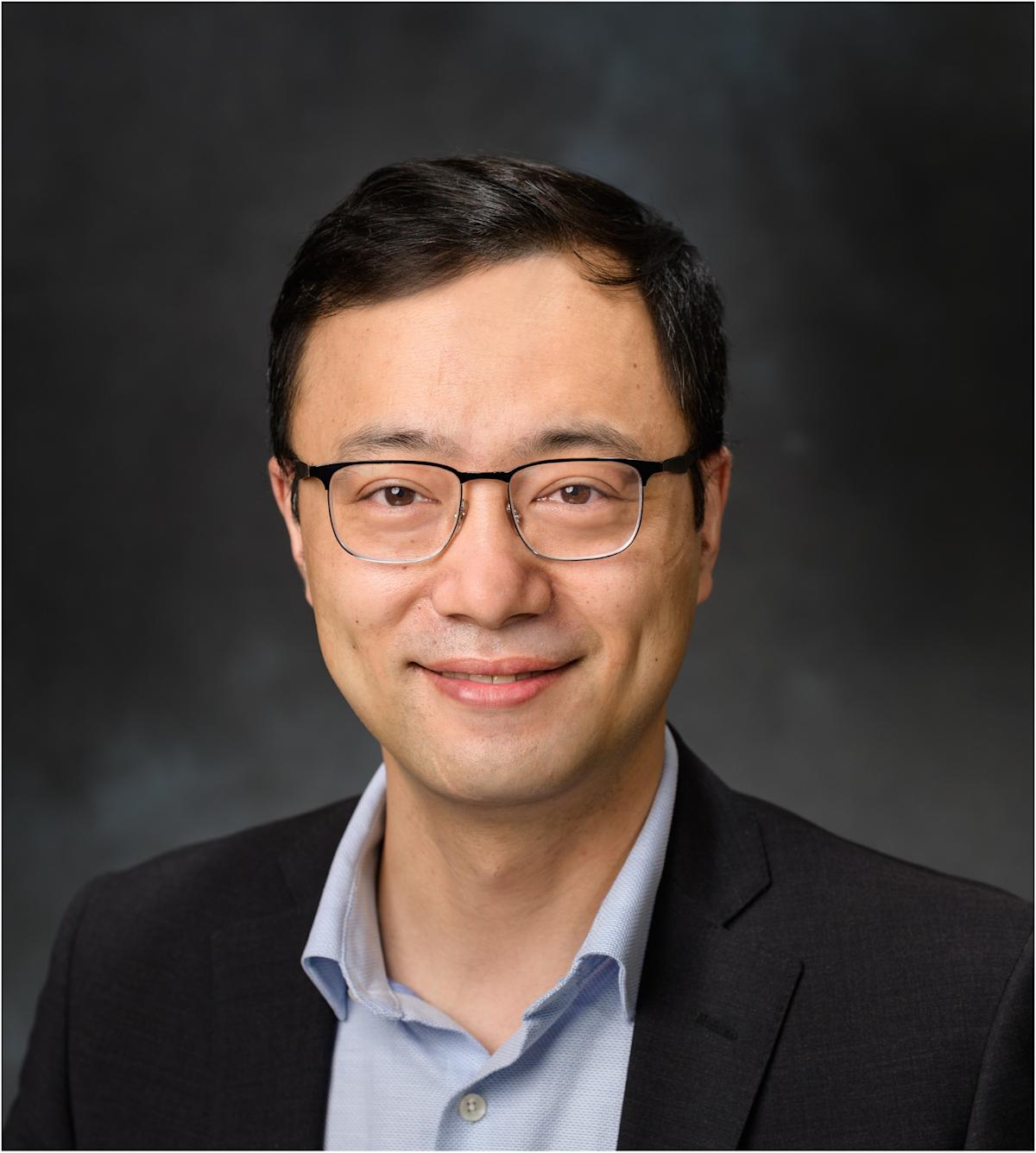
“We used to make decisions about finance separate from scheduling, from safety, and from construction methods,” he said, noting that this separation has long been a source of problems in the construction field.
Ilbeigi explained that new technologies can now automate the coordination between those teams, and Stevens is focused on preparing students for the age of connected construction.
He highlighted three primary areas in the curriculum.
The first involves courses on emerging technologies, including automation in construction and building information modeling, and digital twins. Students learn about robots, drones, sensors, and other tools.
“It’s not going to be just ‘these are the robots, drones, the sensors that we have, and this is how to use them,’” Ilbeigi said. “They’re going to learn about them, but more importantly, they’re going to learn how to integrate them with the existing and expected future activities in the construction domain.”
Management and decision-making are another area. Ilbeigi explained that even as AI is integrated into processes, construction managers working with automated and data-driven systems still need to exercise judgment, communicate with people, and evaluate uncertain conditions.
“We need construction management students who can make decisions under uncertainty, have emotional intelligence, and demonstrate critical thinking,” Ilbeigi said, noting that new courses at Stevens prepare students to become better managers and decision makers.
The third area involves updating established subjects to address conditions that students may encounter later in their careers, such as safety.
“We are thinking about addressing safety 10 years from now. Because when we have these new technologies, when we have drones constantly flying over you when you are in the construction site, when we have semi-automated or fully automated robots, the way that we think about safety will be different,” Ilbeigi said.
Understanding the importance of technology integration
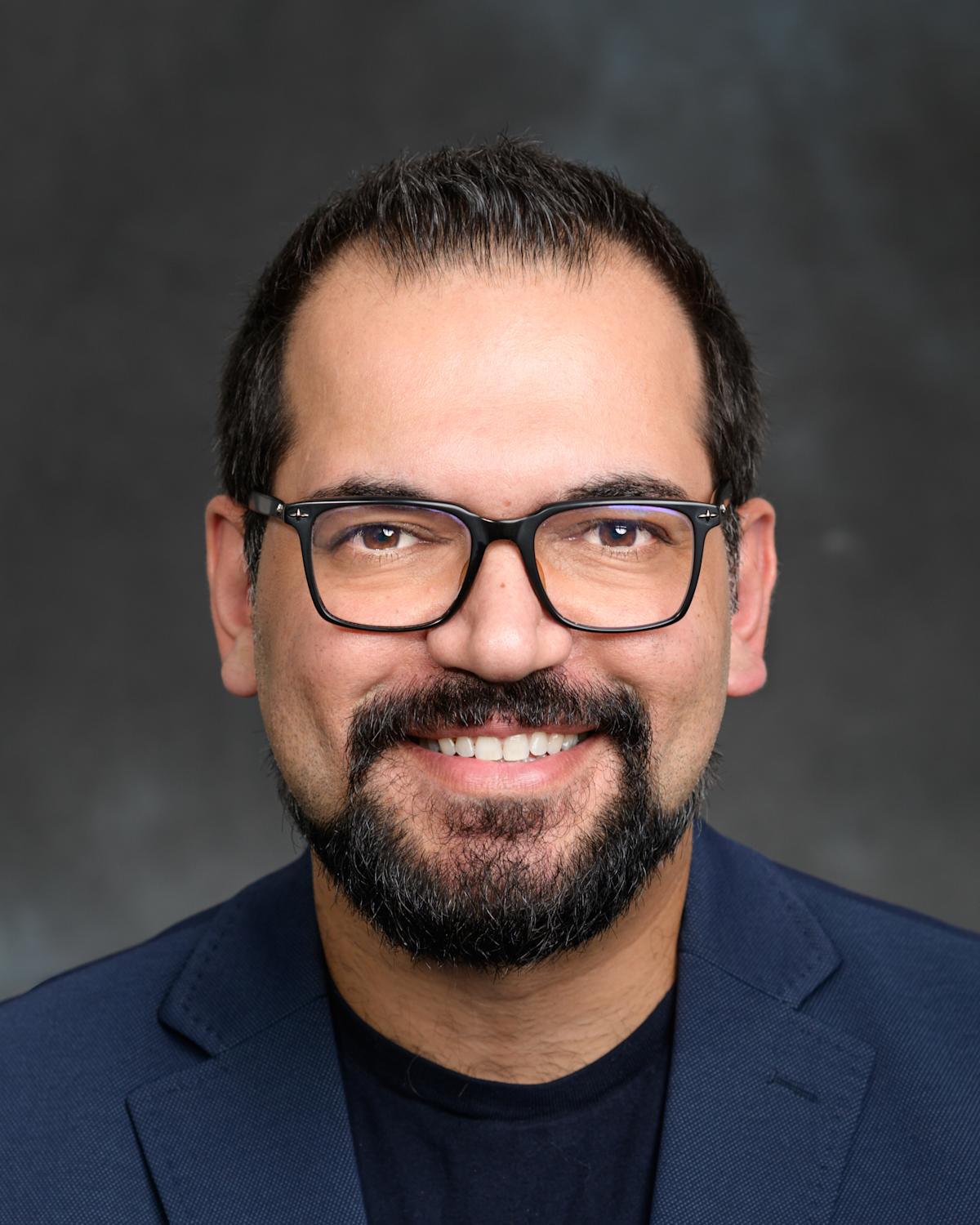
Ilbeigi noted that students must understand integration. He used stationary, semi-automated welding robots as an example.
“The robots cannot just easily replace a human welder or go to the construction site,” he said. “We need to use them in factory settings, which means that we need to change the construction methods from on-site construction toward prefabrication and modular construction.”
A single technology decision, in other words, can require changing the construction method itself.
“Students need to understand that adopting new technologies is more than just buying them: it’s about how to integrate them, how to use them in a way that really increases the efficiency and decreases the cost, with limited or controlled unintended consequences, like job displacement,” he said.
Job displacement and a growing labor shortage mean construction professionals will need to keep developing new skills. In a 2025 analysis, the Associated Builders and Contractors projected that the construction industry needs to attract an estimated 439,000 net new workers to meet demand.
“Not only are we thinking about the current undergraduate and graduate students, but we are also planning for future certificate programs to upskill and reskill the current construction workforce,” Ilbeigi said.
The human element in building tomorrow’s infrastructure
In addition to its focus on integrating technology into construction, the curriculum considers the interaction between people and systems.
“Traditionally, in the civil infrastructure systems domain, research and practice have focused on the physical performance of infrastructure systems,” Liu said. “Humans and their behaviors are often treated as passive or external because there has been limited recognition of the bidirectional nature of human–physical interactions, in which each affects the performance of the other.”
In describing this two-way relationship, which he calls coadaptation, he offered a transportation network during a flood as an example.
“Travelers may change when and where they conduct daily activities, select different routes or transportation modes, work remotely, or postpone nonessential trips,” Liu said. “In response to these evolving behaviors, the transportation system can adapt signal timing, transit service, lane allocation, routing guidance, and recovery priorities. Updated system conditions then inform another round of human adaptation.”

When people and infrastructure adapt to each other rather than separately, Liu said, communities can ease congestion, limit the losses a disruption causes, and recover from it faster. The obstacle, he said, is that the field has no shared foundation for understanding and designing bi-directional human-infrastructure interactions.
The CAREER award also brings this problem into the classroom, enabling Stevens students to explore opportunities through new course modules and project-based learning in cyber-physical and human-cyber physical systems (HCPS).
“Student teams will co-create new HCPS solutions for human–infrastructure coadaptation and demonstrate their projects for the Stevens community and local stakeholders,” Liu said. “Ultimately, students will gain not only interdisciplinary knowledge but also hands-on experience developing and communicating solutions to real-world resilience challenges.”
All of this prepares students for a field that is rapidly changing.
“When we train the students for decision-making under uncertainty, a deep understanding of the life cycle of new technologies, and the fundamental and essential factors for technology adoption, we are preparing them for what comes next,” said Ilbeigi.
Bazzini could not agree more: “The ability of Stevens graduates to harness and apply these technologies to make better decisions, create greater certainty and deliver better project outcomes will distinguish them as the future leaders of the construction industry.”
Learn more about academic programs and research in the Department of Civil, Environmental and Ocean Engineering: