Record research funding, conferred Ph.D.’s and major faculty awards reflect the university’s growing research momentum and high-impact work
Stevens Institute of Technology’s research enterprise reached new heights in Fiscal Year 2026 with $87 million in externally sponsored research funding and a record 92 Ph.D. degrees awarded — milestones that reflect the university’s sustained investment in research and its growing impact across disciplines.
The record research funding represents approximately 13% growth over FY25, even as federal research funding has tightened and uncertainty continues to reshape the national research landscape.
“The research engine at Stevens is growing and these are the types of accomplishments that give me hope and inspiration about the future of this university,” said Stevens President Nariman Farvardin. “Our faculty, researchers and Ph.D. students are really punching above our size — tackling some of the most important and challenging questions of our time. The recognition and support they are receiving from leading agencies, foundations and research partners is a testament to the quality and impact of their work. It is incredibly exciting to see what is happening at Stevens and to envision how we extend our real-world impact in the future.”
The progress reflects a long-term commitment outlined in Stevens 2032: Inspired by Humanity, Powered by Technology™, which calls for Stevens to strengthen its position as a leading research institution. Investments in faculty, research infrastructure and innovation are helping translate that vision into measurable results.
Research with far-reaching impact
Among the year’s standout accomplishments was a $1.3 million grant from the W. M. Keck Foundation to Geoffrey S. Inman Junior Professor Igor Pikovski to advance research into the detection of gravitons — the hypothesized quantum particles associated with gravity.
This highly competitive and prestigious Keck Foundation grant supports work at the frontier of physics that could open new avenues for understanding gravity at the quantum level.
Farber Chair Professor Samantha Kleinberg also received a three-year grant from the John Templeton Foundation for her project, “Explaining Why: A Multidisciplinary Approach to Token Causality.” Her research examines how people understand cause-and-effect relationships, bringing together perspectives from computer science, artificial intelligence and other disciplines.
The awards demonstrate the breadth of research taking place across Stevens.
“The federal research landscape is shifting,” said Edmund Synakowski, Vice Provost for Research and Innovation. “Stevens is meeting that moment with clarity and purpose, diversifying our funding, deepening our partnerships and pressing forward on the work that matters most.”
“This continued growth reflects the strength of our partnerships with government, industry and academic collaborators, and the confidence they place in Stevens to deliver innovative, high-impact research,” continued Synakowski. “With this momentum, there is tremendous opportunity ahead for Stevens and for the discoveries and innovations yet to come.”
Expanding research infrastructure
At Stevens’ Davidson Laboratory, researchers installed a state-of-the-art X-band weather radar system that provides substantially higher-resolution precipitation data. The technology will support improved flash-flood and severe-weather forecasting across the New York-New Jersey metropolitan region while creating new opportunities for research and collaboration.
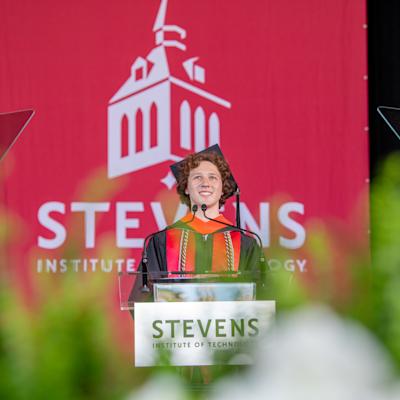
Further, a record 92 Ph.D. degrees awarded this year underscores the role of graduate researchers in advancing the university’s research mission and preparing the next generation of scientists, engineers and scholars.
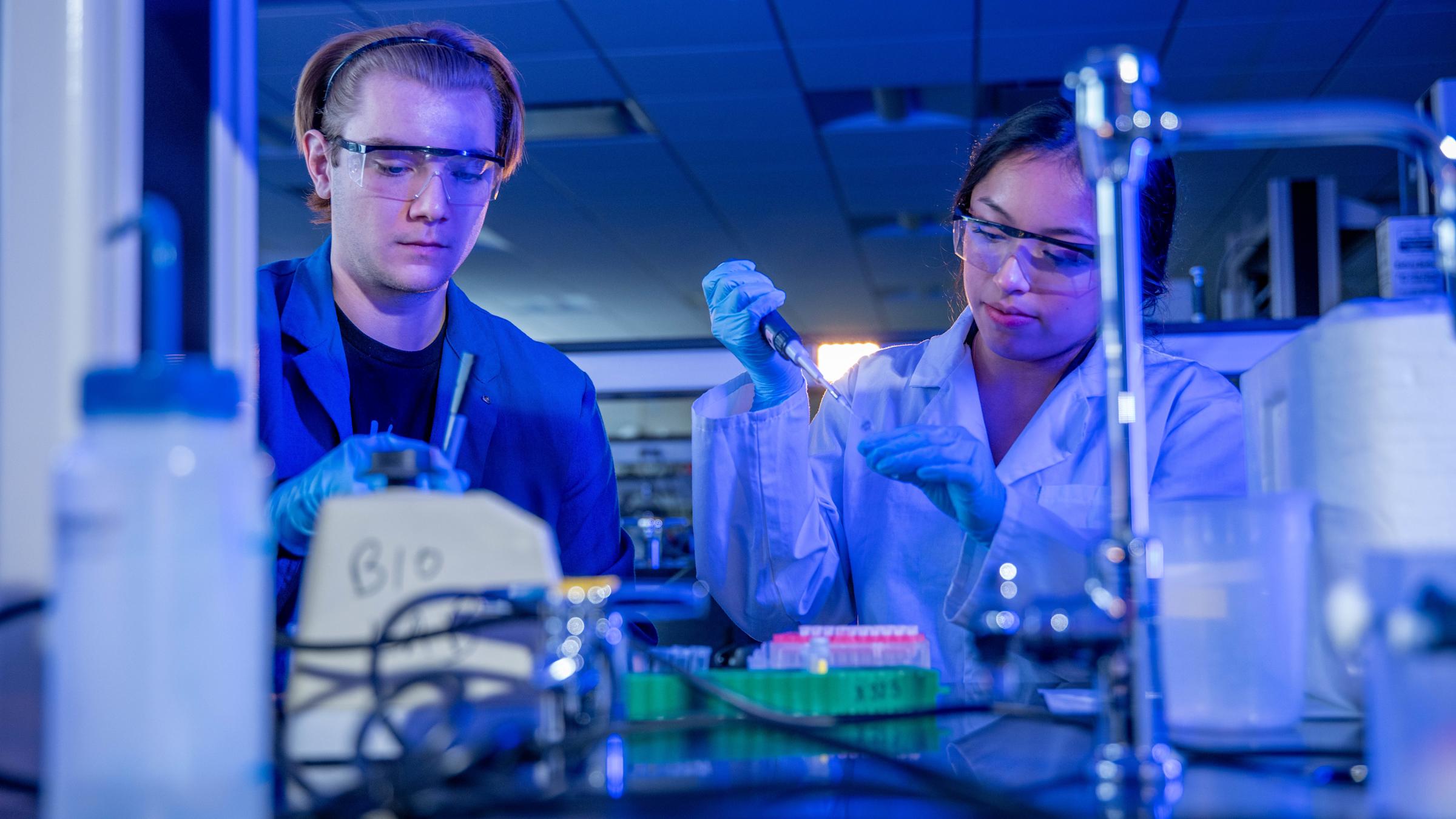
Stevens features 14 research centers and labs, all operating on the leading edge of fields including resilience, sustainability, quantum engineering, biotechnology, artificial intelligence, fintech and healthcare.
These milestones point to a research enterprise gaining momentum — and to the impact of sustained investment in people, ideas and infrastructure. As Stevens continues to pursue the vision set forth in Stevens 2032, its faculty and researchers are demonstrating what is possible when innovation is matched with talent and resources.