Samantha Kleinberg Awarded Templeton Grant to Answer the Age-Old Question: Why?
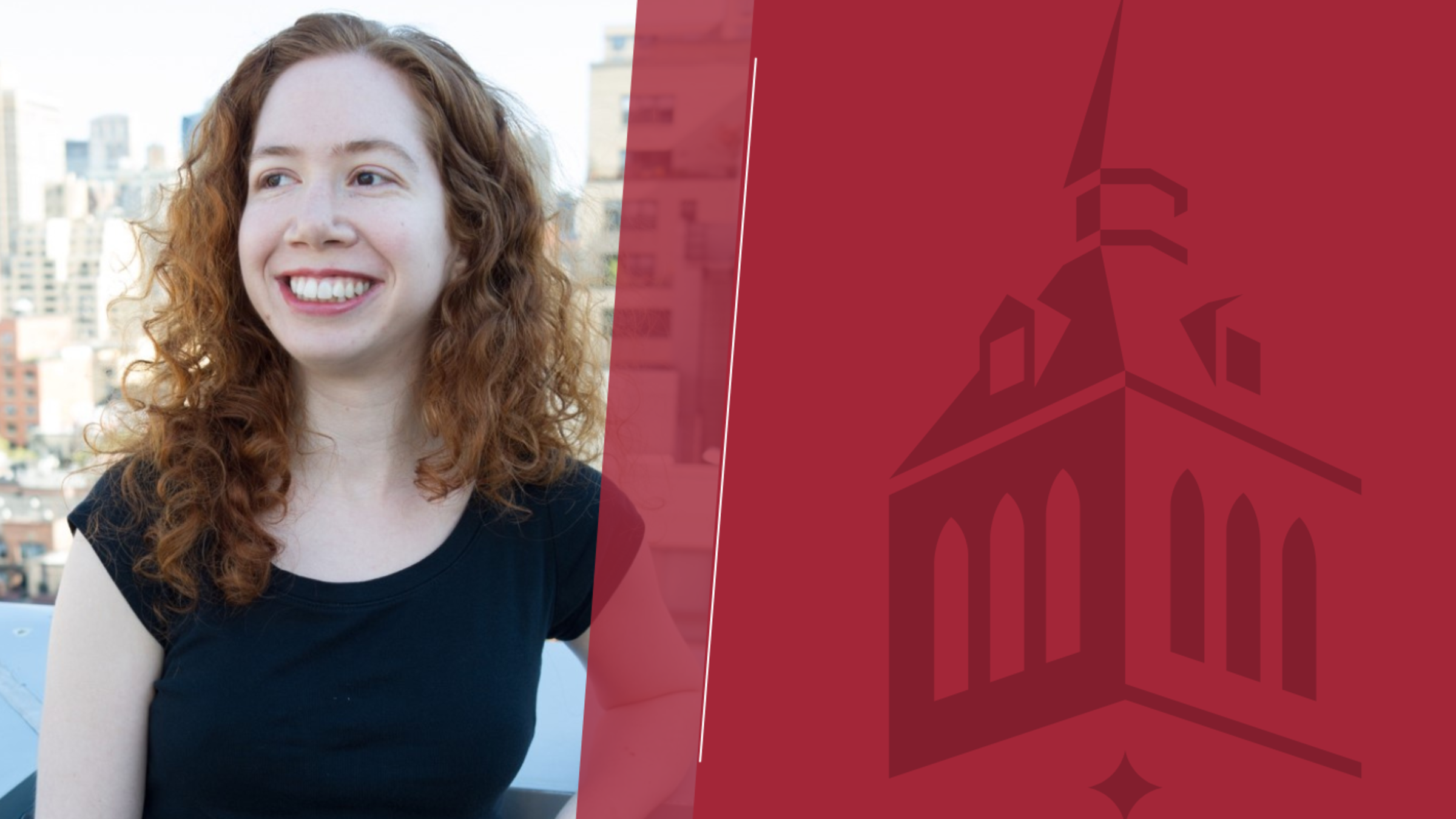
Samantha Kleinberg, Farber chair professor in the Department of Computer Science at Stevens Institute of Technology, has received a three-year grant from the John Templeton Foundation for her pioneering project, “Explaining Why: A Multidisciplinary Approach to Token Causality.”
Who Knows Why?
People of all ages constantly ask “why?” in both big and small ways. Why did someone get cancer? Why did the stock market crash today? Why did the chicken cross the road?
And while it can simply be idle curiosity, figuring out the “why” is fundamental to human development, medicine, law, science, and other areas where understanding cause and effect can save lives, assign responsibility, or reveal how things work.
“Philosophers, economists, psychologists and other experts have been trying to explain events for centuries,” Kleinberg said, “and still no one can give you a single definition of what truly causes something, or an algorithm that can automatically explain it.”
Traditional statistical or machine-learning methods struggle to make these kinds of real-life, nuanced judgments about causality, or cause and effect. Psychological studies often use overly fictionalized scenarios, and philosophical theories rarely address how people actually think about why things happen.
Moreover, most of this work has focused on general patterns such as aggregate data on diseases or behavior. But anomalies and one-off situations, with no obvious data to explain them, remain a mystery. Of course, some events have multiple causes. Lung cancer may stem from both smoking and asbestos exposure, but so far, there’s no way to know how much each contributed.
Instead of continuing research in functional silos, Kleinberg’s project takes an interdisciplinary approach, combining philosophy, computer science and psychology to create a rigorous framework for token causality, or why a particular event occurred in a specific case.
“We need to understand how people think about causes, but because we know people are often wrong and rely on information they shouldn’t, we also need to step back and think about how people do it — and how they should do it.” – Samantha Kleinberg
Why Think Differently?
The first phase of this novel project involves psychology in understanding human reasoning through experiments designed to show how people explain a variety of individual events without prior knowledge of the situations.
Then Kleinberg and two philosophy researchers will develop a theory of causality, defining what makes a viable explanation and identifying the factors people use to come to those conclusions.
“We want to see whether people reason differently about causes depending on the situation,” she said. “For example, does it matter if people feel in control? Does the severity of the event matter? Do people reason differently if they think something happens because of an individual or because of a system?“
Finally, Kleinberg will design algorithms and systems that will mirror human reasoning to generate and communicate those causal explanations automatically.
Interactive, web-based systems focused on diabetes will allow users to test hypotheses and determine whether explanations help people make better decisions.
“We need to understand how people think about causes,” she said, “but because we know people are often wrong and rely on information they shouldn’t, we also need to step back and think about how people do it — and how they should do it.”
“Understanding causality is fundamental to human reasoning,” noted Kleinberg. “With this work, we aim not just to develop new theory and technology — but also to help people think more clearly about why things happen, and how they can make better decisions.”
Why Does it Matter?
Kleinberg is particularly interested in understanding specific counterfactuals — questions like what would have happened if a person had eaten breakfast later or taken less insulin. In health contexts such as managing diabetes, this could help patients and clinicians understand why blood glucose is unexpectedly low or high and what small changes could prevent future incidents and improve patients’ quality of life.
This research also has critical implications for moral responsibility and legal blame. Understanding why things happen could provide a more solid foundation for assigning responsibility in both everyday and high-stakes scenarios.
The grant highlights Stevens’ strength in interdisciplinary, high-impact research. To foster broader discussion, Kleinberg is organizing a conference at University College London next year, bringing together philosophers, psychologists, computer scientists, legal scholars and other experts to explore the connections between cause and effect.
“Understanding causality is fundamental to human reasoning,” noted Kleinberg, who has made major contributions in AI, health informatics and causal inference over the past 20 years, including publishing two books on causality. “With this work, we aim not just to develop new theory and technology — but also to help people think more clearly about why things happen, and how they can make better decisions.”
Learn more about academic programs and research in the Department of Computer Science: