Stevens Institute of Technology Installs Advanced X-Band Weather Radar to Strengthen Flood Monitoring and Severe Weather Forecasting for the New York Metropolitan Area
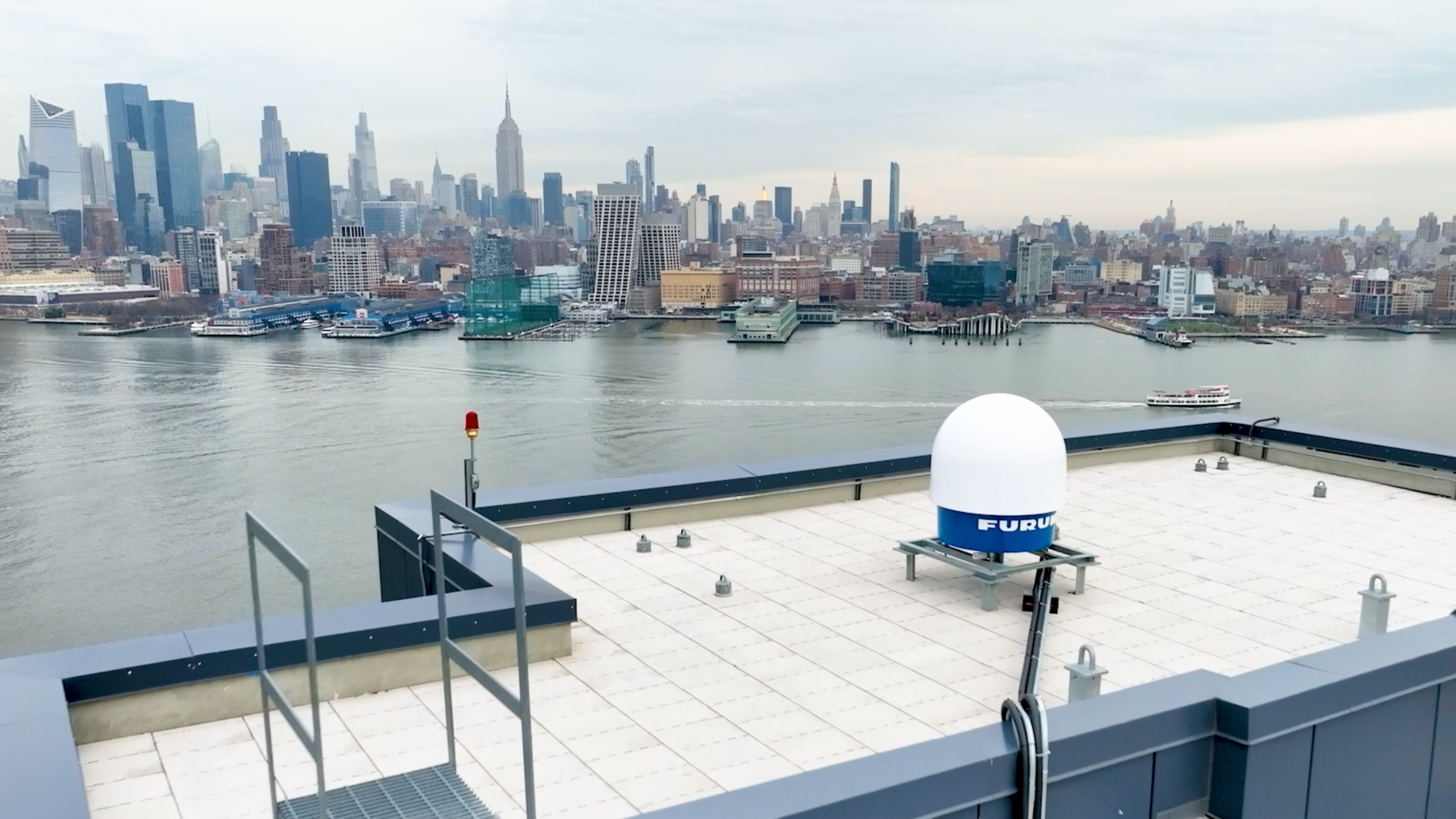
HOBOKEN, N.J. — February 19, 2026 — Stevens Institute of Technology announced today that it has installed a state-of-the-art X-band weather radar system on its Hoboken campus, significantly expanding the university’s capacity to monitor and forecast severe weather events, including flash flooding, across the New York metropolitan area. The installation is a project of the university’s Davidson Laboratory, a global leader in coastal resilience research and extreme weather forecasting.
X-band radar systems operate at a frequency range of 8–12 GHz, offering higher-resolution imagery than the larger S-band NEXRAD radar systems operated by the National Weather Service. This enhanced resolution is critical for detecting localized weather phenomena—such as flash flooding, heavy rainfall, and microbursts—that can develop rapidly in densely populated urban areas like the New York–New Jersey metropolitan region.
The new radar system complements the Davidson Laboratory’s existing suite of monitoring and forecasting tools, including the Stevens Flood Advisory System (SFAS), which provides real-time water level observations and four-day advance flood forecasts for more than 150 locations from Delaware Bay to Maine. SFAS data are used by the US National Weather Service (NWS), regional and municipal Offices of Emergency Management, as well as by the general public. The addition of X-band radar capabilities will allow the Davidson Laboratory to generate more precise, hyperlocal precipitation data, improving the accuracy and lead time of flood and severe weather warnings for communities throughout the region.
“This X-band radar installation represents a significant investment in research that will enhance the safety and resilience of our surrounding communities,” said Greg Townsend, Assistant Vice President for Corporate, Government and Community Relations at Stevens Institute of Technology. “Stevens has a long history of partnering with local, state, and federal agencies to provide critical weather and flood information, and this new capability will allow us to deliver even more timely and actionable data to the people who need it most.”

The installation is part of a broader effort by the Davidson Laboratory to expand its extreme-event monitoring infrastructure. Recent federal and state funding has supported the development of the Stevens Extreme Event Coastal Preparedness and Response System (SEECPRS), which integrates additional supercomputing resources, drones with LiDAR capabilities, portable weather stations, and now the X-band radar system. Together, these tools will enhance the laboratory’s ability to collect critical data before, during, and after extreme weather events—validating predictive models and informing mitigation strategies for vulnerable coastal communities.
“The X-band radar gives us the ability to observe precipitation with a level of detail that was not previously possible from our campus,” said Dr. Marouane Temimi, Gallaher Associate Professor at the Charles V. Schaefer, Jr. School of Engineering and Science at Stevens, who worked with his PhD student Ismail Gul to deploy the radar and set up data. “In a region as densely populated as the New York metro area, where flash flooding can develop in minutes and threaten lives, having access to high-resolution, real-time radar data is essential for improving our nowcasting capabilities and giving communities the lead time they need to respond,” Temimi said. “It will allow us to provide an important service to our partners, including Offices of Emergency Management (OEMs) at the state and local levels, along with the National Oceanic and Atmospheric Administration’s (NOAA) National Weather Service."
The urgency of improved hyperlocal forecasting has been underscored by recent catastrophic weather events. In September 2021, the remnants of Hurricane Ida produced extreme rainfall across the New York metropolitan area, causing rapid urban flooding that killed dozens of people. Researchers at Stevens, including Dr. Temimi, have published studies demonstrating the need for more granular nowcasting models—forecasts that predict weather conditions minutes into the future—to support emergency response during such events. The new X-band radar directly addresses this need by providing the high-resolution data required to power these models.
In addition to its operational benefits, the radar system will serve as a valuable educational and research resource for Stevens students and faculty. Graduate and undergraduate researchers will have the opportunity to work directly with real-time radar data, gaining hands-on experience in meteorology, hydrology, and environmental engineering.
About Stevens Institute of Technology
Stevens is a premier, private research university situated in Hoboken, New Jersey. Since our founding in 1870, technological innovation has been the hallmark of Stevens’ education and research. Within the university’s three schools and one college, more than 8,000 undergraduate and graduate students collaborate closely with faculty in an interdisciplinary, student-centric, entrepreneurial environment. Academic and research programs spanning business, computing, engineering, the arts and other disciplines actively advance the frontiers of science and leverage technology to confront our most pressing global challenges. The university continues to be consistently ranked among the nation’s leaders in career services, post-graduation salaries of alumni and return on tuition investment.
Stevens Media Contact
Kara Panzer
Director of Public and Media Relations
Division of University Advancement
845-475-4594
[email protected]