A New Direction: Building the Future of Chemical Engineering and Materials Science
After becoming chair of the Department of Chemical Engineering and Materials Science (CEMS) last month, one of Henry Du’s top goals was working with his colleagues to develop the department’s five-year strategic plan.
It’s more than an academic exercise. The plan will shape how the department educates students, pursues discovery and generates knowledge through creative approaches and collaboration.
A department retreat and subsequent focus-area discussions illuminated five priorities: sustaining a vibrant undergraduate program; strengthening and refocusing graduate programs; integrating AI into learning; elevating research through partnerships; and strengthening connections among faculty, students and alumni.
More than a degree
The Department of Chemical Engineering and Materials Science is embedding data-driven tools, machine learning and computational modeling into the core curriculum. Students will learn to apply AI to the process optimization, molecular design and predictive maintenance tasks that modern industry demands.

Du also sees potential for expanded research into designing and manufacturing advanced materials for health, energy and sustainability, leveraging Stevens AI and machine learning expertise and unique fabrication and analytical capabilities.
Indeed, the department is purposefully integrating AI, not as a standalone technology, but as an evolution in how students learn and practice engineering — while maintaining a clear focus on engineering fundamentals, experimentation and verification. Students will learn to use AI for modeling, data analysis and design, then test its results against physical principles and experimental evidence.
“Ultimately, our aim is not to graduate students who simply use AI,” said Dilhan Kalyon, professor. “It is to graduate engineers who know enough science and engineering to direct AI, challenge it, verify it, improve upon it and take professional responsibility for the decisions they make with it.”
Networking forums and other connections among faculty, students and alumni will create opportunities to share expertise and build collaborations. Formal mentorship programs and industry-sponsored senior design projects will more closely connect undergraduates with alumni in pharmaceuticals, energy and biotechnology.
“Our students enter the workforce with a robust professional network and mastery over next-generation digital tools,” said Yujun Zhao, associate chair for undergraduate studies, “making them highly competitive leaders from day one.”
New minor is a major step
One of the early examples of the department’s growth strategies is the new Materials Science and Engineering minor. It is designed to provide students from other engineering and science disciplines with a deeper understanding and working knowledge of the relationships among structure, properties and processing for choosing materials across a wide array of applications.
“The development of humanity is propelled by major breakthroughs in the field of materials,” Du said. “In our technology-driven world, materials science and engineering is a key enabling discipline. Basic materials knowledge will further empower engineers and scientists across disciplines to be better problem-solvers and more creative innovators.”
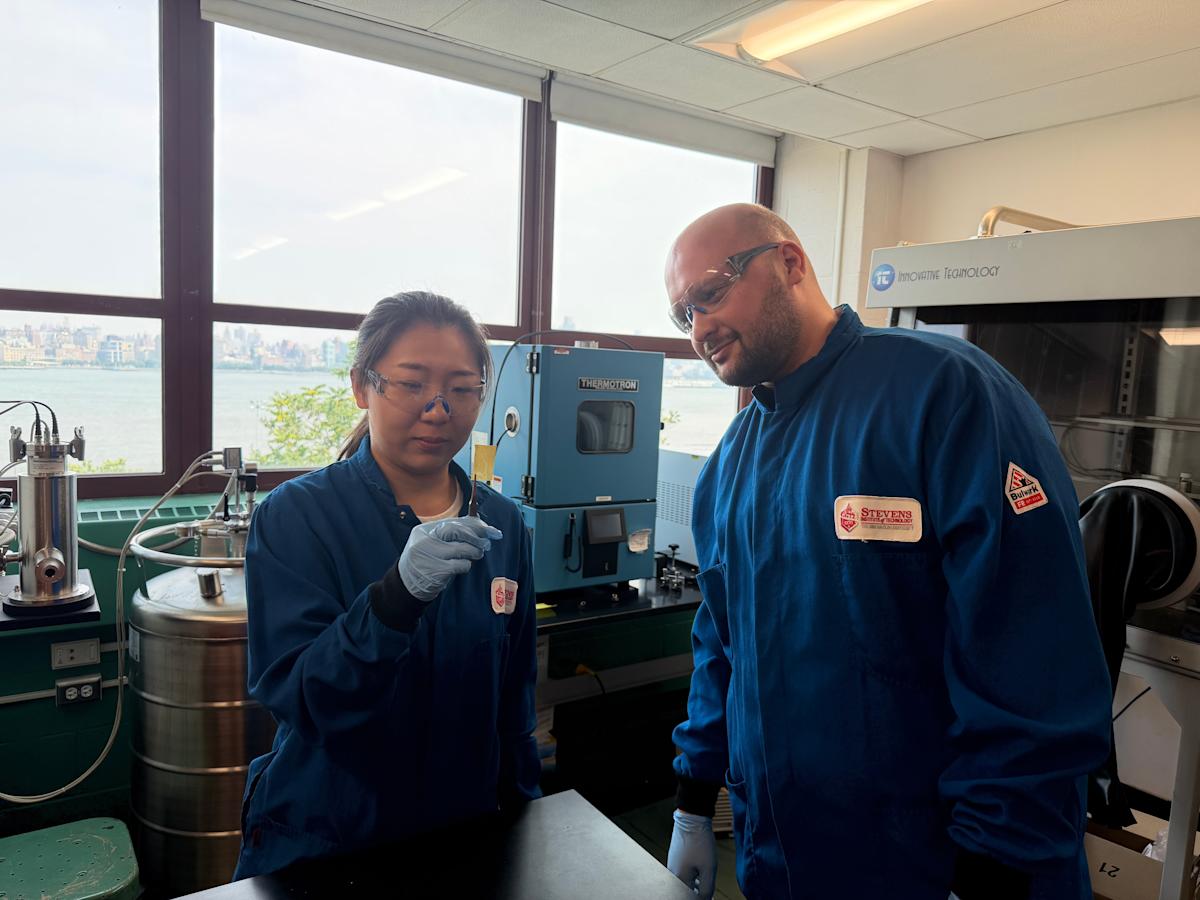 Students pursuing the minor will take foundational courses in the Fundamentals of Materials Science and Engineering and the Characterization of Materials, plus another four courses covering thermodynamics, design and two electives they find most relevant to their field of interest.
“The minor prepares students to succeed in today’s fastest-growing STEM sectors including semiconductors, electronics, AI, materials informatics, aerospace, automotive, energy, sustainability, biomedical devices, advanced manufacturing, and civil and infrastructure engineering,” noted Matthew Libera, professor and faculty advisor for the minor program.
It can also serve as a strong foundation for an accelerated M.S. or Ph.D.
“Many Stevens graduates will find themselves following highly interdisciplinary careers,” said Ben Paren, assistant professor. “The minor will give them tools that complement their primary major and enable them to apply an understanding of materials selection, design and characterization to engineering problems beyond what they would learn in their main discipline. It will also provide a much deeper foundation for students to use AI to address real-world problems.”
Graduate programs put students to work in active research labs
The department’s graduate programs pair in-depth coursework with hands-on research in Stevens laboratories. These opportunities align with national priorities and place students in environments where they can contribute to emerging research investigations.
“With ongoing new grants, our Ph.D. programs are well-positioned to grow,” said Pinar Akcora, associate professor and associate chair for graduate studies. “Our faculty’s synergy and collaborative environment allow us to pursue funding from both industry and national agencies.”
Students prepare for real-world biomanufacturing challenges
One promising new avenue for the department is biomanufacturing, which combines chemistry, biology, materials science and chemical engineering to translate biological discoveries into useful products.
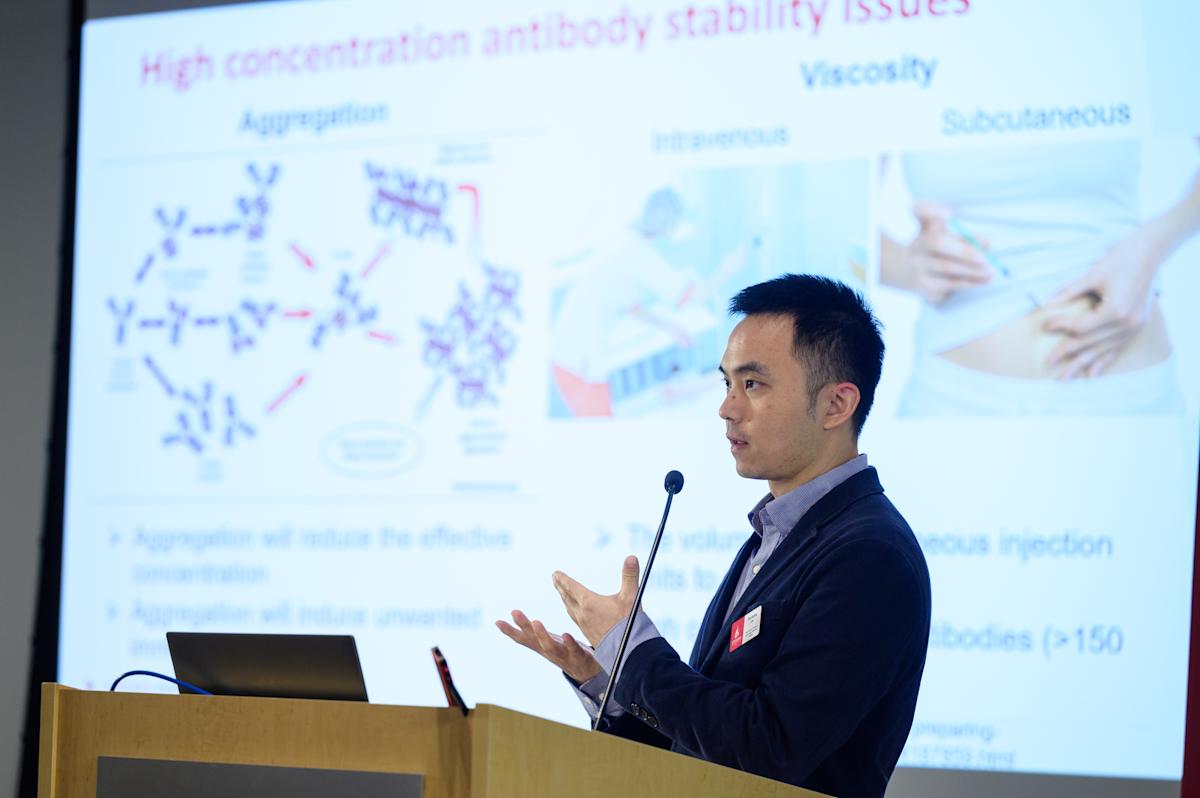 “For medicines such as therapeutic antibodies, discovering a promising molecule is only the beginning,” explained Pin-Kuang Lai, assistant professor. “We also need to understand how to produce, purify, formulate and deliver it reliably. These challenges align with our expertise in molecular interactions, process engineering and computational modeling. Our students can apply fundamental science to problems that directly affect human health.”
The team is working with the Department of Chemistry and Chemical Biology and Department of Biomedical Engineering to explore interdisciplinary program opportunities that connect molecular discovery with process development, formulation and translational medicine. Collaboration with the National Institute for Innovation in Manufacturing Biopharmaceuticals further informs industry-relevant education and provides research and workforce-development opportunities.
“Connecting academic expertise with industry needs can help us identify meaningful research questions,” Lai said, “and prepare students to contribute to the development and manufacturing of medicines.”
Engineering what’s next
After 37 years in his academic home with the Department of Chemical Engineering and Materials Science, Du is gratified both professionally and personally to lead the department through this next phase of growth.
“It has been a privilege to be part of the education and research training of generations of students who have become business leaders and innovators, research scientists and, yes, professors at major research universities,” he said.
“Going forward, I envision our department enjoying even greater national recognition for impactful education pedagogy and research discovery in a culture of excellence and collaboration. We want to be known for the success of our graduates because of their rigorous academic and research training. As we prepare tomorrow’s technology learners and leaders to succeed in an increasing variety of endeavors, I could not be more optimistic about our collective future.”
Learn more about academic programs and research in the Department of Chemical Engineering and Materials Science: