Henry Du Named Chair of Chemical Engineering and Materials Science Department
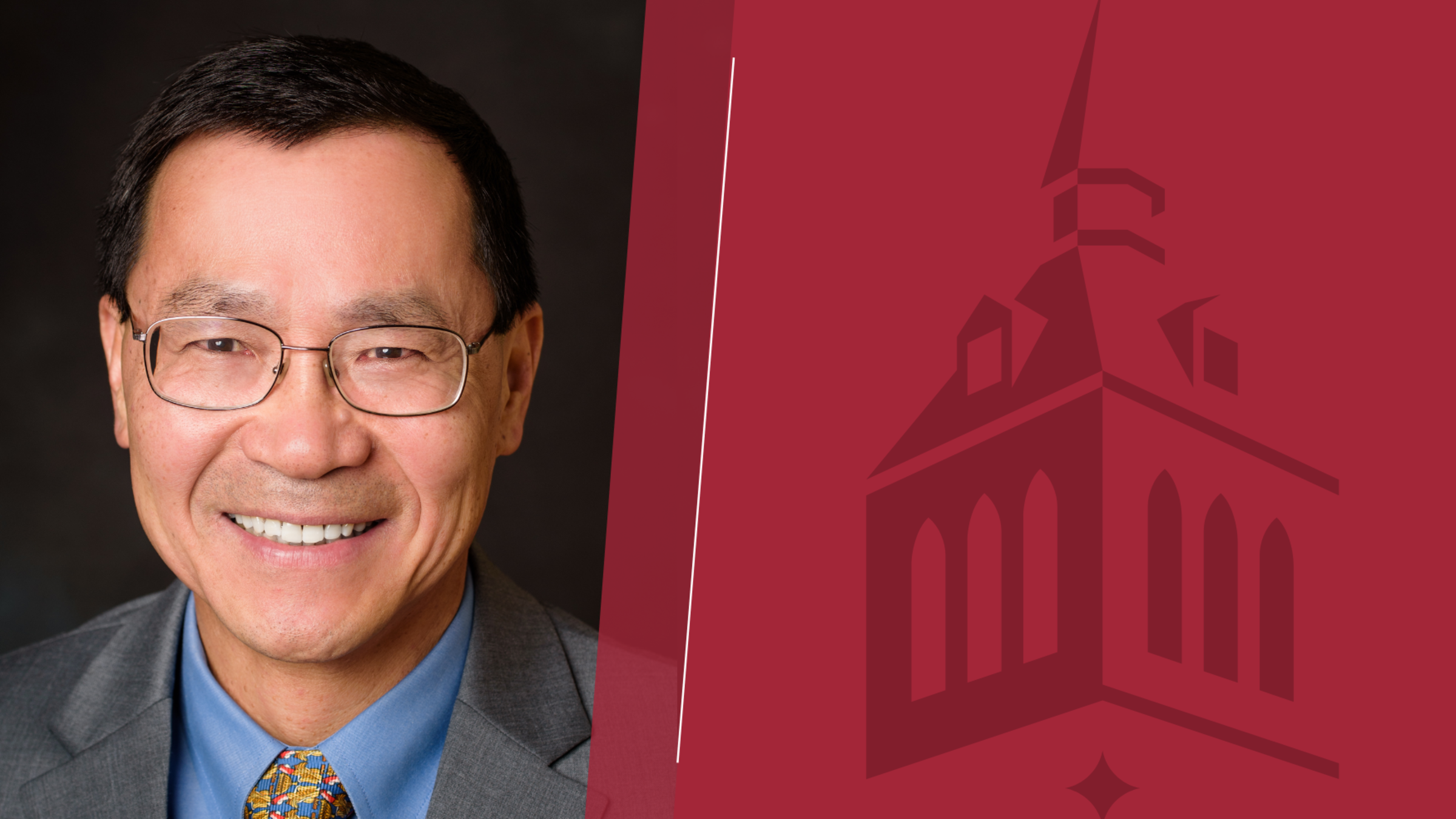
When Henry Du joined Stevens Institute of Technology as a research assistant professor in 1989, he could hardly have predicted the shape his career would take: three decades of research spanning fiber optics, plasmonics and quantum sensing, a body of work built as much on partnership as on invention, and now, a new role leading the department he's called his academic home for his entire Stevens career.
Du has been named Chair of the Department of Chemical Engineering and Materials Science, part of the Charles V. Schaefer, Jr. School of Engineering and Science.
"Dr. Du has been an exceptional leader in advancing research and faculty development across the Schaefer School," said Jean Zu, Lore E. Feiler Dean of the Schaefer School, in praise of the appointment. "His vision and dedication have strengthened our research enterprise, supported faculty at every stage of their careers, and contributed significantly to the school's remarkable growth in research activity and impact. His distinguished record as a scholar, mentor, and academic leader makes him exceptionally well suited for this appointment."
Du shared a similar sense of purpose in a message welcoming the department into this next chapter.
"Our mission is to prepare engineers and scientists with strong disciplinary foundations, critical-thinking skills, and problem-solving abilities needed to address society's most important challenges," he wrote. "We combine rigorous education with leading-edge research and an interdisciplinary approach that prepares our students to be lifelong learners and leaders in a rapidly evolving world."
Du's role draws on nearly every chapter of his time at Stevens. He rose through the faculty ranks — from research assistant professor to full professor with tenure by 1999 — and, most recently, served as Associate Dean for Research and Faculty Development for the Schaefer School. Along the way, he built a research program spanning two main areas: using engineered nanoparticles and fiber-optic sensors for chemical and biological sensing and imaging, and studying how unique quantum sensing approaches can be developed and utilized to study cancer cells and their therapeutic response — work that led to innovative technologies for healthcare applications.
That research has drawn sustained support from the National Science Foundation, the U.S. Army, DARPA and the EPA over dozens of projects, and yielded four U.S. patents. Du is also a Fellow of SPIE, the International Society for Optics and Photonics, and a two-time winner of Stevens' Jess Davis Memorial Award for research excellence.
Colleagues also point to how Du works with others. The latest example is his ongoing collaboration with physics professor Yuping Huang, a leading expert in quantum science and engineering, to develop novel quantum sensing techniques for label-free molecular identification and biomedical imaging at single- molecule or single-cell levels. For more than two decades, Du has collaborated with biomedical engineering professor Hongjun Wang, pairing Du's expertise in nanophotonics with Wang's research into photodynamic therapy, a light-based approach to treating cancer. The partnership has produced a steady stream of published research, a tie with Hackensack Meridian Health's Center for Discovery and Innovation, and doctoral students who've gone on to careers in academia, industry and entrepreneurship — the kind of collaborative approach Du expects to bring to his new role leading the department.

That vision includes a deliberate embrace of artificial intelligence — not as a shortcut, Du says, but as a tool woven thoughtfully into how students learn, create and solve problems, alongside the department's continued focus on sustainability, renewable energy, biomanufacturing and advanced materials.
The department Du now leads offers an undergraduate program in chemical engineering and graduate programs in both chemical engineering and materials science, along with a new Materials Science minor. For Du, that growth comes back to the people doing the work.
"Our outstanding faculty and motivated students bring a broad and diverse range of experiences and perspectives," Du wrote. "We foster a welcoming environment where every student can thrive — and where curiosity, collaboration, innovation, and responsible use of technology are at the heart of the Stevens experience."
Learn more about academic programs and research in the Department of Chemical Engineering and Materials Science: