Design Solutions That Matter: 8 Reasons to Study Environmental Engineering
Environmental engineering is rooted in a powerful idea: well-designed systems can protect public health, improve environmental quality, and strengthen the relationship between people, infrastructure and the natural world. For students who are curious about to contribute to solutions with lasting impact, environmental engineering offers a path that is deeply meaningful. The field combines technical knowledge, scientific understanding and system design to address complex ways infrastructure, natural systems and communities interact. Here are eight reasons students choose to pursue environmental engineering.
1. Work on Real-World Problems That Affect Daily Life
Environmental engineering centers on systems that sustain human health and community well-being. From clean drinking water and wastewater treatment to air quality, pollution prevention and the transport and control of pathogens, environmental engineers play a vital role in protecting public health, reducing environmental risks and supporting the well-being of people and the planet. Studying environmental engineering helps students understand how these interconnected systems function, how they affect communities and how they can be designed, improved and managed to address environmental needs.
2. Take an Interdisciplinary Approach to Problem Solving
Environmental challenges rarely exist in isolation, and neither do their solutions. They often involve interconnected scientific, technical, environmental, and societal factors. Environmental engineering combines science—including chemistry, biology, and physics—with engineering design to understand complex systems and develop responsible, effective solutions. At Stevens, this approach is reinforced through the Department of Civil, Environmental and Ocean Engineering, where students explore the connections among environmental systems, infrastructure, coastal and ocean processes, and the communities they serve.
3. Build a Strong Foundation in Engineering Principles
While the field focuses on environmental outcomes, it is grounded in core engineering fundamentals. Students develop skills in areas such as:
Fluid mechanics
Environmental chemistry
Biology and Microbiology
Transport processes
Systems design
Data analysis
The environmental engineering bachelor’s program at Stevens emphasizes these fundamentals, ensuring that students gain both technical depth and problem-solving ability.
4. Learn by Doing
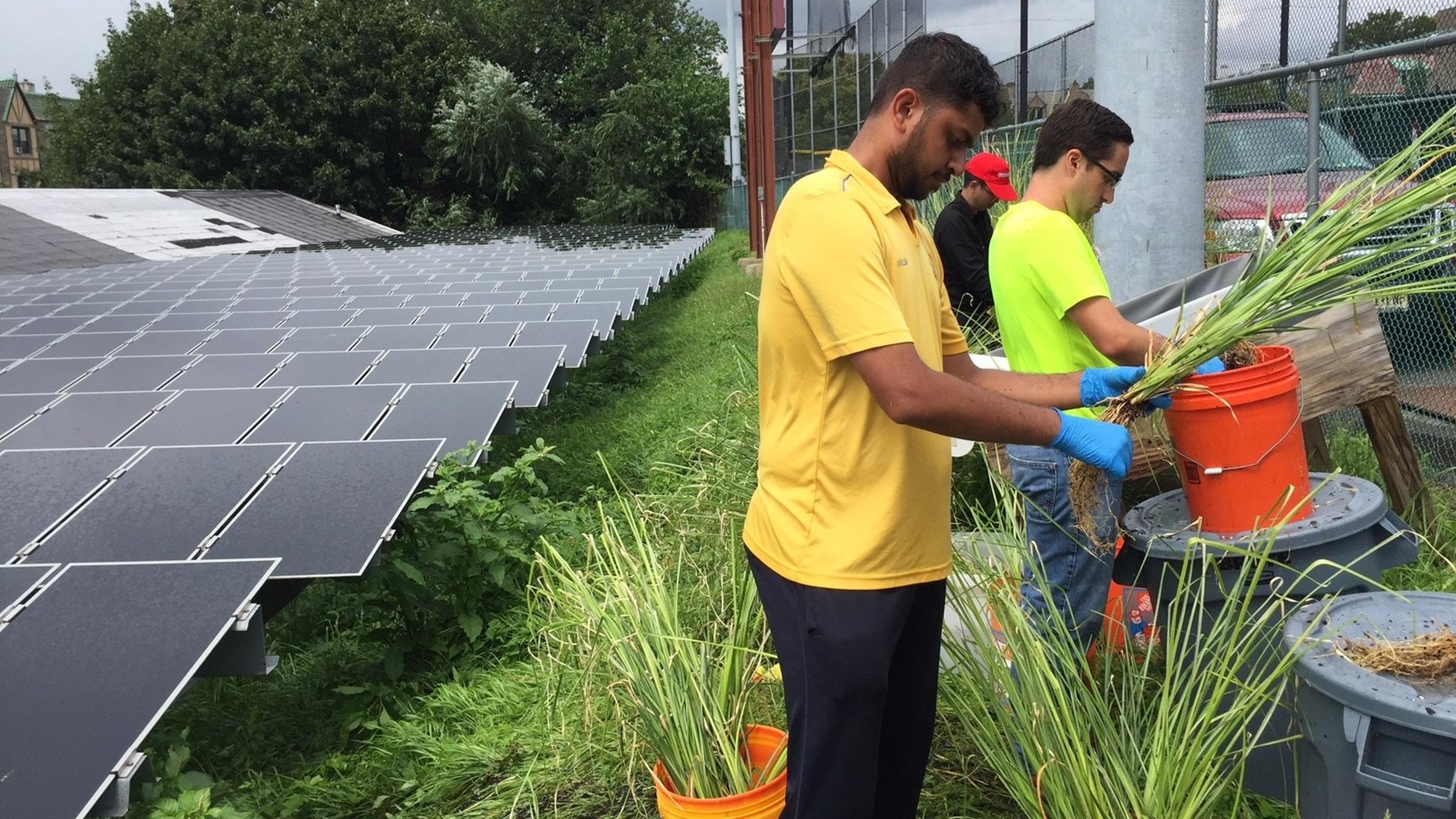
Environmental engineering is best learned through application. Students engage in hands-on laboratories, collaborative projects and design challenges that reflect real-world conditions. These experiences connect theory to practice and help students build confidence in addressing open-ended problems. This applied learning approach prepares students for the types of challenges they will encounter in professional practice.
5. Keep Your Career Options Open
Environmental engineering does not lead to a single, fixed career path. Graduates may work in areas such as:
Water and wastewater systems
Water resources and coastal systems
Environmental consulting
Air quality and pollution control
Sustainability and environmental planning
Public health and risk assessment
Regulatory, government, and public-sector roles
Infrastructure resilience and adaptation
Because the field intersects with many industries, it allows for flexibility early in your career and the ability to shift focus over time.
6. Think in Terms of Systems, Not Just Components
Environmental engineers often work at large scales, considering how systems function across cities, regions and ecosystems.
Learning to think this way helps students understand how decisions in one area can affect outcomes in another. This systems-based mindset is valuable across many types of engineering, planning and problem-solving roles.
7. Contribute to Long-Term Solutions
Many environmental engineering projects are designed with longevity in mind. Water and wastewater systems, air-quality and pollution-control systems, coastal and water-resources infrastructure, environmental restoration projects and resilience and adaptation efforts often serve communities for decades.
For students who want to work on solutions with lasting impact, this long-term perspective can be especially meaningful.
8. Stay Engaged With Evolving Challenges
Environmental engineering continues to evolve as new challenges emerge. Topics such as climate resilience, public health, resource management, pollution prevention, and sustainable development are continually shaping the field.
This creates a dynamic learning environment where students build their knowledge, adapt to new technologies and approaches and prepare to address changing environmental needs.
A Meaningful Direction for Problem Solvers
Pursuing environmental engineering is more than choosing a major. It is choosing to develop a way of thinking that combines technical depth, scientific understanding, and awareness of the larger systems that shape human and environmental health.
Students interested in this path can learn more about the Environmental Engineering program at Stevens and how it prepares graduates to design responsible solutions, protect public health, improve environmental quality and address complex real-world challenges.
Learn more about academic programs and research in the Department of Civil, Environmental and Ocean Engineering: