Engineering the Future of Our Oceans
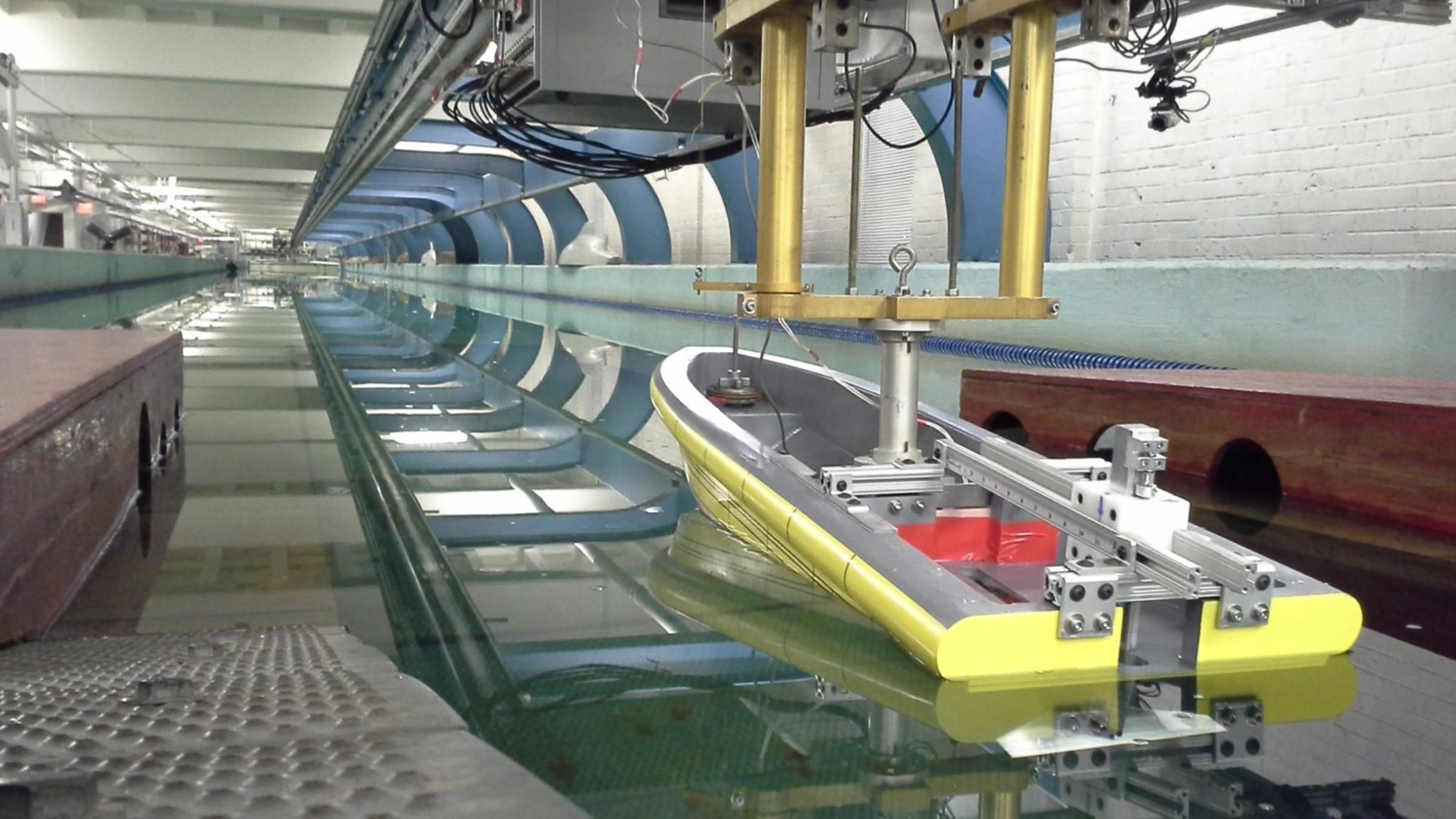
As global industries pivot toward advanced ocean technologies, maritime innovation, and resilient coastal infrastructure, Stevens Institute of Technology is expanding its engineering portfolio to meet the moment.
Starting in Fall 2026, the university will offer a new Bachelor of Engineering in ocean engineering, a program designed to prepare engineers, professionals, and future industry leaders to address technological challenges associated with modern ocean systems and infrastructure.
Housed within the Department of Civil, Environmental and Ocean Engineering (CEOE) with classes taught by world-renowned professors, this new major builds on and expands the university’s long-standing naval engineering concentration. By elevating the curriculum to a full degree, Stevens becomes the only university in New Jersey to offer this specialized path, supporting critical sectors in national defense, renewable energy and coastal resilience.
 "The degree provides a strong and forward-looking foundation that prepares graduates for career opportunities in advanced marine technology, coastal resilience and the responsible development of ocean resources," says Muhammad Hajj, Department of Civil, Environmental and Ocean Engineering chair, George Meade Bond Professor of Ocean Engineering and director of the Davidson Laboratory, one of the nation’s oldest and most respected hydrodynamics and ocean engineering research facilities. "It is grounded in the long-standing legacy of the Davidson Laboratory, whose innovations in marine hydrodynamics and coastal processes have contributed to the development of impactful ocean and coastal technologies that support a wide range of maritime industry sectors and coastal communities."
One Degree, Three Pathways
To address the breadth of the maritime field, students can choose from three distinct concentrations:
Marine technology (naval architecture): Developing expertise in hydrodynamics, ship design and structural integrity of marine vessels, this concentration prepares students for careers in the design and analysis of naval and commercial ships, offshore platforms and advanced maritime systems, often in collaboration with defense organizations and government agencies.
Coastal engineering and resilience: Focusing on shoreline protection through both traditional approaches and Nature-Based Solutions, as well as coastal infrastructure design and hazard mitigation, this concentration prepares students for careers that include developing solutions for erosion control and storm‑surge protection, contributing to resilient waterfront and port development projects and supporting sustainable coastal redevelopment in ways that safeguard coastal communities and critical infrastructure.
Marine energy: Addressing the growing demand for offshore energy systems, this program equips graduates to work on the design and analysis of wave energy converters and tidal energy systems, in preparation for careers that include the design, operation and maintenance of offshore energy infrastructure, including vessels, floating systems and subsea power and support systems.
Meeting National Demand Through an Integrated Approach
Stevens is uniquely positioned to fill a critical national workforce gap. The program aligns with federal initiatives like the SHIPS for America Act and responds to a growing national demand for maritime talent — and while the U.S. Bureau of Labor Statistics projects that employment for marine engineers and naval architects will grow 6% through 2034, few universities have the facilities and research infrastructure to support this growth.
“Across all concentrations, students will be introduced to the integration of artificial intelligence and data-driven methods to enhance modeling, design and decision-making in complex marine systems to position the graduates at the forefront of next-generation maritime engineering,” says Hajj.
Another defining feature of the program is its integration within the broader engineering framework at Stevens. Because ocean engineering sits at the intersection of environmental science and structural design, students will benefit from a multidisciplinary education.
"For example, coastal protection is inherently an environmental problem involving waves, sediment transport and ecosystem response, while the design and construction of coastal and offshore infrastructure are fundamentally civil engineering challenges," Hajj explains. "These concentrations and their integration provide a rigorous, application-driven education that equips graduates to connect environmental processes and structural design with marine systems. This integrated skillset is critical for addressing complex challenges at the land-sea interface and positions our graduates to lead in maritime innovation.”