Stevens Launches New Master’s in Aerospace Engineering
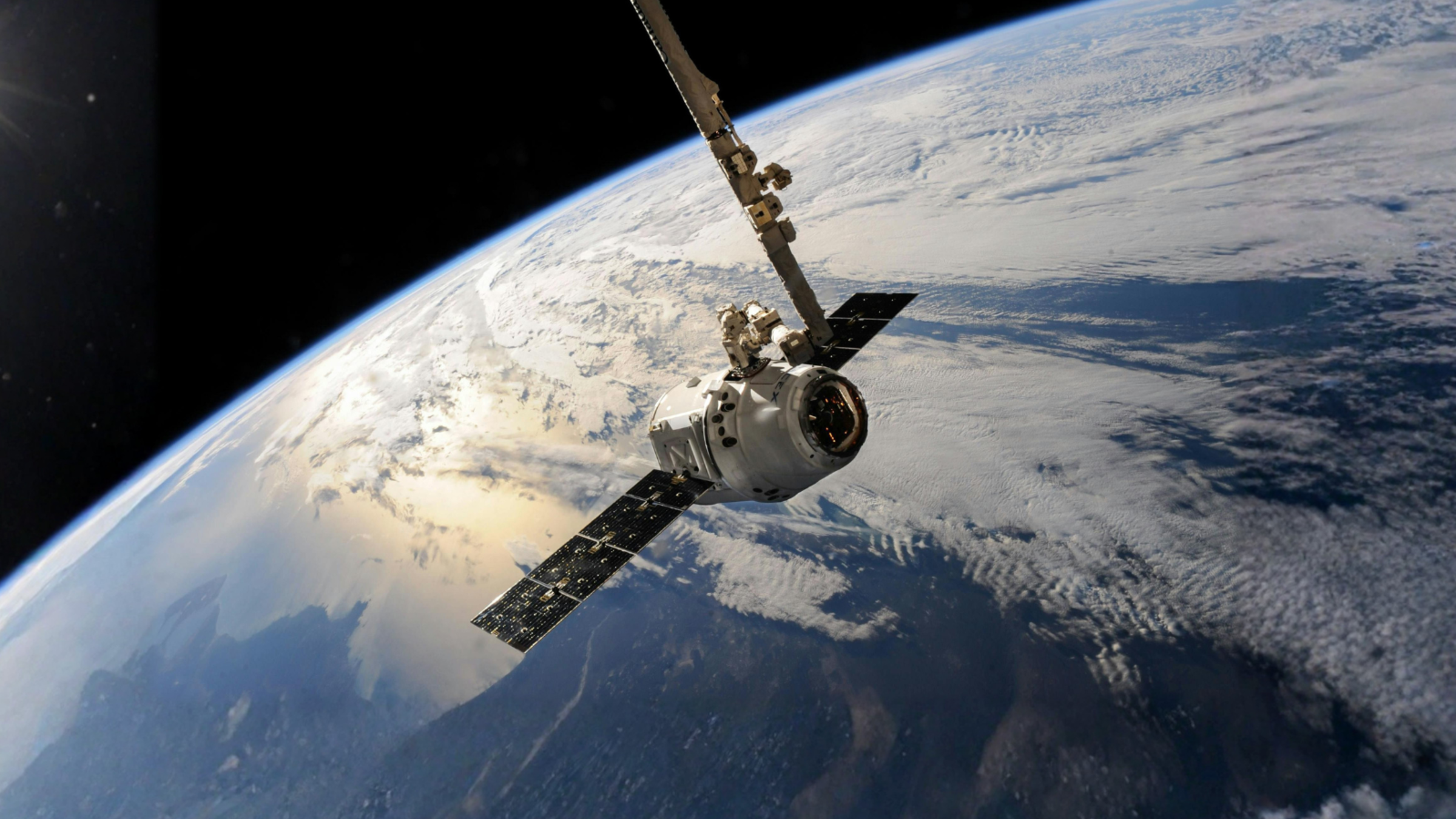
As the aerospace industry experiences massive growth — marked by the emergence of commercial space companies, small and large, and high-profile missions like Artemis II — Stevens Institute of Technology is meeting the moment.
Launching in Fall 2026, the new master’s in aerospace engineering program is designed to provide students with the specialized training needed to thrive in this rapidly evolving field.
A Multidisciplinary Foundation for a High-Growth Industry
Assistant professor Jason Rabinovitch, who led the effort to introduce the degree and previously worked at the NASA Jet Propulsion Laboratory, emphasizes that the program builds on an engineering foundation. “It’s valuable for students to have foundational training in a core engineering discipline and then specialize in aerospace at the master’s level," he says. “There’s been more student interest, more courses offered and more project research opportunities, so it felt like the right time to formalize the program.”
The curriculum integrates rigorous graduate-level training in the disciplines that drive the aerospace, defense and space industries — fluid mechanics, solid mechanics, control theory and space mission design — integrated with modern applications in aerodynamics, propulsion, space systems and AI-enabled engineering analysis.
The courses are taught by industry-connected faculty who are doing cutting-edge research, much of it funded by NASA and other government agencies. Also, because of the interdisciplinary approach, students will learn from faculty experts across a variety of fields, including robotics, AI, scientific computing, vibrations and hypersonics and aerothermodynamics.
Career Outlook and the Stevens Advantage
The demand for aerospace expertise is surging across both the commercial and government sectors. Graduates of the program will be prepared for a variety of high-impact roles, including aerospace engineer, propulsion engineer, systems engineer or mechanical engineer.
“Our master’s program is designed to ensure that students are able to learn how to apply fundamental engineering principles to the unique and challenging space environment. This will provide them with the professional training needed to succeed at any number of jobs at an aerospace company,” Rabinovitch says.
Beyond technical skills, the program is infused with AI electives to ensure graduates can navigate the technological disruptions currently shaping the marketplace. Whether it’s monitoring climate change through Earth observation or supporting the push for data centers in space, Stevens graduates will be at the forefront of what’s next.
“The industry is moving so fast, with the increase of startups, and small satellites companies and new technologies, and the government’s need for national security monitoring,” Rabinovitch says. “We’re developing easier access into space, exploration missions to space and more communications satellites, all of which present an in-demand need for aerospace expertise and this program can meet that need.”