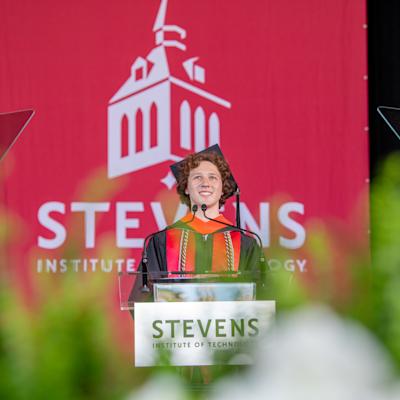
From soft robotic gloves to a hip-hop album, the Class of 2026 showed the Stevens community what four years can build
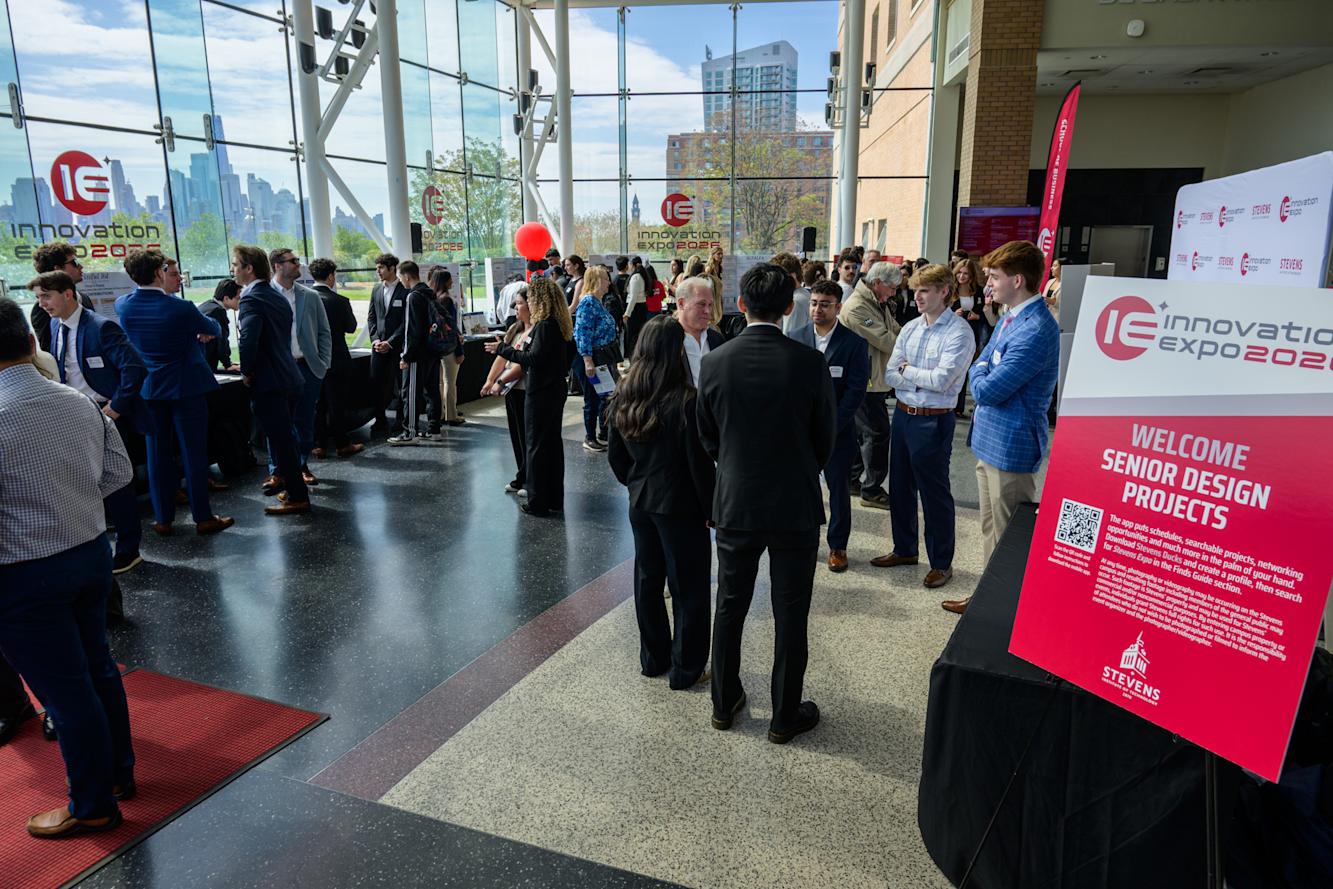
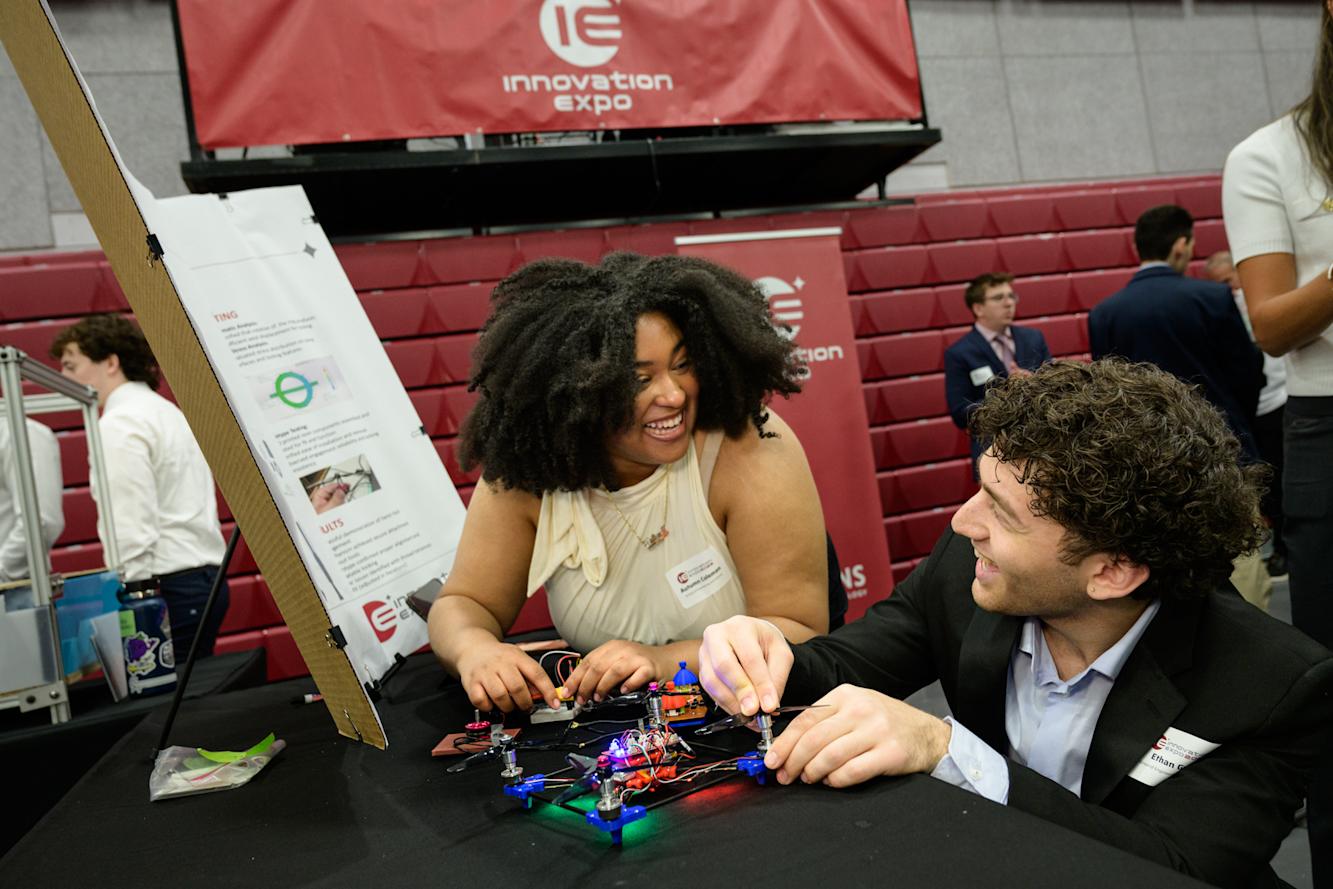
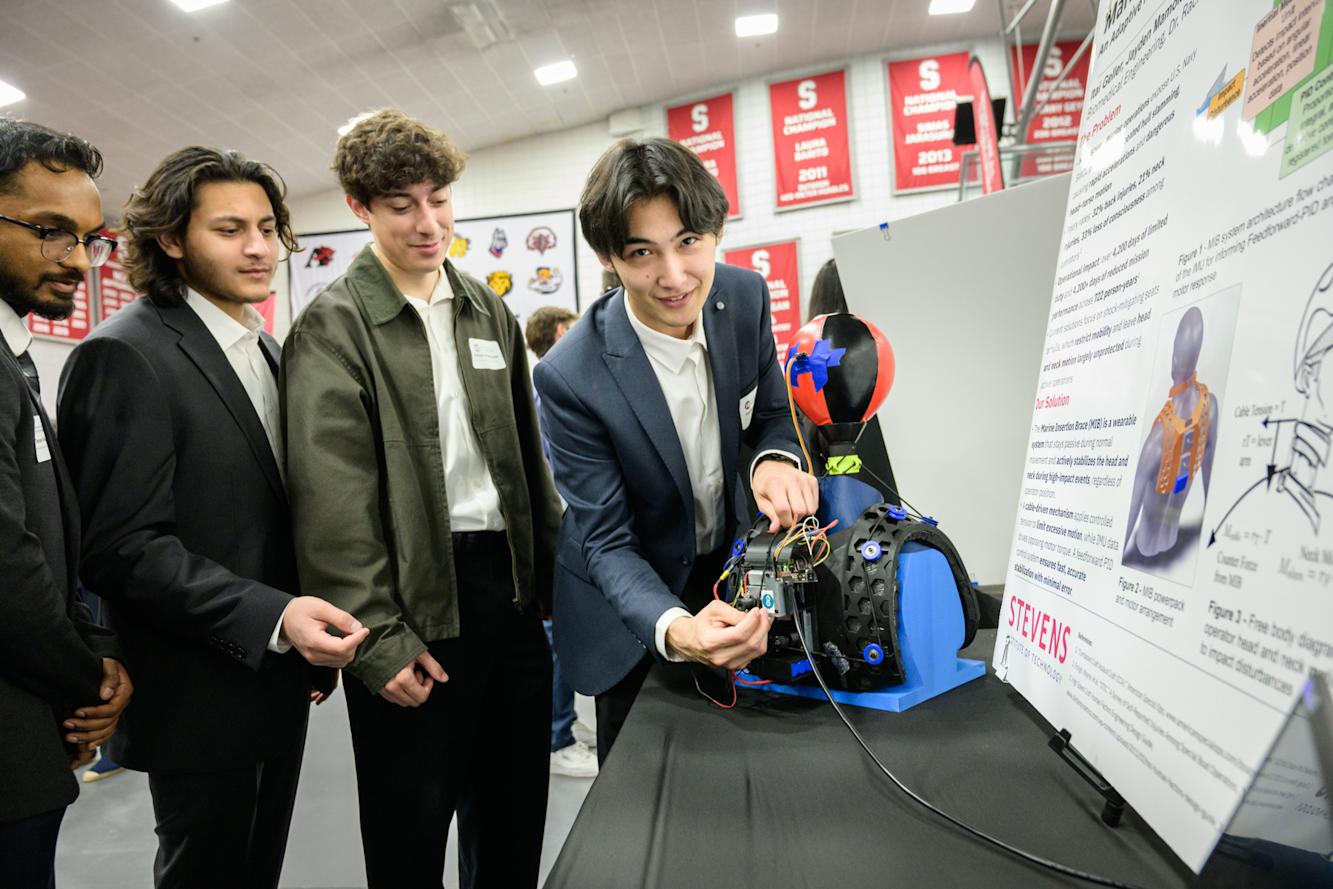
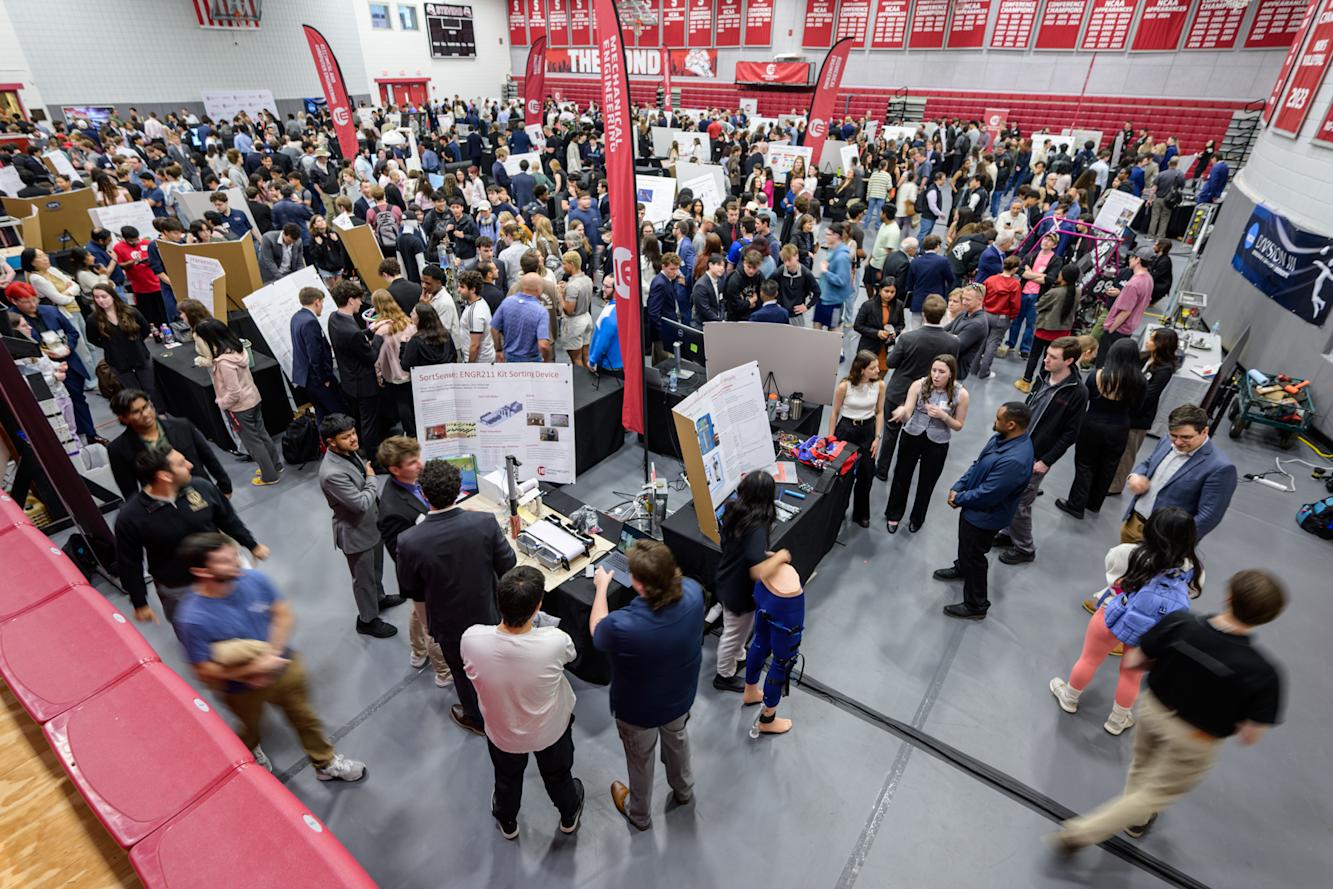
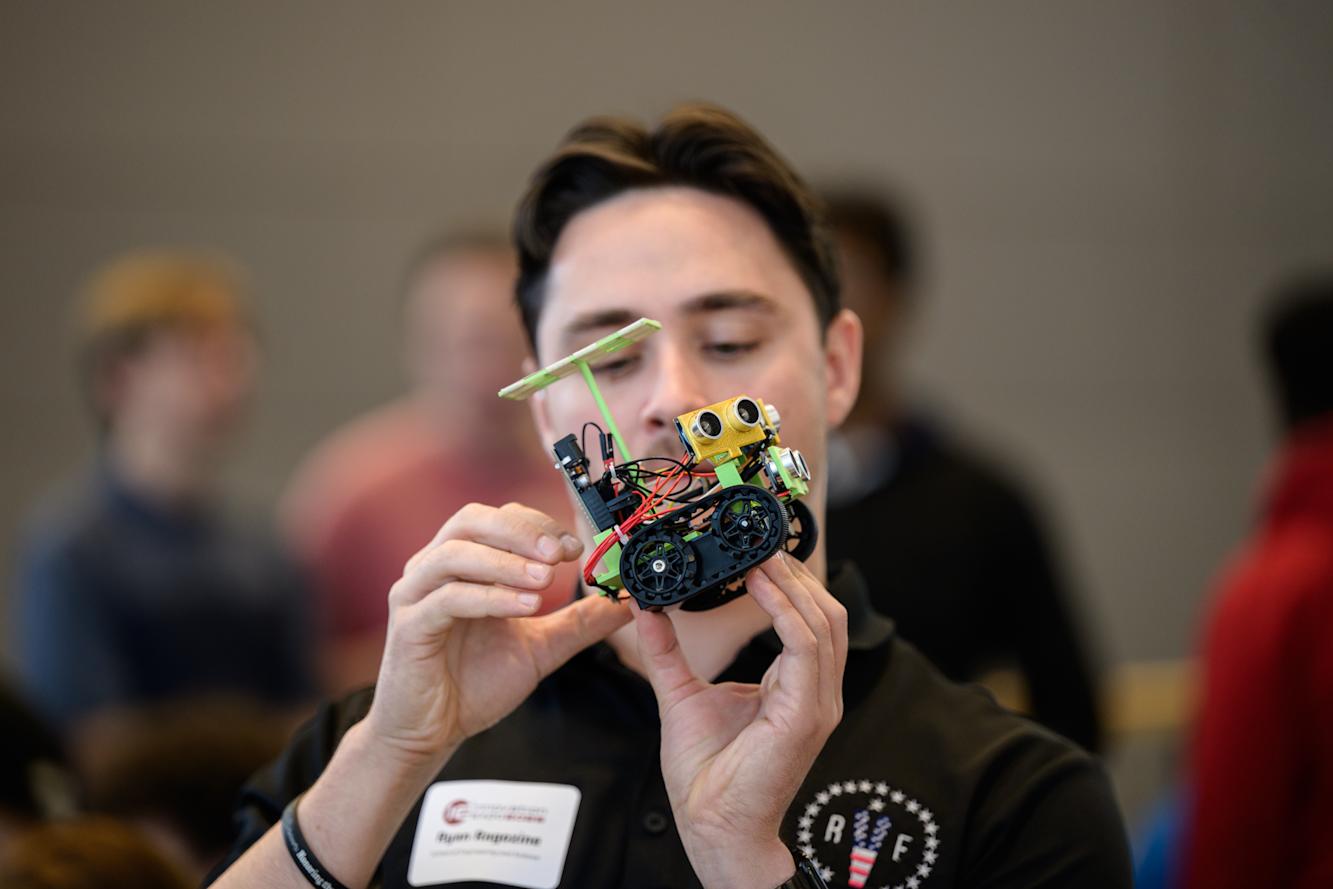
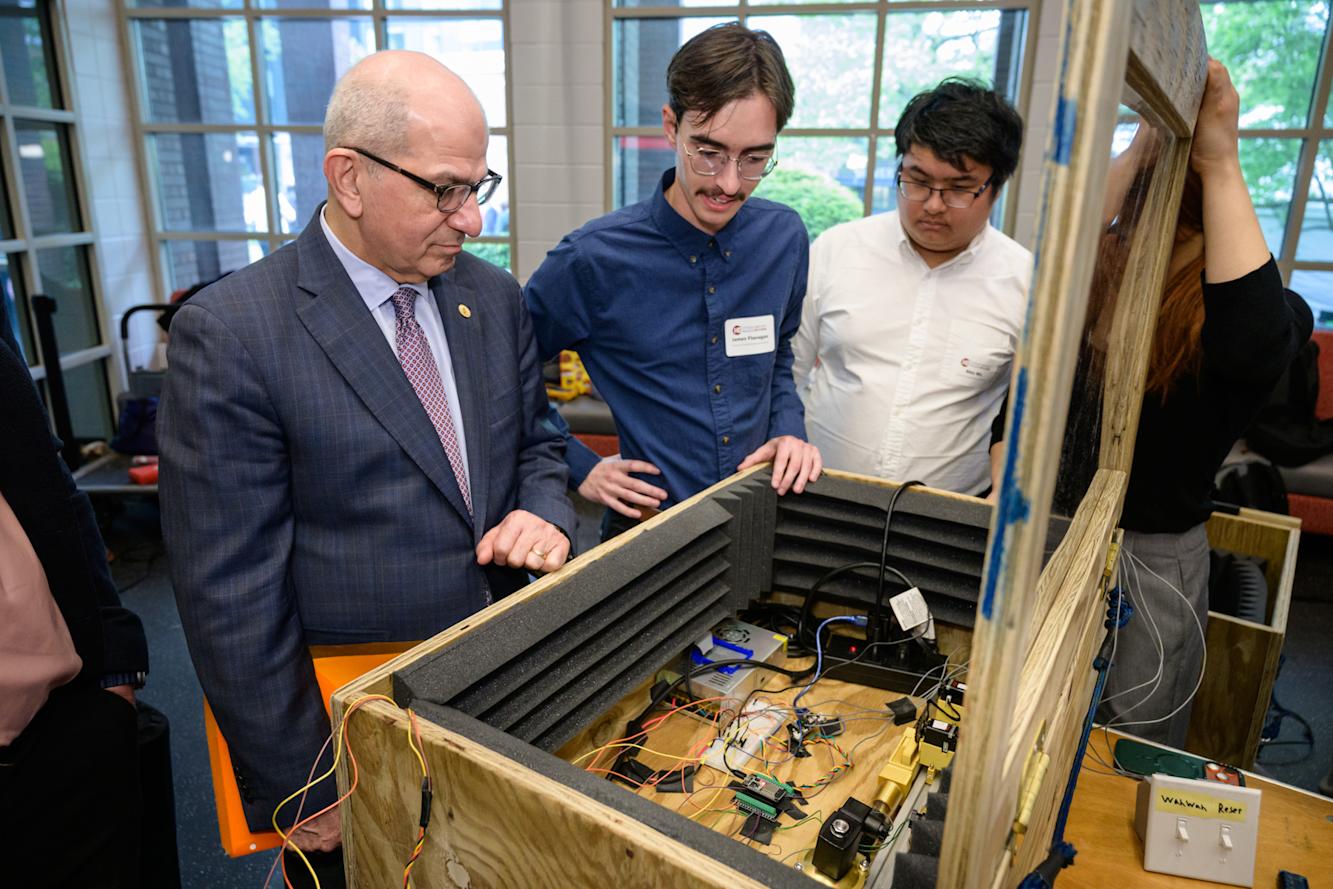
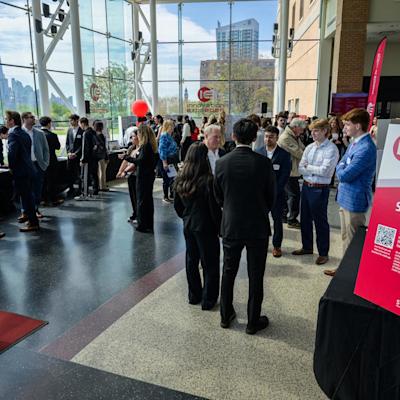
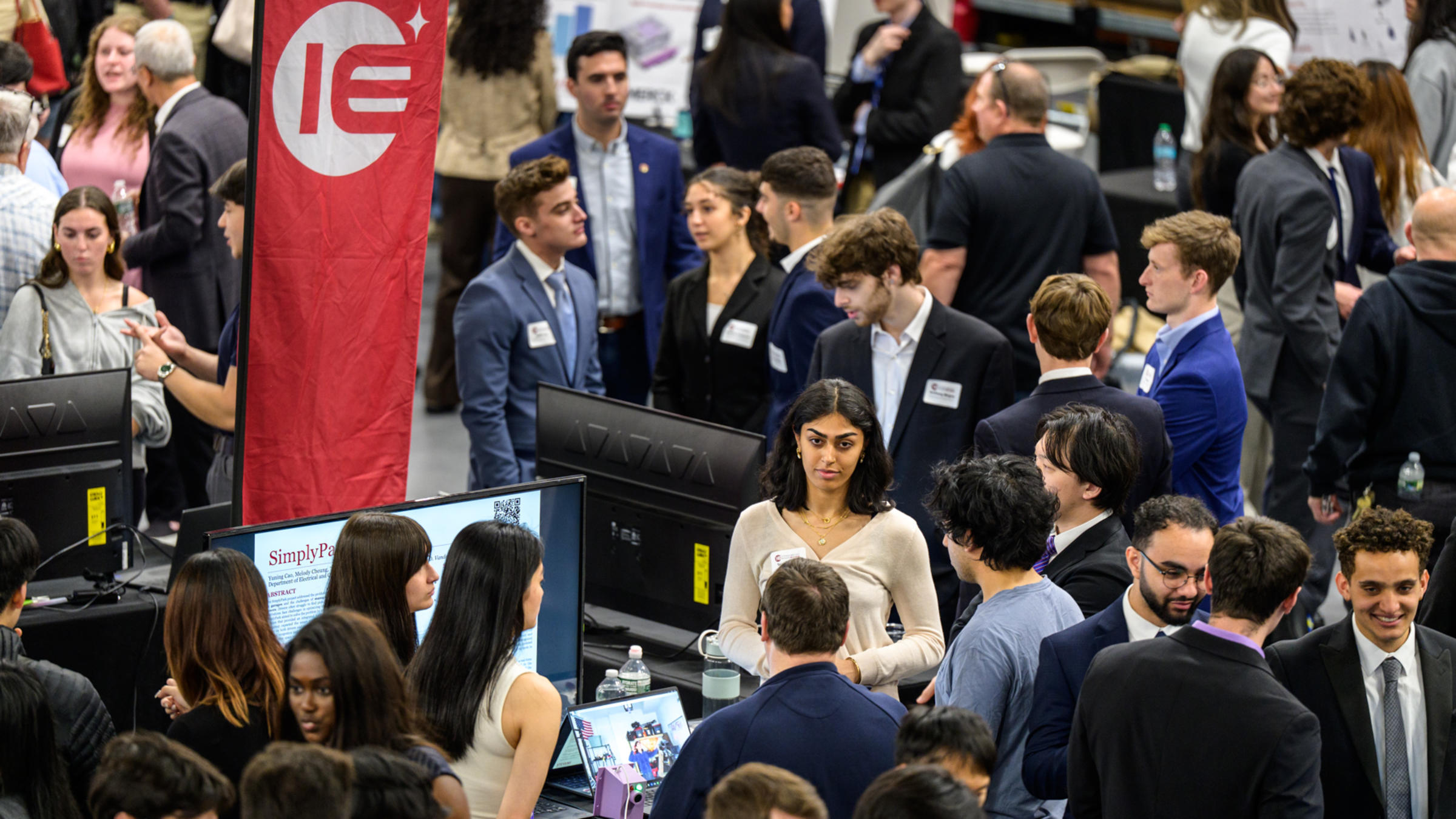
Canavan Arena had a convention vibe by mid-morning. Every table had visitors. Faculty, staff, parents and students leaned in over prototypes and posters, asking the questions that for many seniors had been a year in the making. By 11 a.m. on Friday, May 8, the room was full and loud and exactly what Innovation Expo is supposed to look like.
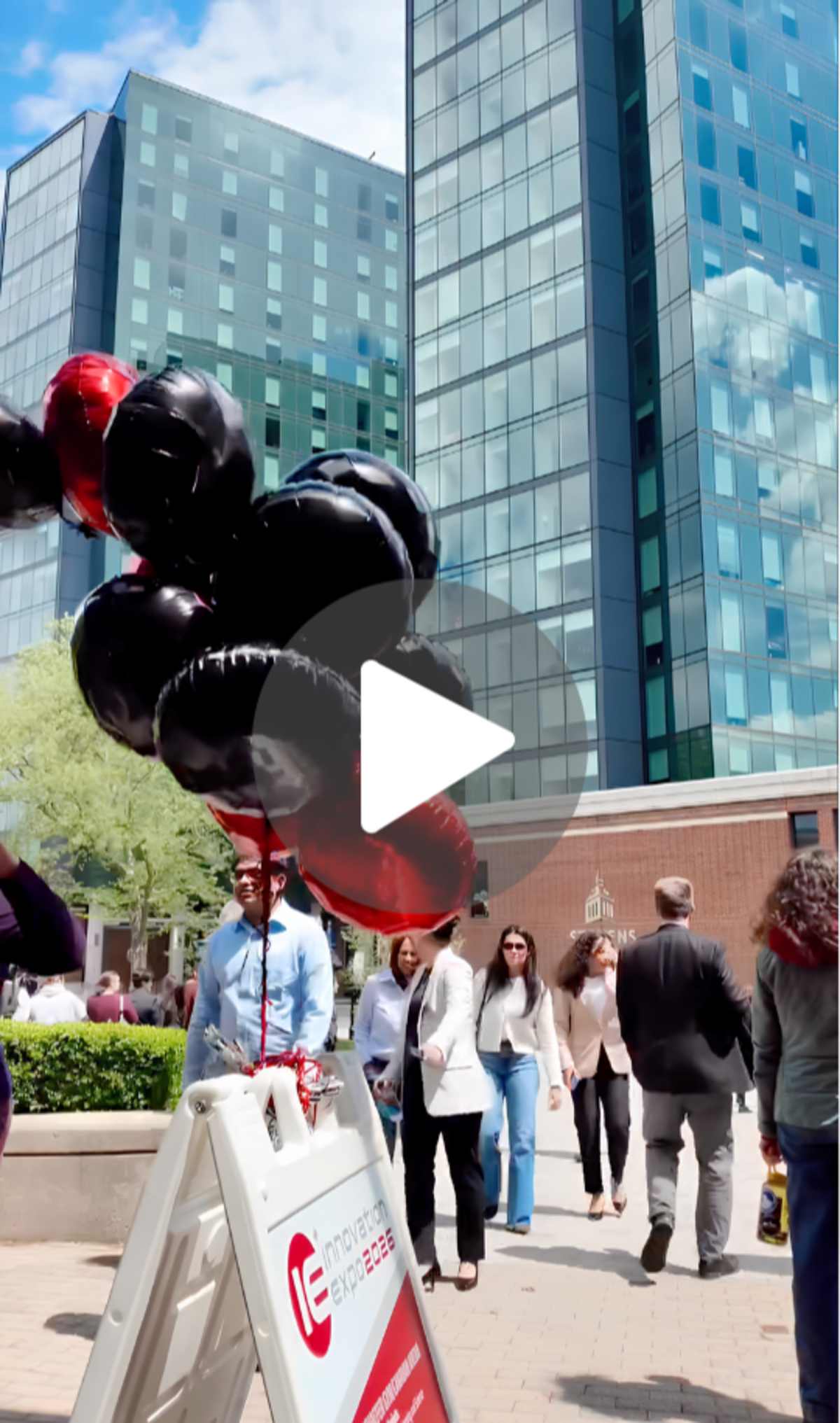
Across 14 venues, nearly 1,000 graduating seniors presented work spanning every department at Stevens Institute of Technology — from biomedical devices and autonomous systems to economic research, original artwork, business consulting engagements and live music performances. More than 100 of those projects were developed in partnership with a corporate sponsor, government agency or community client, meaning students were tested against real expectations by real organizations before they crossed the stage.
Among the seniors on the floor was Robert Olson ’26, a chemical and environmental engineering student whose team designed a bimetallic nickel catalyst to convert palm oil into sustainable aviation fuel. “This is the first time I really applied theoretical knowledge practically to a real-world problem,” Olson said in a feature on the project — a sentence that, on Expo day, could have come from almost any senior at almost any table.
By mid-afternoon, having walked the floor and talked with students across all three schools, President Nariman Farvardin offered an assessment.
“This event keeps getting better and better every year. This class has set a remarkably high bar,” Farvardin said. “As I was walking around campus talking to students, I felt inspiration, energy and hope about the future. This is enough to keep me going for a whole year.”
A morning conversation on leading through uncertainty
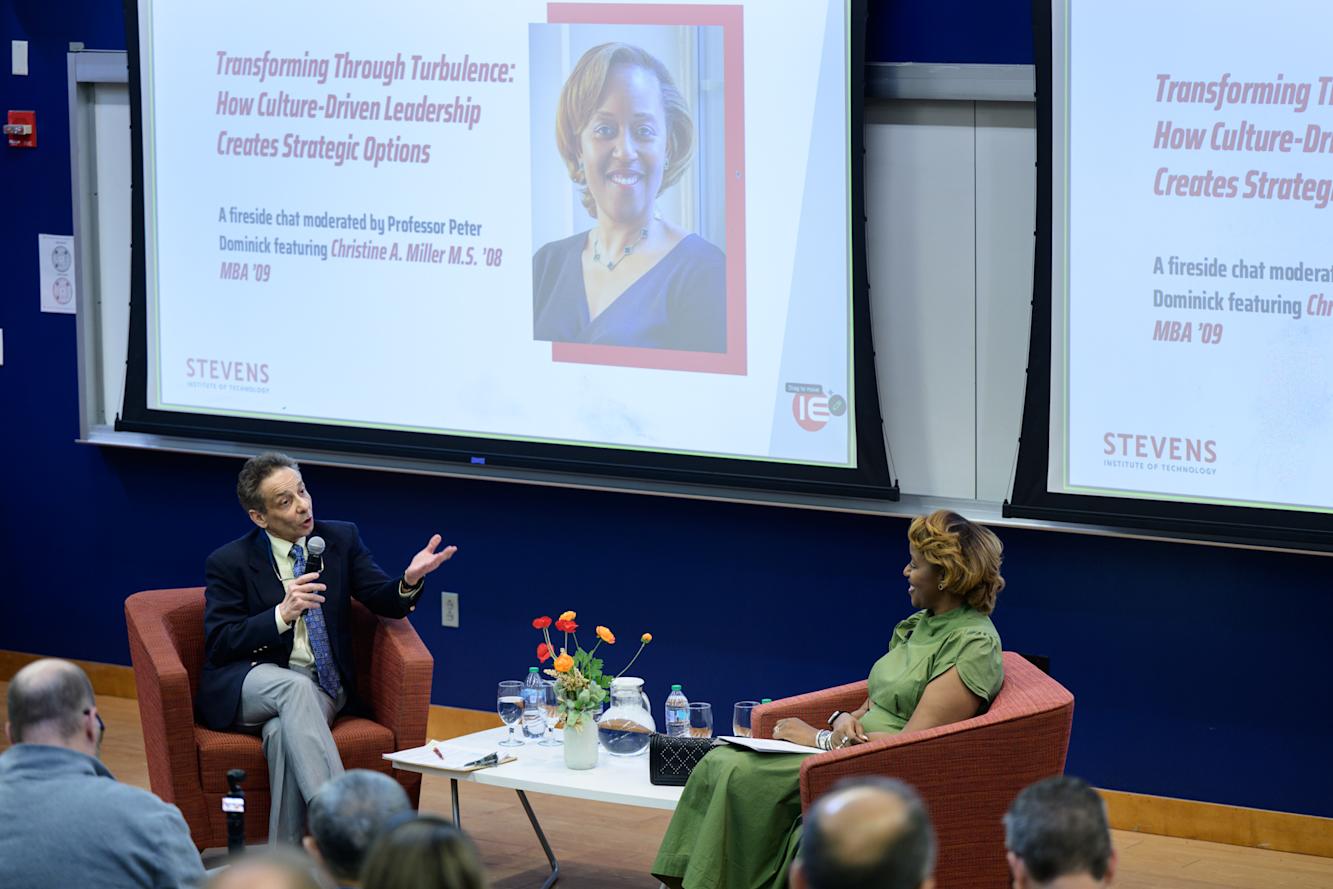
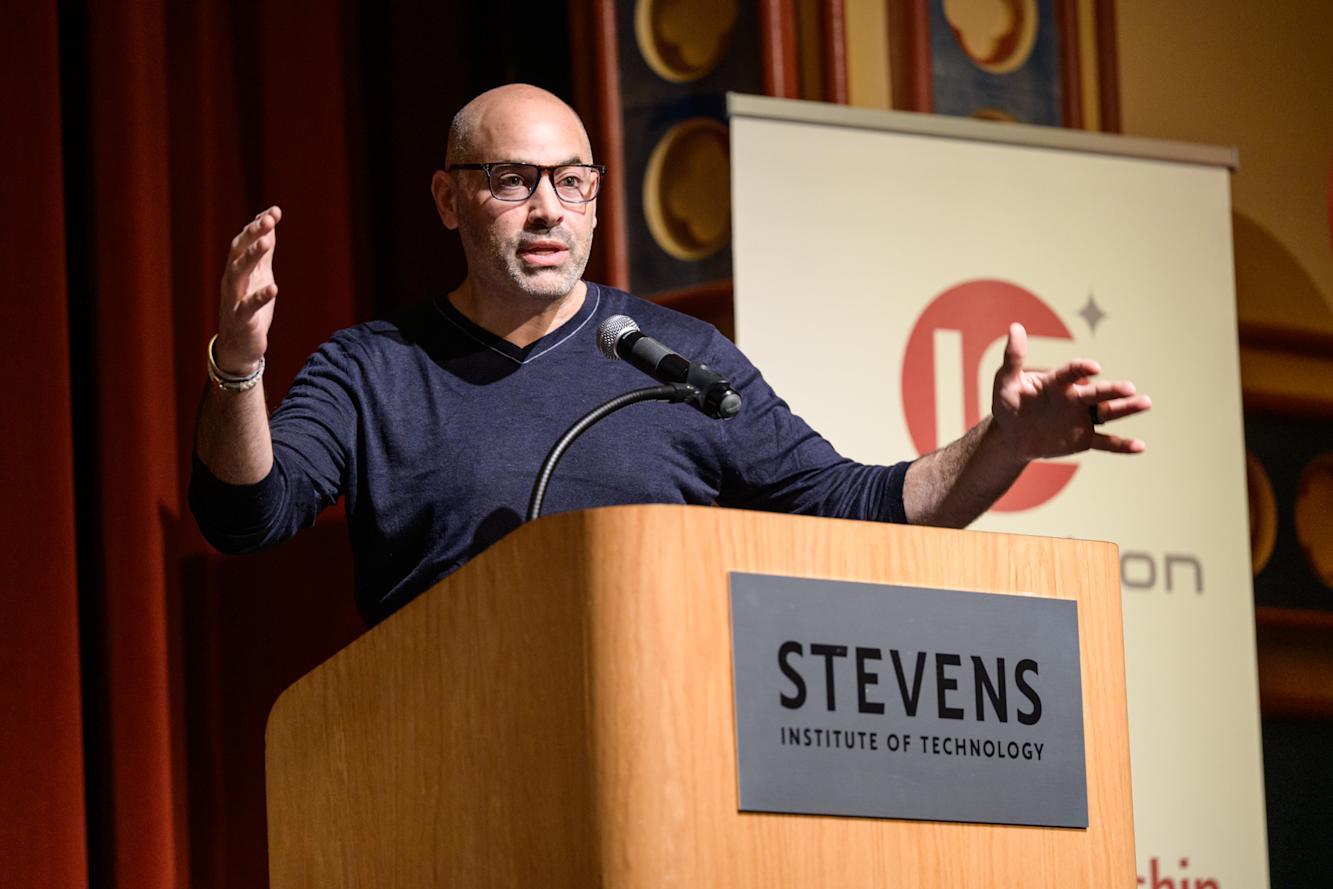
The day opened with the Thomas H. Scholl Lecture by Visiting Entrepreneurs, this year a fireside chat between alumna Christine A. Miller M.S. ’08 MBA ’09 and Stevens School of Business professor Peter Dominick titled “Transforming Through Turbulence: How Culture-Driven Leadership Creates Strategic Options.” Miller, a life sciences executive who most recently served as president and CEO of Melinta Therapeutics, walked the audience through the people-first leadership philosophy that guided her there. Under Miller’s leadership, Melinta transformed from a pure-play antibiotics business into a leader in the hospital acute care market, nearly doubling revenue, securing multiple FDA approvals and achieving sustainable profitability — work that positioned the company for a successful strategic acquisition in August 2025. Earlier in her career, she held senior global leadership roles at Sandoz, Actavis and Merck.
Miller credited her own Stevens education with preparing her for the uncertainty that has defined her career.
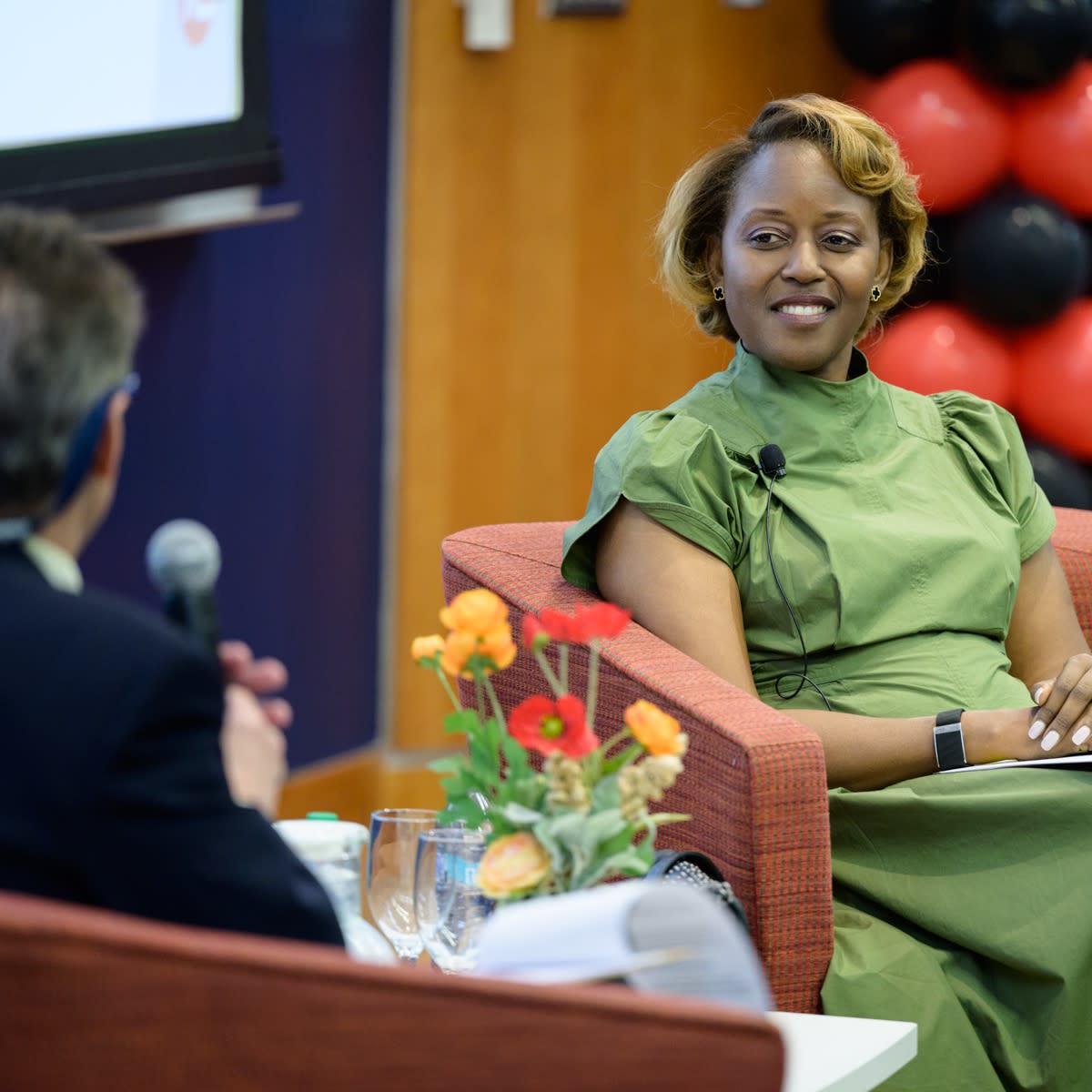
"Stevens sets you up for so much success. This institute teaches you how to think critically, how to act strategically and how to overcome obstacles — you get that as a Stevens student," said Miller. "You leave here being able to do that."
An afternoon of first-year robots, performances and pitches
While seniors took the spotlight, the Gallois Autonomous Robot Competition gave Stevens’ first-year engineers a stage of their own. Established by Dr. Bernard Gallois — the former Schaefer School of Engineering and Science dean who, during his tenure from 1996 to 2002, conceived of the eight-course design spine that remains a hallmark of an SES education — the competition is the capstone of the first-year design experience. Three-student teams spent the spring semester building autonomous robots to navigate a model of the Stevens campus. On Expo day, finalists were handed a brand-new path and 15 minutes to recode. First-year students, in other words, getting their first taste of the design-build-test rhythm that will carry them through to the senior projects on display elsewhere on campus today.
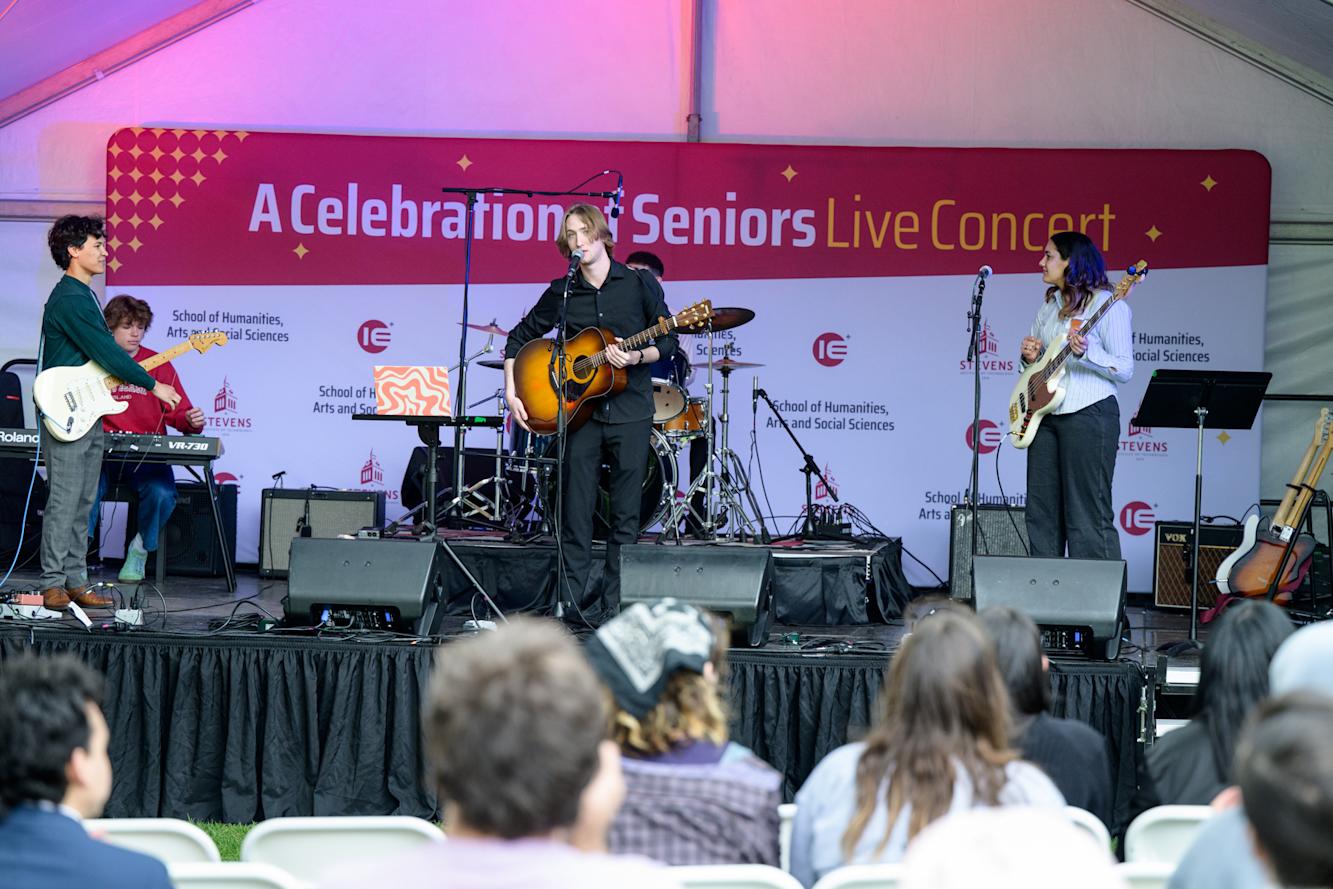
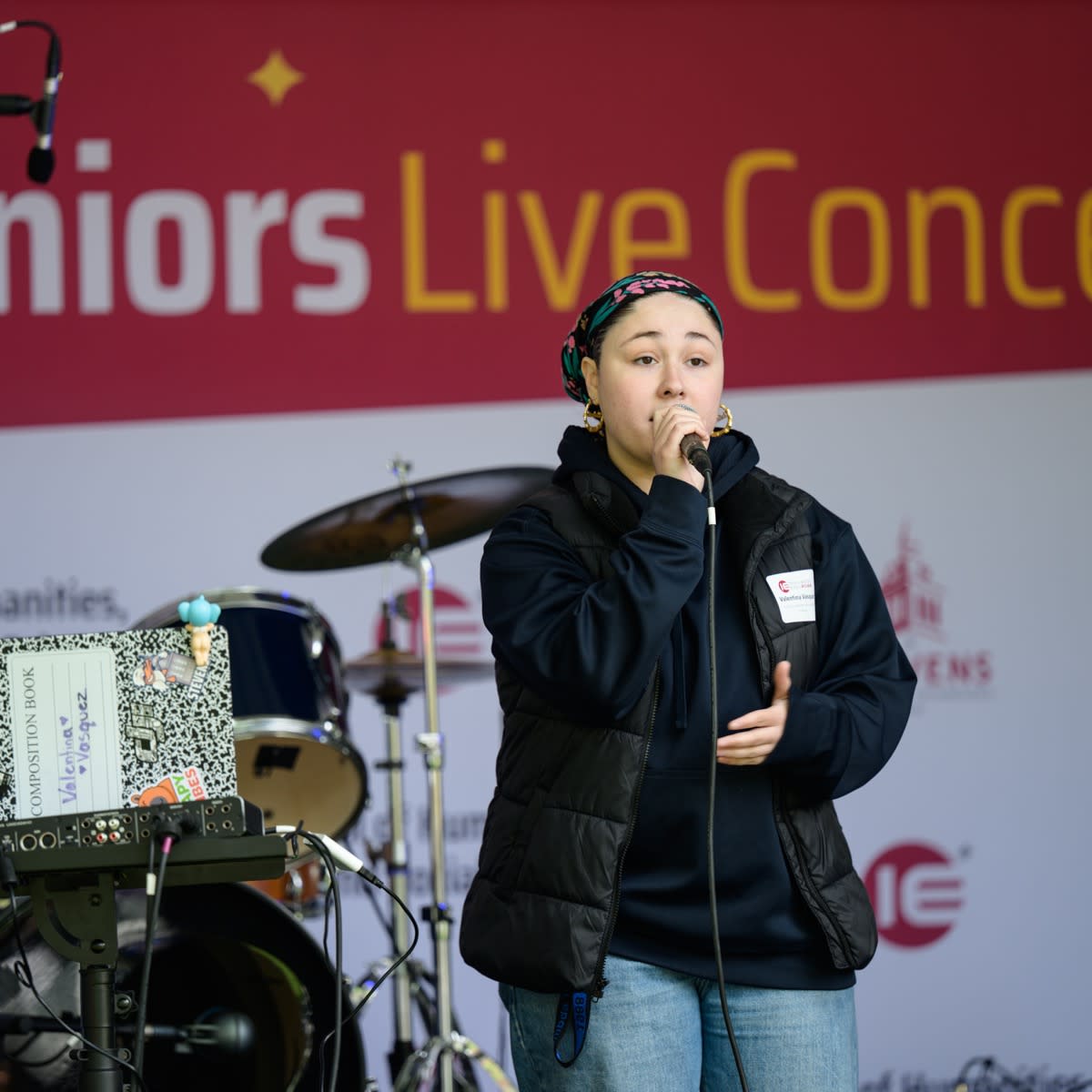
On Schaefer Lawn, the School of Humanities, Arts and Social Sciences staged its annual Celebration of Seniors Live Concert. Among the performers was music and technology student Valentina Vasquez ’26, a.k.a. ValienteTheArtist. Her debut single, “Excited,” released earlier this year, earned airplay on TripleThreatRadioFM and led to radio interviews and bookings. Her senior thesis, an album titled La Flor Del Barrio, is set for release on May 31.
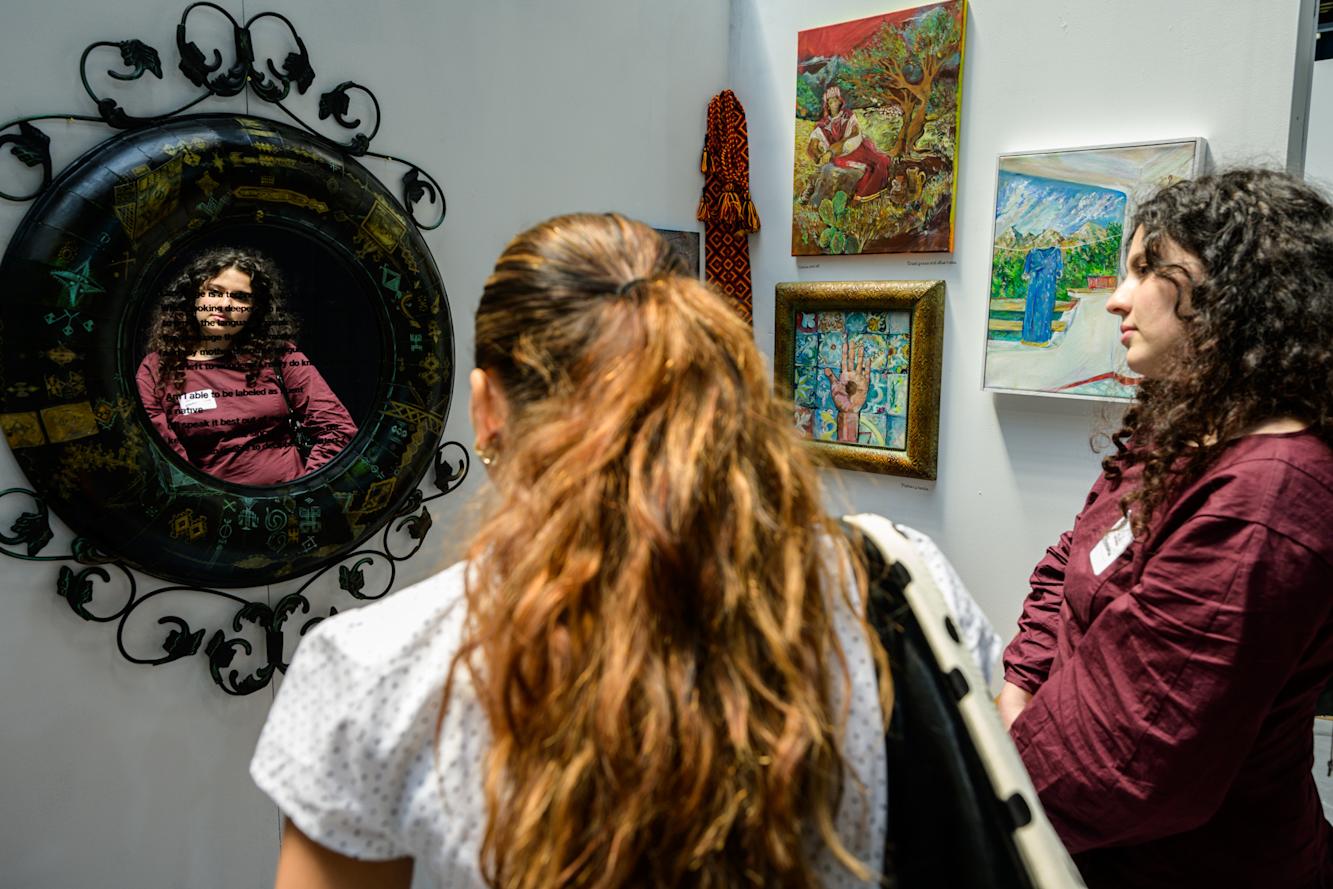
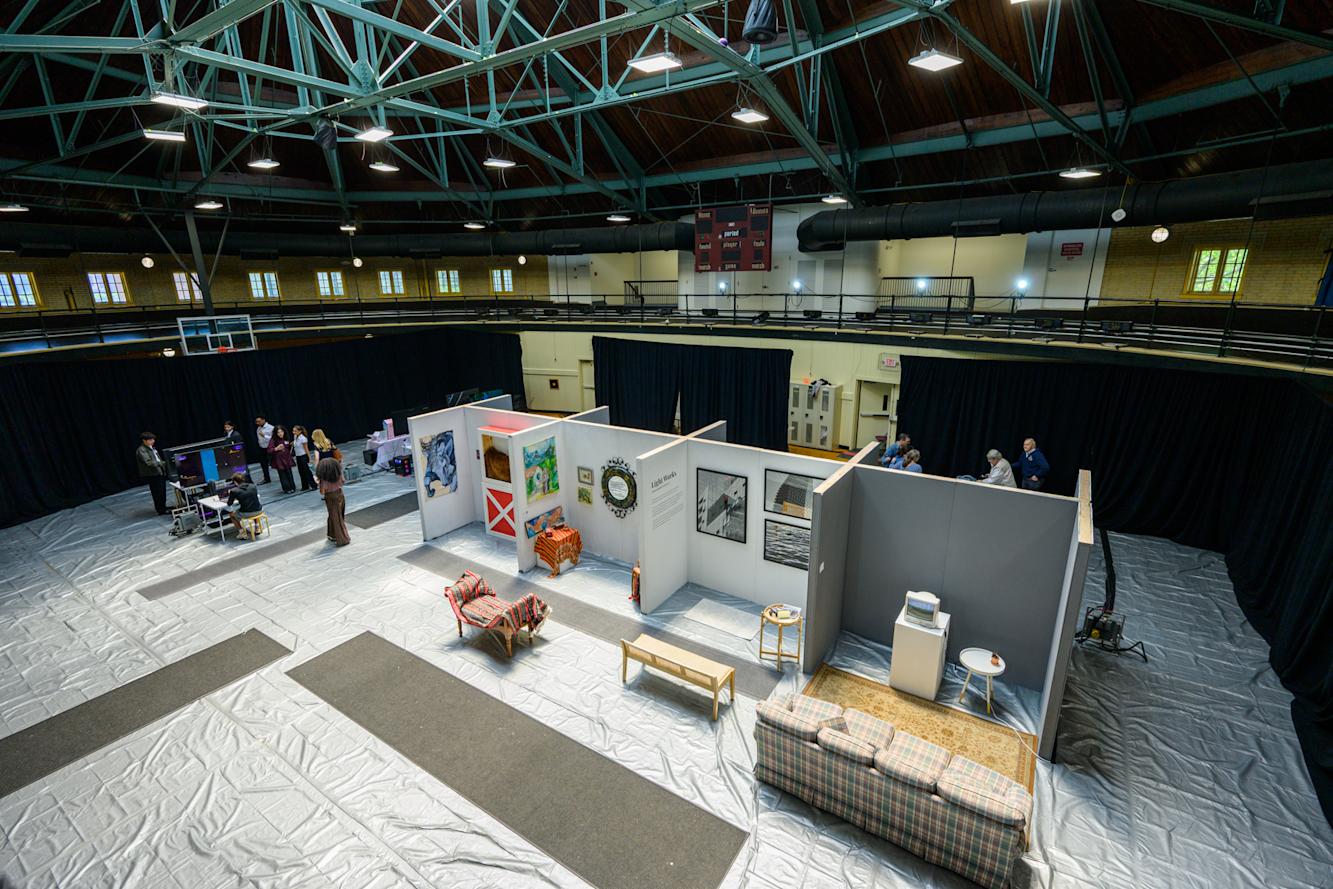
Down the hill in Walker Gym, the Ebb and Flow student art exhibition ran from 9 a.m. to 9 p.m., bookending the entire day with student visual work.
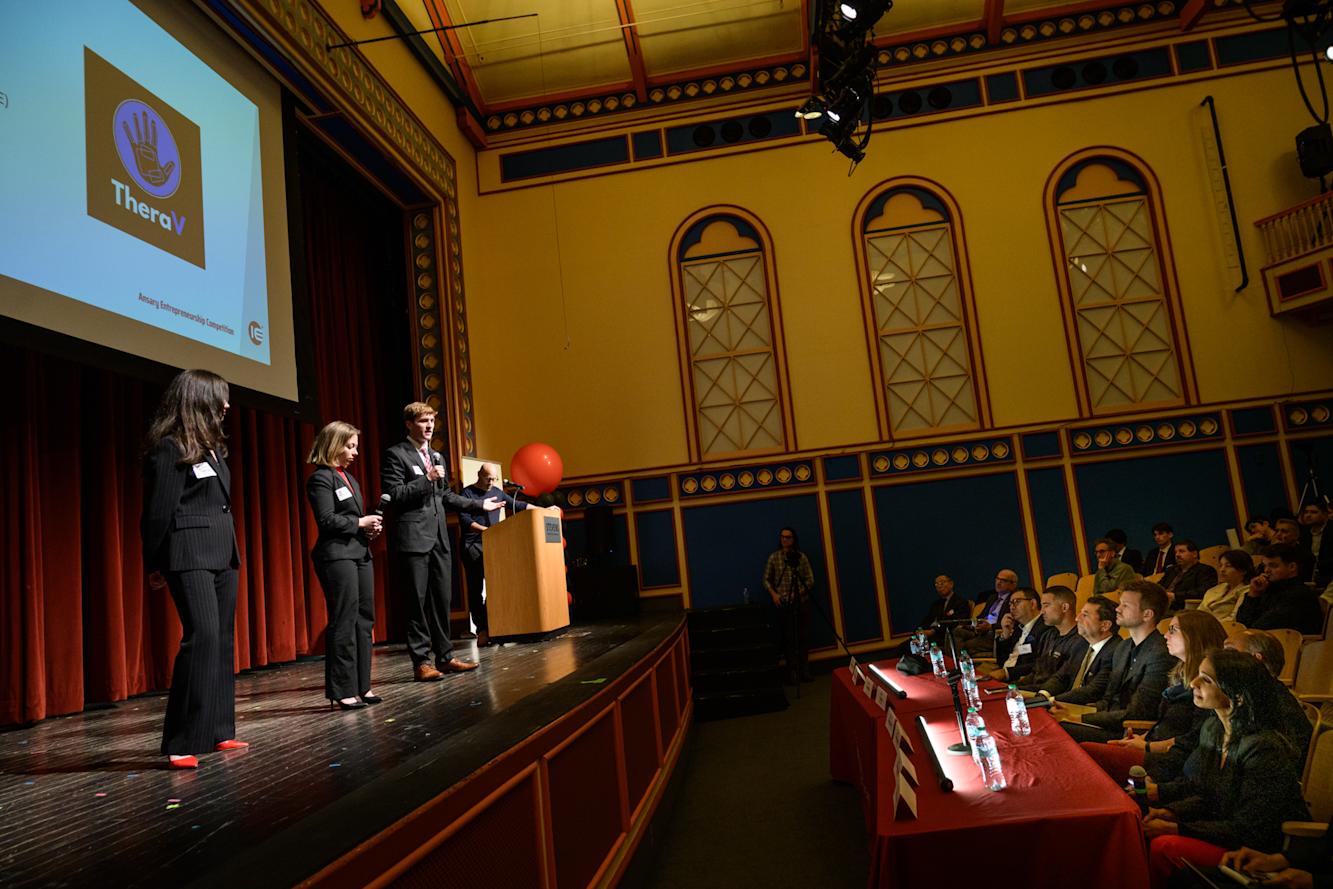
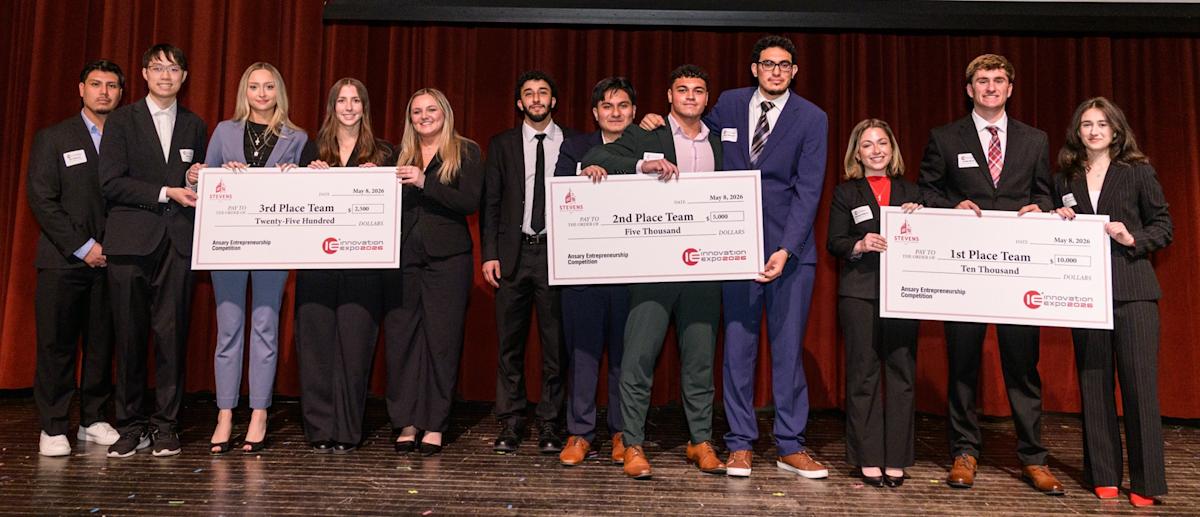
The Ansary Entrepreneurship Competition closed out the day in DeBaun Auditorium, giving Stevens’ most promising student ventures a stage and seed funding to match. Six finalist teams pitched a panel of judges for prizes of $10,000, $5,000 and $2,500.
The first-place prize went to TheraV, a team of five mechanical engineering seniors who, working with sponsor L3Harris, designed a modular soft robotic exoglove for stroke survivors with hand spasticity — using compression and pseudo-massage to restore mobility for patients who can no longer perform daily tasks like typing, driving or picking things up.
“Thank the mechanical engineering department,” the TheraV team said as they accepted the prize. “Super proud to bring home a win for our fellow ‘mechies.’”
Second place went to CTRL, four systems engineering seniors who built an iOS digital-wellness app aimed at the attention crisis caused by doomscrolling and notification overload, combining timed focus sessions, app controls and reflection prompts in a single privacy-first platform.
Third place went to TeleHub, five biomedical engineering seniors who developed an at-home cardiac vitals-measuring platform combining ECG, blood pressure, heart rate and oxygen saturation in a single device — designed to reduce the burden of post-heart-attack rehab and expand the reach of telehealth.
Three additional finalists rounded out the field: DuoVitalis, a digital stethoscope attachment using active noise cancellation to help clinicians hear heart, lung and vascular sounds clearly in noisy ER and OR environments; HOPE Incubator, a low-cost, low-power neonatal incubator designed for low-resource clinics, using phase-change material and a digital twin to keep newborns safe through 8 to 12 hours of power interruption; and the Stevens Flood Inundation Mapper, an upgraded version of Stevens’ flood forecasting tool with new mapping features built on OpenStreetMap and Azure.
The leap
Late in the morning, Miller offered the students a piece of advice that, by the time the day was over, looked less like advice and more like description.
“Courage is not the absence of fear,” she said, drawing on a line she credited to Oprah Winfrey. “Courage is, with your knees knocking and your heart thumping, you leap anyway.”
Two hundred and fifty projects. Nearly a thousand seniors. One day to show the world what they had built.
They leapt.
2026 Innovation Expo Gallery