Stevens School of Business Hosts Revenue Revolution 2026
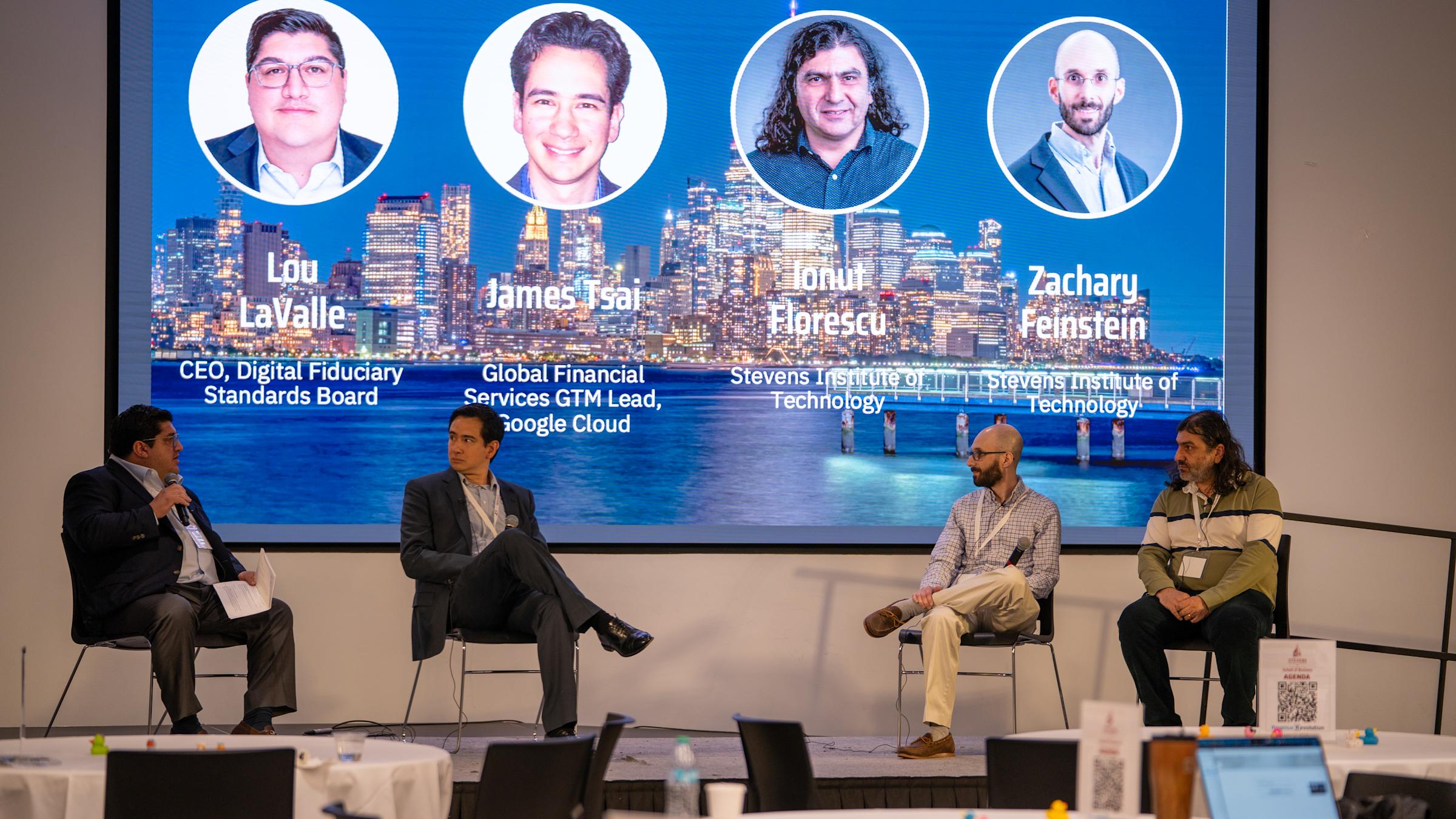
Stevens School of Business welcomed the financial services industry to campus for Revenue Revolution 2026, a conference focused on how artificial intelligence and digital transformation are reshaping asset management distribution. Held in the Tech Flex Center with a panoramic view of the Manhattan skyline, the event drew professionals for a full day of keynotes, panels, AI product demonstrations and an evening reception overlooking the Hudson.
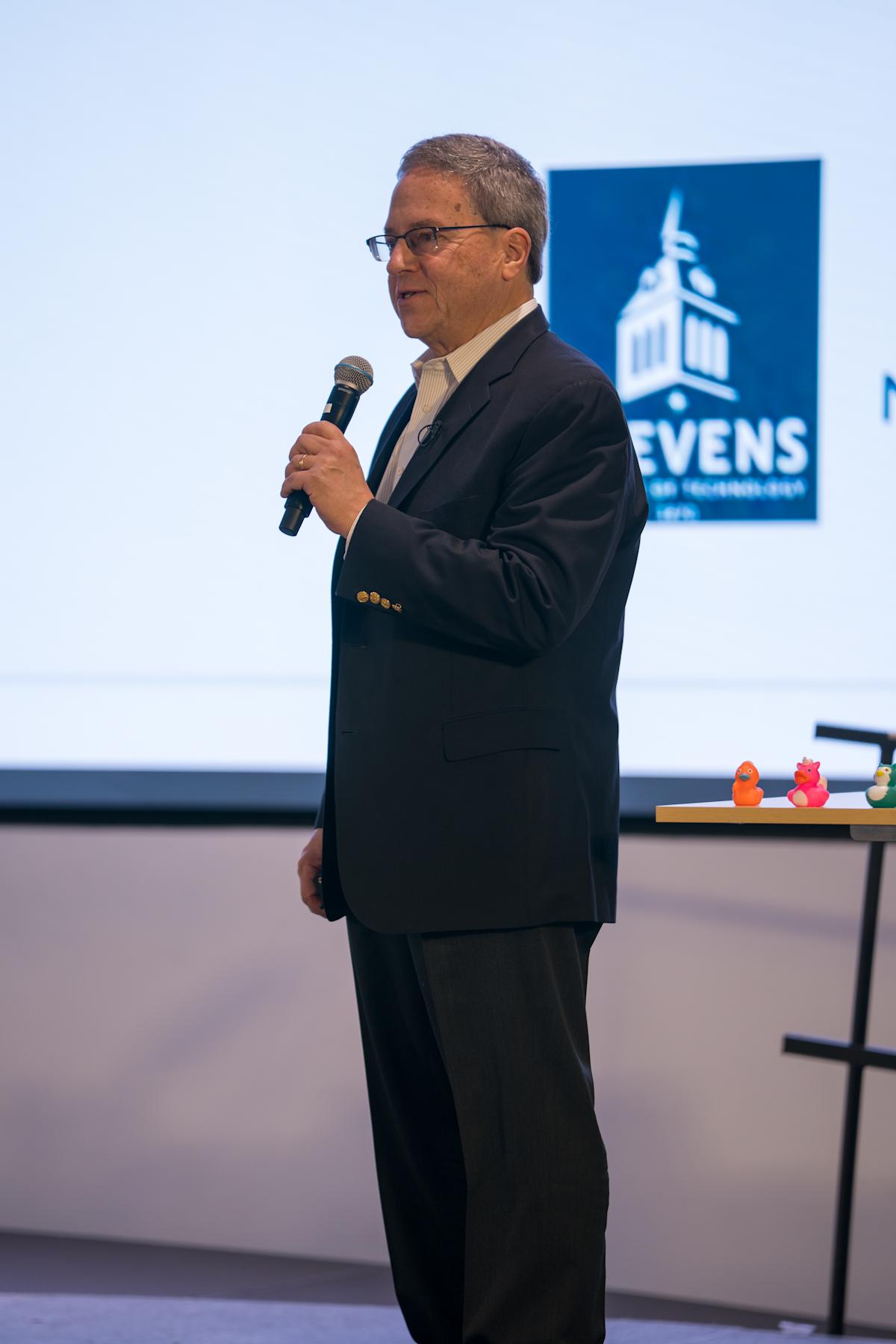
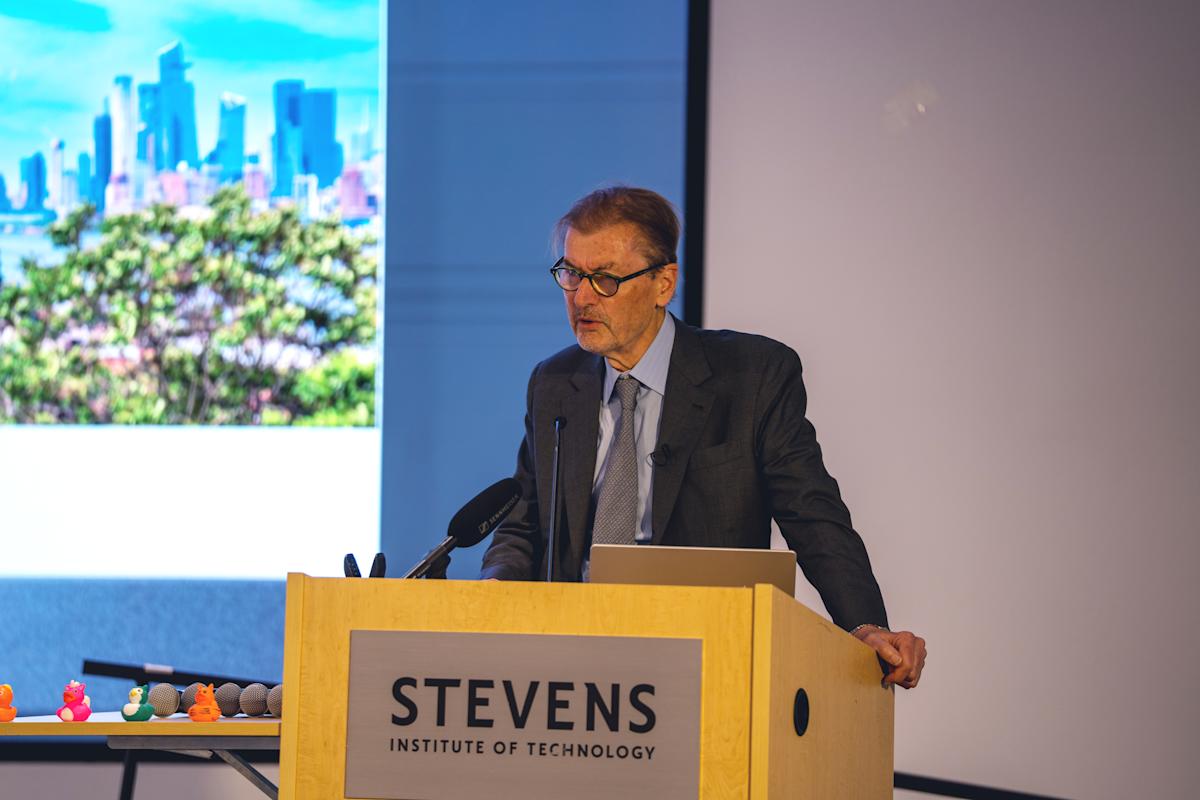 The day opened with remarks from Dr. George Calhoun, Professor and Director of SSB’s Quantitative Finance program and Executive Director of the Hanlon Financial Systems Center. Calhoun emphasized that Stevens was not just the host of the event but an active participant in the industry's evolution through the delivery of three essential “products.” Stevens delivers talent in the form of quantitative finance students who enter the workforce Bloomberg-certified and career ready. Second, the School of Business is a research leader through the Hanlon Financial Systems Center and CRAFT, the NSF-backed center that brings industry partners and academics together to fund work directly relevant to financial markets, and finally, the school is a thought leader, which Calhoun called an urgent and largely unmet need at a moment when regulators and the private-sector are struggling to navigate the implications of AI.
"We are the manufacturer of the most critical product in your ecosystem, the student talent that operate the types of systems that you have to integrate into the financial world as you adopt the technology and wrestle with it," he told attendees. “And they flow out to a wide spectrum of the financial industry. It's not just quant modelers working for a hedge fund, but it's in the wealth management field. It's in the exchanges and the New York Federal Reserve.”
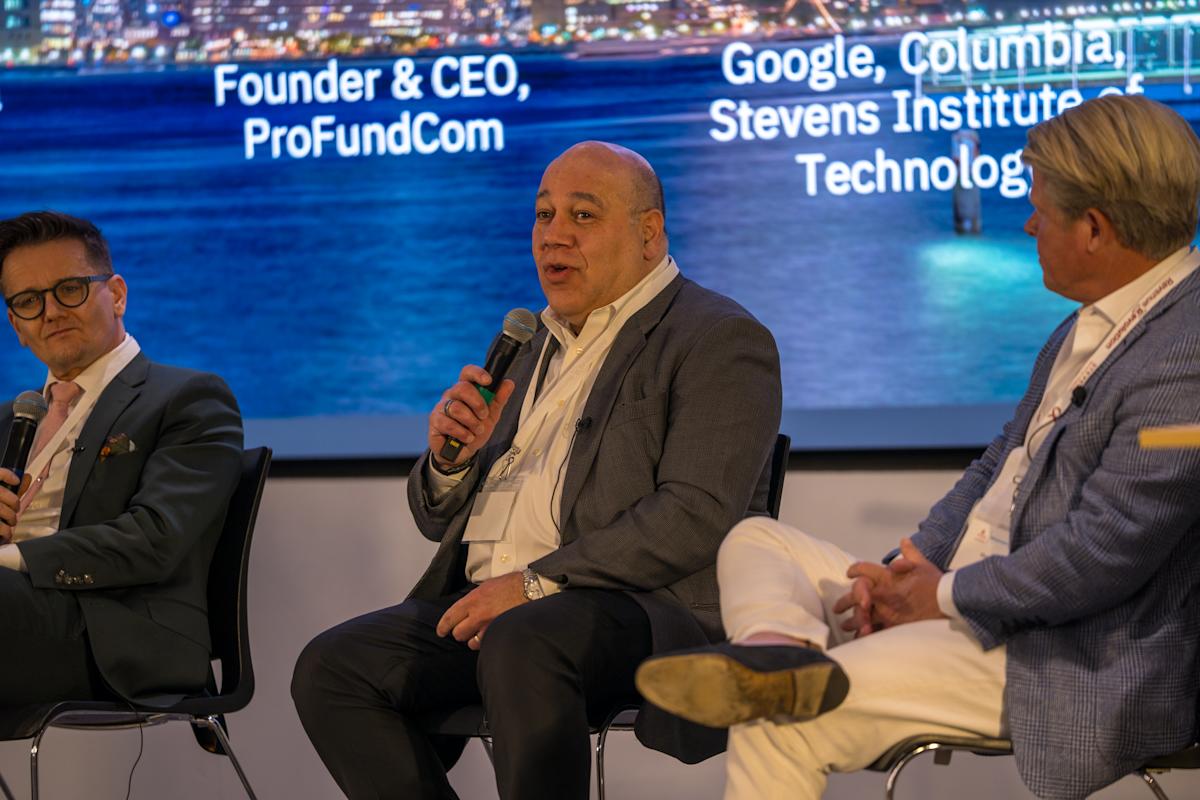 The conference was co-organized by Paul Magnone and Rick Lake. Magnone is the Head of Global Strategic Alliances at Google Cloud and a member of the Stevens School of Business Board of Advisors. A Stevens alumnus holding both a B.E. in Electrical Engineering and an M.S. in Technology Management, Magnone has co-authored two books on data-driven decision-making. He also participated in the panel “Four Authors, One Revolution,” discussing where financial services are headed through the lens of their respective books on investing, decision-making and distribution.
Lake, founder of Narrative Alpha and a recognized thought leader in digital marketing and AI for financial services. Lake spent three decades building Lake Partners into one of the country's leading alternative investment consultancies, growing it to more than $5 billion in advisory assets. He opened the program with a keynote on the urgent need for asset managers to embrace digital and AI-powered distribution. He bookended the day with a presentation on the seven AI prompt archetypes he has developed through his work at the intersection of human judgment and machine capability.
 Stevens faculty played a meaningful role in the day's programming. Professor Zachary Feinstein, Co-Director of the School of Business Ph.D. programs and the CRAFT Director of Research and Development, joined a panel on compliance in the AI era. He was joined by Professor Ionut Florescu in a roundtable on tokenization and digital assets.
The day's agenda also included speakers and panels exploring how leading firms are building distribution through AI and digital engagement, with deep dives into wealth management, ETF strategy and capital raising in the alternatives space.
"I hope that you'll be, in the near-term future, seeing Stevens more and more as a source of neutral, scientifically valid information about the issues that relate to the regulatory side,” Calhoun said. “And since it's a regulated industry, that's something that is a crucial product for the ecosystem.”