Darinka Dentcheva Awarded $300K Air Force Grant to Advance Decision-Making Research
The project uses advanced mathematical models to support smarter choices in uncertain situations
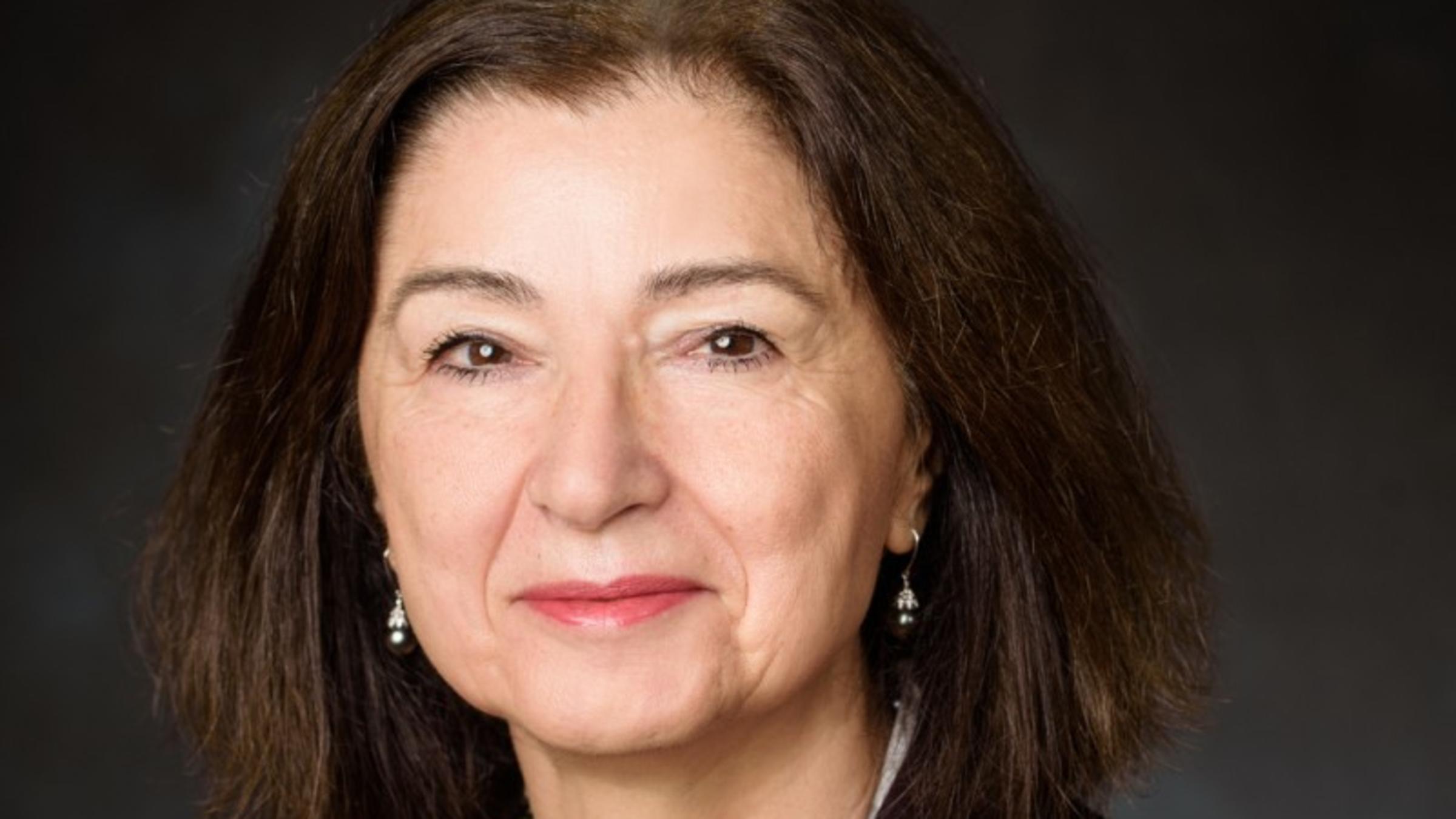
Darinka Dentcheva, professor in the Department of Mathematical Sciences at Stevens Institute of Technology, has received a $300,270 grant from the Air Force Office of Scientific Research for her latest project, “Optimization and Learning with Contextual Risk Models.” Rutgers University is also part of the total $655,000 grant.
The goal of Dentcheva's research is to improve decision-making processes by using mathematical models that handle risk and uncertainty in a clear and logical way.
"We aim to develop a theory known as 'risk-averse stochastic optimization and learning' in situations where we can’t directly observe essential characteristics, but we have contextual information that can help guide decision-making," Dentcheva explained. "We want to consider the risks in that extra contextual data so we can better understand the nature of risk and manage it more precisely and effectively."
What is risk-averse stochastic optimization?
Risk-averse stochastic optimization and learning involves making smart decisions in unpredictable situations. "Stochastic" refers to unpredictable factors—like the roll of dice—with uncertain outcomes. Dentcheva's research uses math to leverage available information to help avoid inherent risks in such situations and make choices that have the best chance of success.
Dentcheva's research is particularly useful in machine learning and artificial intelligence, where such models are essential for making accurate predictions in the face of variations and uncertainties.
"For example, if we consider an individual who does or does not undergo a specific medical treatment, we cannot observe both outcomes for the same individual," she explained. "This same problem occurs when we devise mathematical models for many other projects including clinical trials, personalized medicine, training, targeted marketing, equipment service, targeted inspection, and security and military operations."
Building a better risk-management model
In today’s real-world applications such as machine learning and data analysis, making decisions among the barrage of random, complex data presents a significant challenge. Dentcheva is researching novel methods by creating models that use simulations and online learning to manage unpredictability and handle incomplete information.
Accuracy and objectivity are essential.
"Every action—including doing nothing—brings some risk," Dentcheva said. "It is important to measure it properly and create a mechanism to manage it fairly. We want to build better models that can handle unexpected challenges and make sure decisions are fair in different contexts."
Advancing trailblazing research
Dentcheva’s current research builds her substantial work refining the theory and methods behind risk-averse optimization. Over the past 12 years, she has received five grants from the National Science Foundation and a grant from the Office of Naval Research for her contributions in this area.
Partnering with project collaborator Andrzej Ruszczynski, an applied mathematical researcher and Board of Governors professor at Rutgers University, Dentcheva has also recently published Risk-averse Optimization and Control: Theory and Methods, helping lay the foundation for advancing this work.
With the Air Force Office of Scientific Research grant, Dentcheva aims to make substantial strides in the field of risk-averse decision-making, equipping researchers and industry leaders with the tools to make smarter, data-informed choices in a world filled with uncertainty.
Learn more about academic programs and research in the Department of Mathematical Sciences: