An Autonomous IV System That Fixes Problems Before Alarms Sound — Innovation Expo
 Dealing with a healthcare situation that requires intravenous (IV) treatment can be stressful enough without complications such as tubing kinks, blockages, empty IV bags, irregular flow or false alarms.
For patients, constant monitoring and pump alerts can interrupt sleep and daily activities, heighten anxiety and even risk recovery by disrupting medication delivery. For nurses, responding to real IV issues and frequent false alarms means time that could be spent caring for patients is instead spent checking lines, troubleshooting and resetting pumps. The result is greater workload, alert fatigue and increased strain across care settings.
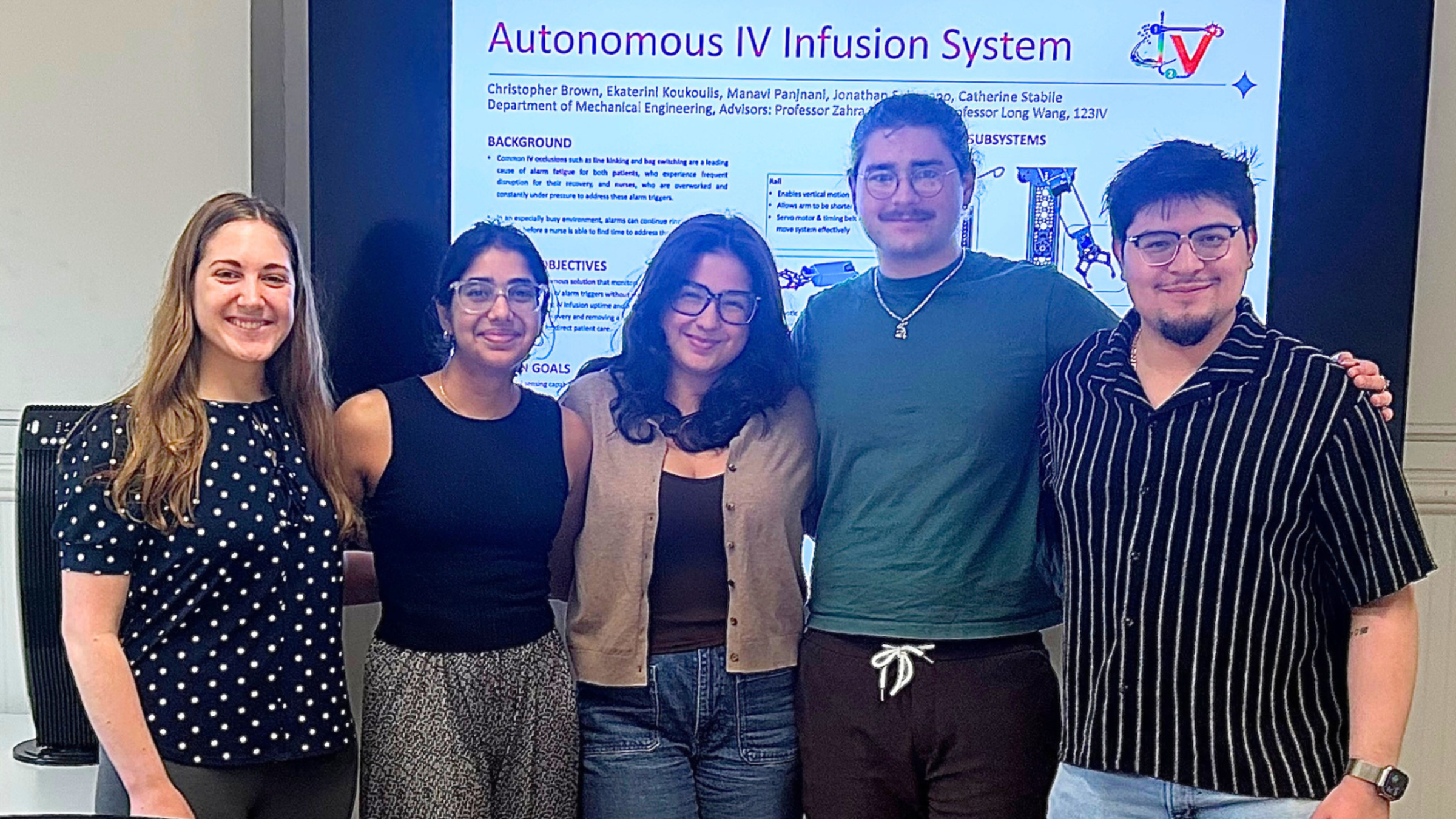
Five Stevens Institute of Technology students from the Class of 2026 devoted their Innovation Expo project to developing an autonomous IV infusion system to make IV alarms a thing of the past. Their project uses integrated sensing, real-time feedback control and automated corrective actions to eliminate failure points that activate alarms. It shows potential to improve reliability, reduce clinical interruptions and optimize patient outcomes.
“Allen Chefitz is the co-founder of the noninvasive diagnostic device firm 123IV, our project sponsor,” said Jonathan Solorzano ‘26, who is completing the Accelerated Master’s Program in mechanical engineering. “He had experienced firsthand how disruptive the constant alarm sounds can be to recovery and how difficult it proved for overworked nurses to address the causes in a timely manner, and he wanted to find a better way to address these common triggers without manual intervention. He and his team gave us valuable clinical and industry perspectives.”
IV, Heal Thyself
Most traditional IV systems include a tall metal stand with hooks, an IV bag that hangs on a hook and a pump that controls and monitors the rate of medication delivered. If the pump detects an interruption in infusion, a loud alarm continues until a nurse finds and fixes the problem — but it offers no clues to the root cause.
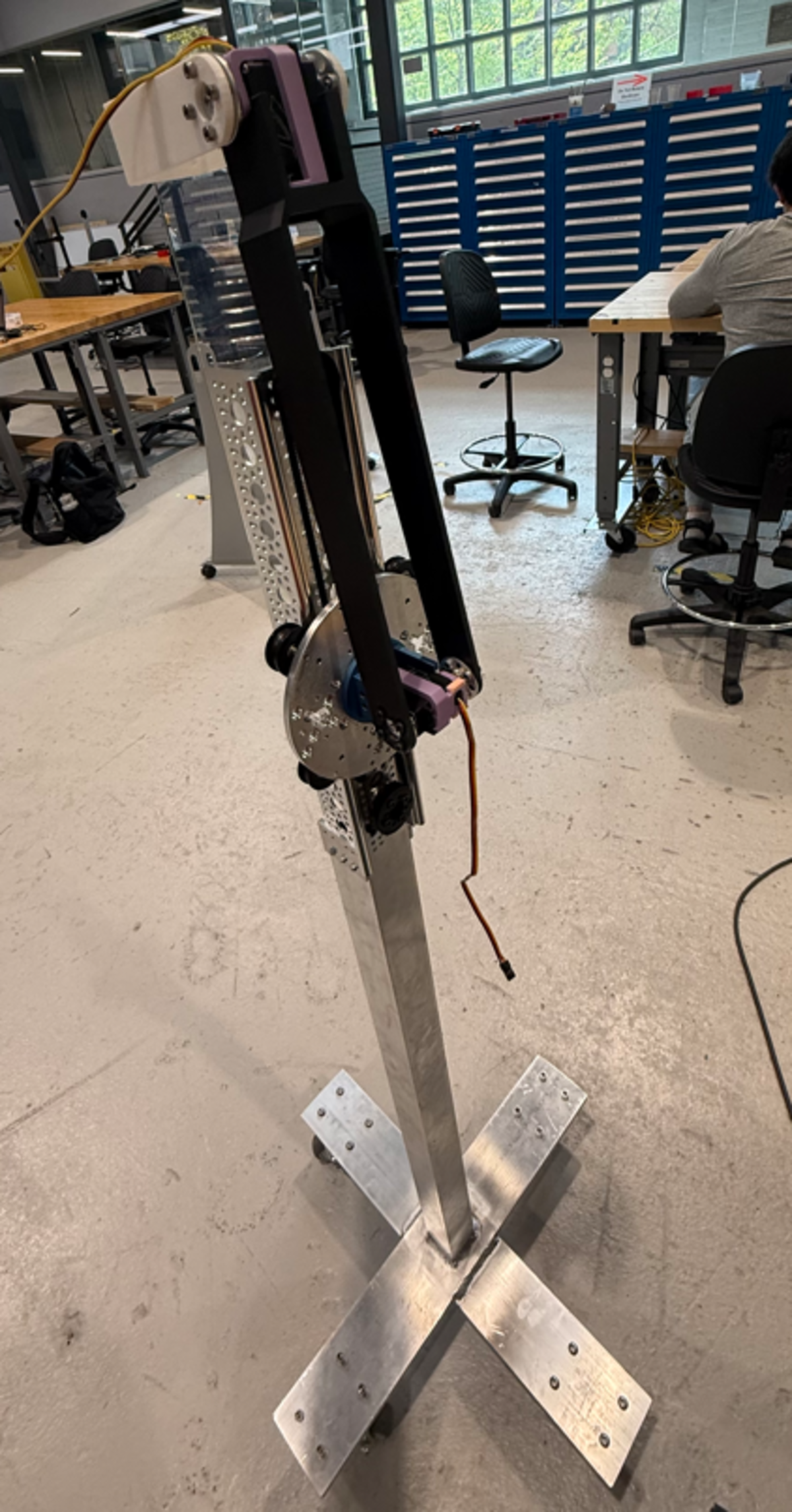
The Stevens team’s project is in a whole new IV league. Their IV stand doesn’t just detect tubing failures; it incorporates a robotic mechanism that can silently correct any problems.
“Our system continuously monitors the IV setup and intervenes before a problem escalates into an alarm,” said mechanical engineering student Ekaterini Koukoulis. “Instead of waiting for an alert, it identifies and corrects issues in real time. For example, it will spot a kink, move to that location, clamp on to the tubing and gently and precisely tug the tubing to remove the kink before it impacts delivery. It reduces the frequency of alarms, which eases workload and alarm fatigue for nurses and keeps therapy running more smoothly for patients.”
Keeping the Innovation Flowing
 As their own design process encountered blockages, the students self-corrected those as well.
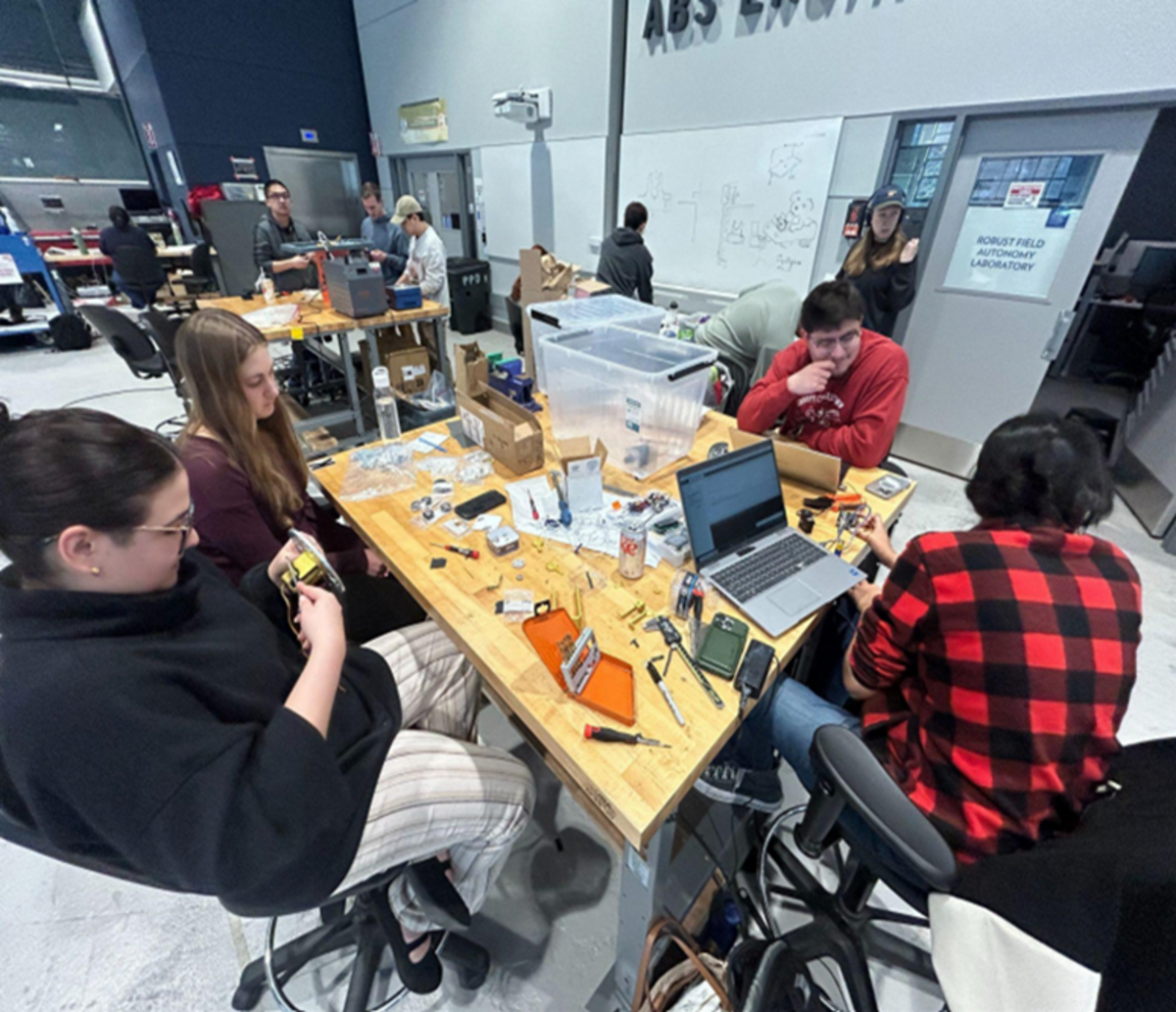
Through multiple design iterations, they identified causes of common IV issues, then focused on automation and mechanical intervention at the source of each problem. They validated concepts through CAD modeling and prototypes, continually refining the mechanical design and system architecture.
“One of our toughest challenges came during our alpha prototype, when the gripper wasn’t consistently following the IV tubing, even though on paper and in CAD, everything looked aligned,” recalled Catherine Stabile, who is continuing her studies in mechanical engineering through Stevens’ Accelerated Master’s Program next year. “We also realized the device weight was affecting stability and made the system feel less practical for clinical use.”
They fundamentally rethought the build in terms of geometry, material selection, component placement and weight distribution. They added passive self-centering features, adjusted the gripper design, integrated feedback mechanisms to correct positioning and simplified the structure to fit more naturally with a standard IV stand.
“That moment was a real turning point,” noted Christopher Brown ‘26, who is majoring in engineering management. “It shifted our mindset from relying on ideal CAD assumptions to designing for real-world variability and constraints, which made the system more robust.”
They appreciate how Stevens’ emphasis on hands-on, design-driven problem-solving prepared them for success.
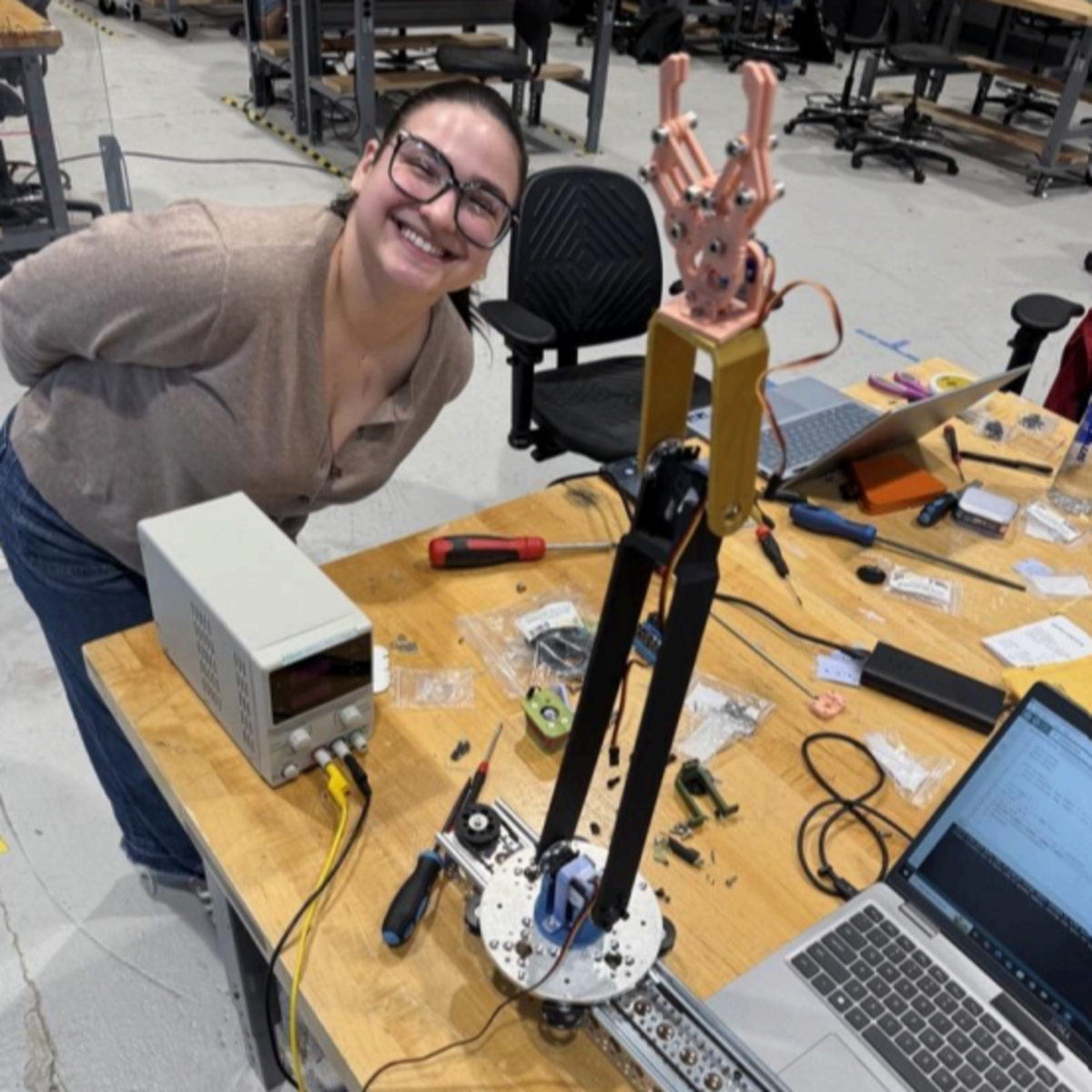 “Across our design labs and mechanical engineering courses, we’ve gone from concept to physical prototype, including CAD modeling, simulation, fabrication and iterative testing,” Koukoulis said. “When we ran into prototype issues, it felt like a natural extension of what we’d already done in class. We were comfortable identifying where the design broke down and working through how to fix it. We’re also used to collaborating, running design reviews and breaking down complex problems into manageable steps. Stevens gave us both the technical foundation and the mindset to iterate, adapt and design with real-world constraints in mind.”
Adding to the project complexity was the interdisciplinary team structure that combined mechanical, engineering management and computer engineering approaches.
“The students had to communicate and coordinate across technical perspectives,” said Zahra Pournorouz, teaching assistant professor, Department of Mechanical Engineering, one of their project advisors. “That kind of teamwork, integration and practical problem-solving is exactly what I would expect from early-career professionals.”
‘The opportunity to make a real difference in people’s lives’
123IV holds the patent for the team’s autonomous IV infusion system and plans to continue development toward commercialization, with potential expansion into other types of medical tubing such as for feeding or oxygen.
“Our product could make a real difference in people’s lives,” said Manavi Panjnani, who is completing her master’s degree in computer engineering this spring, “reducing the burden on nurses, which could trickle down to savings for hospitals who invest in the technology, while helping patients get the treatment they need, have a more pleasant recovery and go home sooner.”