Student-built App Takes the Stress Out of Dining With Food Allergies and Dietary Restrictions

When we think about going out to eat with friends and loved ones, most people imagine a relaxing way to get together, have some good food, and unwind from the stresses of daily life.
But for millions of people with food allergies or dietary restrictions, dining is not a casual decision, but a calculated risk. Even a simple meal can require researching menus, calling restaurants, or asking detailed questions about preparation methods, with no guarantee the information is complete or accurate.
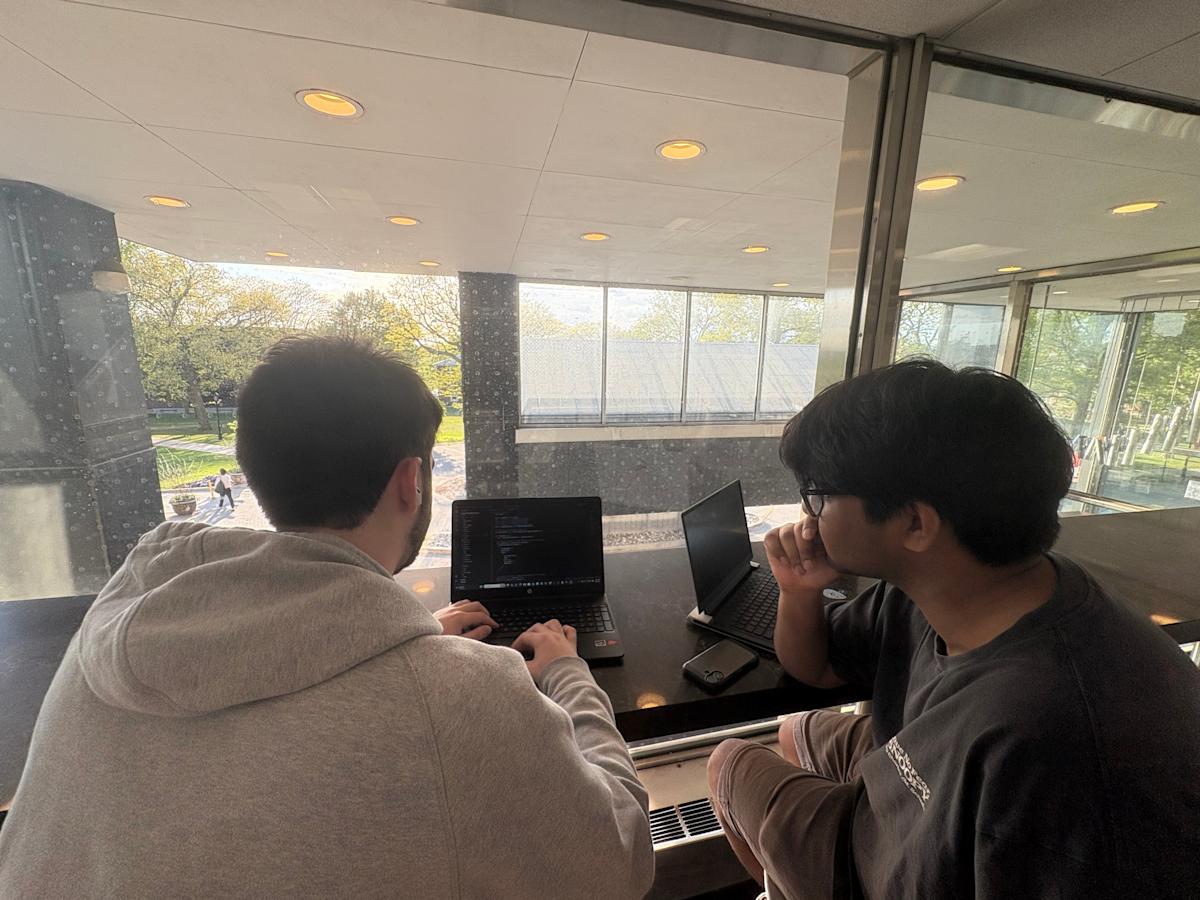 At Stevens, a team of computer science students in the Schaefer School of Engineering and Science is working to change that.
Their senior design project, Nummle, is a food-focused web platform designed to help users quickly and confidently identify meals that align with their dietary needs, removing uncertainty from the dining experience and opening the door to more inclusive, accessible eating.
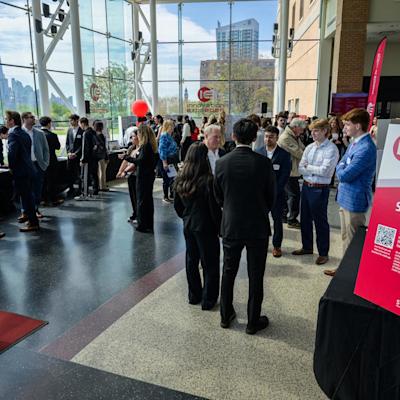
Nummle was developed as part of Stevens’ yearlong senior design program, where students collaborate to solve complex, real-world problems. On May 8, the Nummle team — which includes seniors CJ Folgore, Tanav Thota, Daniel Fong, Michael Lazieh, Yash Yagnik and Alice Agnoletto — will present their platform at the 2026 Innovation Expo, joining more than 100 student teams showcasing projects across disciplines.
Coding with compassion
For course coordinator and instructor Matthew Wade, the most important part of his job is to widen the scope for his students and remind them to reflect on why they chose this profession in the first place: that empathy and human impact is the point.
“I say this on the first day of class,” Wade explains. “At one point in your lives, you said to yourself, ‘I want to help other people. I want to make other people’s lives better.’ And you gravitated toward a career in computer science because computer science, at its core, is about creating value that solves problems for other people.”
 Folgore, a fourth-year computer science student, says the idea behind Nummle came from a familiar but often overlooked challenge.
“I have a few friends that have tree nut and gluten allergies,” Folgore says. “In the past, I’ve watched them struggle and tried to help them find good options when we go out to eat, so either they just wouldn’t eat out, or they would just not go in general.”
What might seem like a minor inconvenience for some can be a major barrier for others. For people with conditions like celiac disease or severe allergies, even trace exposure — such as food prepared in the same pan as the allergen or even in the same facility — can cause serious, even life-threatening issues.
“That information is hard to find,” Folgore says. “You have to call ahead or email a restaurant and it takes time just to figure out what you can eat. Before you reach the end of this process, it’s easy to see why you would lose your appetite and just give up.”
Nummle aims to eliminate that friction.
“You don’t build solutions looking for problems,” Wade says. “You build solutions in direct response to the problems that you know exist.”
How Nummle works
The platform functions as a centralized, filterable database of restaurant menus, designed specifically around dietary transparency. Restaurants can upload their menus and tag items with labels such as gluten-free, vegan or allergen-friendly while also providing detailed context about preparation methods.
“It’s always good, even if you’re putting the basic labels on the food, to know exactly what those labels mean,” Folgore explains.
On the user side, the experience is personalized. Diners can input their dietary restrictions into a profile or apply filters during search, instantly narrowing down options to meals that are safe.
“We wanted to essentially make a Grubhub-style viewing menu,” Folgore says. “Not an ordering service, but something where you could directly see what you can and can’t have instantly.”
Instead of spending time researching or second-guessing, users are presented with curated, relevant options along with nearby restaurant recommendations.
A great boost for the restaurant business
 While the project prioritizes user safety and convenience, it also delivers value to the entire food service industry.
By tracking engagement and preferences, Nummle can provide insights into how customers interact with allergen-friendly menu items, data that could influence future offerings, delivering what diners actually want and boosting sales.
“You could get good information out of what you can adjust and take off your menu based on what people are ordering,” Folgore says.
More importantly, the platform highlights an often underserved market.
“If they could see over time that their numbers are increasing just because it’s easier to access their allergen-friendly menu,” he adds, “more restaurants would be more open to creating that side of the menu and focusing on it.”
In other words, accessibility isn’t just good for customers, it’s good for restaurant clients.
Real-world preparation for a meaningful career
Over the course of the academic year, the Nummle team combined technical development with real-world research, reaching out to local restaurants to better understand their needs and constraints. “We wanted to figure out what they would need out of a site like this,” Folgore says, “and see if they were interested in onboarding their menu.”
The process of engaging directly with users and stakeholders is central to the Stevens approach to help students prepare for future endeavors that require forming relationships and speaking to potential investors, partners, policymakers, and, of course, customers. For the students, that shift from building in theory to building with purpose is essential.
“They have to get out and understand these people,” Wade says. “You don’t guess, you don’t assume. You get out and you talk to people, and you become active listeners. This is really a transformative moment in their undergrad experience – because they have purpose, very direct purpose in their work.”
For Nummle, that value is a future where dining out is no longer a source of stress or risk, and once again becomes the experience for which it was originally created: a carefree time filled with good cuisine, conversation and connection, for everyone at the table.
Learn more about academic programs and research in the Department of Computer Science: