Prestigious Goldwater Scholarship Awarded to Stevens Undergraduate
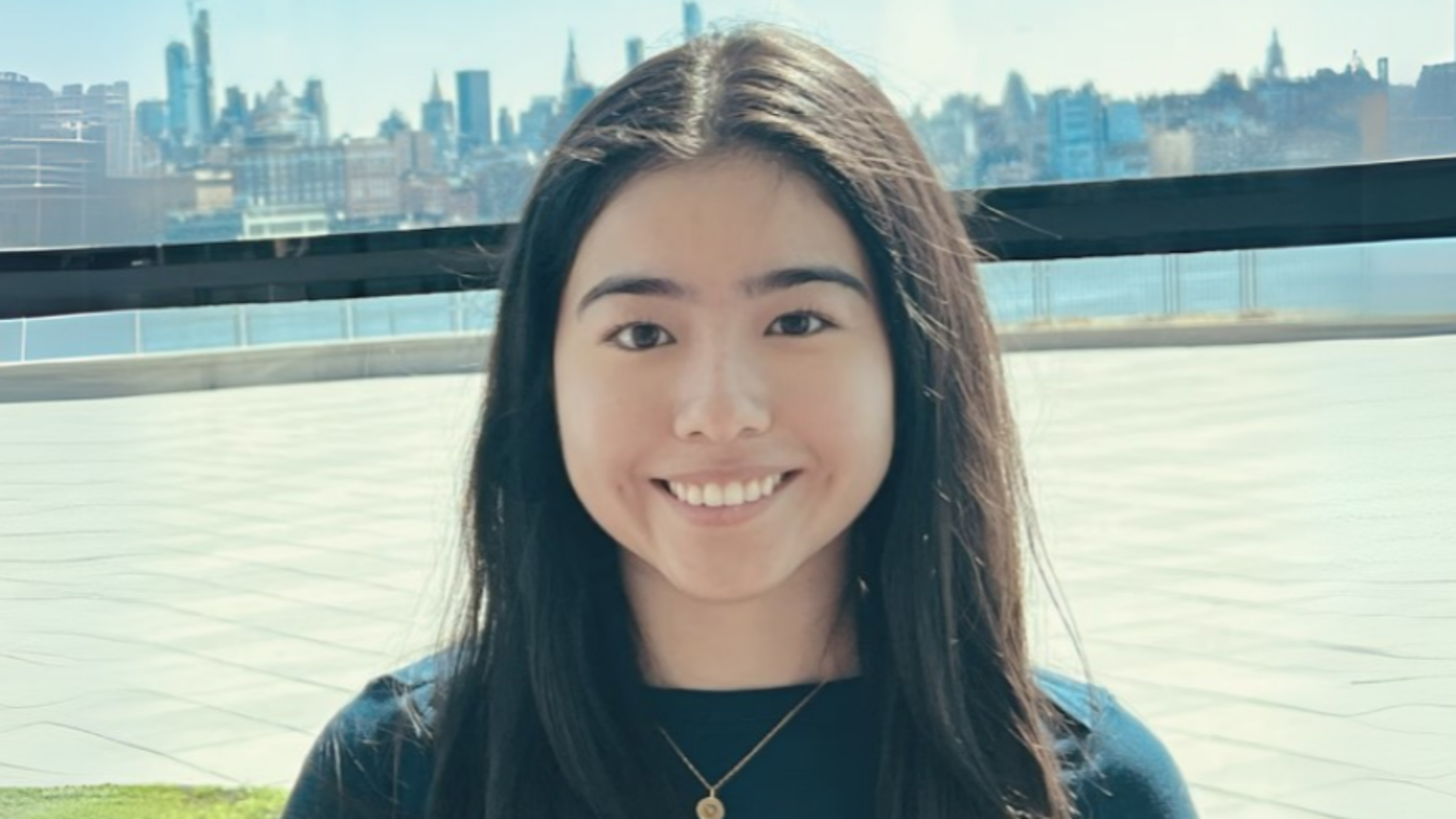
Pinnacle Scholar Alexandra Garzon investigates innovative methods of extracting pollutants
Stevens junior Alexandra Garzon has been named a 2025 Goldwater Scholar from a pool of more than 1,300 applicants. It is the third Goldwater scholarship — one of the nation’s oldest, most sought-after scholarships in the natural sciences — awarded to a Stevens undergraduate in recent years.
Garzon, a Pinnacle Scholar, investigates methods of removing harmful chemicals from drinking water.
“She has made great strides in both academic research at Stevens and in her internship, where she applies her expanding research toolkit to real-world problems,” comments Andrés Mansisidor, Stevens’ director for undergraduate research.
“These experiences have set up Alexandra to thrive in her career, bridging academic research with tangible applications.”
Keeping water supplies safer
Inspired to study chemical engineering at Stevens, she began with ideas about possibly working in industrial formulation or pharmaceuticals.
But a summer research project in Professor Alyssa Hensley’s catalysis lab and an internship with a major municipal water supplier changed her trajectory — shifting her research focus to attack the challenge of persistent ‘forever chemicals’ that linger in water supplies.
“I realized the importance of removing these dangerous chemicals from our water supplies for the health and safety of all,” Garzon says. “Understanding the materials that can help do this, on a quantum scale, could make treatment and removal technologies more effective.” “This is a real-world application that can help people, and that was exciting to me.”
With the multinational firm Veolia — which supplies water and waste management services to nearly 100 New Jersey municipalities — she has been investigating the use of galvanic activated carbon in filtration systems that remove PFAS and PFOS chemicals from water.
Garzon’s specific understanding of carbon’s interactions at the nanoscale level enable calculations that help Veolia predict when carbon filtration must be renewed — and how variations of carbon-based compounds might one day remove PFAS and PFOS more safely and efficiently than current technologies.
What’s next? Garzon continues working part-time at Veolia and participating in campus activities, including as a peer advisor and in a community-facing role with Alpha Phi.
After graduating Stevens, she expects to pursue a Ph.D. and work in industry, possibly in the development of novel PFAS/PFOS remediation technologies.
“From the moment Alexandra joined our lab, she demonstrated an ability to grasp complex concepts quickly and apply them creatively,” enthuses Hensley, who co-authored a 2024 paper with Garzon in the journal Applied Surface Science. “She completely redesigned and revamped our in-lab Python codes for generating macroscale, multi-dimensional phase diagrams from quantum-based simulations.”
Hensley also lauds Garzon’s personality and work ethic.
“Her willingness to tackle difficult problems, learn new skills independently and apply them effectively is a testament to her resilience and growth mindset,” Hensley says. “She brings an infectious enthusiasm to the lab—always curious, supportive and eager to collaborate.” “It’s rare to find someone so talented who also uplifts everyone around them.”
For Garzon’s part, the environment at Stevens proved perfect for broadening her interests and giving her additional career options.
“I really appreciate Stevens’ increased focus on undergraduate research, including the addition of a dedicated director,” she says. “That’s important, and you just don’t find it everywhere.”
The Goldwater Foundation, a federally endowed agency, partners with the U.S. Department of Defense and has awarded more than 11,000 scholarships since it was established in 1986. Each scholarship grants up to $7,500 per academic year to help cover costs associated with student tuition, fees, books, and room and board.