From Fruit Bundle to Jet Fuel: A Stevens Senior Design Project Takes on Sustainable Aviation
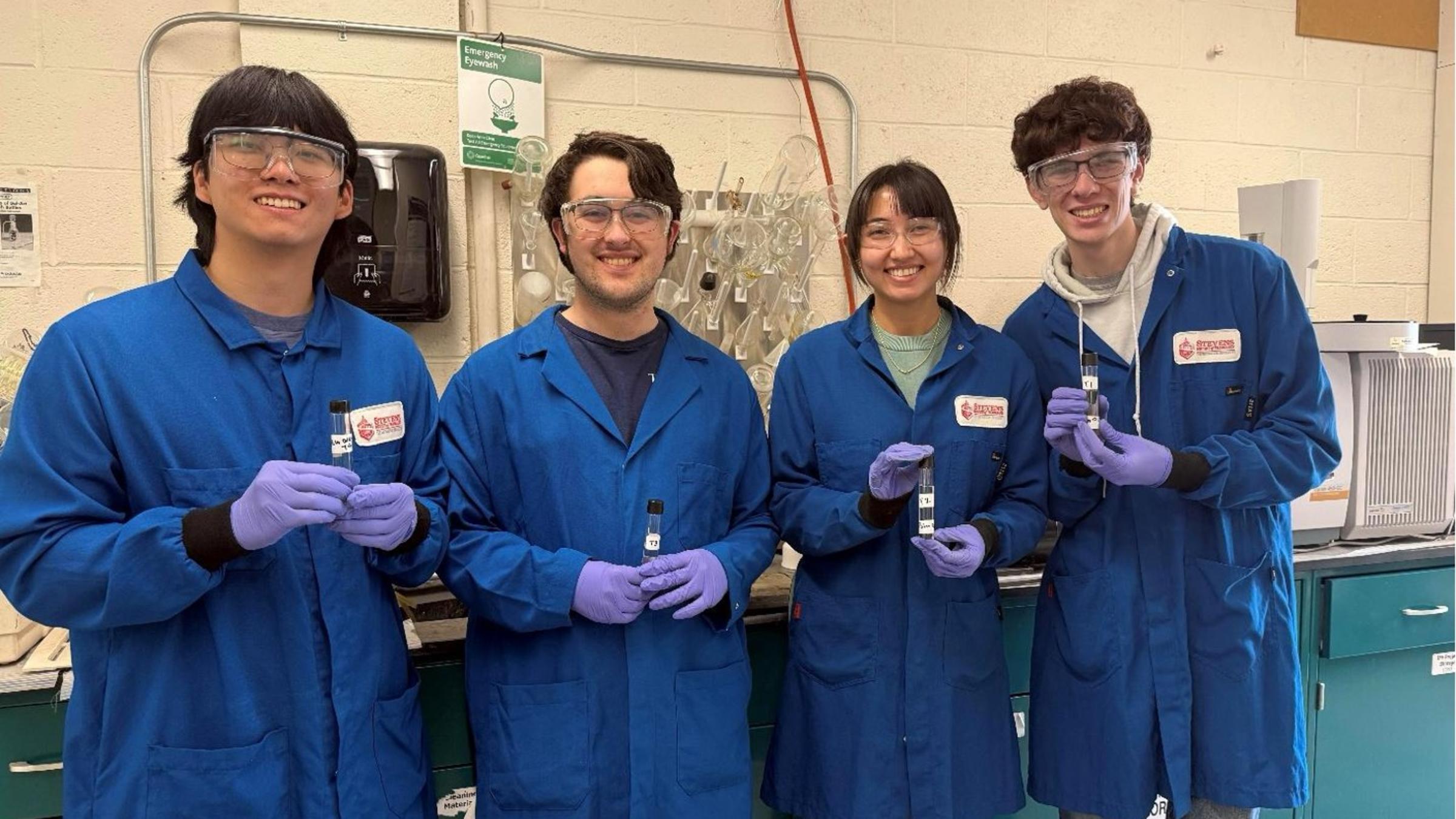
From the fruit of the oil palm tree, four Stevens seniors behind the Sustainable Aviation Fuel (SAF) from Palm Oil project envision a more sustainable future for flight.
 The team — chemical engineering students Christopher Oliveira '26, Robert Olson '26, and Aaron Wong '26, and environmental engineering student Alexandra VanderVeer '26 — point out what's at stake. Fossil fuel reserves may run out within this century. Aviation alone accounts for 2.5% of global energy-related CO2 emissions, according to the International Energy Agency (IEA). And unlike cars and trucks, planes don't have a clean electrical alternative waiting in the wings.
“Due to energy density, you can get more energy in a smaller volume from biofuels in comparison to a battery,” Olson said. “That’s one of the reasons why our research is on aviation fuel specifically — because it’s harder to replace with a battery in comparison to something like a car.”
The team set out to chip away at that gap by converting palm oil into jet-ready fuel. They will present their project at the Stevens Innovation Expo on Friday, May 8, at Stevens' campus in Hoboken, New Jersey.
Making the case for palm oil starts with problem-solving
Palm oil trees are bushy and low to the ground, bearing something called a fresh fruit bundle — the dense, oil-rich cluster at the heart of the team's project.
“Palm oil is a very promising biomass feedstock because it carries a high concentration of saturated fats,” VanderVeer said, explaining that these saturated fats can be converted into hydrocarbons, the compounds that give fuel its energy.
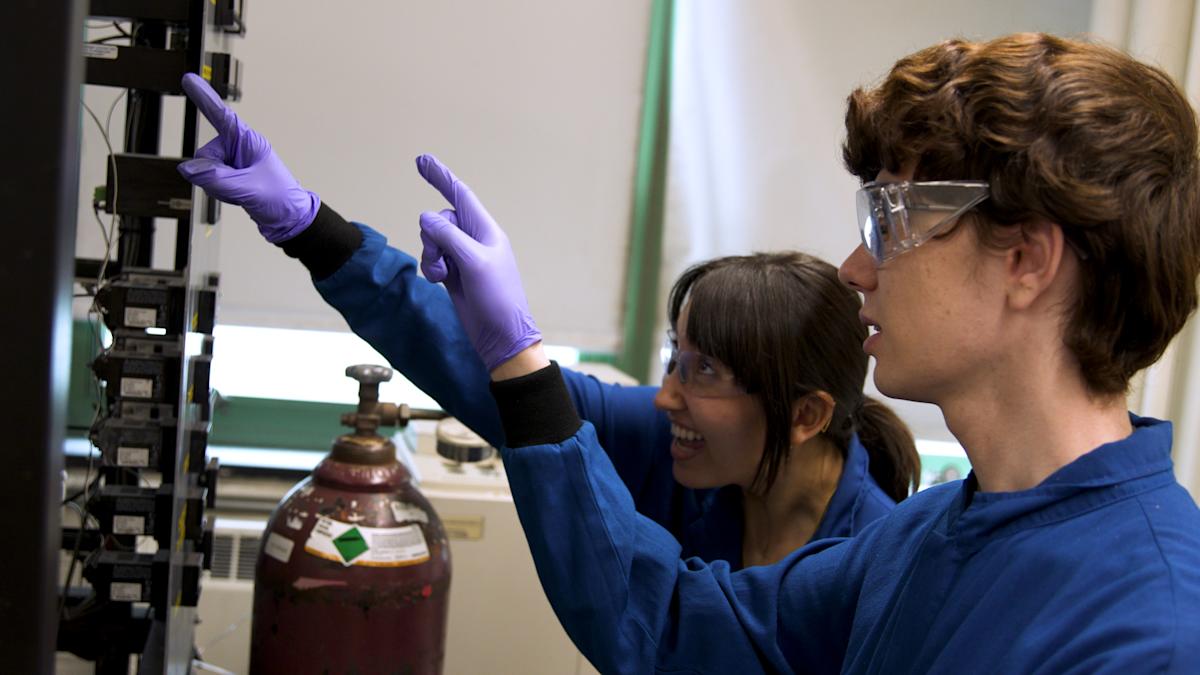 In practice, the longer-term target may not be virgin palm oil, but palm fatty acid distillate. This byproduct, left over from processing palm oil, contains many of the same chemical components, making it suitable for conversion to fuel without competing with food sources, noted Adeniyi Lawal, Professor and Chair of the Stevens Department of Chemical Engineering and Materials Science and the team's faculty advisor.
The conversion process involves hydrodeoxygenation. “Turning palm oil into sustainable aviation fuel involves a certain reaction that essentially tries to remove oxygen atoms from the oil, which is necessary for it to be classified as a valid fuel,” Oliveira said.
Part of what makes SAF from biomass worth pursuing is the carbon cycle it creates. When biomass is used to produce fuel, the carbon released during combustion is the same carbon the plant absorbed from the atmosphere while growing — a loop rather than a one-way release. Fossil fuels offer no such cycle: carbon extracted from the ground becomes atmospheric CO₂ with no path back.
The team understood all of this — in theory.
“This is the first time I really applied theoretical knowledge practically to a real-world problem,” Olson said.
But challenges waited for them in the lab.
Challenge No. 1: Building a catalyst from scratch
The team’s first catalyst didn’t work.
“I told them: even PhD students who go into industry, their catalysts don’t work at first either,” said Lawal. He explained that making a catalyst is like cooking. “You can have the recipe, the procedure, all the ingredients — and it will still come out differently every time.”
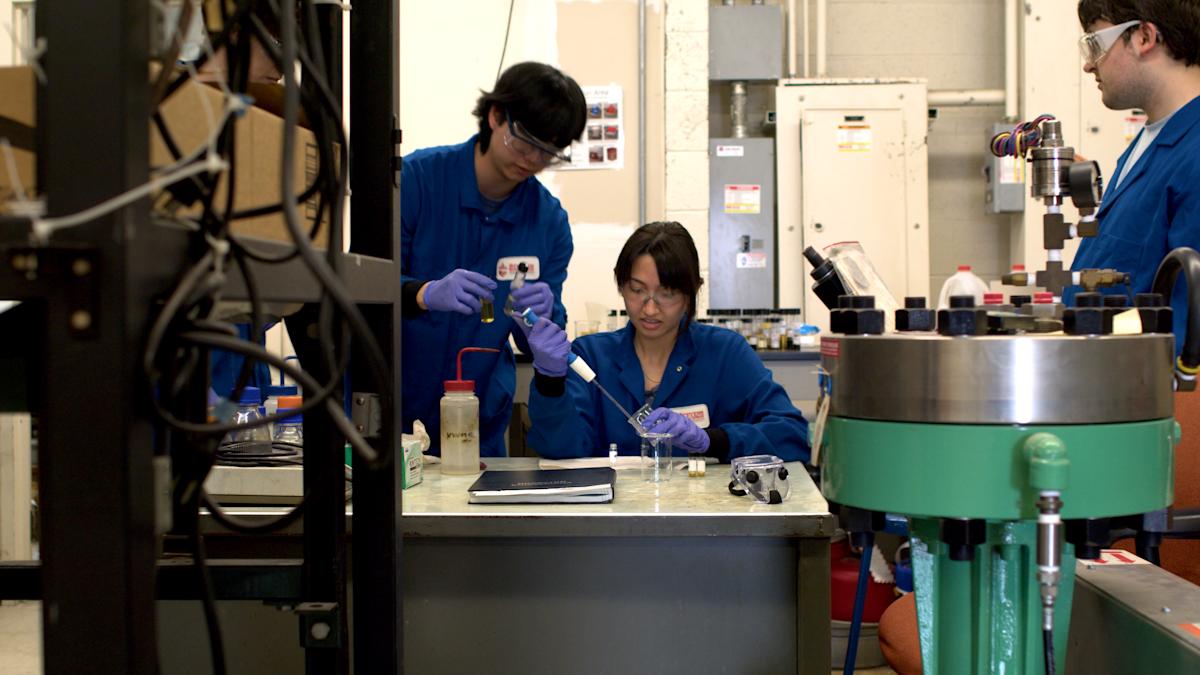
Guiding them through that process — and every step of operating complex lab equipment — was Priscilla Manteaw, a PhD candidate whose hands-on mentorship was critical to the team’s progress.
“It was great working with the team. They picked up on instructions quickly and were very diligent in their work. They had some challenges with getting good and reproducible results at the beginning, but that is expected in the early stages of research,” said Manteaw.
Eventually, the team overcame it, and the bimetallic nickel catalyst they'll be presenting at the Expo is one they made themselves.
Challenge No. 2: Finding a cadence
Coordinating efforts was just as difficult.
“Initially, it seemed like we might not even be able to make any progress,” Olson said. “That was kind of the vibe for the first semester.”
In those first months, the team managed fewer than five reactor runs. Each one required long stretches in the lab, sometimes on back-to-back days.
“We would be in there for like eight hours straight,” VanderVeer said. “We did feel very burnt out, at least halfway through the semester.”
Wong pointed out how lengthy the processes took. “I guess what surprised me was how much you’re able to do with what feels like such little time. Even though we’re spending so many hours every week in the lab, we really don’t have that much time to complete too many runs,” he said.
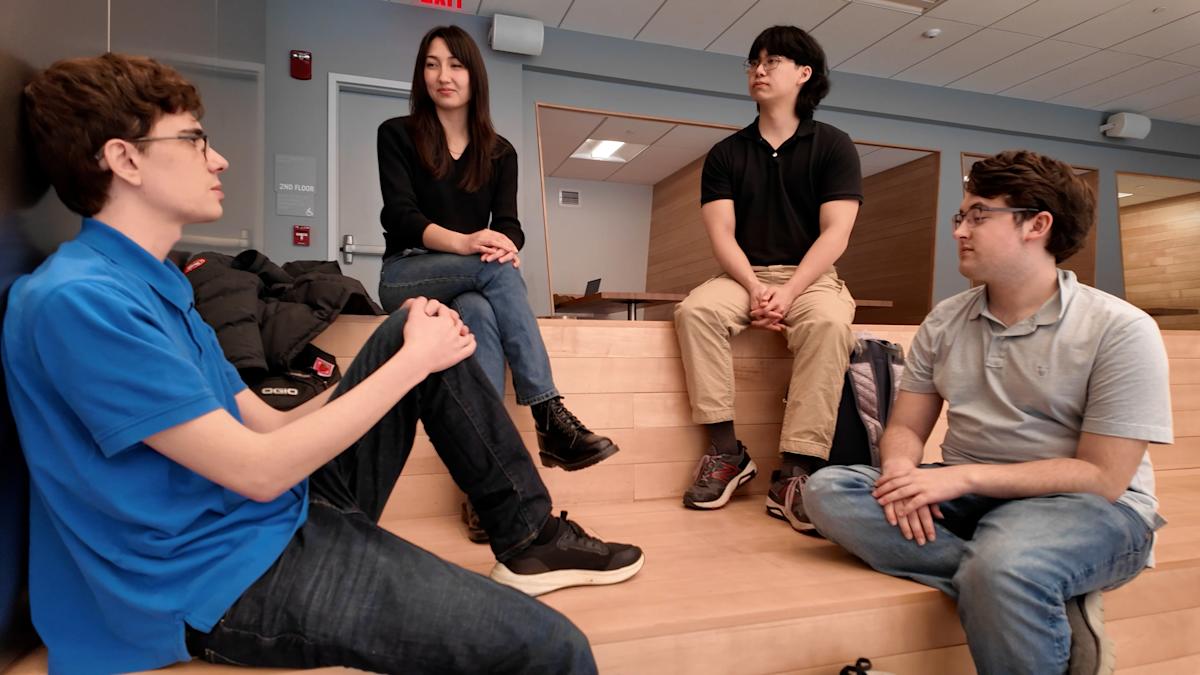 That changed in the second semester. They committed to two runs per week, built around analysis and discussion, and the rhythm held throughout the rest of the project.
“Once we got started, we were running everything essentially independently — doing our own research through literature reviews. That really taught me a lot about working on your own and delving into a topic I was completely unfamiliar with before,” Oliveira said.
“With further practice and working through those challenges, they were able to refine their approach and successfully run their experiments independently for the remainder of the project,” said Manteaw.
Wong had worked on a related project the year prior. “I find it amazing… the amount of work we were able to accomplish.”
Putting pieces of a larger puzzle together
VanderVeer, the sole environmental engineer on a predominantly chemical engineering project, contributed a lifecycle analysis — modeling the cost of scaling this process and its carbon footprint compared to traditional jet fuel from well to wing.
“Getting to be hands-on with this project helps you realize how much manpower, how much time, and how many resources are truly put into making this fuel,” she said.
The economics of this technology remain a challenge. “It’s really hard to make the process industry-wide profitable,” Wong said. “Even the feedstock we use — palm oil — it’s fairly expensive compared to crude oil.”
In 2024, SAF accounted for just 0.3% of commercial jet fuel, according to the International Council on Clean Transportation. “There’s also some difficulty staying carbon net neutral due to the growth and transport cycle of the feedstock,” said Wong.
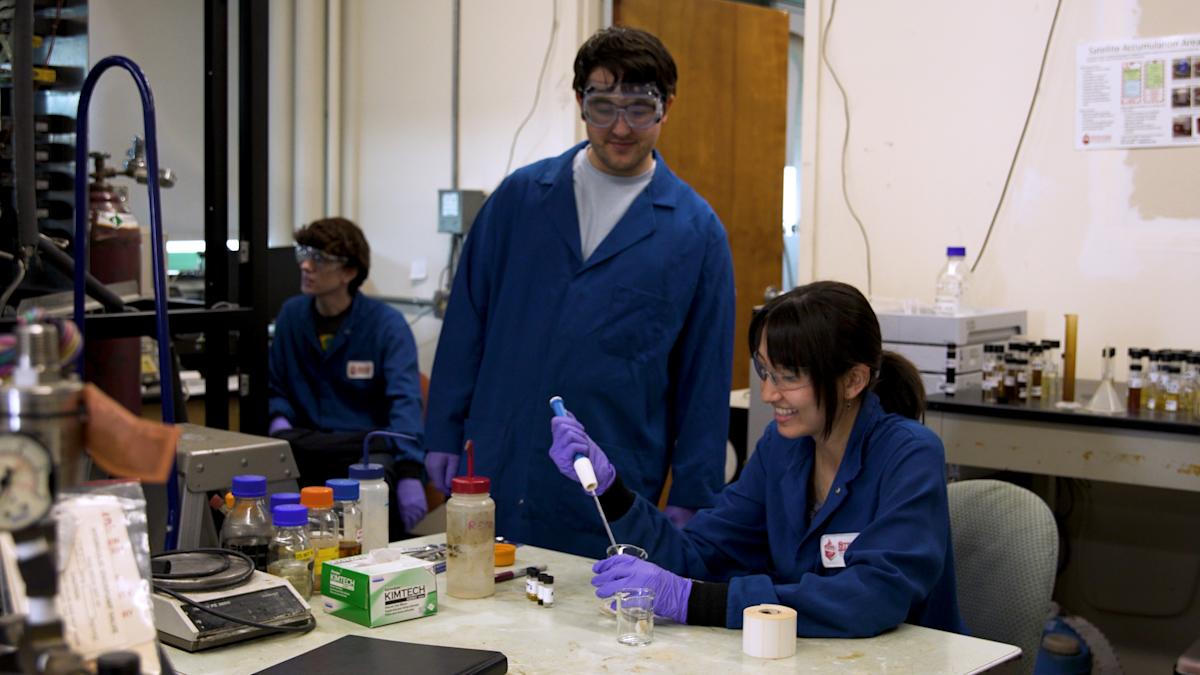 “The thing about engineers is that we keep chipping at the challenges,” Lawal said. The technology is not mature now, but technically, we have shown that it is feasible.”
As the team heads to the Innovation Expo, they understand where their work fits — as Olson put it, “a little piece of that big puzzle toward the goal of having sustainable aviation fuel-powered planes.”
For the team, the Expo marks both an ending and a beginning. Oliveira and Olson are heading into industry. VanderVeer is pursuing a master’s in sustainability management at Stevens while continuing her internship with the New Jersey Department of Environmental Protection. Wong is pursuing a master’s in materials science and engineering, also at Stevens.
They were the first student group in Lawal’s lab to ever work with palm oil. They won’t be the last. “This work is going to continue,” Lawal said.
Learn more about academic programs and research in the Department of Chemical Engineering and Materials Science: