Brendan Englot Awarded $1.9 Million Office of Naval Research Grant to Help Autonomous Boats Make Smarter Decisions
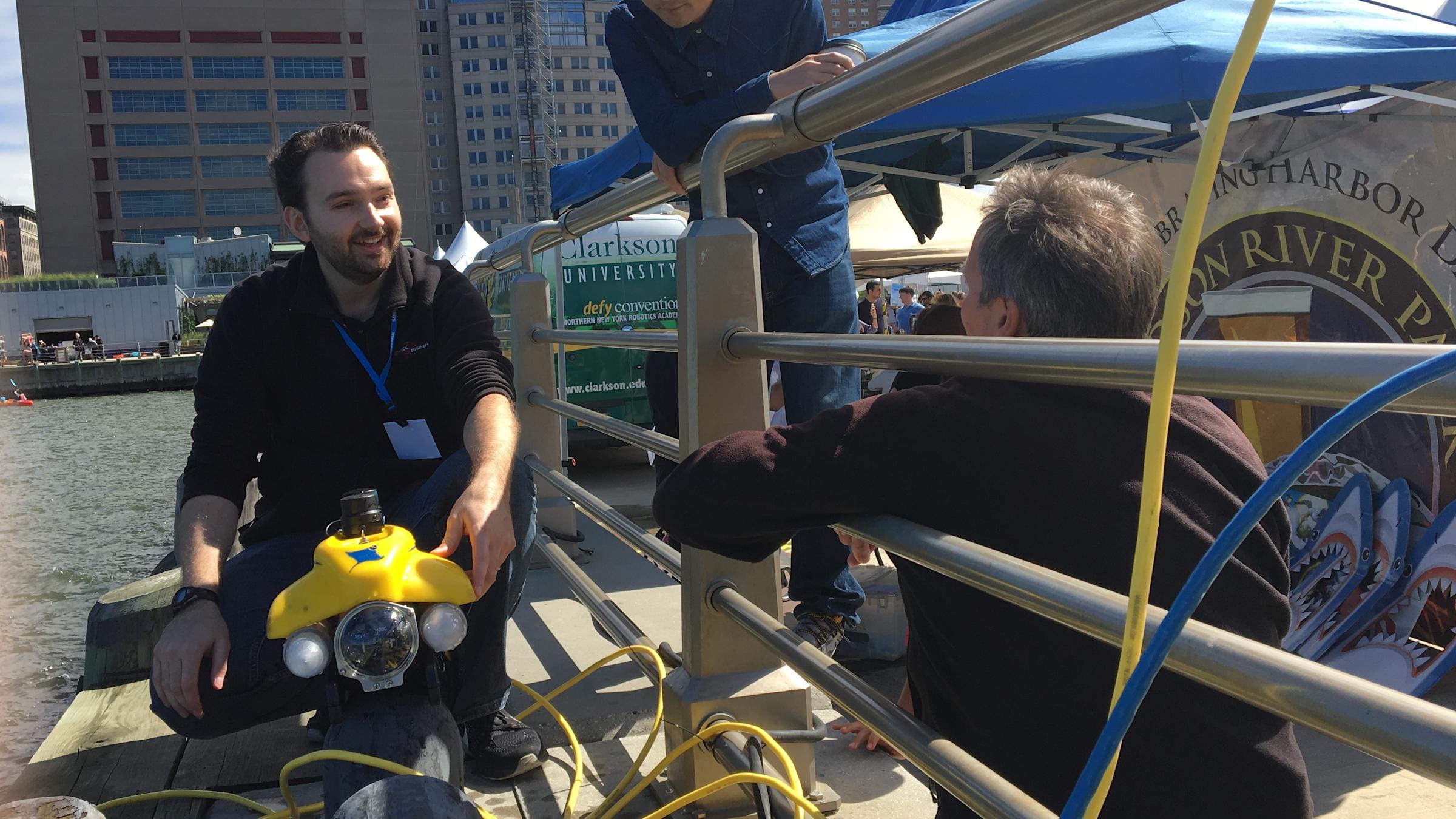
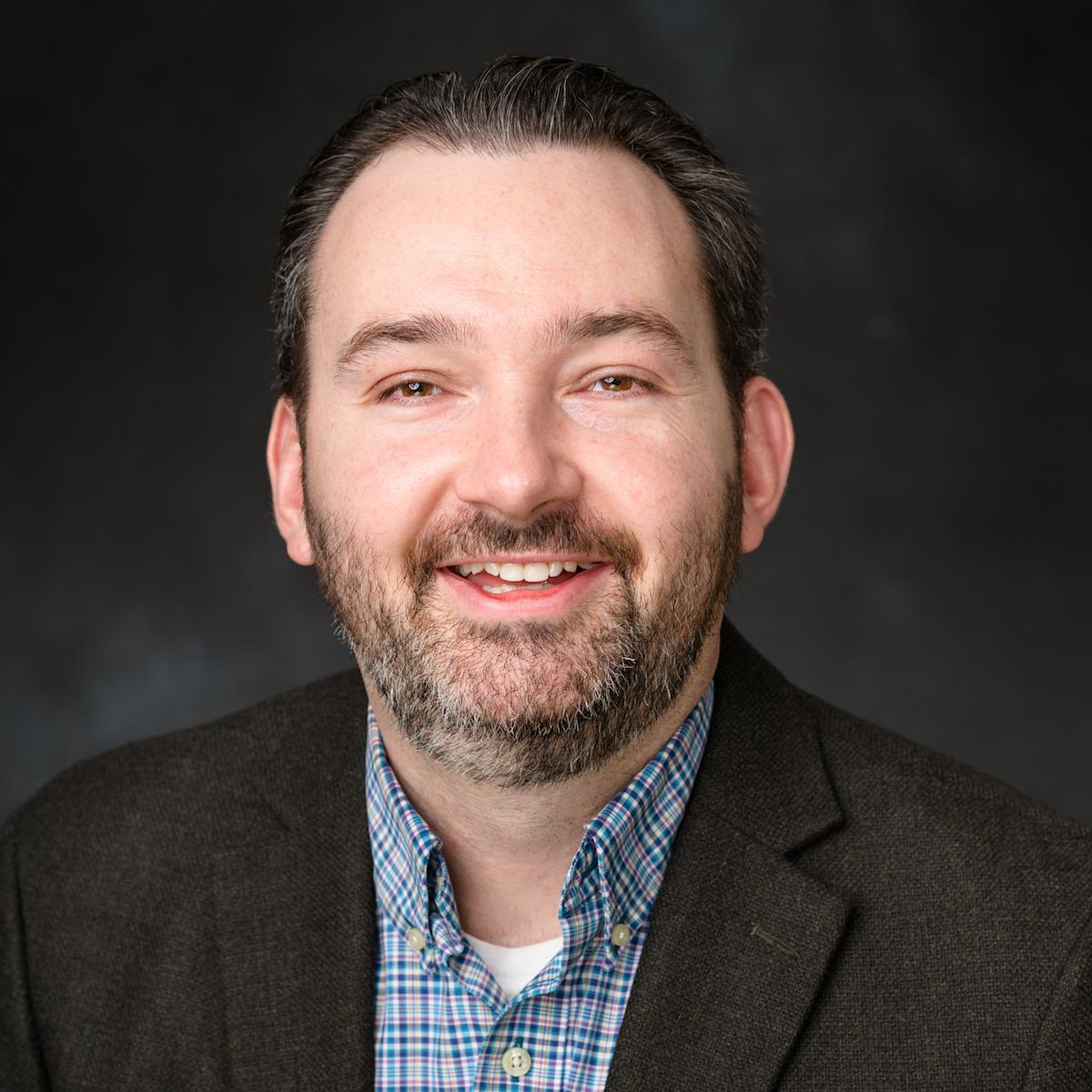
Brendan Englot, professor in the Department of Mechanical Engineering at Stevens Institute of Technology and director of the Stevens Institute for Artificial Intelligence, has secured a $1,900,885 grant from the U.S. Office of Naval Research to enhance the capabilities of autonomous surface vehicles.
The five-year study, “Advanced Autonomy for Unmanned Surface Vehicles (USVs) via Distributional Reinforcement Learning,” is designed to help USVs become more reliable and autonomous in a variety of complex, unpredictable situations. These might include tracking an algal bloom or oil plume, monitoring for damage during and after a storm, performing search-and-rescue missions, dropping off and picking up aerial drones and other USVs, and pursuing or avoiding other marine vehicles.
Englot’s interest in this research was inspired by his work on another Navy-funded project in which he investigated how to improve the safety and reliability of autonomous vehicles.
Building on the currently predominant method of reinforcement learning that teaches the machine to make decisions based on expected outcomes, he and his team will go a step further and use distributional reinforcement learning. It’s a broader approach that gives the vehicle a bigger picture so it can make more informed, safer decisions.
“Think of it like autonomous whitewater rafting,” Englot explained. “Even when a vessel has maps and GPS, it may not know about boulders, eddies or other threats until they come into view, and it’s forced to make rapid decisions for safe and efficient routing and control. Our goal is to find improved ways to help these unmanned vehicles learn to safely navigate and complete their missions through dynamic, even unexpected conditions.”
Through the project’s three stages, conducted by Stevens Ph.D. students, the system will:
learn to handle a rich portfolio of difficult tasks in unpredictable conditions to build versatile capabilities.
manage and assign missions for multiple vehicles to work together effectively as a fleet.
be tested and further trained in simple 2D and advanced 3D simulations, and then with real USVs in Stevens' hydrodynamic testing tank.
Englot and his team aim to be among the first researchers to use both a low-fidelity simulator, which Ph.D. student Xi Lin '26 custom-created, together with a high-fidelity simulator, to train large numbers of USVs to operate safely and efficiently together in the same environment.
The project will offer unique opportunities to connect with other Navy-funded researchers working on USV science and technology, as well as with Naval staff who can share guidance and feedback.
“I hope that our research will allow USVs to perform key tasks in mission-critical situations in the most challenging environments,” Englot said. “In addition to advancing this important technology and giving us improved situational awareness of coastal environments and infrastructure, it could potentially keep more humans out of harm's way.”
Learn more about academic programs and research in the Department of Mechanical Engineering: