What Unexpected Career Paths Are Open to Arts Majors?
Arts graduates move into marketing, advertising, education, publishing, technology and arts administration fields, just to name a few.
And these roles pay more than one would think, according to the U.S. Bureau of Labor Statistics. Art directors earn a median annual salary of $111,040. Special effects artists and animators earn an average of $99,800. Industrial designers earn $79,450.
Here’s a closer look at fields where creative training is a key differentiator for arts graduates.
Design and interactive media
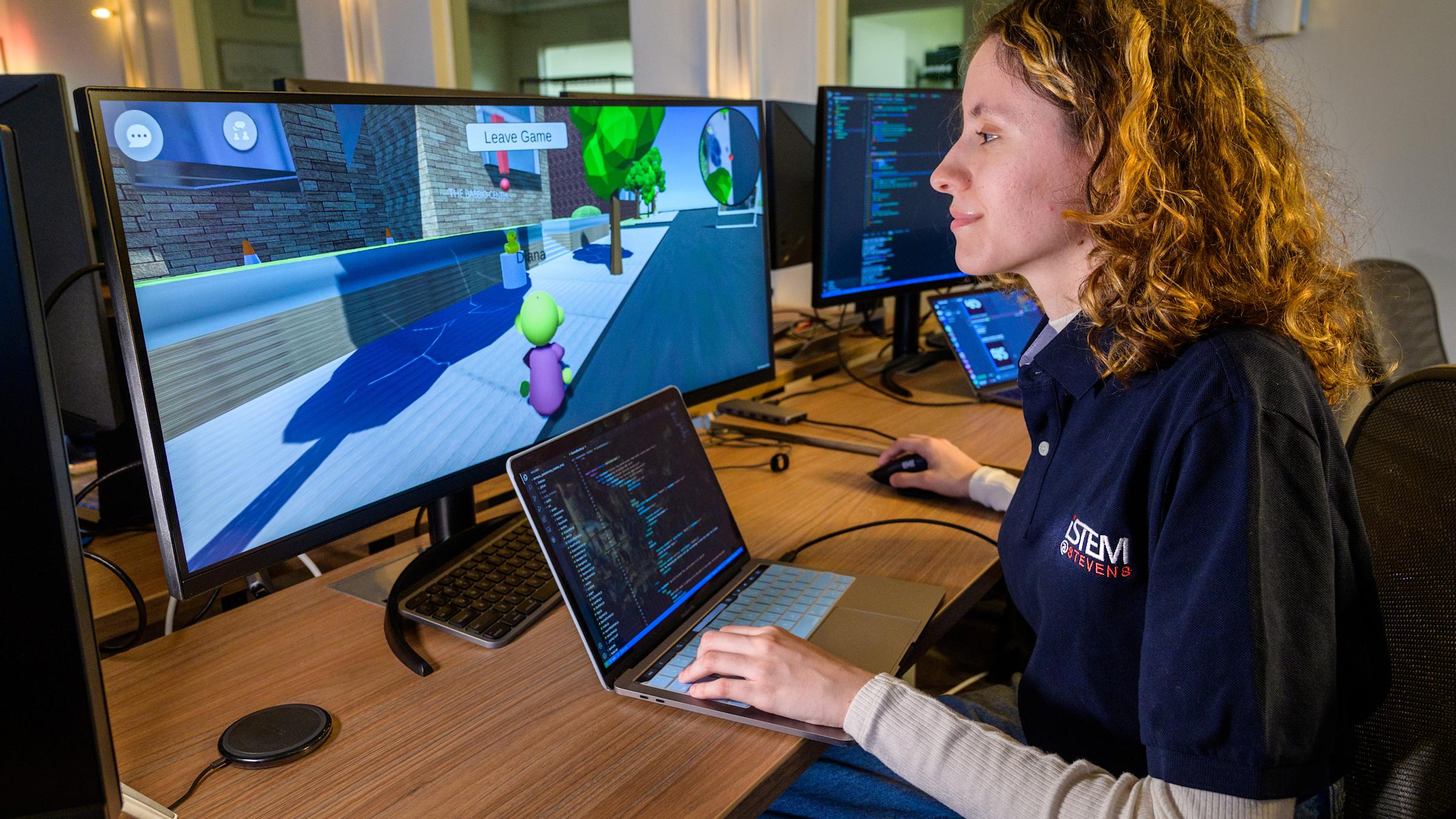
Graphic and web design are a direct extension of a visual arts background, but the field has broadened. User interface and user experience (UI/UX) design — shaping how digital products look, feel and function — draws heavily on the same visual communication skills as traditional design work. Game and app development, interactive installations and data visualization all benefit from design training and technical fluency. At Stevens, the visual art and technology major’s creative computation concentration is built around that combination.
Sound, production and media
Musical training can lead to sound engineering, audio production, and composition roles in film, television, games and recorded music. This work sits at the intersection of artistic judgment and studio technology. Arts graduates who also have technical training know how a mix should sound and what equipment can deliver the desired result. Stevens’ music and technology major reflects this directly, taking students through composition and music theory courses alongside recording, sound design and audio engineering training in the Creative Collaboration sequence.
Brand, marketing and creative direction
Companies in every sector need people who can translate a message into something tangible. Arts graduates are a natural fit for roles in advertising, brand strategy and marketing coordination. The skills involved in this work — visual communication, audience awareness and creative problem-solving — are the same ones that are developed in studio coursework. When combined with the technical training in Stevens’ visual art and technology major, students shift the application of these skills from the gallery to the campaign.
Education, arts administration and cultural institutions
Museums, nonprofit organizations and schools rely on people with arts training. Museum educators, gallery assistants, curators and arts administrators keep cultural institutions running, while art and music teachers extend that training to the next generation of students. These roles require the same critical thinking and cultural fluency that courses in Stevens’ arts majors can build.
Technology and product roles outside of the arts
The tech sector itself is a prime destination for arts majors. Companies building digital products need people who can move seamlessly between the creative and technical sides of a project rather than handing the project back and forth between separate teams. That combination of skills is exactly what Stevens’ visual arts and technology and music and technology programs are designed to deliver.
A solid foundation for the future
The combination of skills arts students build matters beyond their first jobs after graduation. AI and other emerging technologies are reshaping how creative fields work, and their evolution shows no signs of slowing down. Graduates who pair foundational arts training with technical fluency are not only positioning themselves well to fill today’s roles but developing creative adaptability that will keep them nimble for whatever comes next.