A quantum state describes a tiny particle, like an electron. It tells you everything we can know about that particle at a given moment.
Everyday objects are easy to describe. A baseball has a position and a speed, and that’s the whole story. Tiny particles don’t work like that. A quantum state doesn’t give you one clear answer. Instead, it gives you the odds of what you’d find if you checked. Scientists write this out with math, in something called a wave function.
How is this different from everyday physics?
A particle can be in more than one state at the same time. Scientists call this “superposition.”
Think of a coin spinning in the air. While it spins, it isn’t heads or tails yet. In a way, it’s both. A particle can work the same way. An electron can be part “up” and part “down” at once. It’s both, until something forces it to land on one or the other. That “something” is a measurement. The moment you check a particle, it locks into one answer. Which answer you get is based on odds.
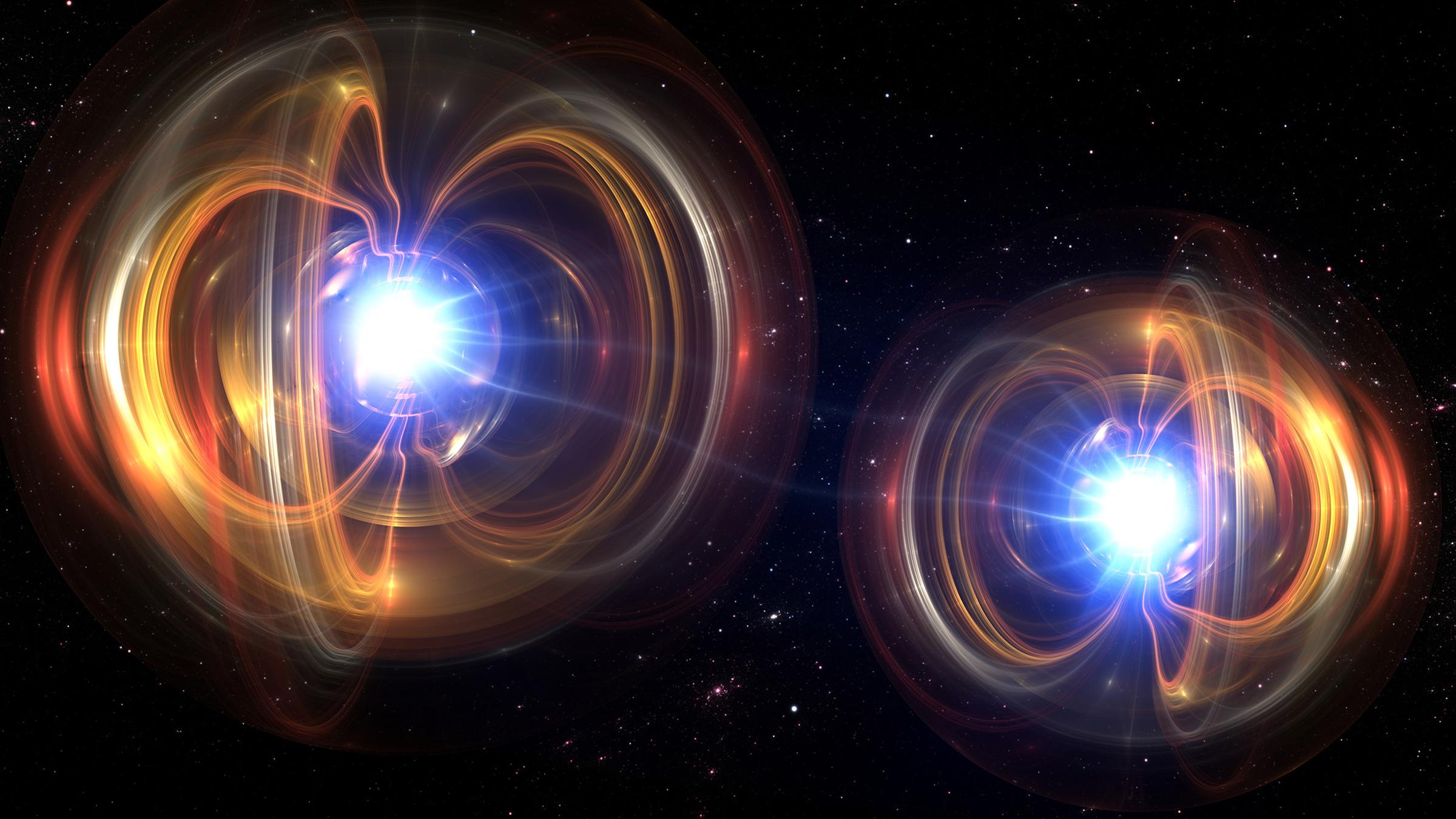
Particles can also connect to each other in a strange way called entanglement. Two entangled particles act like a matched pair. If you measure one, you learn something about the other, no matter where that “other” is.
Why does this matter in everyday life?
Quantum states are the basis for a lot of technology. Quantum computers, super-secure messaging and next-generation sensors all rely on these strange particle behaviors to do things regular computers and devices can’t. Understanding quantum state is where that work starts.
How can you learn about quantum state at the undergraduate level?
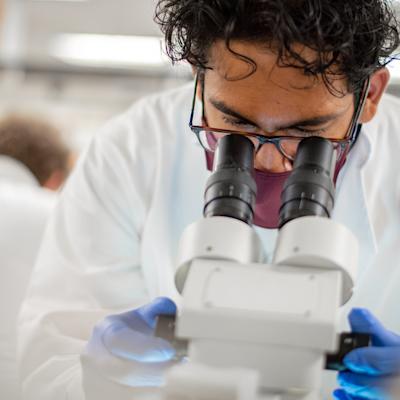
At Stevens, physics students start working in real quantum research labs early in their undergraduate experience. Physics undergraduates can even choose a quantum engineering concentration to focus even more in this area (other concentrations include astrophysics and photonics). They build toward independent research over six semesters through a structured program called the Science Knowledge Integration Ladder (SKIL).
That foundation in quantum research leads Stevens physics students to success after graduation. According to Stevens’ 2025 Careers Report, 100% of physics graduates had a job or a next step (e.g., graduate school) lined up within six months of completing their degree. Many physics majors choose to begin with positions in engineering and computer software while others pursue roles in physics or astronomy.
Blocks worth building on
Quantum state may sound complicated — and it is. But once you’ve understood it, you have the foundation to learn everything else in quantum physics. Stevens has offered quantum innovation and research for decades. The current hub of this activity is the university’s multi-disciplinary Center for Quantum Science and Engineering (CQSE), which works to develop technologies and applications in quantum computing, communication, security, optics, imaging and metrology.