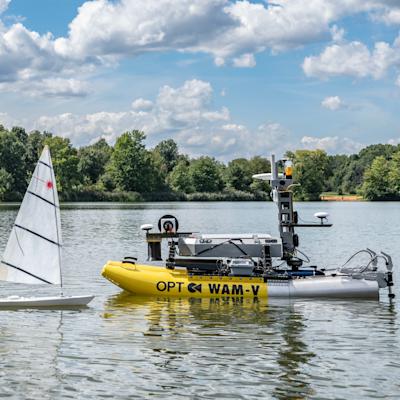
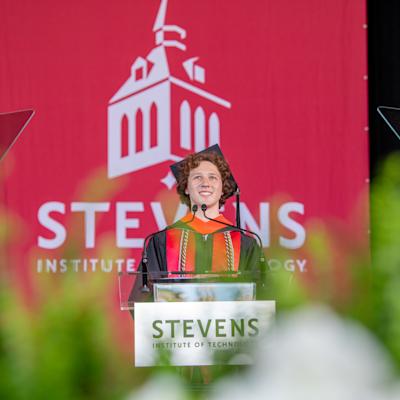
Stevens Professor Jia Mi is Helping Advance the Future of Marine Energy
Jia Mi, assistant professor in the Department of Civil, Environmental and Ocean Engineering at Stevens Institute of Technology, has been selected as one of nine 2026 Offshore Technology Emerging Leaders by the Offshore Technology Conference (OTC).
Since 1969, OTC has become an industry powerhouse, drawing more than 50,000 people from more than 120 countries each year to Houston, Texas, to share ideas, advance innovation, and promote scientific understanding of offshore resources. Its recognition of Mi, the only faculty member among this year’s cohort of early leaders in the industry, highlights this passionate researcher’s dedication to applying advanced engineering principles to solve the world’s most pressing energy projects.
And it all began at home with Mi’s father… and a well-stocked tool cabinet.
Driven to succeed
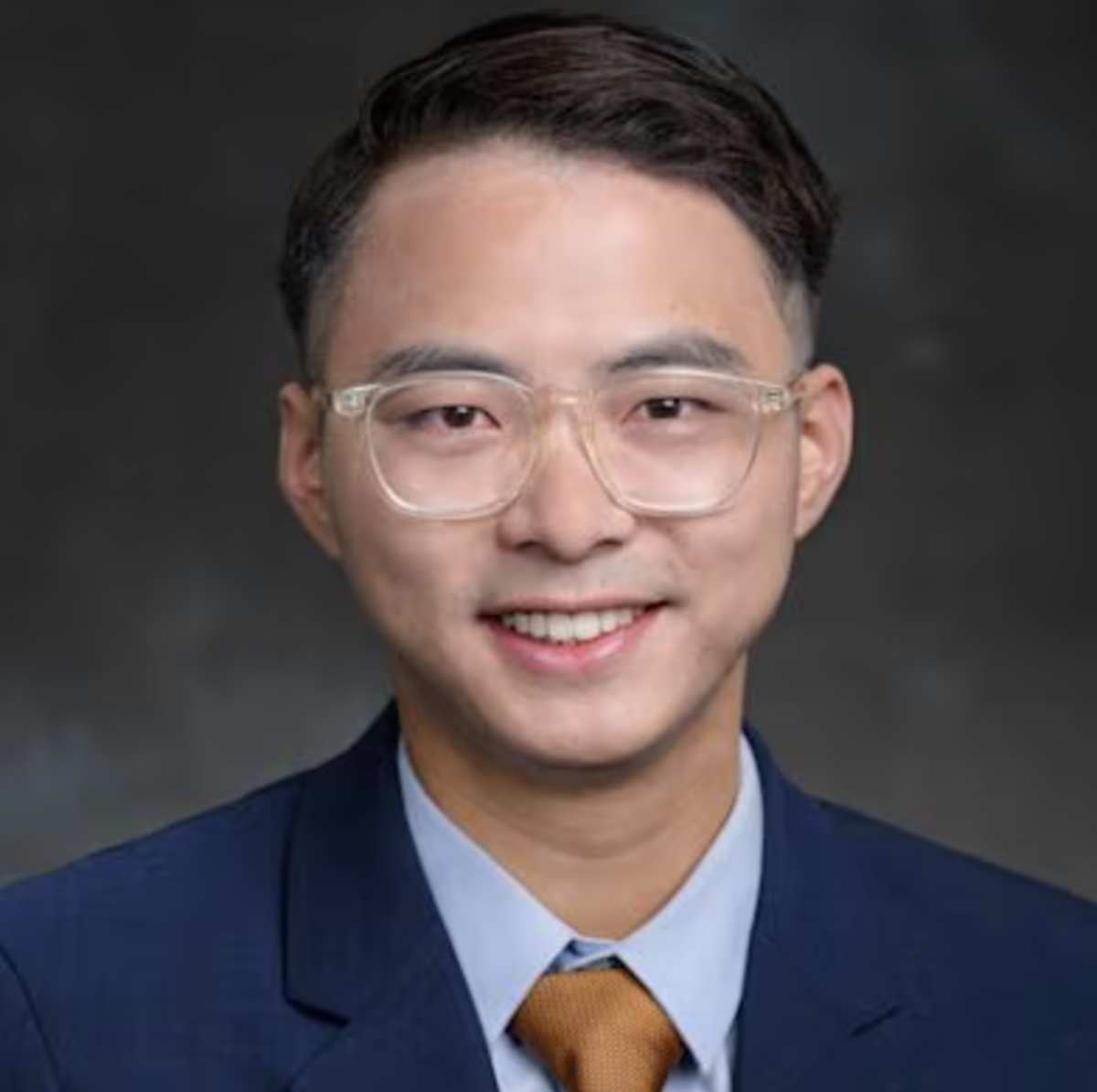 “My dad was my first engineering mentor,” Mi recalled. “As an engineer, he could fix our washer or refrigerator, and I thought it was cool to help him. Soon, I was using his tools to fix my bicycle and my toys.”
With an interest in cars, Mi earned his bachelor’s degree in automotive engineering and his master’s degree in mechanical engineering, researching how to mitigate and harvest energy from vehicle vibrations. That led him to ocean wave energy harvesting, which piqued his interest so much that he won a national award for his design of a life jacket powered by wave energy. He pivoted his focus to unlocking the energy secrets of the sea, and earned his doctorate in naval architecture and marine engineering.
Marine energy offers significant promise. Its energy density is roughly 10 times greater than solar and five times greater than wind, with total U.S. technical potential estimated at about 57 percent of the nation’s annual electricity use. But because the field is still so new, and ocean conditions are so harsh, consistency and cost-effectiveness are still barriers to real-world deployment.
“My research is trying to fill the gap by making system designs more robust and reliable under time-varying ocean conditions, and developing a practical framework to help smoothly transition from simulation to laboratory testing and final field demonstration,” he said. “The goal is to help reduce the risk of marine energy operations in the ocean and also reduce the levelized cost of energy.”
Through this work, Mi has also become interested in sustainable deep-sea mining to reduce the nation’s dependence on imported minerals use in energy, artificial intelligence, semiconductors, advanced manufacturing and defense.
“The Clarion-Clipperton Zone in the Pacific holds an estimated 21 billion tons of polymetallic nodules containing nickel, cobalt and manganese in quantities rivaling the world’s largest land-based reserves,” he noted. “Globally, seawater contains more than 230 billion metric tons of dissolved lithium, more than all known terrestrial deposits. Marine mineral mining can reduce geopolitical supply risks and position the U.S. to lead in critical mineral production.”
Making waves with educational outreach
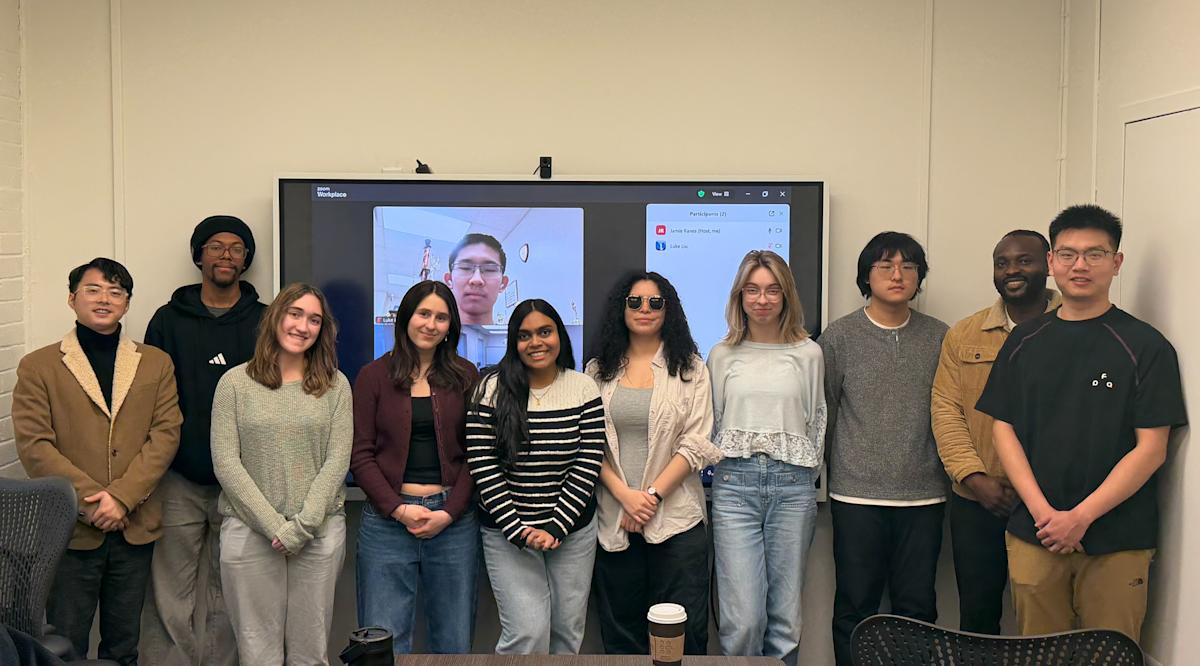 At Stevens, Mi runs the Advanced and Intelligent Energy Laboratory (AI-Energy Lab), where he collaborates with students and industry leaders to develop and leverage advanced technologies and intelligent methods to solve energy challenges. He especially appreciates the opportunity to team up with people from multidisciplinary backgrounds to solve complex marine energy challenges to benefit technology as well as the economy and social-environmental issues.
He’s also a respected mentor who advised the Stevens team – led by our latest Goldwater Scholarship winner Emily Lossman – that won the 2026 Marine Energy Collegiate Competition (MECC), earning the $20,000 prize to conduct further marine energy research into wave-powered, offshore seaweed farming system.
As a student in 2019, Mi had participated in the inaugural MECC, where his team won the Top Three team award and the Best Business Planning Award. He encourages his own students to compete in MECC because students from engineering, business, environmental science and liberal arts collaborate to solve complex problems from the wide span of technical, community engagement, business and environmental considerations.
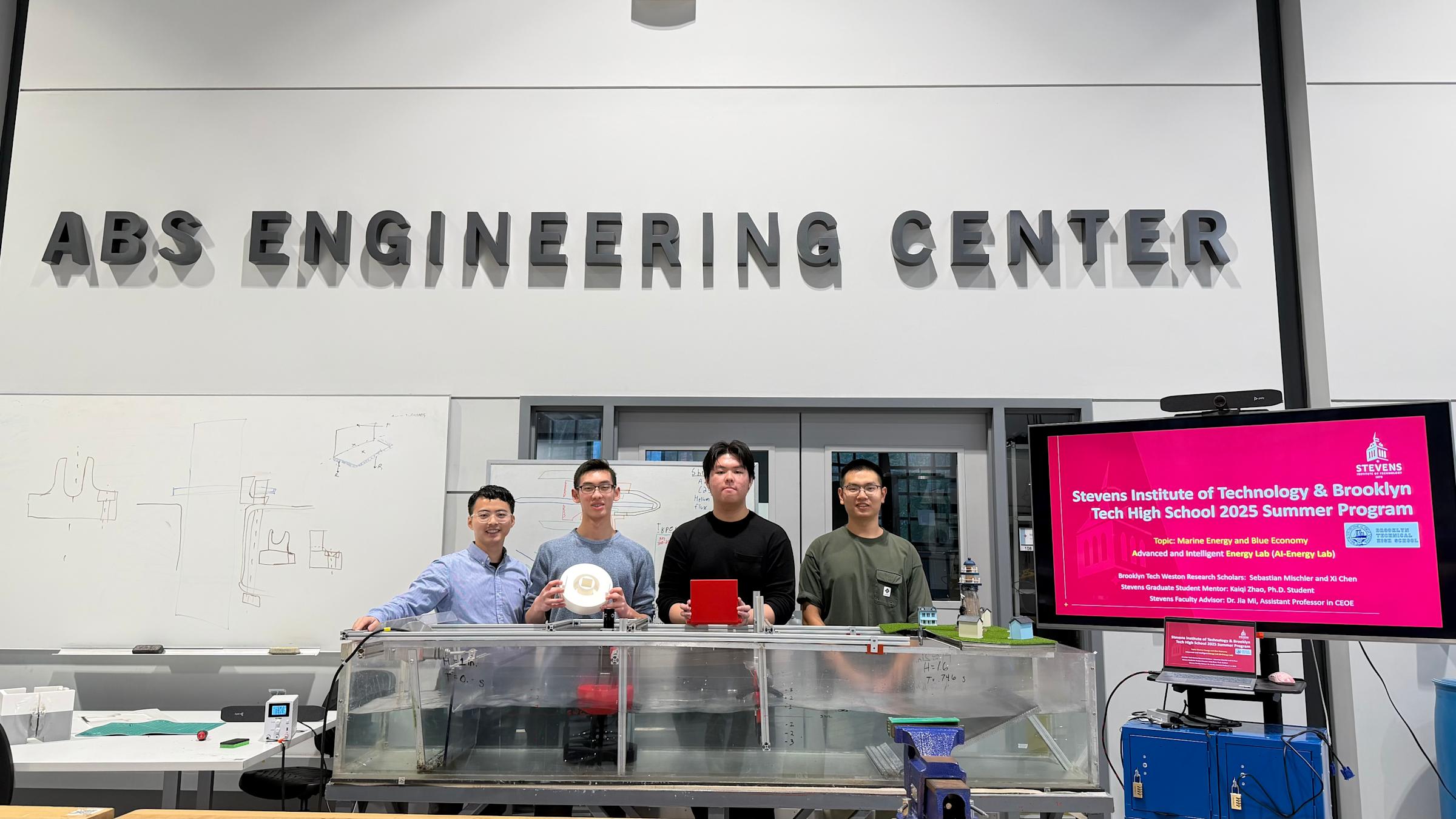
In 2025, Mi mentored two Brooklyn Tech High School students who designed, fabricated, and tested their wave energy converters at Stevens. He then visited the campus on Earth Day 2026 to present a lecture on marine energy, sustainability and stewardship. It’s part of his contribution to nurturing the next generation of marine engineers, and he’s eager to welcome them to Stevens.
“Stevens has the right programs, facilities and mechanism to support students in this field,” he said. “We will launch our bachelor of engineering in ocean engineering degree program in Fall 2026. In addition to a marine energy path, students will also be able to choose marine technology and naval architecture, or coastal engineering and resilience. Ocean engineering is opening doors in some of today’s most important industries, from clean energy and coastal resilience to maritime innovation and national security. At Stevens, students will build on the Davidson Laboratory's legacy while gaining hands-on experience in the technologies and challenges shaping the future of our oceans.”
Learn more about academic programs and research in the Department of Civil, Environmental and Ocean Engineering: