Nicholaus Parziale Wins $1.1M ONR Award to Study How Droplets Break Apart at Hypersonic Speeds
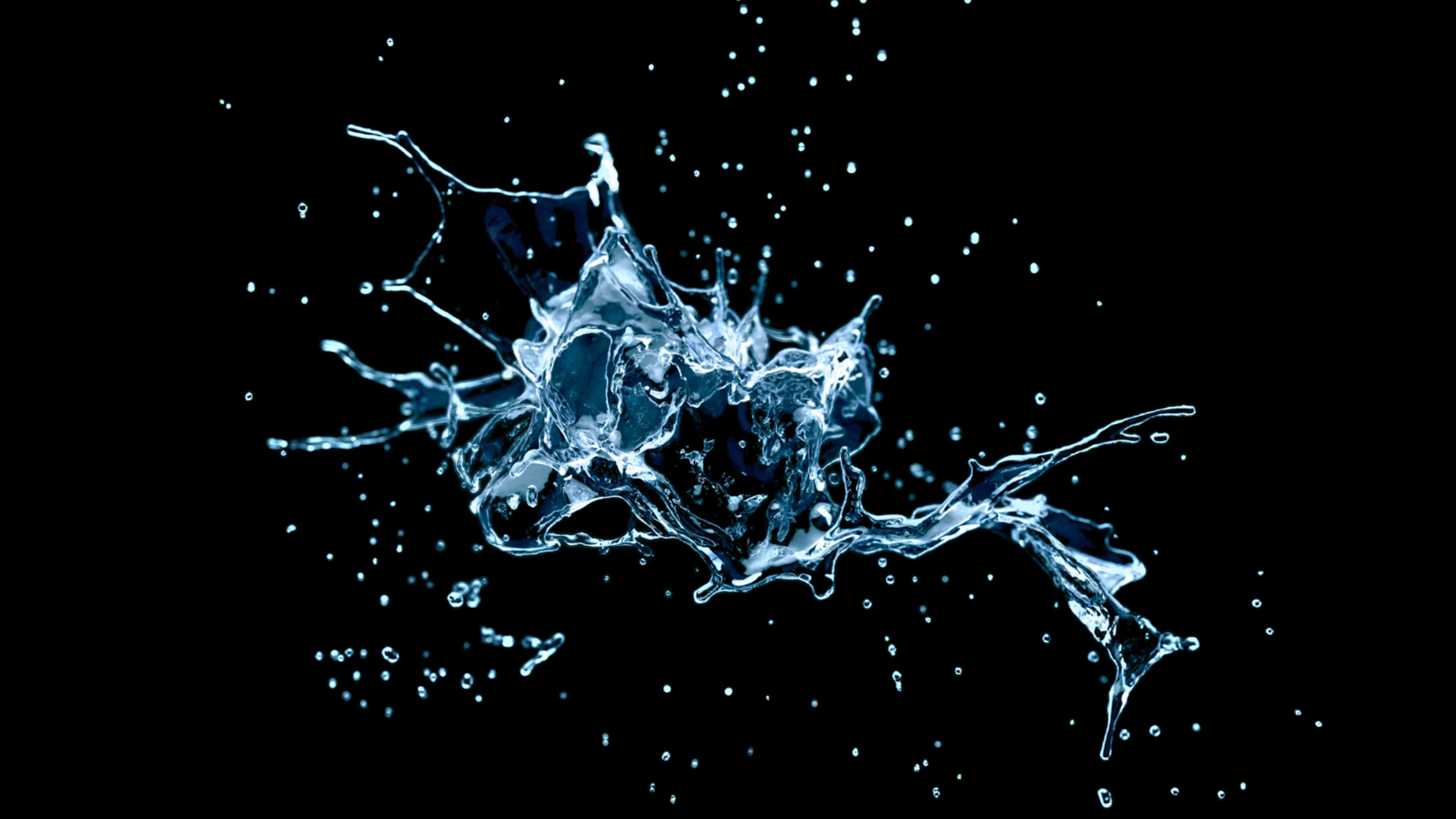
When air moving at hypersonic speeds hits a liquid drop, the result is a violent scene. The airflow flattens the drop. It shears fluid from the surface while exciting instabilities in the liquid. Ultimately, the drop breaks into smaller droplets. Researchers call this process aerobreakup.
Nick Parziale, George Meade Bond Professor of Mechanical Engineering at Stevens Institute of Technology, was awarded $1,136,926 from the Office of Naval Research (ONR) for “High-Speed Drop Aerobreakup and Impact” to study this process under extreme high-speed conditions.
“Little is known about this process at the conditions we propose to study because they are so hard to create in the lab,” Parziale said.
Those conditions are characterized by high Reynolds and Weber numbers, which compare the force of fast-moving air against effects that resist it, such as viscosity and surface tension. By gathering detailed data on how instabilities grow on a drop’s surface, how that surface behaves, and how liquid turns to vapor as the drop breaks apart, the project aims to move the field beyond formulas based on past observations toward models that can predict how drops behave under new conditions.
The research has direct relevance to Navy problems.
“The Navy cares because they propose to fly things at high speeds through precipitation,” Parziale said. “They need to know how the drop breaks up due to the airflow immediately adjacent to the vehicle and then what it looks like upon impact.”
The work also extends beyond naval systems.
“Examples include climate science, where improved breakup models could reduce uncertainty in rainfall and aerosol–cloud interactions in hurricanes, where ocean spray fragmentation strongly influences storm intensity,” he said.
He also pointed to applications in volcanology, planetary science, energy and industry, and wildfire suppression.
Building on Years of High-Speed Research
The new award from ONR is the latest chapter in an ongoing, high-profile research program that Parziale has been developing throughout his career at Stevens.
This new project builds directly on previous work, such as the $1.2 million ONR Multidisciplinary University Research Initiative hypersonics grant his lab was awarded in 2020. That project brought together a large research group to study how precipitation and particulate matter in the atmosphere might degrade a high-speed vehicle's performance.
In 2023, ONR awarded Parziale $953,000 to study hypersonic turbulence, and in 2025, he received the Presidential Early Career Award for Scientists and Engineers (PECASE), which included a $1 million grant to advance understanding of high-speed fluid mechanics.
“The PECASE was through the Air Force and focused more on aerodynamics, but they are all interrelated,” he said.
Parziale is also the recipient of the 2026 AIAA Aerodynamic Measurement Technology Innovation Award, which he called “a terrific honor because it is an award where you are nominated and voted on by your peers.”
Watching a Drop Break Apart
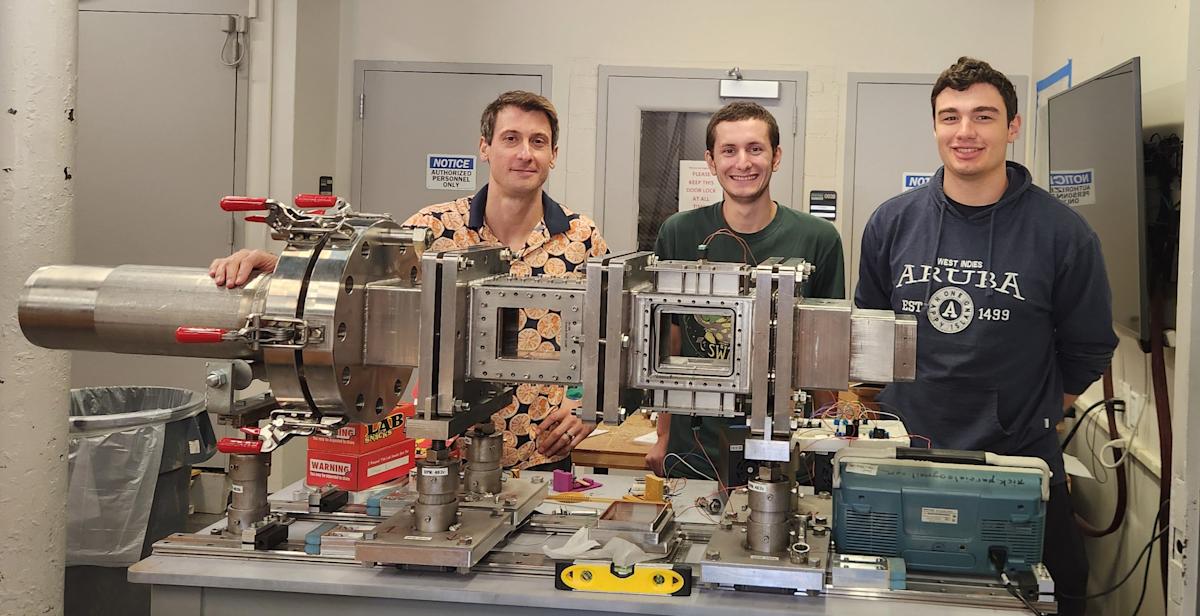
The first component of the new project will take place in the Stevens Shock Tube.
“A shock tube allows you to impulsively accelerate gas to a high speed for a short period of time,” Parziale said. “It is a great way to create hot, dense, fast gas in a controlled environment.”
Inside the tube, researchers suspend a liquid drop using ultrasonic levitation so that it does not touch a support. The technique uses sound waves too high-pitched for humans to hear to hold the drop in midair.
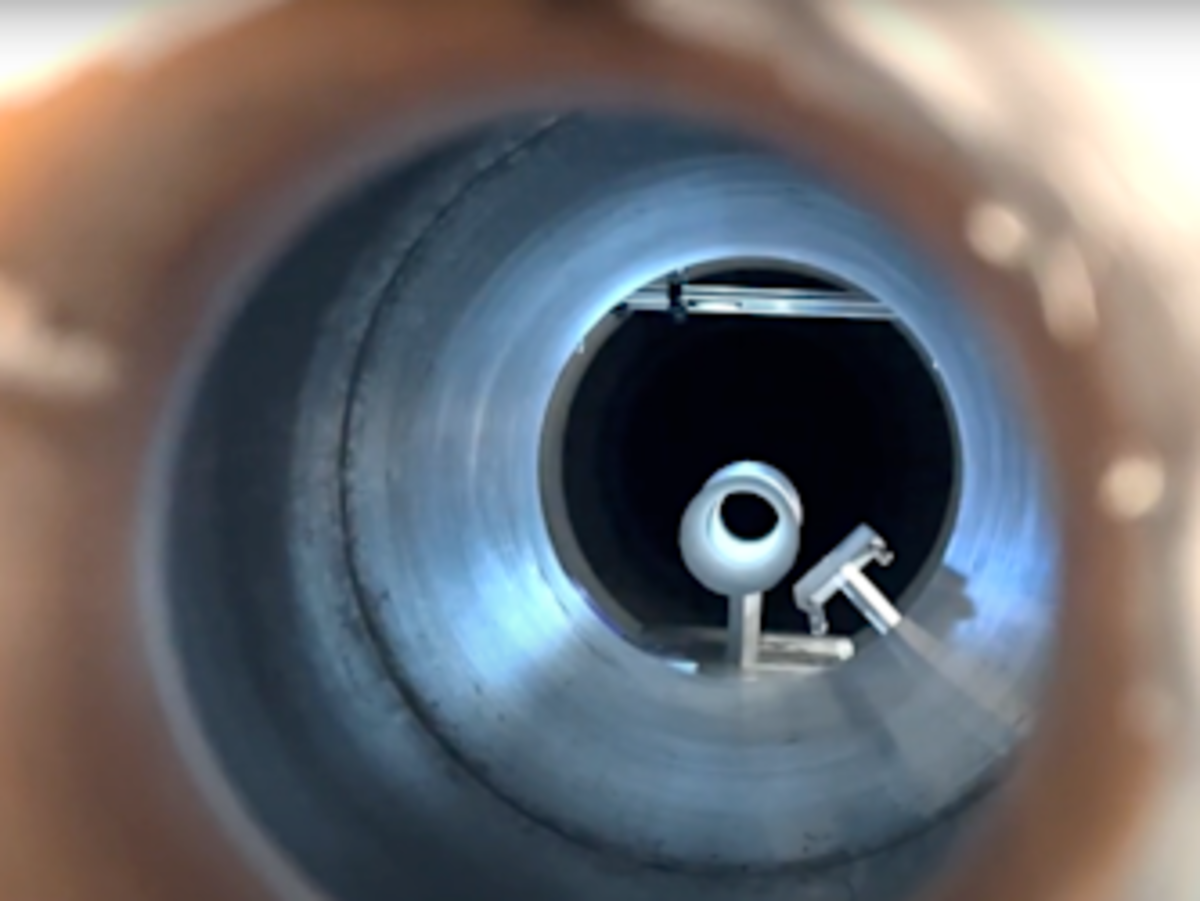
“A shock passes over the drop while synchronized high-speed imaging records how it flattens, stretches, breaks apart, and loses mass,” Parziale said. “We can systematically change the drop size, liquid, gas, and pressure to isolate the physics.”
Once a drop begins to fragment, however, an ordinary camera can capture only so much. According to Parziale, it usually records only a silhouette.
“Once sheets, droplets, and vapor begin overlapping, it becomes difficult to determine how much liquid remains or what is happening inside the cloud,” he said.
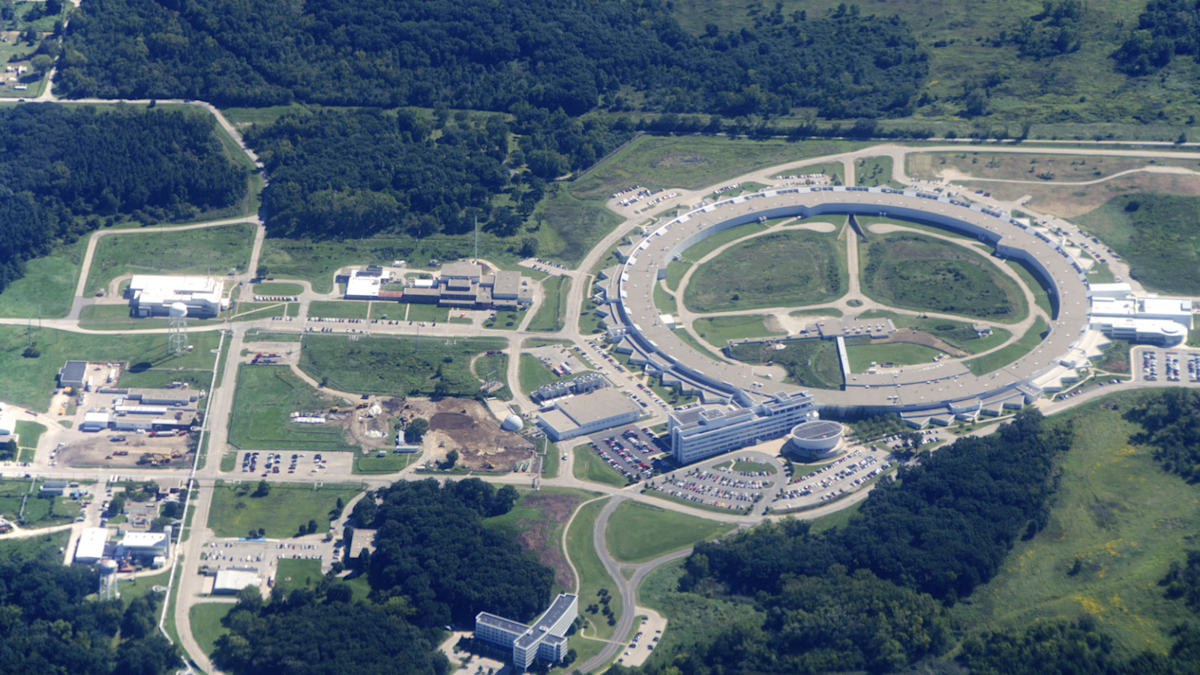
To see inside that cloud, Parziale’s team will turn to the Dynamic Compression Sector of the Advanced Photon Source (APS) at Argonne National Laboratory, one of the few facilities capable of making these measurements at the required speeds. There, researchers will also conduct droplet impact tests using a powder gun.
At the APS, high-energy X-rays can pass through the dense cloud of liquid and vapor that blocks visible light. That lets researchers see inside the breaking drop. According to Parziale, the imaging can reveal "internal cavities, overlapping fragments," the shape of the liquid’s surface and how much liquid remains as the drop comes apart.
“A single X-ray view is still a line-of-sight measurement, not a complete three-dimensional picture, but it provides information that visible-light imaging cannot,” he explained.
As a stretch goal, the researchers plan to build a compact, high-pressure shock tube specifically for use at the APS. The proposed design is about four meters long, with a 50-millimeter internal diameter.
“It would bring a controlled, levitated-drop experiment directly into the X-ray beam and allow us to record breakup at 300,000 frames per second or faster,” Parziale said. “If successful, it would become a reusable platform for testing different liquids, gases, pressures, and breakup conditions.”
As for the potential long-term payoff of this project, Parziale described the connection to naval propulsion as more indirect, but important. He explained that better models of how drops break apart and turn to vapor could improve predictions of how fuel breaks into a fine spray, mixes, and burns, supplying tested physics for future propulsion designs.
For hypersonic vehicles, Parziale explained, the long-term goal is to trace a drop’s entire journey, from the moment a vehicle meets it through breakup, the motion of its fragments, the force of their impact, and possible damage to the vehicle’s materials.
“That could improve weather-operating limits, material selection, survivability margins, and the targeting of future flight tests,” he said.
For students considering a future in engineering or research, projects like this demonstrate the range of problems researchers can take on.
“A career as a university researcher in STEM is incredibly rewarding,” Parziale said. “You get to work with smart people on fun problems.”
Learn more about academic programs and research in the Department of Mechanical Engineering: