Ilke Uguz Connects Engineering and Biology to Better Understand the Human Brain
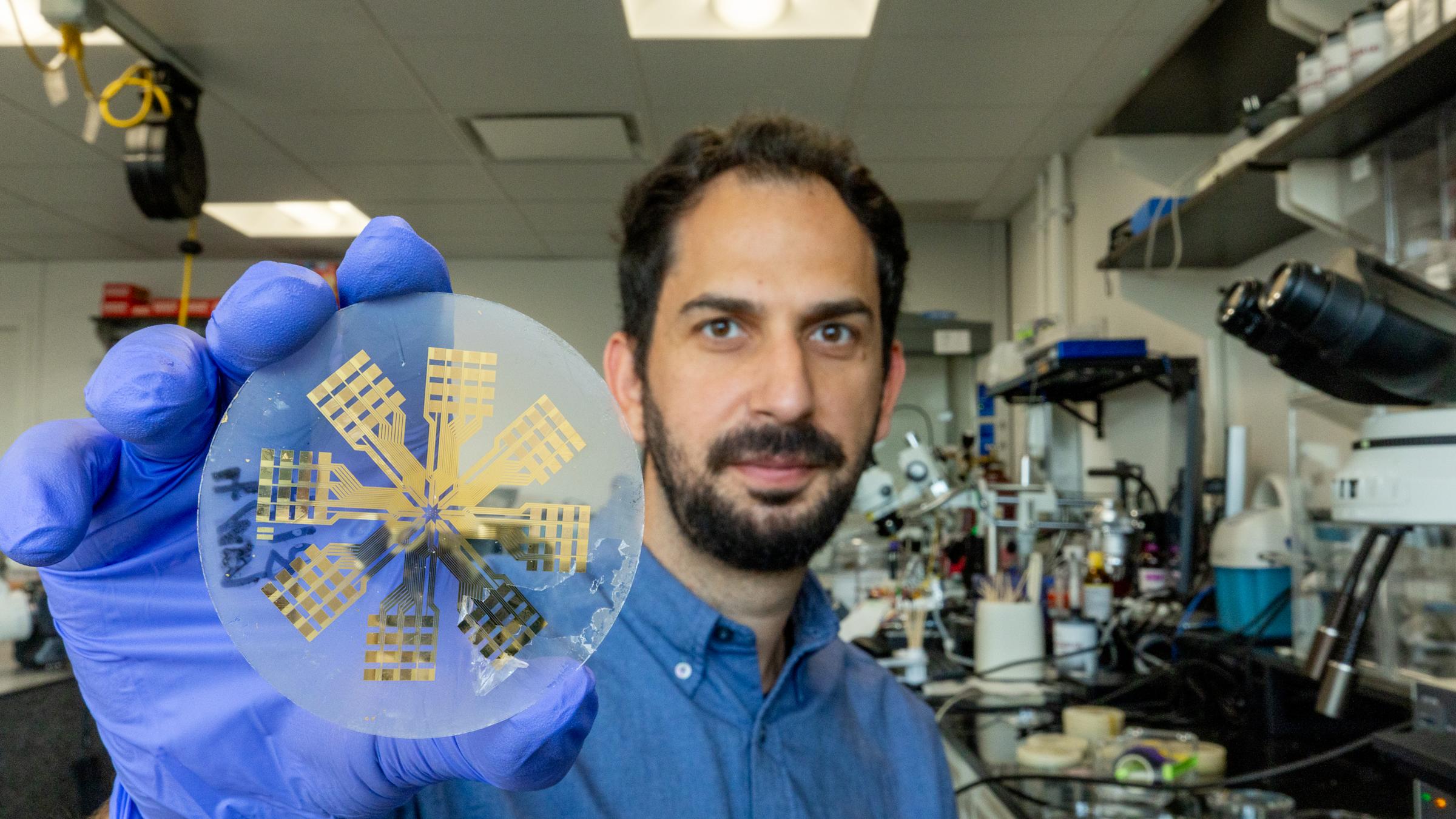
Ilke Uguz has always enjoyed tinkering with things to understand how they worked.
 “One of my earliest projects was trying to combine a toy boat with a motor I attempted to take from a handheld mixer,” he recalled with a laugh. “It neither worked, nor was it very well received by my parents, which I found quite surprising. They started giving me construction toys, not because they thought it would improve my skills, but to protect household equipment. I always felt that turning this kind of curiosity-driven exploration into a career would make life just as fun and engaging as an adult.”
And that’s exactly what led him to his career path and his current role as assistant professor in the Department of Biomedical Engineering at Stevens.
Combining his innate drive to ask questions with an equal fascination for the complex biological engineering of the human body led Uguz to his professional path in biomedical engineering. His current work sits directly at the intersection of his undergraduate studies in electrical engineering at Yildiz Technical University in Turkey, his master’s work in biophysics at Dresden Technical University in Germany, and his Ph.D. in materials science through École des Mines de Saint-Étienne in France.
“Physics gave me a foundation to understand phenomena at the cellular scale, engineering trained me to translate those principles into systems at larger scales, and materials science provided the tools and components needed to bridge the two,” he explained. “I believe it is increasingly important to work at the convergence of fields and to integrate perspectives. That broader exposure leads to a more versatile skill set and a stronger research approach.”
Building technology the brain can live with
Uguz’s work is concentrated at the source of concentration: the brain, where billions of independently functioning neurons form intricate circuits that govern everything from movement and vision to hearing and consciousness, far beyond even the most advanced computers.
“We design and build biosensors, then use them to better understand the body at the boundary between technology and biology,” he said. “We’re connecting ongoing biological processes with external devices in ways that feel more natural and compatible.”
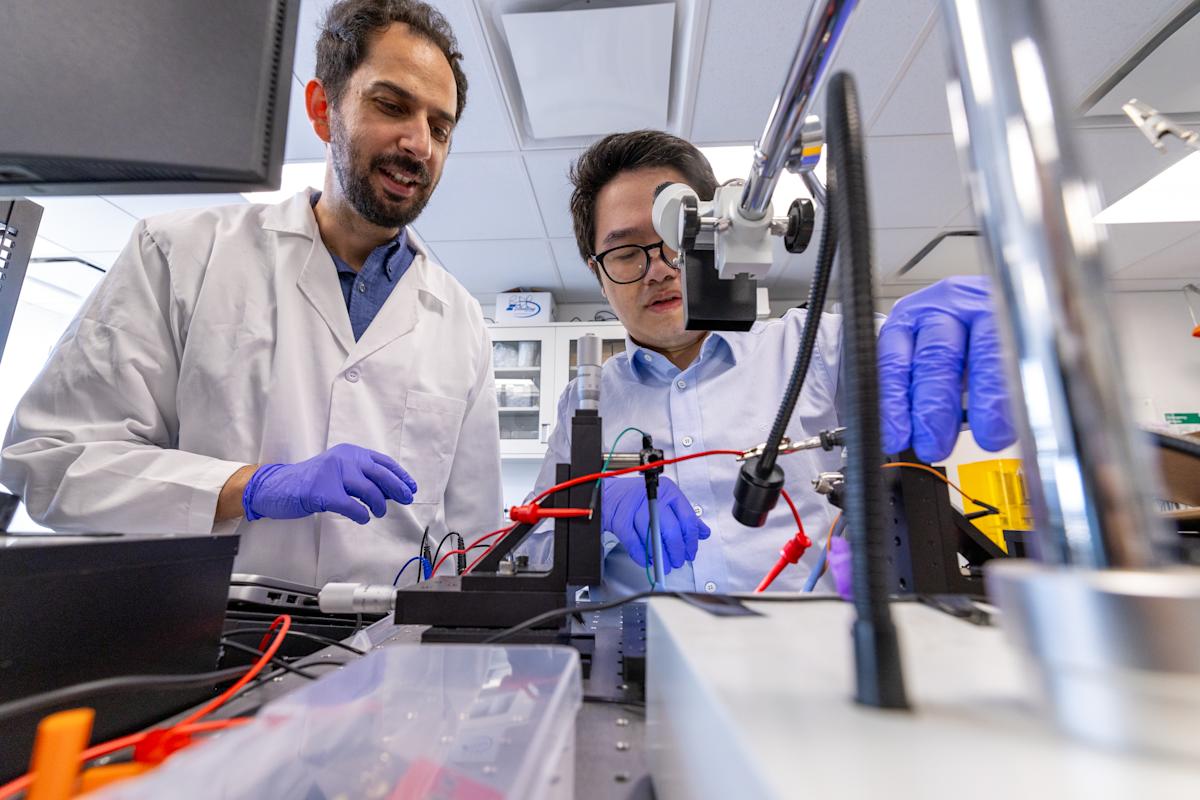 Last year, Uguz launched the Stevens InBrain Electronics Lab, designed to develop implantable platforms that can record brain activity and deliver targeted drugs. Specifically, he is building devices that go inside the brain to help doctors study and treat brain conditions such as Alzheimer’s disease, Parkinson’s disease and brain tumors.
Because the brain is soft and delicate, traditional hard, stiff designs do not work well. Instead, Uguz makes soft, flexible, lightweight, tiny, electronics that last a long time — ideally, a lifetime. This would allow researchers to follow the brain’s changes from a healthy state to a disease state, enabling earlier diagnosis and timely intervention.
“What excites me most is working with unconventional electronics whose capabilities improve every day,” he says.
“This research is essentially collaborative: I do my part, publish my results, and learn from others, which allows me to help push the field forward, step by step. Being part of this process and seeing how small contributions build toward transformative technologies is what keeps me passionate about this work.”
Meeting of the minds
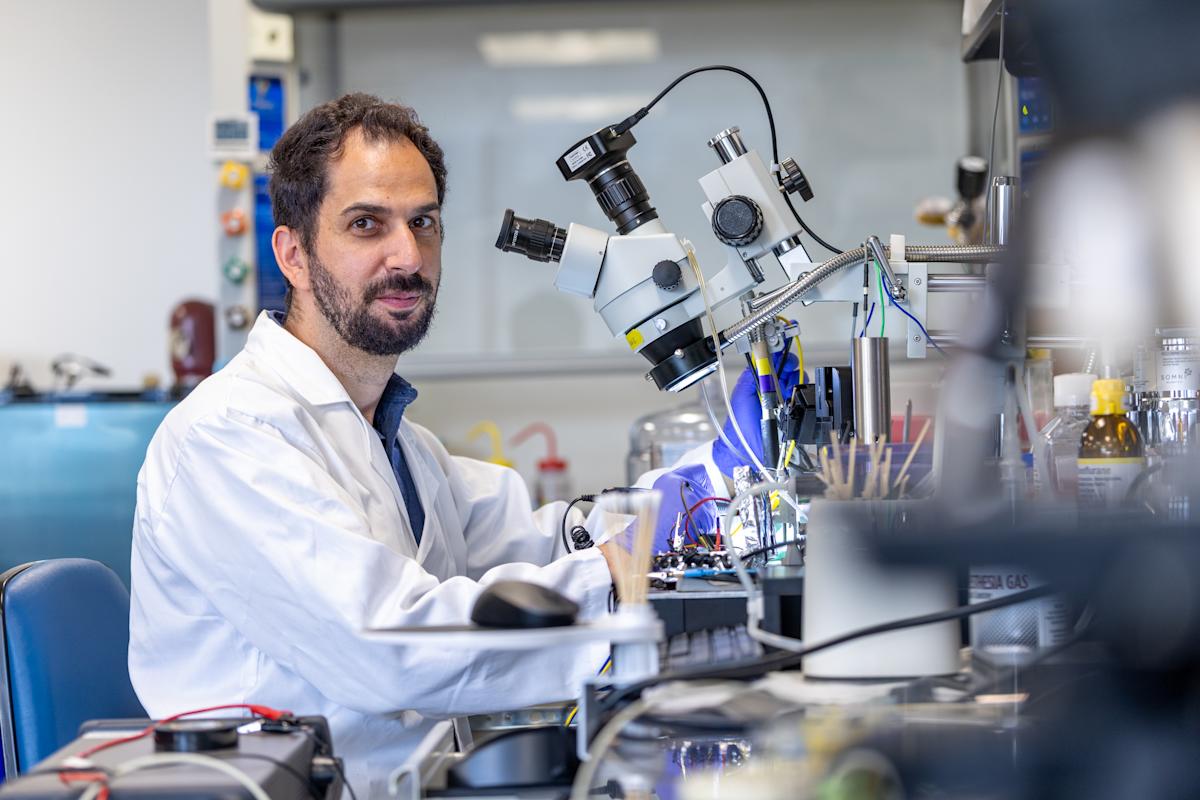 He’s also energized by his work with the next generation of tinkerers becoming biomedical engineering leaders. In his lab, students from electrical engineering backgrounds design implants, and students with physiology backgrounds test the devices in animal models.
“Our students naturally see how parts of the process fit together,” he said. “They collaborate across disciplines, participate in meetings and lab visits and teach each other their skills so their training covers the full spectrum of device development and testing.”
As the lab gains momentum, Uguz has one special project on his wish list.
“Now it is time to try the toy boat motor idea again,” he said, “just a bit smaller this time to cruise through brain waves.”
Learn more about academic programs and research in the Department of Mechanical Engineering: