Meet L.I.N.C.: The Stevens-Built Robot Heading Into the Lincoln Tunnel
A student-built robot takes on a real-world mission beneath the Hudson River
The Lincoln Tunnel carries roughly 120,000 vehicles a day beneath the Hudson River. Hidden alongside that traffic are narrow catwalks once patrolled by manned electric vehicles, now dormant for more than 20 years.
A team of Stevens students is working to bring them back to life — with a robot.
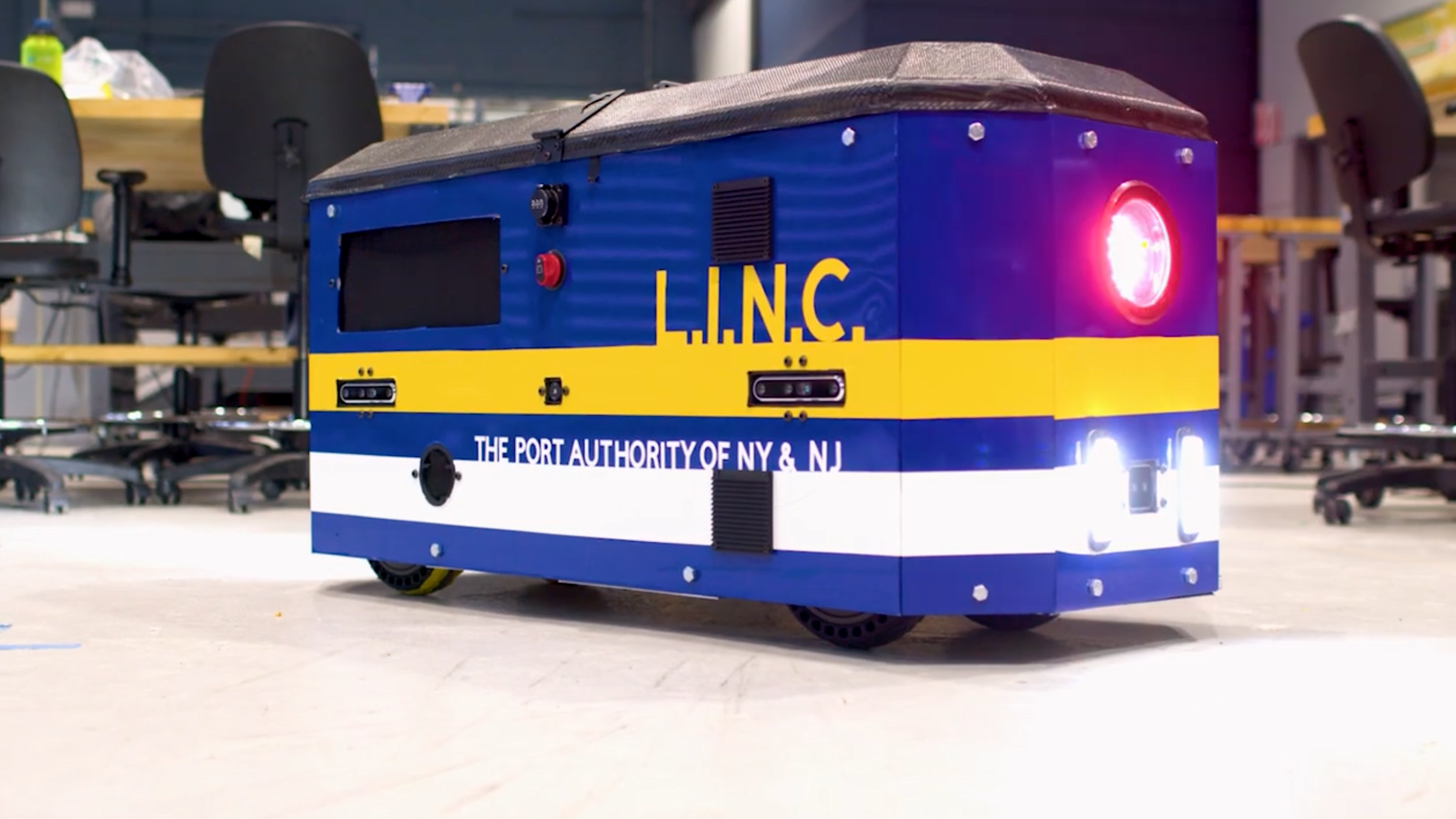
Over the last year, six undergraduates designed and built L.I.N.C. — the Lincoln Investigation and Navigation Cadet — an autonomous robot engineered to monitor those catwalks in real time. Developed in collaboration with the Port Authority of New York and New Jersey, L.I.N.C. is designed to detect accidents, fires, flooding and other emergencies, transmitting critical information directly to tunnel operators.

Built From the Ground Up
L.I.N.C. is the product of months of hands-on engineering, from machining and welding to advanced electronics and AI integration. The six-member team — Noah Golan ’27, Christian Osowski ’27, Dominic Souza ’27 and Adrien Susino ’27 (Mechanical Engineering) and Mauricio Sanchez ’27 and Jared Surajballi ’27 (Electrical and Computer Engineering) — worked under the guidance of faculty advisor Anthony Shupenko, Jr., PE, Teaching Associate Professor in the Department of Civil, Environmental and Ocean Engineering.
To operate in a live tunnel environment, L.I.N.C. functions as a mobile sensing platform. Six onboard cameras serve as its eyes, running AI models that detect vehicles, measure distances and identify pedestrians. A thermal camera scans for signs of fire, while onboard sensors keep the robot centered along the narrow catwalk as it moves.
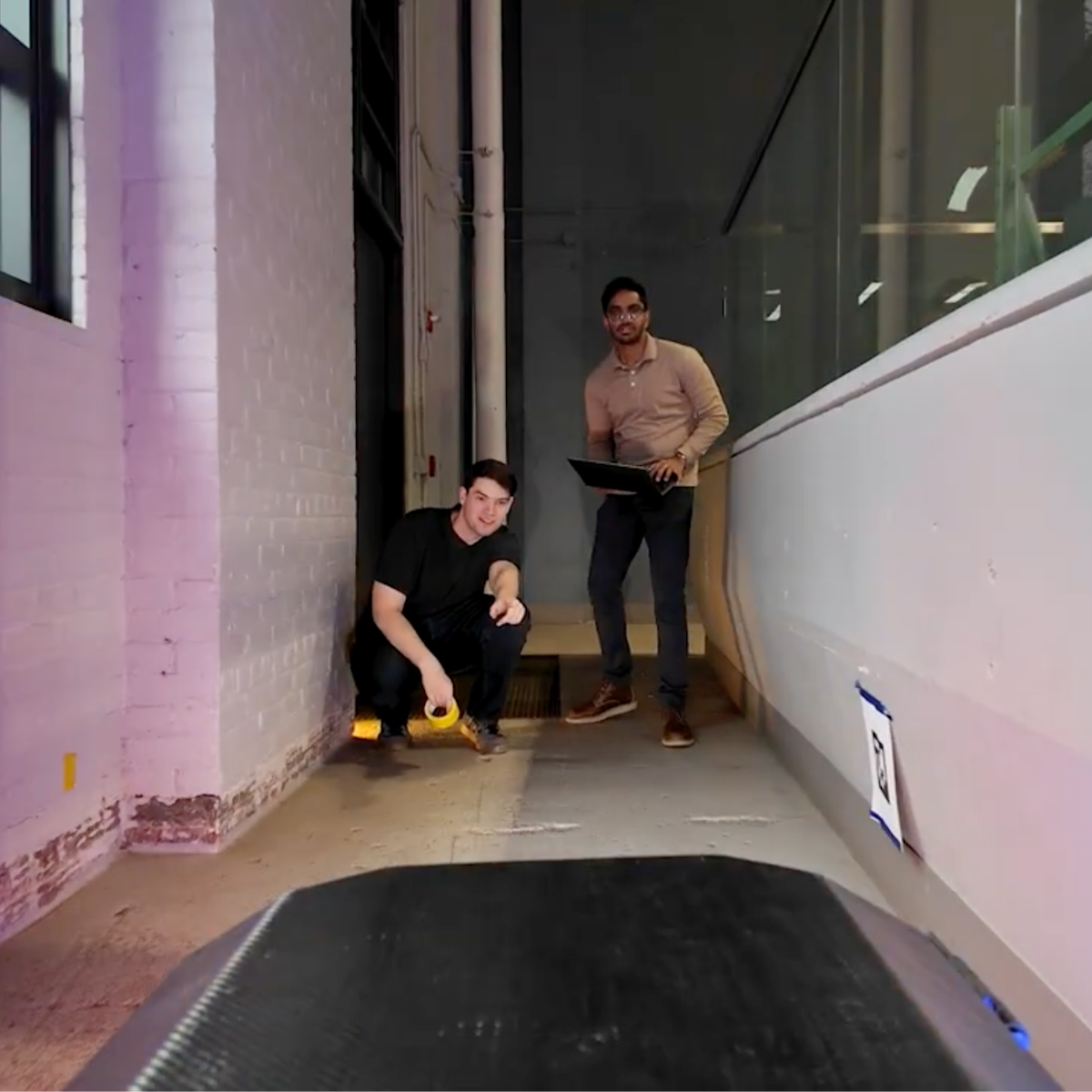 A high-speed processor analyzes incoming data in real time, and the system is designed to enable direct communication between tunnel occupants and Port Authority staff —helping accelerate response times, even in areas that are difficult for first responders to reach quickly.
Advancing to the Next Phase
Stevens was one of just two universities selected by the Port Authority to advance to the prototype phase of the competition. The team received $10,000 in funding to continue development — and all six students were offered internships with the Port Authority last summer, where some of them worked on the very infrastructure their robot is designed to support.
The Port Authority will announce the competition winner in late May. The selected team will continue development into the fall, with the potential for real-world implementation inside the tunnel. If selected, L.I.N.C. could one day patrol one of the region's most critical transportation corridors — bringing a long-dormant safety function back online in an entirely new form.
"Designing this robot required our team to bring expertise from each of our own hobbies and talents to meet all of the challenge requirements," the team said. "We are excited about taking this design to the prototype stage. We can say for sure we are all walking away with many new skills that we will take with us through our careers. And thank you to the PANYNJ for this opportunity."
Look for L.I.N.C. at Innovation Expo
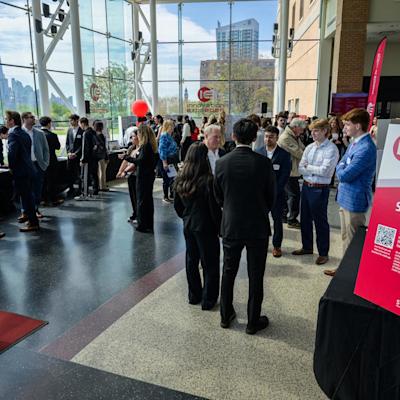
Look for the Stevens Port Authority Robotics Team at Stevens' Innovation Expo on May 8, where student researchers and engineers share projects with the university community, industry partners and the public.