Harnessing Light, Matter and Measurement to Leverage Quantum Physics and Transform the Future

At the smallest scales of nature, the rules of physics behave in ways that seem almost impossible. Particles can exist in multiple states at once, influence one another across immense distances as they have the ability to transcend the limitations of three-dimensional space and respond to tiny changes in their environment with extraordinary sensitivity.
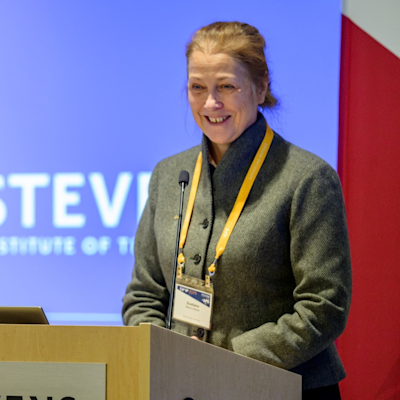
Scientists believe these unusual quantum properties could power a new generation of technologies—from ultra-precise sensors to advanced computing systems, as well as great advancements in environmentalism, medicine and much more. Stevens researcher Svetlana A. Malinovskaya, professor of physics and leader of the Ultrafast Dynamics and Quantum Control Theory group, is developing ways to harness these effects by learning how to precisely control interactions between light and matter.
Once science fiction, now the catalyst for a quantum breakthrough
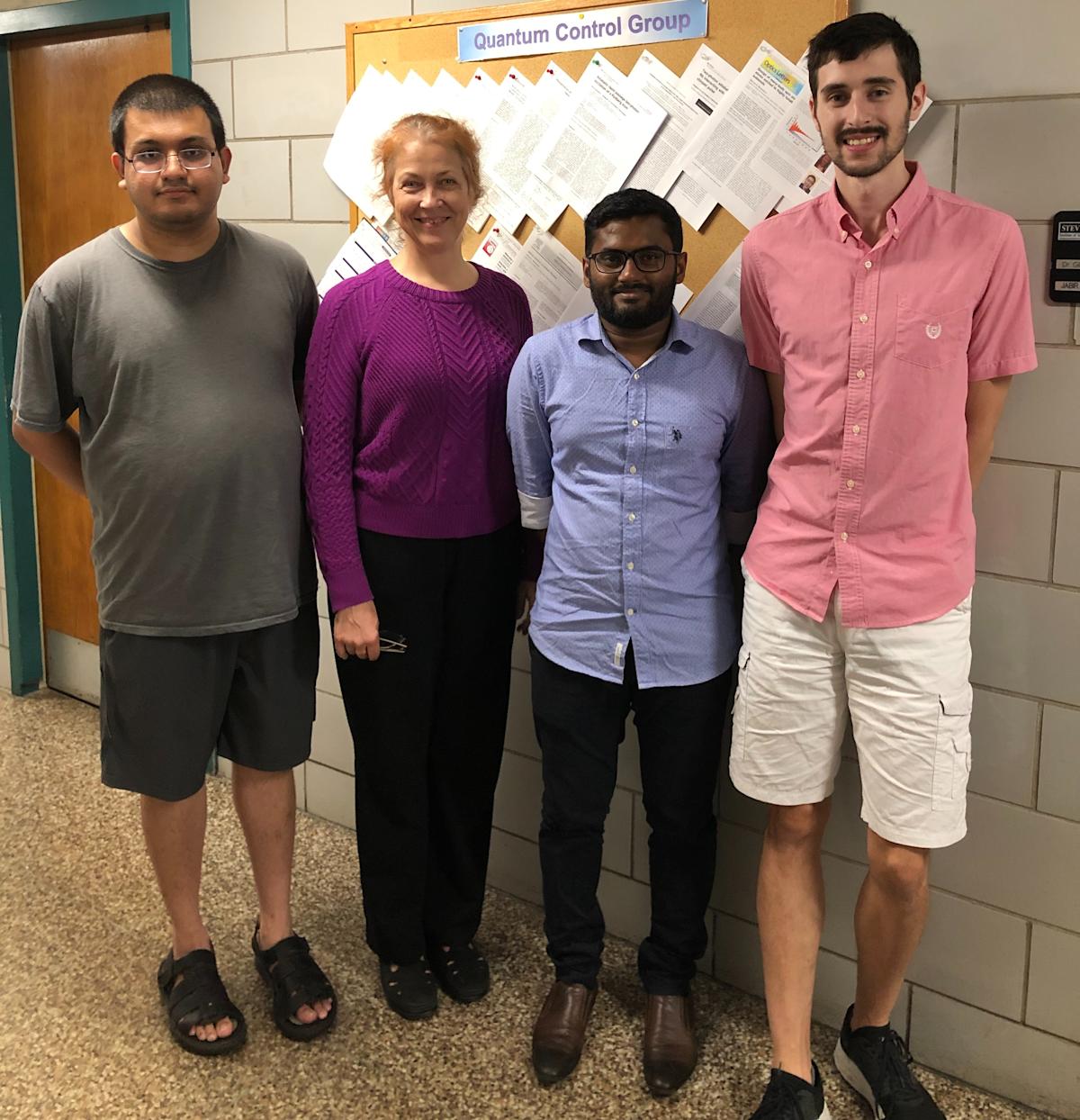 Malinovskaya’s research focuses on quantum control — the ability to guide the behavior of atoms and light using carefully designed laser pulses and electromagnetic environments. By steering quantum systems with precision, she and her team can transform fragile quantum effects into tools for sensing, measurement and information processing.
“My fascination with light–matter interactions and quantum optics took shape during my time at the University of Michigan, where I worked as a postdoctoral fellow in the NSF-funded FOCUS Center,” Malinovskaya explains. “Immersed in a vibrant environment that brought theorists and experimentalists together, I pursued theoretical studies of ultrafast Raman spectroscopy and developed methodologies for the selective excitation of Raman modes.”
That work explored how tailored light fields can manipulate molecular vibrations on extremely fast timescales, opening new possibilities for controlling quantum processes in molecules.
Untangling one of physics’ greatest mysteries for better measurement
A major focus of her research today is quantum entanglement, a phenomenon Albert Einstein famously described as “spooky action at a distance.” When particles become entangled, measuring one reveals information about the other, even when separated by enormous distances. It was once believed that physical, three-dimensional space was a fixed stage whose laws governed the entire universe. But discoveries in relativity and early quantum research fundamentally altered that view, revealing a far more complex picture in which space and time are intertwined and the behavior of matter at very small scales no longer follows the rules of classical physics. At the subatomic level, our intuitions about how particles move through space simply break down. The speed of light remains one of the fundamental constants of nature, and although photons behave in ways scientists are still working to fully understand, modern technology allows us to use light as an extraordinarily precise tool for studying some of the smallest particles and phenomena in the universe.
In recent research, Malinovskaya and her collaborators have developed methods to create entangled states in atoms and transfer those correlations to particles of light trapped inside optical cavities — structures that confine light between mirrors. Her team has explored techniques for generating what is known as multipartite entanglement in Rydberg atoms and transferring those correlations to photons. Because light can travel long distances without easily losing its quantum properties, transferring entanglement from atoms to photons enables new approaches to quantum sensing and precision measurement.
“In other words,” Malinovskaya says, “such sensitivity could allow us to build quantum sensors that pick up extremely small signals — changes in magnetic fields, gravity, or chemical surroundings — signals that are often too weak for our current sensors to detect.”
Transforming the hypothetical into the truly possible
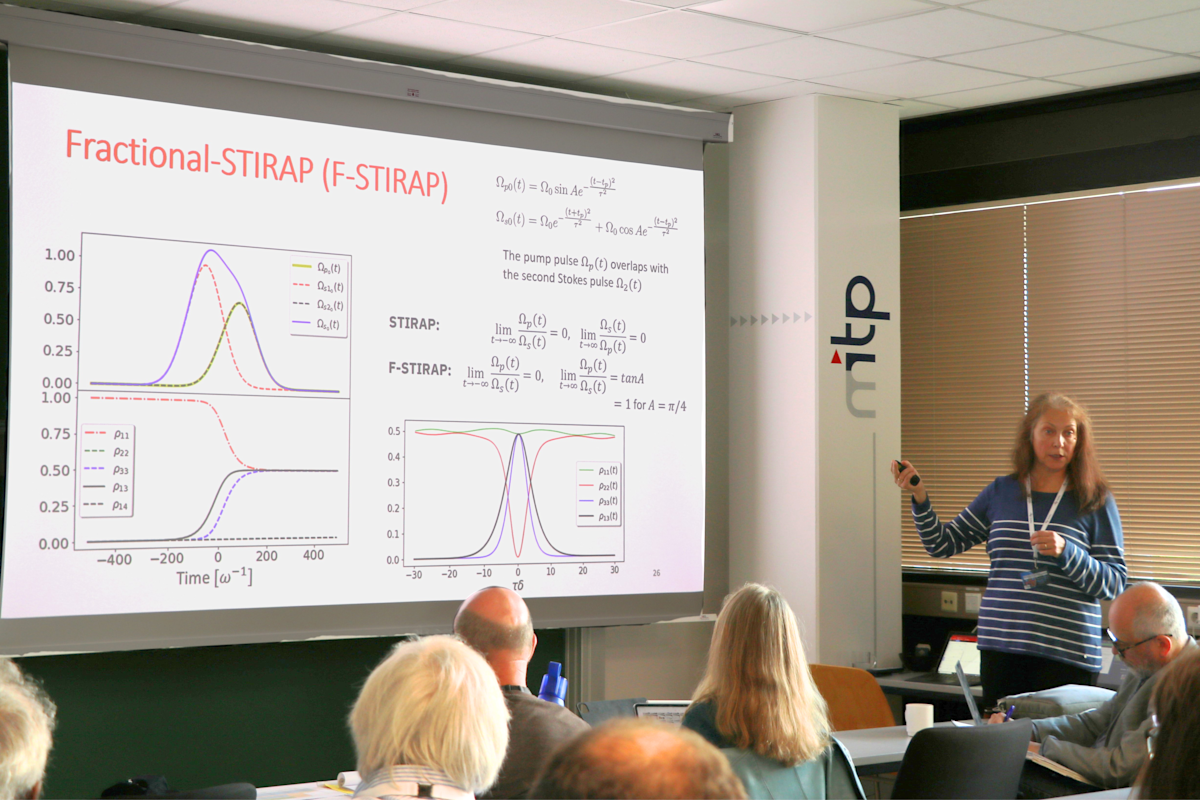 While Malinovskaya’s work is theoretical, her team is developing mathematical models and control strategies that experimental physicists can now make testable, giving them the framework and instruction manual for laboratory experiments using real lasers and atomic systems. She and her team have been designing reliable operations, known as quantum gates, within systems of interacting atoms. Quantum gates act as a containment method so that this tiny world can “hold still” long enough to be studied.
“One of the main challenges in quantum technologies is that quantum states are extremely fragile and can easily be destroyed by noise or environmental influences,” Malinovskaya says. “My research focuses on developing ways to control quantum systems so they remain stable long enough to perform useful functions.”
These gates would not only allow other researchers to tangibly explore and test Malinovskaya’s theories, but build quantum systems robust enough for real-world applications.
“What inspires and motivates me the most is the possibility that quantum technologies could dramatically improve how we measure the world around us,” she says. “Quantum sensors using entangled particles may transform navigation, environmental monitoring, and medical imaging. At the same time, advances in quantum control could help turn quantum computing into a scalable technology.”
The (current) limit no longer exists
While there are many confounding and intersecting areas within quantum physics that remain elusive, Malinovskaya’s insights, theories, and research have proven that our understanding of the world and the universe is only as big (and small) as our capacity to measure it, and her discoveries have now blasted through the ceiling like an Olympian not only breaking a world record, but going far past what we ever thought possible. This sets a new standard that will move this field of science from theory toward technologies that forever transform how we view and do — everything. The term “quantum leap” has never been more literal.
“At its core, my motivation as a scientist comes from a deep curiosity about the mechanisms that govern the natural world,” she says. “The idea that our understanding of these phenomena can eventually translate into technologies that reshape our very perception of reality and improve people’s lives is profoundly exciting.”
Learn more about academic programs and research in the Department of Physics: