Scientists at Stevens Institute of Technology Reveal That Time Can Go Quantum in Ion Clock Experiments
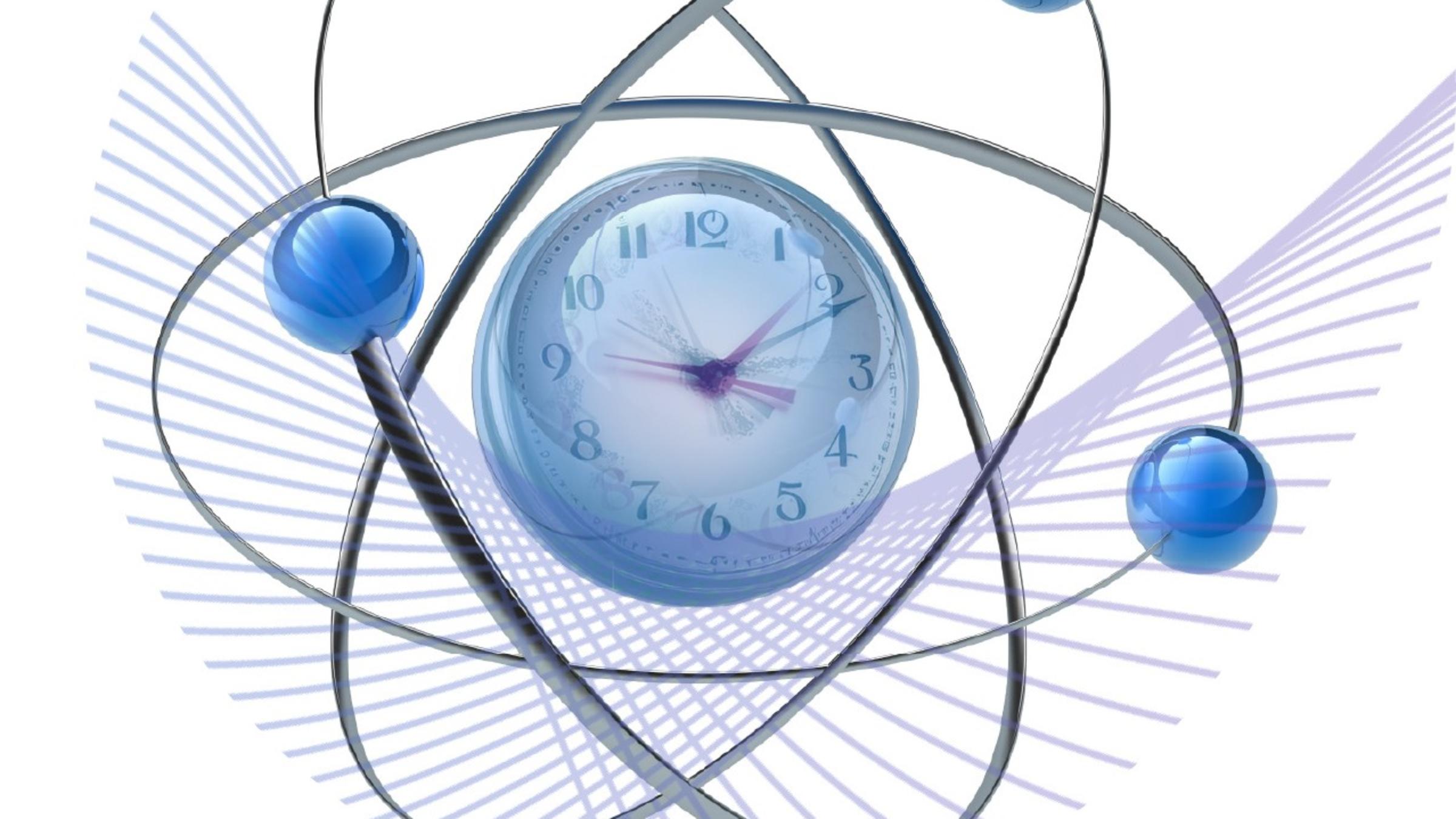
HOBOKEN, NJ., April 20, 2026 — Few concepts in physics are as familiar, yet as enigmatic, as time. In Einstein’s theory of relativity, time is not absolute: its passage depends on motion and gravity. But when combined with quantum physics, this relativistic form of time becomes even more counterintuitive. According to quantum theory, the flow of time itself may exist in a genuine quantum superposition, ticking faster and slower at the same time. Now, a new paper titled Quantum signatures of proper time in optical ion clocks, published on April 20, 2026 in Physical Review Letters, the premier physics research journal, shows that this striking possibility may soon be tested in the laboratory.
In this work, a team led by Assistant Professor of theoretical physics Igor Pikovski at Stevens Institute of Technology, in collaboration with experimental groups of Christian Sanner at Colorado State University and Dietrich Leibfried at the National Institute of Standards and Technology (NIST), explores quantum aspects of the flow of time and how they can be accessed with atomic clocks. Their results suggest that the same quantum technologies being developed for next-generation clocks and quantum computers may soon probe something far more fundamental: When a clock’s motion obeys quantum mechanics, its movement can exist in superposition, and with it the recorded passage of time itself. This is analogous to Schrödinger’s famous thought experiment, where the counterintuitive nature of quantum superposition is illustrated by a cat being both alive and dead; here it is the passage of time itself that is in superposition, like a cat that is both young and old at once.
“Time plays very different roles in quantum theory and in relativity,” says Pikovski. “What we show is that bringing these two concepts together can reveal hidden quantum signatures of time-flow that can no longer be described by classical physics.”
In relativity theory, every clock experiences its own flow of time, which in turn depends on velocity and position. For example, a clock moving at 10 m/s for 57 million years would lag behind another clock at rest by just one second. This has been observed and confirmed with ultraprecise clocks, such as aluminum-ion clocks at NIST.
The effect is often illustrated as the “twin paradox”: two identical twins will age differently, if one of them takes a high-speed roundtrip. Yet there is a more counterintuitive version: the “quantum twin paradox.” Can a single clock experience two different times in a quantum superposition, and become both younger and older simultaneously? According to quantum theory, as outlined by Pikovski and collaborators over a decade ago, that should happen. So far, such subtle effects have been beyond experimental reach, however, the team’s new theoretical study shows that atomic clocks are now up to the task.
The authors of the now published paper investigated the interplay of relativistic time and quantum effects in atomic clocks, such as those developed at NIST and at Colorado State University where scientists trap single ions (such as aluminum or ytterbium), cooling them to near absolute zero temperature and manipulate their quantum states with laser pulses. The results of their study show that by combining the rapidly improving clock technology with quantum information techniques developed for trapped-ion quantum computing, unique and yet undetected quantum features of time can be observed.
“Atomic clocks are now so sensitive, they can detect tiny differences in time caused by just the thermal vibrations at miniscule temperatures,” says Gabriel Sorci, a PhD candidate at Stevens Institute of Technology and co-author of the paper. “But even at the absolute zero temperature, the ground state, the ticking rate will still be affected by just the quantum fluctuations alone.”
The team went one step further. Rather than just cooling the atoms, they show that one can instead manipulate the vacuum itself, creating so-called squeezed states in which the position and velocity of the clock exhibit subtle quantum behavior. The result is a new manifestation of relativistic time in the quantum regime, where superpositions and entanglement of time arise: a single clock can measure how it ticks both faster and slower simultaneously, and entangle with the squeezed motion. The team now aims to demonstrate the effects in the laboratory.
“We have the technology to generate the required squeezing and a path to reach the clock precision needed in ion clocks to observe such effects for the first time,” says Sanner of Colorado State.
Looking ahead, Pikovski, whose recent work includes showing that single gravitons can be detected using quantum technology, points to the bigger picture. “Physics is still full of mysteries at the most fundamental level. Quantum technologies are now giving us new tools to shed light on them.”
About Stevens Institute of Technology
Stevens is a premier, private research university situated in Hoboken, New Jersey. Since our founding in 1870, technological innovation has been the hallmark of Stevens’ education and research. Within the university’s three schools and one college, more than 8,000 undergraduate and graduate students collaborate closely with faculty in an interdisciplinary, student-centric, entrepreneurial environment. Academic and research programs spanning business, computing, engineering, the arts and other disciplines actively advance the frontiers of science and leverage technology to confront our most pressing global challenges. The university continues to be consistently ranked among the nation’s leaders in career services, post-graduation salaries of alumni and return on tuition investment.
Stevens Media Contact
Lina Zeldovich
Manager of Media Relations
Division of University Advancement
201-216-5123
[email protected]