Stevens Marks Its Biggest National Science Foundation Graduate Research Fellowship Year

This year, three Schaefer School students received the National Science Foundation’s Graduate Research Fellowship, the most awarded to Stevens students in a single year. The NSF GRFP honors exceptional graduate students pursuing research-based master’s and doctoral degrees in STEM fields. It supports students who are likely to make significant contributions to their fields.
The projects of the Stevens recipients range from exploring the atomic-scale behavior of modern electronics, to studying the neurological roots of Alzheimer’s in women, to addressing the hardware challenges holding back quantum computing.
An atomic-level look at the materials powering modern electronics
Emma Nei ’26, a senior majoring in chemical engineering, was initially unsure whether she belonged. When she arrived at Stevens, she was undecided about engineering and intimidated by classmates who already knew how to code. “I definitely sort of had imposter syndrome going into a lot of these classes,” she said.
Over time, she found herself drawn to the parts of the research taking place at the atomic scale. “We interact with advanced materials every day through electronics,’” she said. “We know so much about this, but at the atomic scale there is still a lot we don't fully understand.”
She started undergraduate research her sophomore year with Alyssa Hensley, then an assistant professor in the Stevens Department of Chemical Engineering and Materials Science, and co-authored a paper in the Journal of Catalysis. Nei later joined a group led by Pin-Kuang Lai, also an assistant professor in the department.
 Her GRFP proposal grew out of a 2025 Research Experience for Undergraduates at the University of Michigan, where she used computational modeling to study what happens when small amounts of magnesium are added to gallium nitride, a semiconductor that can operate at high voltages, frequencies, and temperatures, widely used in LEDs, laser diodes, and power electronics.
“To improve its performance, you introduce dopants like magnesium,” Nei said. “These atoms do not always distribute uniformly in the material. They can cluster, and that can impact how efficiently the semiconductor carries charge.”
“My proposal aimed to provide insight into how subtle atomic interactions affect high-performance device functionality and improve efficiency,” said Nei, who heads to Michigan in the fall for a Ph.D. in materials science and engineering. Understanding these atomic interactions could lead to the design of more efficient semiconductors, ultimately benefiting industries that rely on electronics by enabling faster, more reliable, and energy-efficient devices.
She is drawn to the chance to see what experiments alone cannot reveal. She explains that computational modeling lets her watch how molecules interact and how materials change — allowing her to see “what is happening inside a material, and how those atomic interactions influence performance.”
Looking ahead, Nei wants a career that combines research with science communication. “I’m interested in making complex topics accessible to a wide range of audiences,” she said.
Understanding why Alzheimer's disease disproportionately affects women
Before her senior year, Bertila Bruka ’25 spent the summer at the National Institutes of Health, working with brain imaging data that showed the brain’s regions in vivid color. The images were beautiful, she thought, but they also represented a harsh reality: the loss of brain volume in patients with Alzheimer’s disease, a neurodegenerative disease that affects memory, thinking, and behavior, and that impacts more than 7 million Americans, according to the Alzheimer’s Association.
 Women are about twice as likely as men to develop Alzheimer’s and account for nearly two-thirds of patients, Bruka noted. The disparity has been documented for years, but the biological mechanisms behind it remain unclear. One theory points to estrogen’s protective effects on the brain. “Estrogen is connected to protective layers in the brain and strengthens connections in the brain,” she said. “It’s theorized that the decrease in estrogen during menopause might remove this protection from the brain.”
That gap was what eventually pulled her toward her current research — a question she couldn’t stop asking: why don’t people study women more? “I thought, ‘Now that I have funding, why not study women?’” Bruka said. “I can be the change I want to see.”
Her GRFP-funded research, part of the joint Emory University/Georgia Tech Ph.D. program in biomedical engineering, will study how changes in 17β-estradiol levels across the lifespan correlate with changes in brain connectivity in female rat models. Clarifying the link between hormones and neural networks can help advance understanding of factors contributing to Alzheimer's progression and may lead to more effective prediction and intervention strategies. She will also test whether including hormonal data in machine-learning models improves the prediction of Alzheimer's progression.
What draws her to the work, Bruka said, is the chance to study the disease on two levels at once. “You can do both physical tests of the brain and also functional tests of the brain,” she said. With Alzheimer’s, both can be tracked over time — early-stage patients begin forgetting simple words, and late-stage patients lose the ability to function independently. “And we don’t understand what’s happening in between.”
Clearing a physical bottleneck on the road to quantum computing
Inside a quantum computer, the qubits must be kept just above absolute zero, in a refrigerator colder than deep space. To control them, engineers thread hundreds to thousands of physical wires into the chamber. Christopher Kniss ’25 says those wires are the reason the field is hitting a wall. They conduct heat from the outside into the refrigerator and take up critical physical space. Adding more would destroy the very environment the qubits need to survive.
His research aims to address the bottleneck by drastically reducing the number of physical wires present, enabling quantum computers to scale. At the University of Massachusetts Amherst, where Kniss began his Ph.D. in electrical engineering, he is working on a team designing custom microelectronics that can survive cryogenic conditions. They have already demonstrated the ability to transmit gigabits of data per second wirelessly inside the freezer.
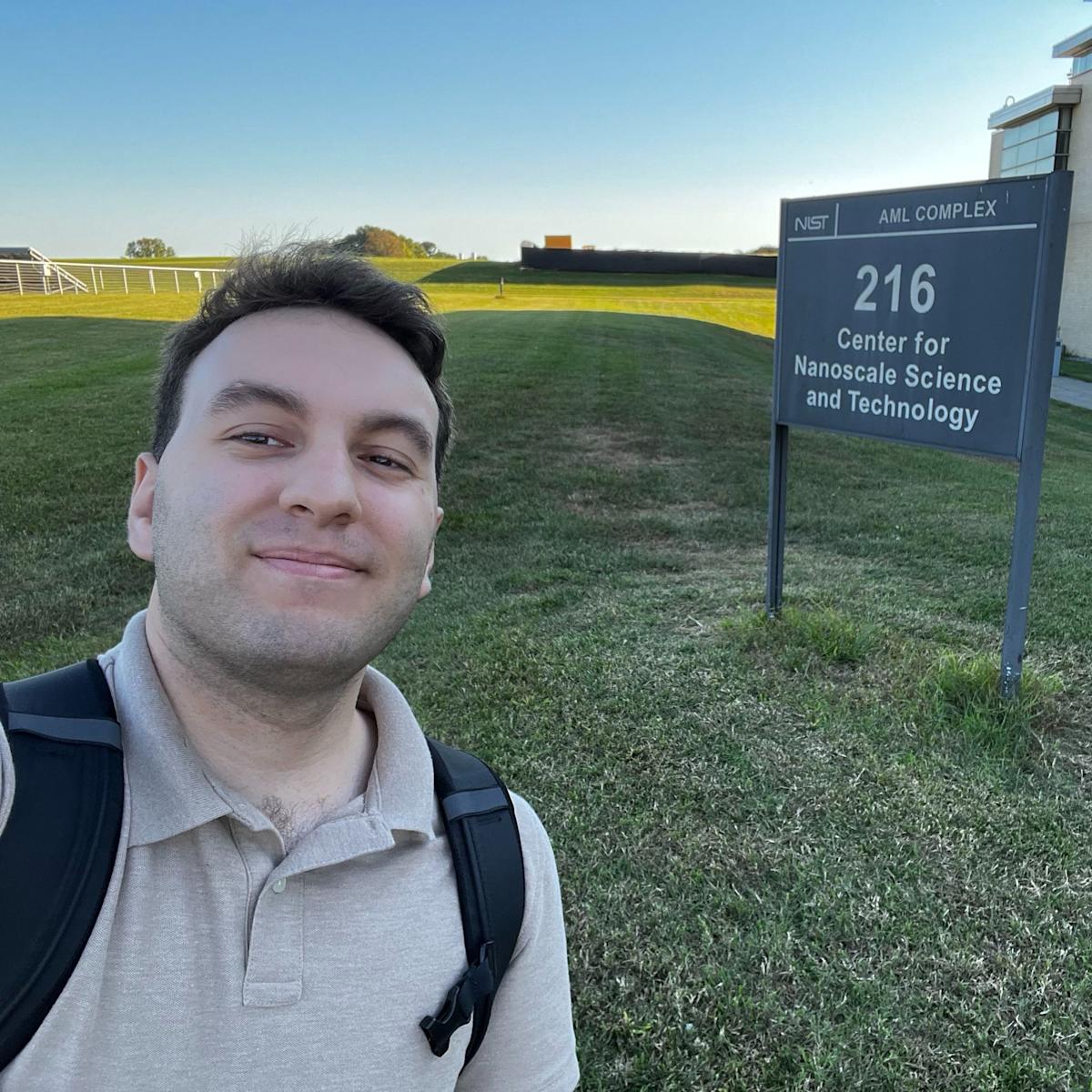 The work has implications well beyond quantum computing. Kniss points out that as extremely cooled electronics are pursued more, access to low-power and high-speed wireless communication links that work at those frigid temperatures are a basic capability that many systems will need. Successfully removing physical wires could pave the way for larger, more practical quantum computers.
For now, quantum is the headline use case, and the field is genuinely early. “There are no settled standards, and different companies are pursuing wildly different implementations of quantum hardware,” he said. “If a classical computer is a car meant to traverse land, a quantum computer is a boat that ventures into different problem spaces, and we haven’t made a boat [functional at the scales we need] yet.”
He credits the preparation and people he met at Stevens with giving him the foundation to achieve so much in such a short time — and, in particular, with creating a setting where it was safe to learn by struggling. “I’ve been really honored to be in this setting, to be allowed to be bad at something, and to be given so much opportunity to grow and to get better.”
That perspective is something he shares with students considering a career in this field. “Never underestimate the impact of something you publish or an idea you had,” he said. “It might just be the piece of the puzzle that unlocks it all.”
Learn more about programs and research at the Schaefer School: