New AI Degree Launches Fall 2026
Beginning in Fall 2026, Stevens Institute of Technology will offer a bachelor’s degree in artificial intelligence, preparing graduates to design, build and lead with one of the most in-demand skill sets in the modern economy.
“Artificial Intelligence is no longer a niche specialization — it is becoming foundational to nearly every industry,” says Yue Ning, associate professor of computer science.
“A dedicated degree allows us to educate students not just as users of AI tools, but as designers, builders and critical thinkers who understand how these systems work and how to responsibly deploy them.”
The launch responds to surging demand: The U.S. Bureau of Labor Statistics projects much faster-than-average growth across computing and data science occupations over the next decade, and employers consistently rank machine learning among the most sought-after skills for new graduates. Stevens computing graduates already achieve a 95% placement rate and average starting salaries above $92,000 — outcomes the AI program is designed to match or exceed.
Ning, who helped develop the study plan and curriculum of some courses in the program, says that the AI program starts with a rigorous foundation in computer science and mathematics, building essential skills in programming, algorithms and probability, then progresses into more advanced AI topics like machine learning, natural language processing, computer vision and human-centered design.
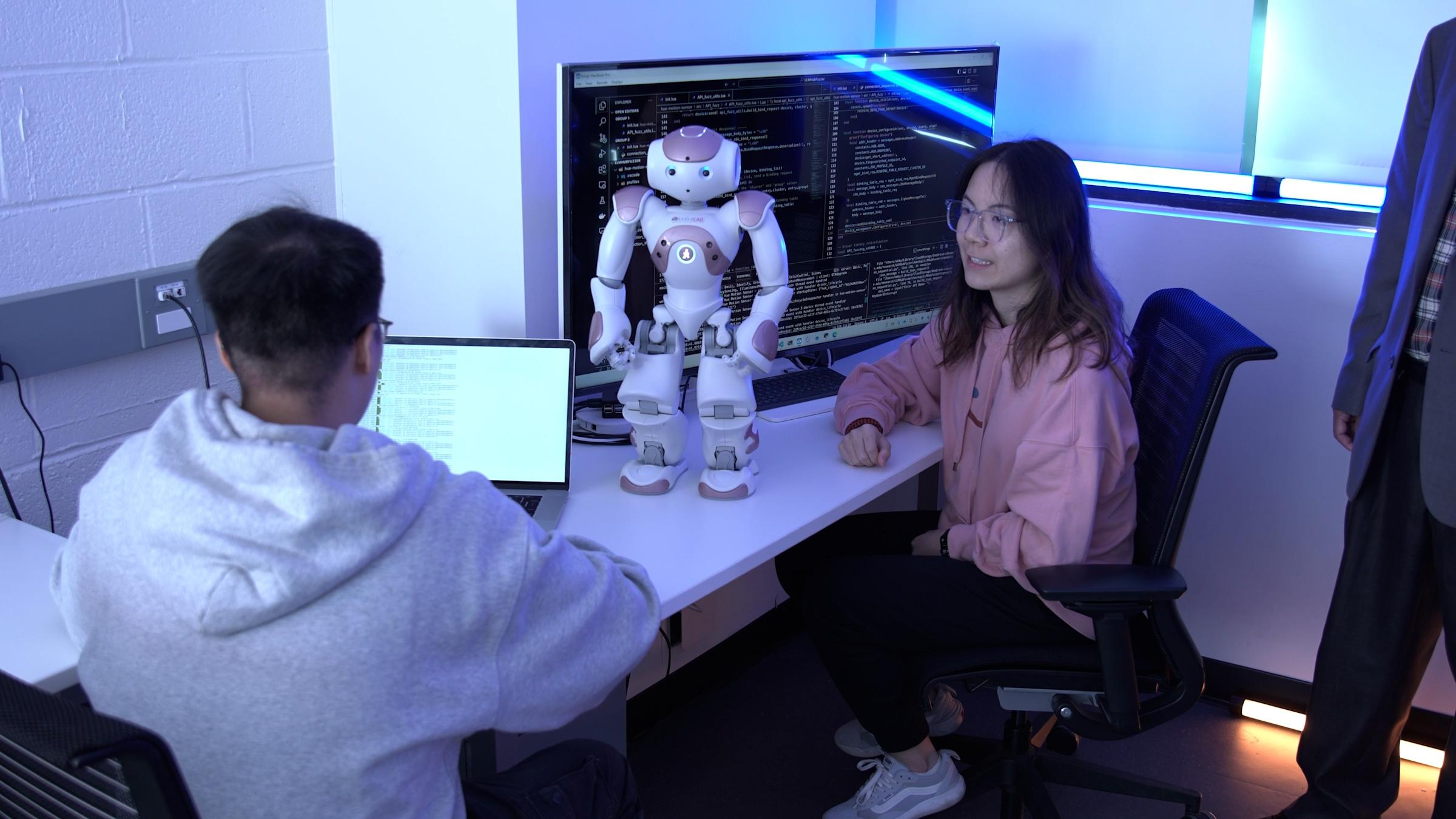
The program concludes with a two-semester senior design capstone, where students tackle real-world AI challenges in partnership with industry sponsors, integrating technical expertise with communication, leadership and project management skills that employers value most.
The Stevens program will also take advantage of the university’s industry-connected approach to education.
“Students will benefit from close collaboration with faculty who are actively engaged in AI research and industry partnerships, as well as from project-based learning embedded throughout the curriculum,” Ning says. “The university’s proximity to New York City also provides unparalleled access to internships, industry collaborations, startups and research opportunities across the finance, healthcare, technology and engineering sectors.”
Equally important, she says, is Stevens’ emphasis on human-centered responsible AI. Students will learn not only how to build intelligent systems, but also how to evaluate ethics, security and impact on society, an area that is increasingly critical and often overlooked.
“This combination of technical depth, experiential learning and ethical awareness makes the Stevens AI program distinctive and highly attractive,” she says.
Stevens will also offer a minor in AI, designed to bring applied AI fluency to students across disciplines – from finance and biomedical engineering to music and policy — which Stevens President Nariman Farvardin sees as a benefit to any student.
“The AI minor will provide leading-edge and application-oriented coursework in AI, significantly enriching their disciplinary education and dramatically improving their marketability in the rapidly evolving workplace,” says Farvardin.
Both the AI major and minor will be part of Stevens’ School of Computing, targeted to launch this fall. The new school responds to a fundamental shift in the technology workforce: Employers increasingly seek graduates who can integrate computational expertise with deep domain knowledge rather than pure coding skills alone.
Ning says that students majoring in AI want to shape the future of intelligent technology, not just consume it. Farvardin agrees.
“Graduates of this program will not only master technical AI skills but also develop the ethical understanding needed to lead responsibly in this rapidly evolving field. They'll be perfectly positioned for careers in any industry being transformed by AI at any organization, whether a tech giant like Google and Amazon or an innovative startup,” he says. “It is another example of how Stevens evolves to keep our students ahead of the technology-driven future, not just prepared for it.”