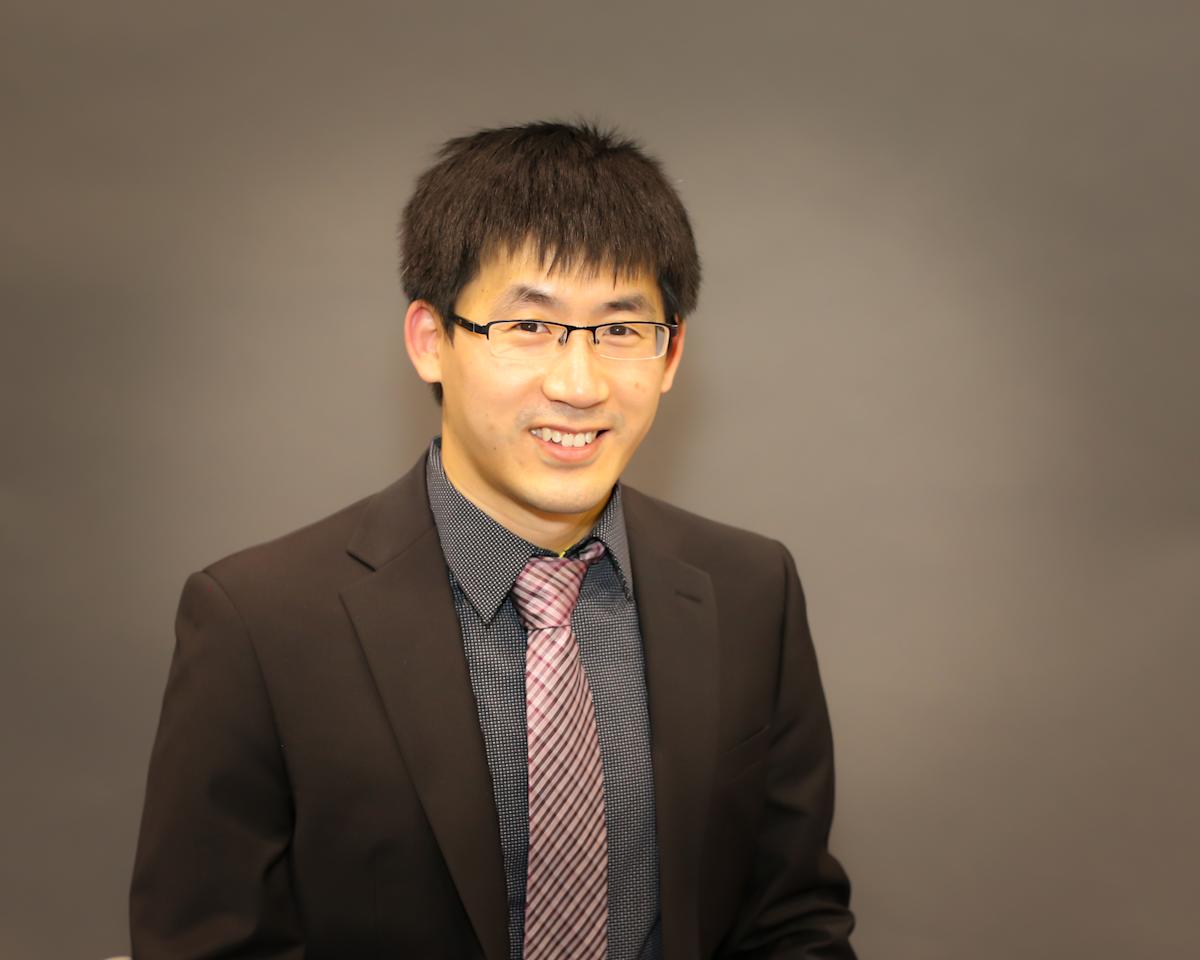
Feng Liu, assistant professor in the Department of Systems Engineering at Stevens Institute of Technology, is developing artificial intelligence models that explain how the brain works, and how neurological disorders can disrupt its function.
Through his training as an engineer, Liu learned to model complex networks and dynamic systems. The pivot to neuroscience came when he began researching brain activity using neuroimaging data during his Ph.D. studies at the University of Texas at Arlington.
“I realized the brain is the body’s most complex, constantly changing network,” he recalled.
Later, during his postdoctoral fellowship at Harvard Medical School, Liu applied machine learning to decode brain states under anesthesia. He also collaborated with researchers at the Massachusetts Institute of Technology Picower Institute and the Martinos Center for Biomedical Imaging, which further affirmed his interest in applying mathematical and engineering tools to clinical neuroscience.
“Seeing how machine learning could translate raw electroencephalogram (EEG) signals into tracking consciousness in real-time was transformative,” he said. “It made me realize that AI shouldn't just predict. It should help us understand the underlying brain mechanisms.”
AI that fits the clinic
 Today, Liu is advancing that vision by building AI models to understand the mysteries of the human brain. These transparent models are intended to decode brain networks and turn large-scale neural data into clinically meaningful insights.
In his Brain imAging and Graph Learning (BAGL) lab, he works with students to develop AI-based tools to understand brain network dysfunctions including epilepsy, traumatic brain injury, addictive behavior, and neurodegenerative disease.
Traditional brain studies often examine regions in isolation. In contrast, Liu uses AI to study overall neural activity across space and time, in partnership with engineering, neuroscience, and clinical practice collaborators at Case Western Reserve University, Rutgers University, Georgia Tech, Emory University, UCSF, Monash University, the Université de Montréal and other international institutions.
When only partial measurements are available, they also develop mathematical methods to reconstruct hidden brain activity.
“For example, in our National Institutes of Health (NIH)-funded work on epilepsy,” Liu said, “we are developing methods to estimate brain networks even when we can only observe part of the brain, mathematically reconstructing the hidden pathways that drive seizures. We are applying similar approaches to understand brain network disruptions in traumatic brain injury and addictive behavior, with the goal of identifying biomarkers that can guide diagnosis and treatment.”
- Our goal is always to be ‘Inspired by Humanity, Powered by Technology.' That’s not just our strategic plan — it’s how we ensure the innovative technology we develop can solve intrinsic human problems.Feng LiuDepartment of Systems Engineering
His current research focuses on four interconnected areas designed to fit into real clinical workflows:
High-resolution brain mapping: Integrating EEG and other non-invasive measurements to precisely visualize brain activity.
Network analysis in epilepsy, traumatic brain injury and addiction: Mapping how brain regions interact, and how these patterns change when diseases are present.
Large language models for clinical decision support: Using patient seizure descriptions and clinical notes to help clinicians identify where seizures start in the brain and what dysfunctions might be related to those situations.
Closed-loop neuromodulation: Monitoring brain activity in real time to guide personalized stimulation intended to help improve sleep, thinking, and mental health.
Making advanced brain healthcare safer and more accessible
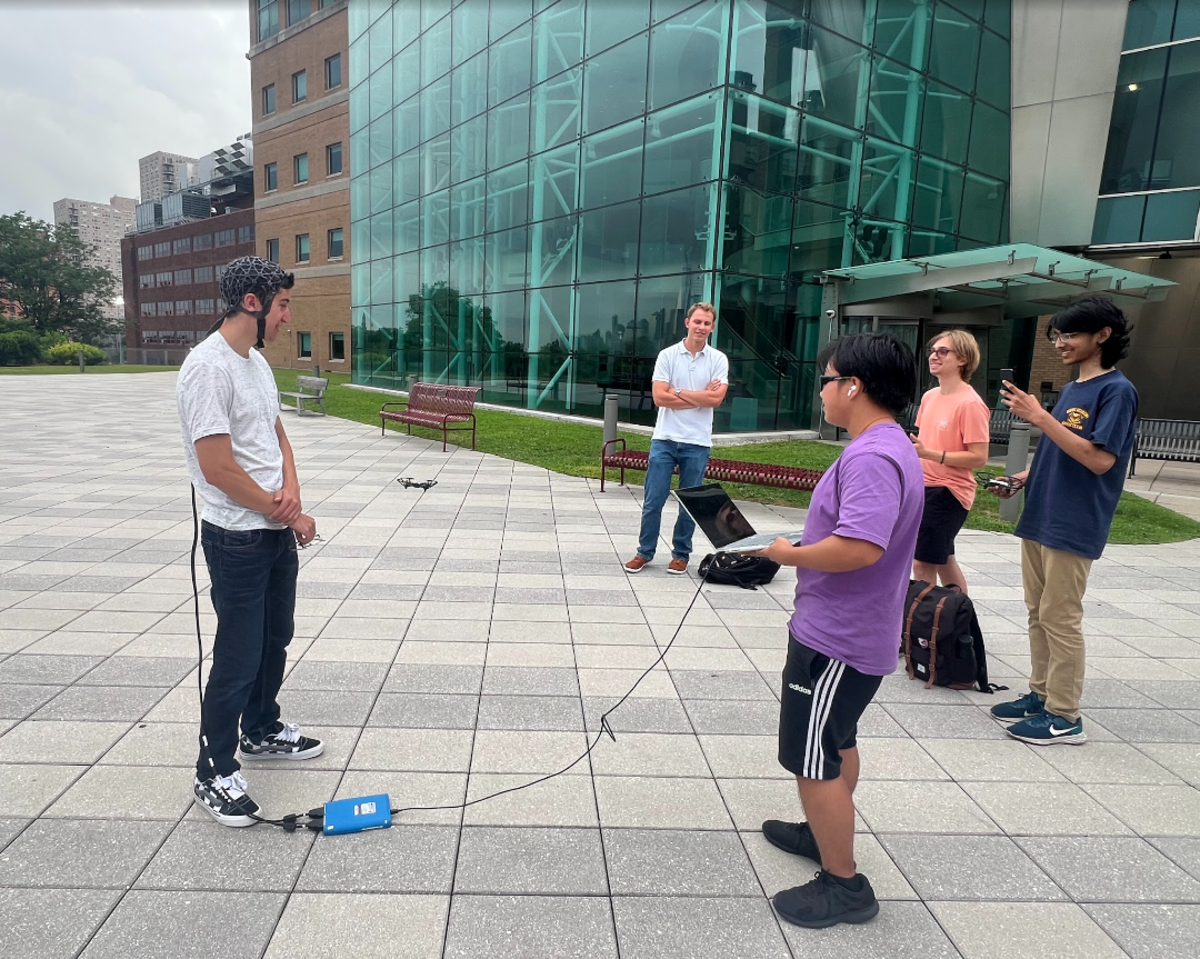 Liu and his team incorporate biological principles into AI models so clinicians can interpret and use the outputs. For epilepsy, this includes generating 3D maps that show seizure activity and uncertainty estimates.
His team is also exploring how large language models can assist in analyzing clinical descriptions of neurological symptoms and identifying brain network patterns associated with addiction and recovery, as well as changes following traumatic brain injury.
The team also develops techniques that convert a minimal amount of raw neural data into clear, actionable roadmaps supporting clinical decision-making.
“It’s exciting to be able to estimate internal brain activity from outside the skull with unprecedented precision,” Liu said. “This opens the door to improving diagnosis and treatment monitoring for epilepsy, traumatic brain injury, addiction, and neurodegenerative disease.”
Training an interdisciplinary next generation to solve next-gen problems
In addition to his research, Liu is committed to mentoring students at the intersection of engineering and neuroscience. His students gain hands-on experience applying AI to real neuroimaging and clinical datasets, and several have received student paper awards at international conferences.
“I want students to be comfortable working across disciplines,” Liu said. “Engineering and neuroscience have a lot to offer each other.”
Supported by funding from the NIH, U.S. Department of Defense, and private foundations, Liu’s lab focuses on developing technologies that can translate engineering innovation into clinical application.
“Our goal is always to be ‘Inspired by Humanity, Powered by Technology’,” Liu said. “That’s not just our strategic plan — it’s how we ensure the innovative technology we develop can solve intrinsic human problems.”
Learn more about academic programs and research in the Department of Systems Engineering: