Christopher Mbonu Named to the Inaugural Class of American Chemical Society PMSE Emerging Professional Scholars
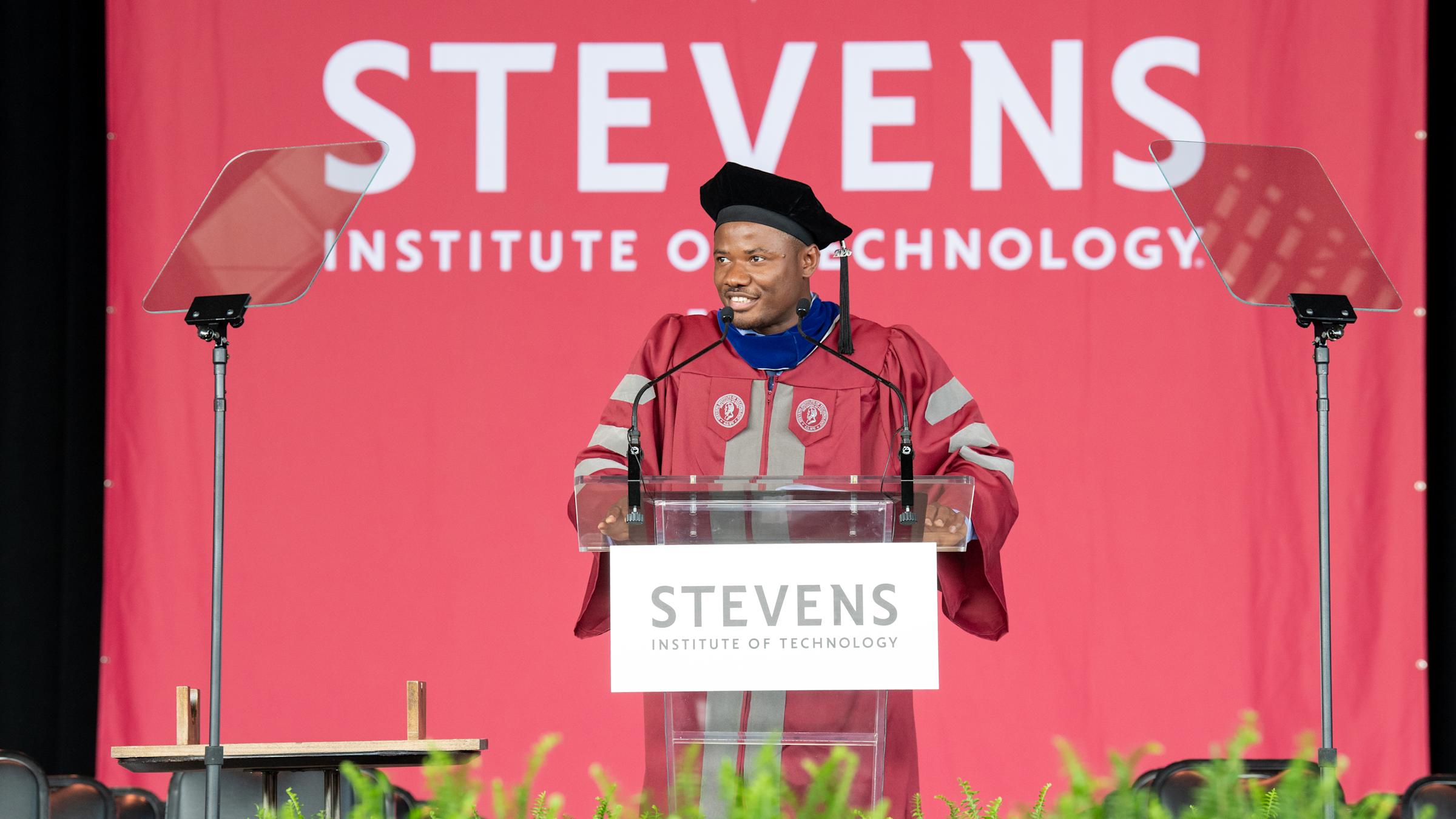
Christopher Mbonu ’22 M.S. ’26 Ph.D. has earned the distinguished honor of joining the first cohort of American Chemical Society (ACS) Polymeric Materials: Science and Engineering (PMSE) division’s Emerging Professional Scholars.
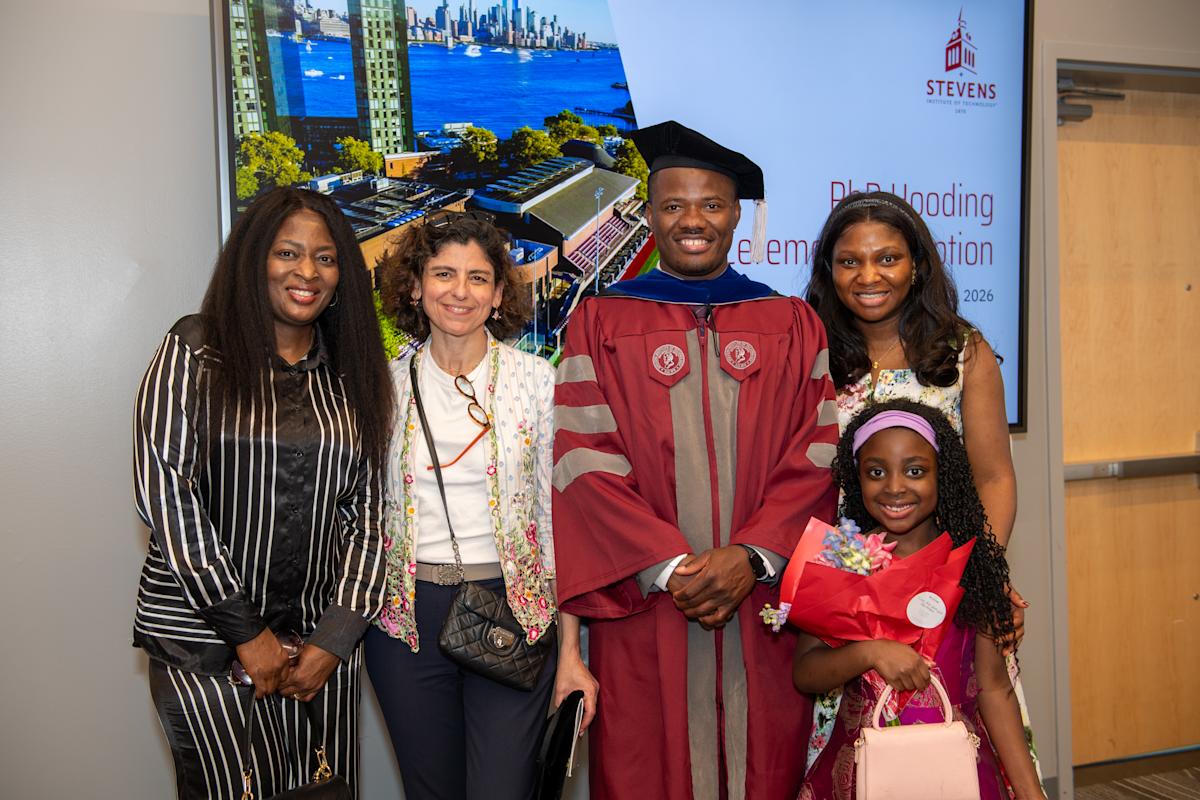 This prestigious new national ACS award recognizes final-year Ph.D. students and postdoctoral researchers in polymer science who have made significant research contributions while demonstrating leadership as they pursue careers in industry and national laboratories.
In January 2026, Mbonu successfully defended his chemical engineering Ph.D. dissertation, “Interfacial Design for Polymer Nanocomposites: From Miscibility to Macroscopic Properties.” His work explored how microscopic particles interact with polymer chains to create stronger, smarter and more versatile materials.
As part of the award, Mbonu has been invited to present a technical talk at the PMSE Emerging Professionals Symposium during the ACS Fall 2026 Meeting in Chicago. He will also hear keynote presentations and connect with polymer science leaders.
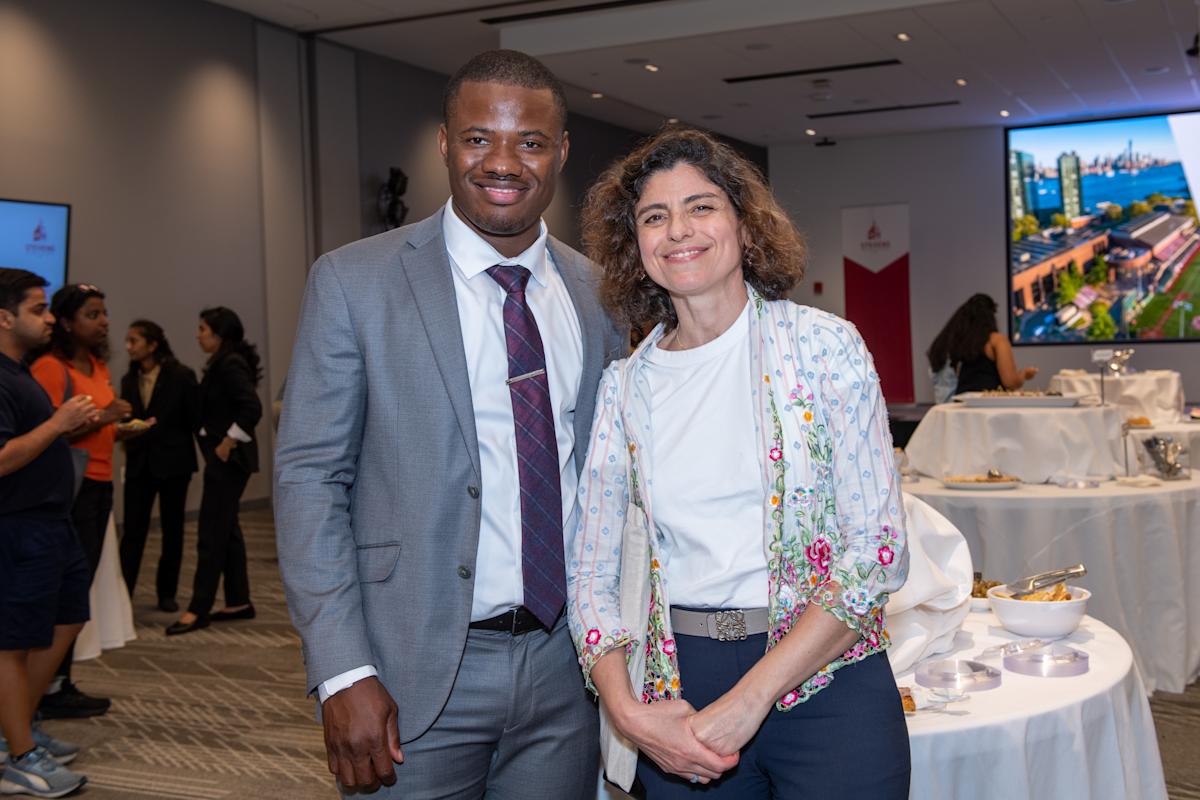
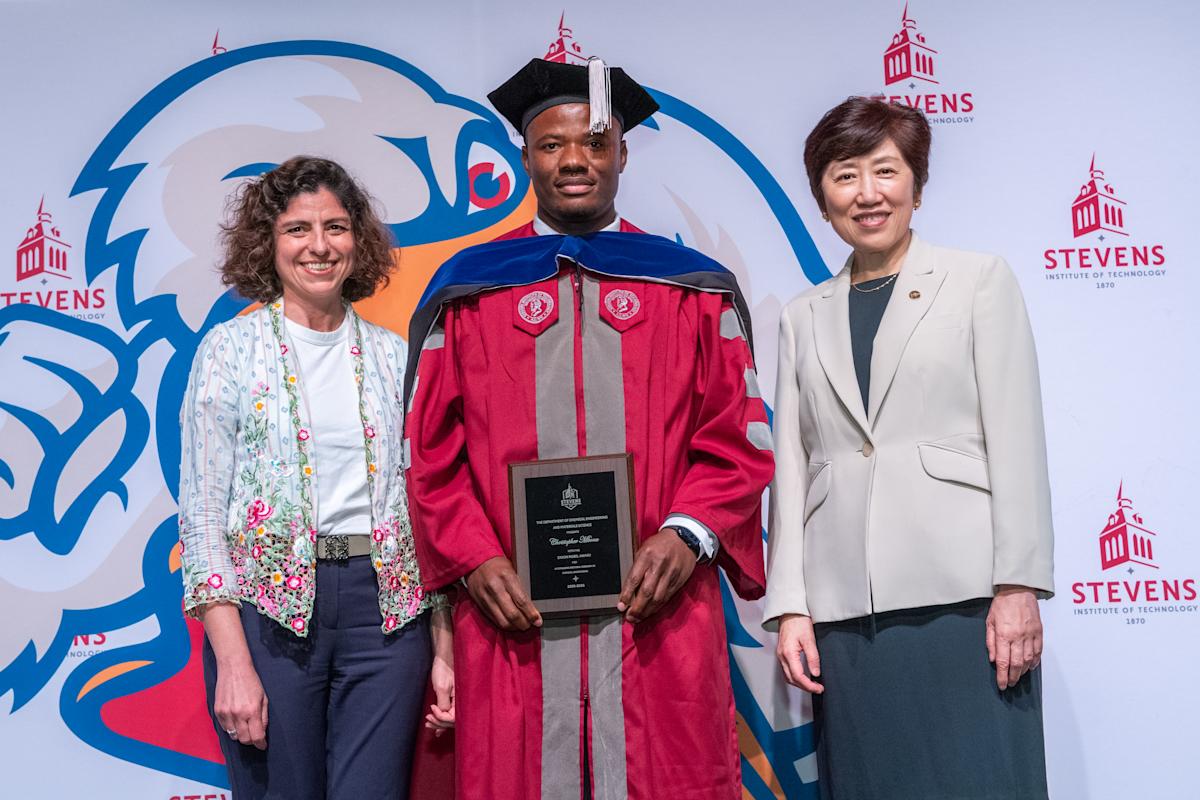
“Christopher’s selection as a PMSE Emerging Professional Scholar is a powerful recognition of the originality of his research and the breadth of his impact,” said Pinar Akcora, associate professor in the Department of Chemical Engineering and Materials Science, and Mbonu’s advisor.
“Chris’ work has helped scientists better understand how to combine polymers that normally don’t mix well, by designing molecular structures around nanoparticles that help hold the materials together,” Akcora said. “He has also been an exceptional mentor to our undergraduate researchers in our soft materials laboratory. This honor reflects his resilience, intellectual curiosity and commitment to excellence, as well as the strength of Stevens’ research environment, where ambitious interdisciplinary research is closely connected to student success.”
Engineering materials from the molecular level
Throughout his academic studies and professional work in the oil and gas sector, Mbonu became fascinated by how tiny structures can dramatically change the behavior of everyday materials. He quickly realized that the interface where nanoparticles and polymers meet is the figurative “room where it happens,” determining a material’s strength, mechanical properties and durability.
 “What inspired me most was the idea that by engineering something invisible to the human eye,” Mbonu said, “we could create materials with enormous real-world impact, from defense systems to advanced electronics and energy technologies.”
His research focuses on understanding how specially designed polymer molecules move and interact, and how those behaviors affect the tiny structures inside advanced polymer-based materials. Within these materials, nanoparticles often clump together, reducing performance and reliability.
Mbonu’s work seeks to disperse those particles more evenly. The goal is to help these materials interact more effectively at the molecular level, so researchers can better predict and improve how they will perform in products such as batteries, electronics, coatings, medical devices and lightweight structural materials.
 “Industries are demanding materials that can do more with less: lighter vehicles for energy efficiency, more reliable batteries, stronger medical materials and sustainable plastics with improved performance,” he said. “At the same time, advances in nanotechnology allow us to engineer materials with unprecedented precision. That means we can move beyond trial-and-error approaches and begin designing materials from the molecular level.”
Traditionally, researchers have focused on the chemical composition of polymers. Mbonu demonstrated that the shape and connectivity of polymer chains attached to nanoparticles can strongly influence nanoparticle dispersion, strength and molecular motion, which determine material properties. He found that loop-like polymer architectures can create more balanced and stable interactions within nanocomposite systems.
These findings contribute fundamental knowledge about how soft materials behave at nanoscale interfaces and may help establish new design principles for high-performance materials used in energy storage, advanced coatings and lightweight structural systems.
“The interfacial architectures I have developed can create materials that are lightweight yet extremely tough, with enhanced ability to absorb and dissipate high ballistic energy,” Mbonu explained. “This could be valuable for next-generation armor, impact-resistant aerospace components and other defense technologies where durability and weight reduction are critical, as well as in energy storage, transportation and advanced manufacturing. Breakthroughs like this make the journey worthwhile.”
Integrating perspectives at the interface of nanoparticles and polymers
Mbonu has thrived in the rigorous and collaborative research environment at Stevens, where he developed extensive expertise in nanomaterials characterization and polymer nanocomposites research.
 Stevens’ strong research reputation also helped position him competitively for national conferences and prestigious neutron-scattering summer programs, while university travel grants enabled him to present his work at major meetings hosted by ACS, the American Physical Society (APS) and the American Institute of Chemical Engineers (AIChE).
Serving as a graduate peer mentor for three years further shaped his development as a communicator and leader.
“I know first-hand how transformative encouragement and guidance can be during difficult stages of education and research,” he said. “I enjoy helping students build confidence and watching them become independent problem-solvers.”
Mbonu collaborated with computational scientists at Northwestern University to connect experimental observations with molecular dynamic simulations, strengthening the impact of his findings.
“Scientific progress is rarely an individual achievement, and the strongest insights often come from integrating perspectives,” Mbonu said. “Every discovery is a network of mentors, collaborators, students and colleagues who contribute ideas and support. I am grateful that my journey has allowed me to combine research, mentorship, leadership and interdisciplinary collaboration to help shape the next generation of advanced materials.”
Learn more about academic programs and research in the Department of Chemical Engineering and Materials Science: