
Student Research
Editor’s Note: “Student Research” is a new column highlighting the outstanding work of Stevens’ student researchers.
Programming the Law
As legislation is increasingly translated into computer code so that software can apply complex legal rules, how can legal professionals without programming experience work with that code?
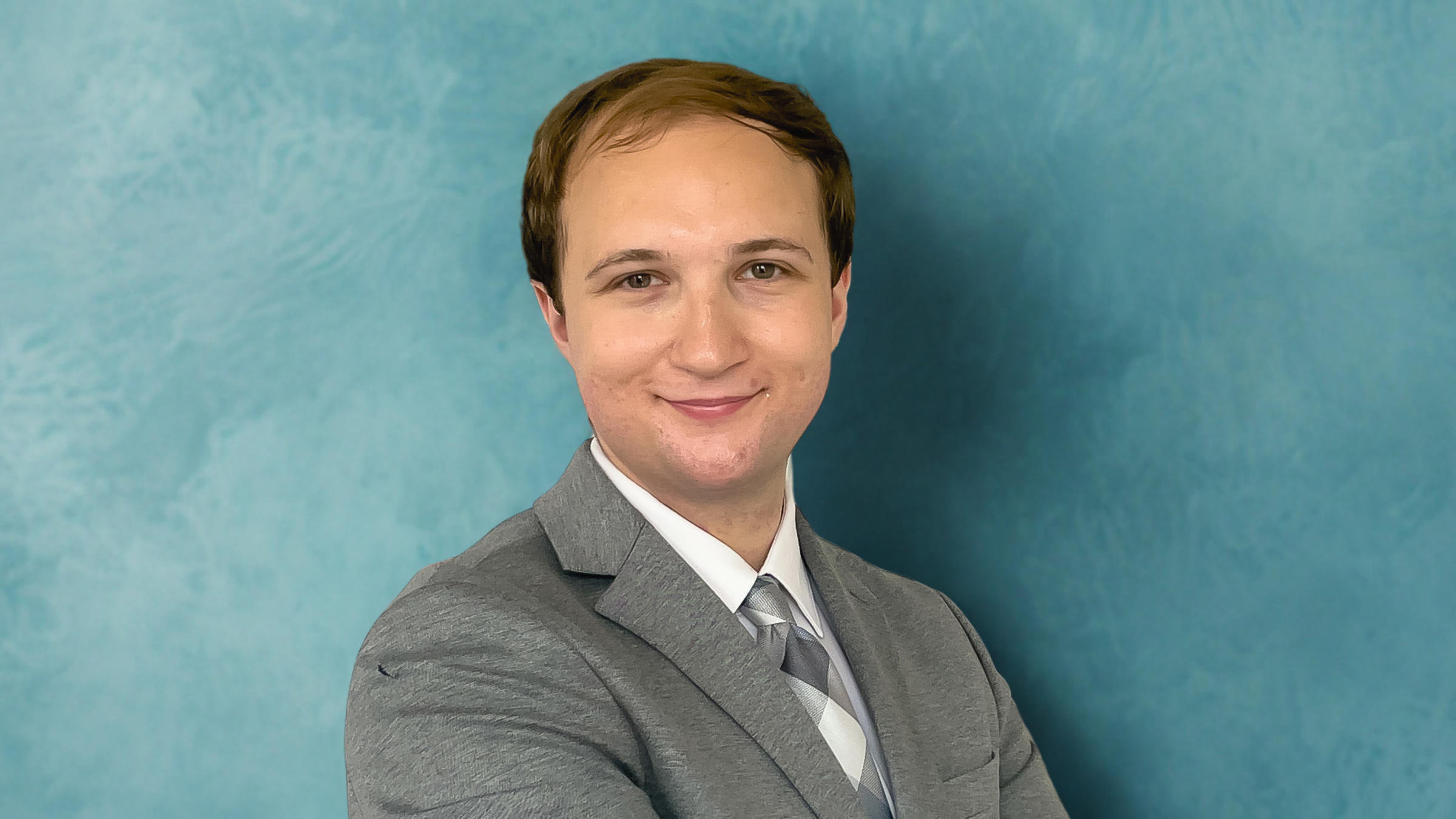
Nicholas Russo ’26 explored that question through a Human-Computer Interaction course project at Stevens. The computer science graduate, now pursuing his master’s in Stevens’ Accelerated Master’s Program, created CatalaBlocks. The visual programming environment, which allows users to arrange its elements as on-screen blocks, is based on Catala, a programming language that allows laws to be translated into rules a computer can execute.
With encouragement from School of Computing assistant professor Jonggi Hong, Russo continued the project with fellow Stevens researchers. After an initial study helped refine CatalaBlocks, they tested it with 10 legal professionals with no programming experience. Participants using CatalaBlocks completed tasks faster, produced more accurate code, reported less difficulty and expressed greater confidence that their work reflected the intended legal logic than those using text-based Catala.
Russo and his collaborators used reviewer feedback to refine the research before it was accepted by the Association for Computing Machinery’s Designing Interactive Systems Conference. Russo presented CatalaBlocks at the conference in Singapore last June. “Presenting at a conference was also an exercise in bridging across domains to make the contribution clear, accessible and succinct,” he says.
Russo’s work at the intersection of law and technology extends beyond his research. He also founded the Stevens Journal of Law and Technology, creating a publication opportunity for undergraduate and master’s students exploring the relationship between law or policy and technology or science. The journal accepts submissions from students outside Stevens, with its second edition featuring work from schools including Columbia University and the United States Air Force Academy.
– Charles O’Brien