Stevens Students Take a Fresh Look at Alzheimer’s Screening with SensiTear
Nearly 44 million people worldwide are living with Alzheimer’s disease, a neurodegenerative disorder involving memory loss and behavioral changes. While no cure yet exists, early intervention can slow progression and lower care costs. However, reliable screening often comes only after symptoms such as memory loss and confusion have already become too obvious to ignore.
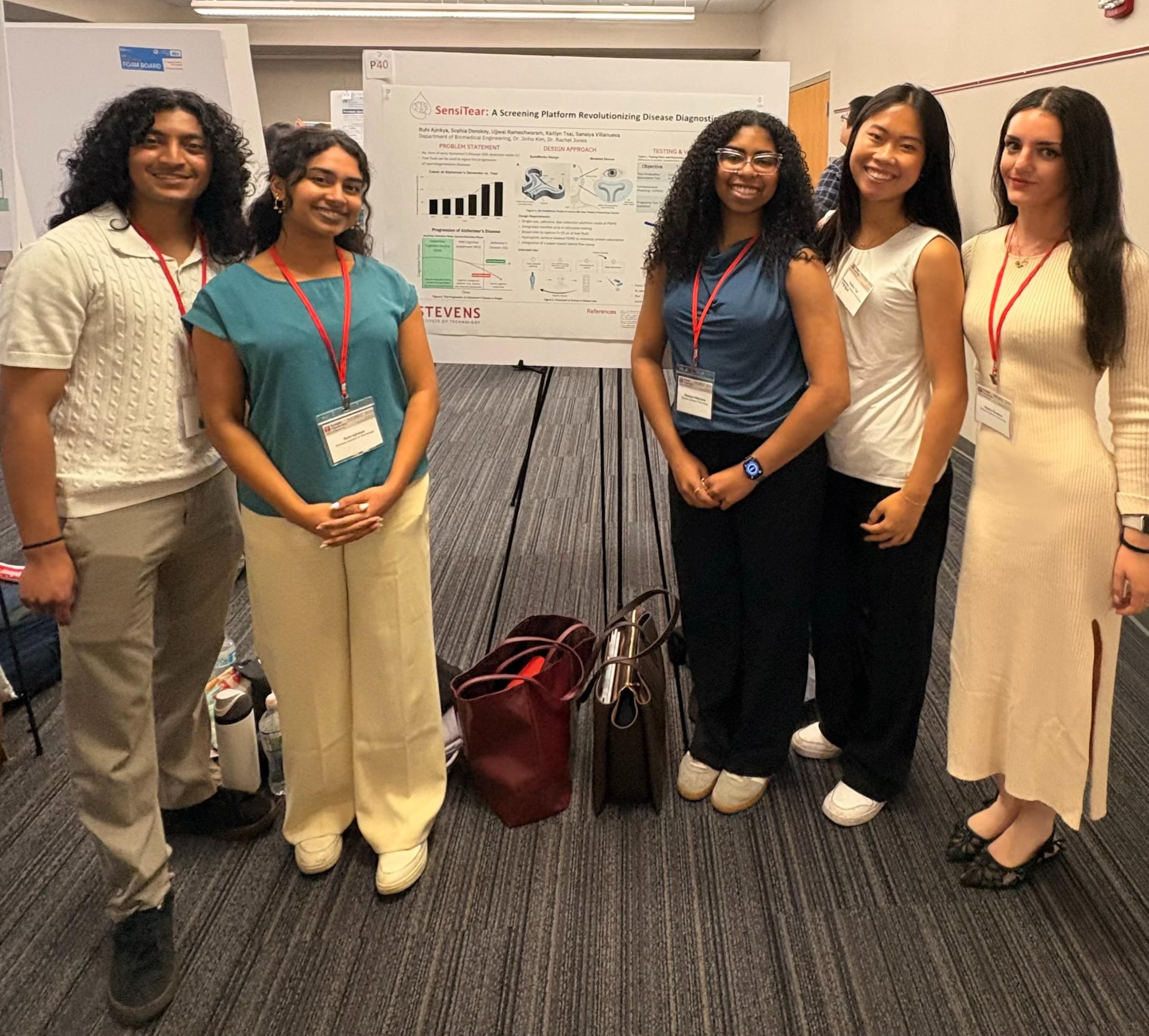
Five Stevens biomedical engineering students have their eye on a solution. Inspired by one teammate’s family experience, they have devoted their Innovation Expo project to developing SensiTear, a non-invasive screening device designed to stimulate tear fluid and analyze it for disease-linked biomarkers.
“My grandfather faced Parkinson’s disease, a neurodegenerative disorder with many of the same issues as Alzheimer’s,” said Ujjwal Rameshwaram ’26. “My family lost years with him that could have been spent preserving his independence and quality of life if we had known sooner.”
Giving the gift of time
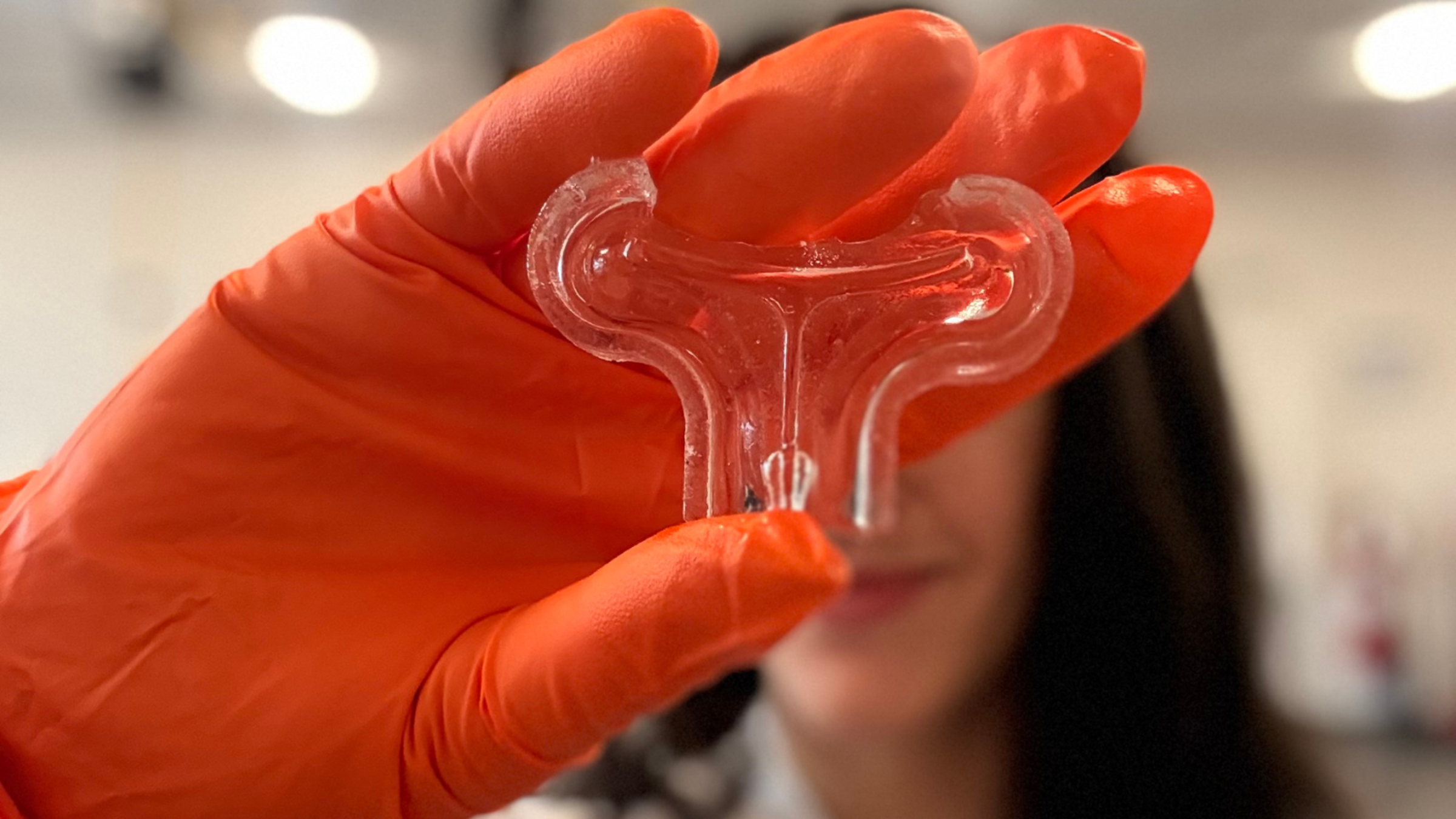
 SensiTear screening could be offered during a patient’s routine annual checkup if family history, age or other background suggested a risk of developing Alzheimer's. A painless adhesive fluid collection device placed beneath the eye would use a menthol coating to stimulate tears, much as Vicks VapoRub ointment makes the eyes water.
Tears would flow through the device to a chemically sensitive detection strip to produce a positive or negative result in less than 15 minutes — similar to an at-home pregnancy test. Positive results could prompt physicians to recommend follow-up procedures such as bloodwork, PET imaging or cerebrospinal fluid spinal taps for an official diagnosis of the disease.
“The body contains countless biological markers that serve as a largely untapped source of information,” said Sophia Donskoy ’26. “We wanted to explore how the tear fluid biomarkers amyloid-beta 40 and amyloid-beta 42 might help make screening earlier, easier and more accessible, potentially flagging the potential for Alzheimer’s disease years before mild cognitive impairment begins.”
“It’s not a definitive diagnosis,” added Kaitlyn Tsai ‘26, “but by identifying risks, it could give the millions facing neurodegeneration what matters most: time to act, plan, and access treatments while their minds can still benefit.”
‘Alzheimer’s is our first application, not our last.’
The students deeply appreciate the support Stevens has provided to equip them to bring their vision to life.
“Our coursework taught us the engineering concepts and principles that guided our design and testing process,” said Ruhi Ajinkya, who is also pursuing a master’s degree in applied artificial intelligence. “Using computer-aided design software, computational modeling and 3D printing gave us the skill sets to develop our device. Just as important was the invaluable guidance we received — from Dr. Rachel Jones, our senior design professor; Dr. Jinho Kim, our advisor; Dr. Jennifer Kang-Mieler, our department chair; Khurram Gore, our Innovation, Design and Entrepreneurship professor; and John Battikha, our senior design teaching assistant.”
These faculty mentors were equally impressed with this team’s creative problem-solving approach and its strong research and execution skills.
“These students are venturing into new territory to address a serious unmet need,” Jones said. “Biomarkers for Alzheimer’s disease in tears is still a developing field, but they have identified that potential and run with it. And they are on top of their game. For every question I posed about feasibility and specifications, they had an answer ready with peer-reviewed resources to back it up.”
Encouraged by the concept’s broader potential, the team plans to continue development and explore commercialization through additional testing, clinical trials, U.S. Food and Drug Administration (FDA) medical device classification and, eventually, go-to-market opportunities.
“If SensiTear succeeds, it could demonstrate that our platform is suitable for point-of-care detection of systemic diseases associated with biomarkers found in tears and other bodily fluids,” noted Sanaiya Villanueva ’26, who also is minoring in chemical biology. “Alzheimer’s is our first application, not our last. Emerging research has shown specific biomarkers in tear fluid can indicate breast cancer, diabetes and Parkinson's disease. This could be an exciting step toward the future of personalized diagnostics.”
The 2026 Stevens Innovation Expo will be held on Friday, May 8, beginning at 9:30 a.m.
Learn more about academic programs and research in the Department of Biomedical Engineering: