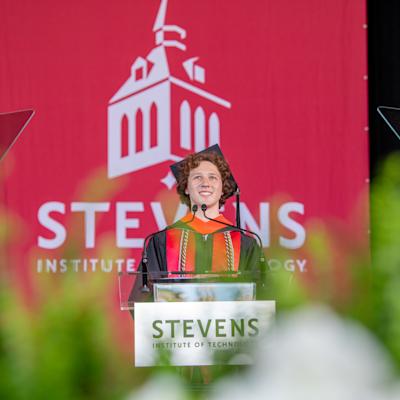
Stepping Out of Her Comfort Zone and Onto the Stage
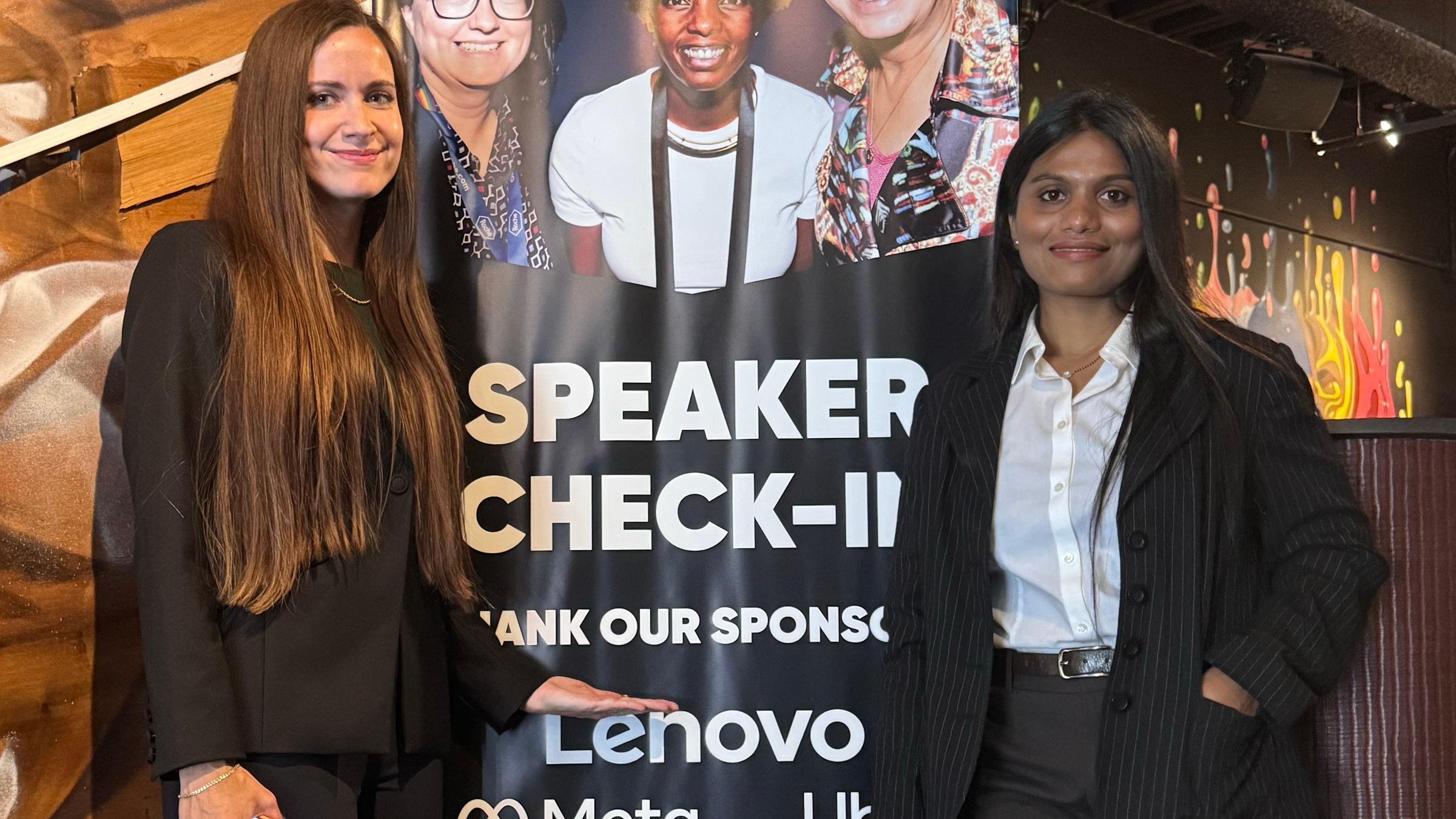
When Pratiksha Parsewar walked on stage at the 2026 Women Who Code Summit, she felt the usual nerves any speaker might experience. However, she took the microphone with a layer of confidence earned by already working through discomfort to follow her dreams.
Less than a year earlier, she left an eight-year career in her home country of India behind to move to the United States and pursue a master's degree in Business Analytics and Artificial Intelligence at the Stevens School of Business.
"Knowing that people had intentionally chosen to attend my workshop made me feel both excited and responsible," she recalled. "Once I started speaking, the nerves quickly disappeared because I focused on helping the audience rather than thinking about myself."
Women Who Code is a global nonprofit organization dedicated to advancing women in technology careers, and their annual event draws founders, executives, investors and AI professionals from around the world.
Pratiksha's session, "How to Use Generative AI Tools Effectively to Solve Real-World Problems," walked an audience of engineers, founders, product managers and technology leaders through practical ways to use tools like ChatGPT for productivity, research, content creation and workflow automation. Her presentation stressed responsible adoption and prompt engineering.
Beyond the professional opportunity, the moment carried personal significance. Years earlier in India, Pratiksha had been on the audience side, subscribing to newsletters and attending events to learn from more experienced engineers. This time, the community she had once turned to for guidance was watching her on stage.
"Less than a year after moving to the United States to pursue my master's degree at Stevens, I found myself speaking at an international conference hosted by a community that had inspired me years earlier in India," she said. "It truly felt like coming full circle. It reminded me that if you continue learning, stay curious and are willing to step outside your comfort zone, opportunities you once only dreamed about can become reality."
That willingness to do the hard thing is what brought Pratiksha to Hoboken in the first place. After earning her undergraduate degree in computer science and engineering in India, she spent eight years building software across startups, unicorns and global technology companies, including the fintech unicorn MobiKwik and a Toronto-based technology firm, developing products used by millions of customers. Not satisfied with her success, she wanted more than to adapt to the changes AI was bringing to her field.
"I realized AI was fundamentally changing how software would be designed, built and used," she said. "I didn't want to simply adapt to that change; I wanted to understand it deeply."

She enrolled at Stevens in the fall of 2025, moving to the U.S. on her own, drawn to the program that blends AI, data analytics and business strategy rather than treating them as separate disciplines.
That combination showed up directly in her summit presentation. Coursework in Management of AI Technologies, Augmented Intelligence and Generative AI, and Business Applications Using Generative AI gave her the language to share her engineering expertise through the business lens. She also credited serving as a teaching assistant for Professor Alexis Rittenberger and Professor Alkis Vazacopoulos for sharpening her ability to explain complex ideas simply, a skill she relied on heavily in front of a room of varying levels of experience.
"I focused on principles rather than complexity," she said of designing a talk that needed to land with students and industry leaders alike. "Whether someone was a student or a senior engineering leader, everyone wants to solve problems more effectively. People usually make one of two mistakes. They either trust AI completely or dismiss it entirely. The real value of AI comes from combining human expertise with intelligent automation, not replacing one with the other."
Responsible use was a throughline of the session. If attendees remembered one thing, she wanted it to be that AI is becoming a collaborative partner rather than a replacement for human judgment.
That philosophy echoes the legacy of David Belanger, the late Stevens professor and former AT&T chief scientist whose name Pratiksha now carries as the 2026 recipient of the David Belanger Fellowship, awarded annually to the first-year Business Analytics & AI student judged most likely to build a successful career in Big Data and AI.
"Professor Belanger believed that Big Data research should ultimately serve real-world systems, and that philosophy resonates deeply with me," she said.
Between maintaining a 4.0 GPA, her responsibilities as a TA, co-founding the Financial Planning and Analytics Club, and now representing Stevens on an international stage, Pratiksha has spent her first year building the kind of résumé that the fellowship was designed to recognize.
Looking ahead, she wants to bring her fintech background and her Stevens coursework together at the intersection of technology and product. It's a long way from the newsletters and LinkedIn updates she once followed from a distance, and proof of what's possible when you're willing to bet on yourself.
"I'm particularly interested in building intelligent financial products that make financial services more personalized, accessible and efficient," she explained. "In the long run, I also hope to build my own AI-driven products and contribute to the broader AI ecosystem."