Behind the Seams

Marcus Rocco will be the first to tell you he doesn’t fit the mold people expect of a data analyst.
“I’ve always considered myself a pretty creative person,” said the business analytics & artificial intelligence graduate student who is on track to complete his degree this spring. “When I tell friends and family that I’m working with data, they just think I’m playing with numbers and find it hard to believe a creative person would enjoy that.”
It’s an all-too-common assumption that working with data is just plugging away at formulas and spreadsheets to produce models and even more numbers. Rocco perceives the work much differently. “I actually see it more as creative problem-solving. You get some numbers, and you try to figure out in your head how to best visualize them for decision makers and how the pieces connect.”
Finding his way to Stevens
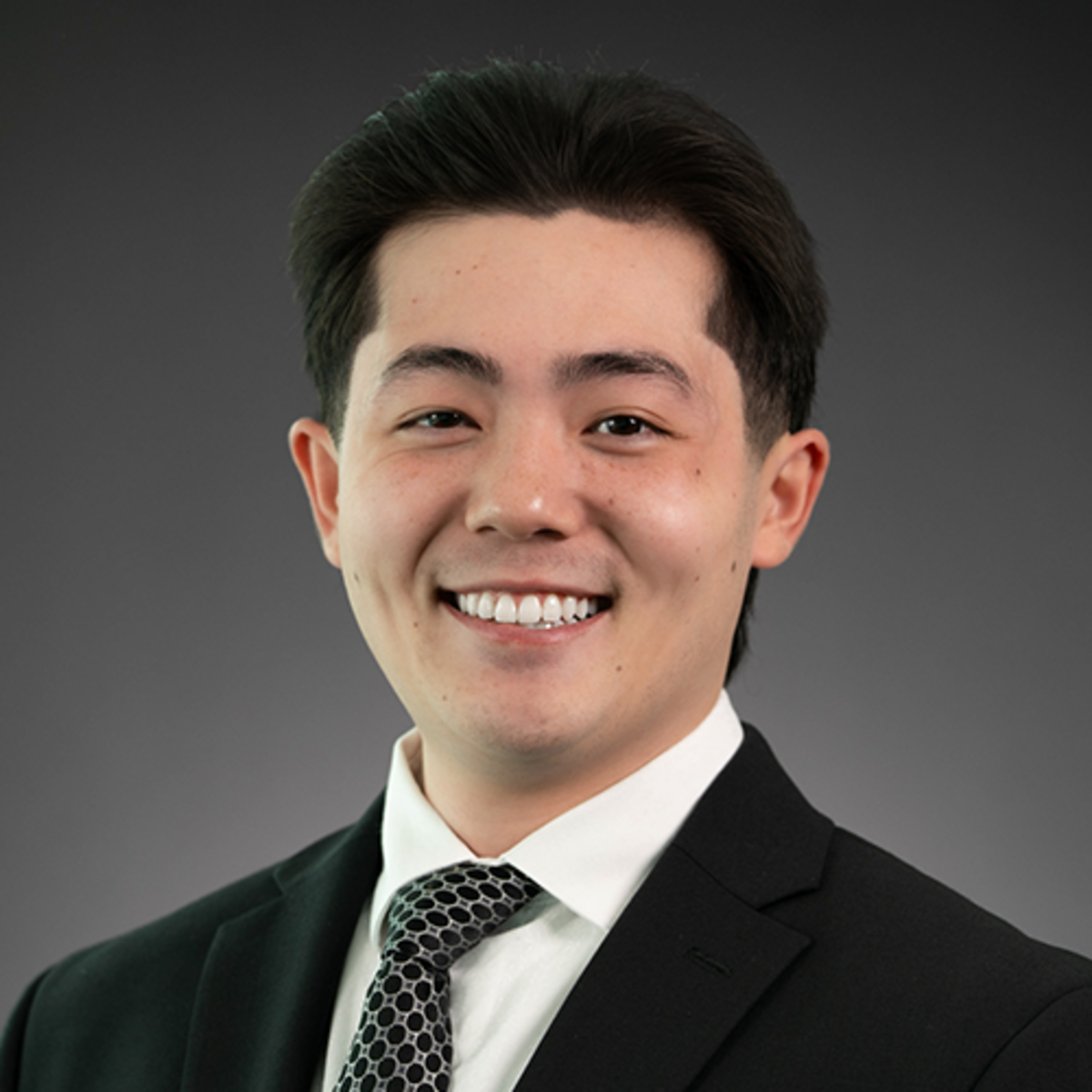 Rocco’s desire to work with data really took shape while earning his undergraduate degree in management information systems at Clemson University in South Carolina. “I was learning about IT, computers and how technology impacts business. What really sold me was a business analytics course that introduced me to collecting data, preparing it and turning it into insights. I really fell in love with that process.” So much so that he decided to continue his studies to pursue a graduate degree in business analytics.
A New Jersey local, Rocco was aware of Stevens’ long legacy of innovation and preparing graduates to leverage technology to drive solutions to pressing challenges. However, it was an undergraduate professor who encouraged him to dig into how Stevens would prepare him for the workforce.
“I’ve always heard about Stevens’ prestige and reputation. When I was researching graduate programs, Stevens was naturally on my list. But I also had a professor who was helping write my letters of recommendation, and he specifically mentioned the program here. Once I took a deep dive into the courses and how industry-applied the program is, the decision was easy.”
At the Intersection of AI and Fashion
The Industry Capstone Program pairs a student team with an academic advisor and a corporate partner to solve a real business problem. While it’s a graduate requirement for full-time MBA students, it’s also available to graduate students in other programs. Rocco was eager to take advantage of the hands-on opportunity.
“I really wanted to experience real-world, cross-functional work beyond the classroom,” he explained. “The Capstone Program allowed me to collaborate with students from different disciplines and develop skills in managing a diverse team working toward a common goal. That experience pushed me to grow not just technically, but also as a leader and communicator. [As project lead], I was someone who could align the team around expectations, manage timelines and deliver the best possible insights to stakeholders.”
When it came to selecting a project, he had a personal connection to The Webster, a shopping and retail brand that curates luxury ready-to-wear, in-store and online, that was looking to build an intelligent recommendation system using an LLM-powered GPT agent. “My mom works in fashion, so working in that space is something I feel close to through my family.”
It was also the ideal project for flexing his creative muscles. “It seemed very innovative, sitting at the intersection of emerging AI technology and a customer-centric strategy. It let me build something from the ground up. I like building things, so this gave me a perfect opportunity to design an AI prototype from scratch, while also thinking about strategy and applying the skills I’ve been developing.”
Rocco was selected to lead a team of four other graduate students — Yujia He (Business Analytics & Artificial Intelligence), Jahnavi Lanke (Analytics MBA), Vedant Shinde (Information Systems) and Pinal Soni (Business Intelligence & Analytics) — guided by faculty advisor Alkiviadis Vazacopoulos.
Traditional recommendation systems look backward, using data about what customers bought or browsed before to recommend that they repurchase their favorite protein bar or try a new hand soap scent, but as Heidi Klum famously said, “In fashion, one day you’re in and the next, you’re out.” A large part of fashion is about moving forward with new silhouettes, styles and colors. In a time of weekly clothing drops and the emergence of micro-trends, fashion is moving faster than it ever has.
Take the sweater you bought six months ago scrolling Instagram late at night. Today, it may be the first thing you toss in a donate pile while cleaning out your closet. It’s why prior purchases aren’t always the best indicator of future fashion decisions. The group was very cognizant of this fact.
“We built a ‘new arrival’ signal into our data. If a product was marked as new and the user indicated they liked staying on top of trends, we would rank it higher for them.” Additionally, they also factored in the effects that social media influencers have on customers’ preferences. “If you follow a certain influencer, the system will see what style they wear and what events they go to and personalize your recommendations to match that as well.”
Thinking Less Like Students
Rocco and his teammates broke the project into three phases to build the best possible prototype.
The first phase involved a deep dive into collaborative filtering, content models and hybrid approaches to understand the best methods to use. “This was really critical because we weren’t just tasked with building a generic prototype,” explained Rocco. “We wanted to design something aligned with The Webster’s brand identity and would genuinely enhance customer experience.”
Once they developed their AI’s back-end architecture, the group created a synthetic dataset to test their work. “The full product feed had around 27,000 rows of data, which was impossible to test and validate properly on our timeline, so we worked with a smaller sample to fine-tune our prompts, output structure and responses.”
Things got challenging when the group transitioned from synthetic data to the fall product feed. “The raw dataset wasn't immediately ready to use. Going back to it after working with our synthetic data, we realized there was so much more cleaning, structuring and validation needed than we anticipated.”
“We also had to ensure we had an optimal and balanced product set,” he continued. “For a recommendation system to make sense, we needed the right mix of tops, bottoms, footwear and accessories.” They also ran into an issue where long URLs containing product images in the dataset were cut off, leading to broken images on the frontend that were integral to the entire styling experience.
Working through these obstacles required the group to approach the project differently than their typical classwork. "We were forced to take a step back, look at root causes and tighten our data pipeline and instructions. It really pushed us to think less like students, and more like a team that was solving a problem together.”
In the end, the team delivered a functional AI-style prototype and outlined recommendations for continuing their work. In the short term, they suggested piloting the prototype with a high-engagement customer segment to measure conversion rates and styling accuracy to improve the underlying data structure before scaling. In the long term, the group envisioned an entire agentic AI ecosystem built, where individual agents handle data collection, validation and preparation, freeing the client to focus on its products and customers.
The team’s use of AI offers an example of the future of AI in business. “It’s not about replacing the hard work I do, but it’s about helping me do the stuff that’s easy.”
The Coursework Behind the Capstone
It may have been Rocco’s passion for combining data and creativity that led him to choose the project, but he credits his courses for preparing him with the technical skills and strategic lens to approach and complete the project as a full-time professional would.
“My coursework directly influenced a significant portion of what I was able to accomplish. MGT 808: Fundamentals of Consulting, was where I learned about scope creep, requirements gathering and translating technical problems into something understandable and actionable. I honestly don’t think I could have shown up to those early Zoom calls without that foundation.”
He took BIA 658: Management of AI Technologies, concurrently with the Capstone, which shaped how he and his team designed their GPT’s architecture and their recommendations for scaling the prototype. “We studied AI as a whole, but what I specifically took from it was how AI systems are structured and governed within an organization, not just technically, but strategically.”
After gaining a deeper understanding of LLM algorithms and principles in MIS 637: Data Analytics and Machine Learning, he applied his learnings to design the multi-factor recommendation logic for product ranking.
What He’ll Take with Him
Unlike structured coursework, leading through a complex problem without a clear solution was not only challenging but incredibly rewarding, said Rocco. “In a typical class, the professor may guide you toward a known answer. This project required navigating an evolving dataset, managing stakeholder expectations under a real timeline and handling genuine uncertainty about what the solution would look like, all while keeping a team aligned, accountable and motivated.”
“I came away with a real sense of accomplishment from having delivered a solution from start to finish,” he continued. “This work could meaningfully contribute to how a company thinks about adopting emerging technology.”
If Rocco provided anything, it’s that breaking the mold never goes out of style.