
On a Mission to Improve Emergency Care
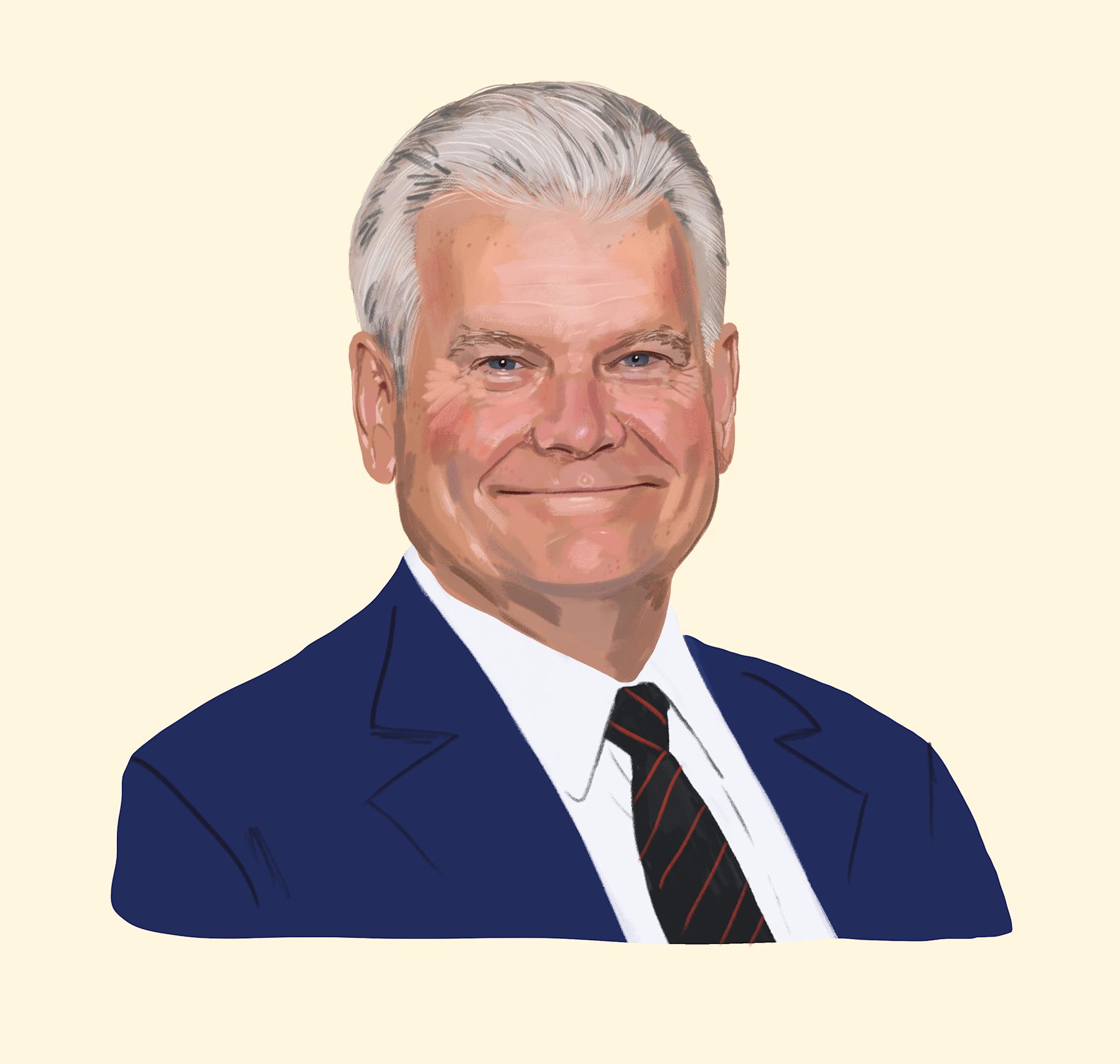
 Emergency care in the United States is broken, says Dr. David Schreck ’75 M.S. ’75 — and he is on a mission to fix it. As co-founder and co-CEO of Acute Medical Management, Inc., Schreck is building a new model for patients with high-acuity healthcare needs.
He notes that 90% of patients in the United States who visit an emergency department wind up getting sent home — often after very long and uncomfortable waits — to a fragmented and expensive system that drives nearly $500 billion in avoidable costs.
AMM, with seven clinics across New Jersey, addresses this by providing hospital-level evaluation and treatment in an outpatient setting and connecting patients with follow-up care on discharge. He previously built these clinics as part of the Summit Medical Group, where he was chairman of emergency and hospital medicine.
When it comes to emergency medicine, Schreck has major cred: more than 35 years in emergency and primary care, providing care for 200,000 patients — through COVID-19, anthrax attacks and Sept. 11, 2001.
In a notably wide-ranging career — he holds four patents, has done extensive clinical research and co-founded medical device company VectraCor with his brother, Brad Schreck ’78 M.Eng. ’79 — Schreck has served as vice president of the Atlantic Health System, overseeing acute medical care; vice chairman of the Department of Medicine at Overlook Medical Center; and chief of emergency medicine at Muhlenberg Regional Medical Center, among other positions.
He never stopped seeing patients.
“That doctor-patient relationship, to me, was the most rewarding,” he says. “It’s based on trust — a kind of mutual respect, and it’s the greatest honor.”
A proud son of Paterson, New Jersey, Schreck was the first in his family to attend college. His dad sold shoes, as Schreck did throughout his Stevens years. He praises Stevens’ Undergraduate Projects in Technology and Medicine program, which allowed him to pursue EKG-related research that helped lead to the Schreck brothers’ VectraCor, a New Jersey-based company that develops cardiovascular diagnostic technologies.
“Stevens taught me how to innovate,” he says. “I had my own lab!”
Today, he sees patients occasionally and volunteers with the Newton Free Clinic in New Jersey, which treats low-income patients, accepting no payment. His motto: availability, affability and ability.
“You’ve got to be available to these patients,” he says. “And you’ve got to have a little bit of personality. We all put our pants on one leg at a time. Show some empathy, let them know you care.”
– Beth Kissinger