
Built for the Bills
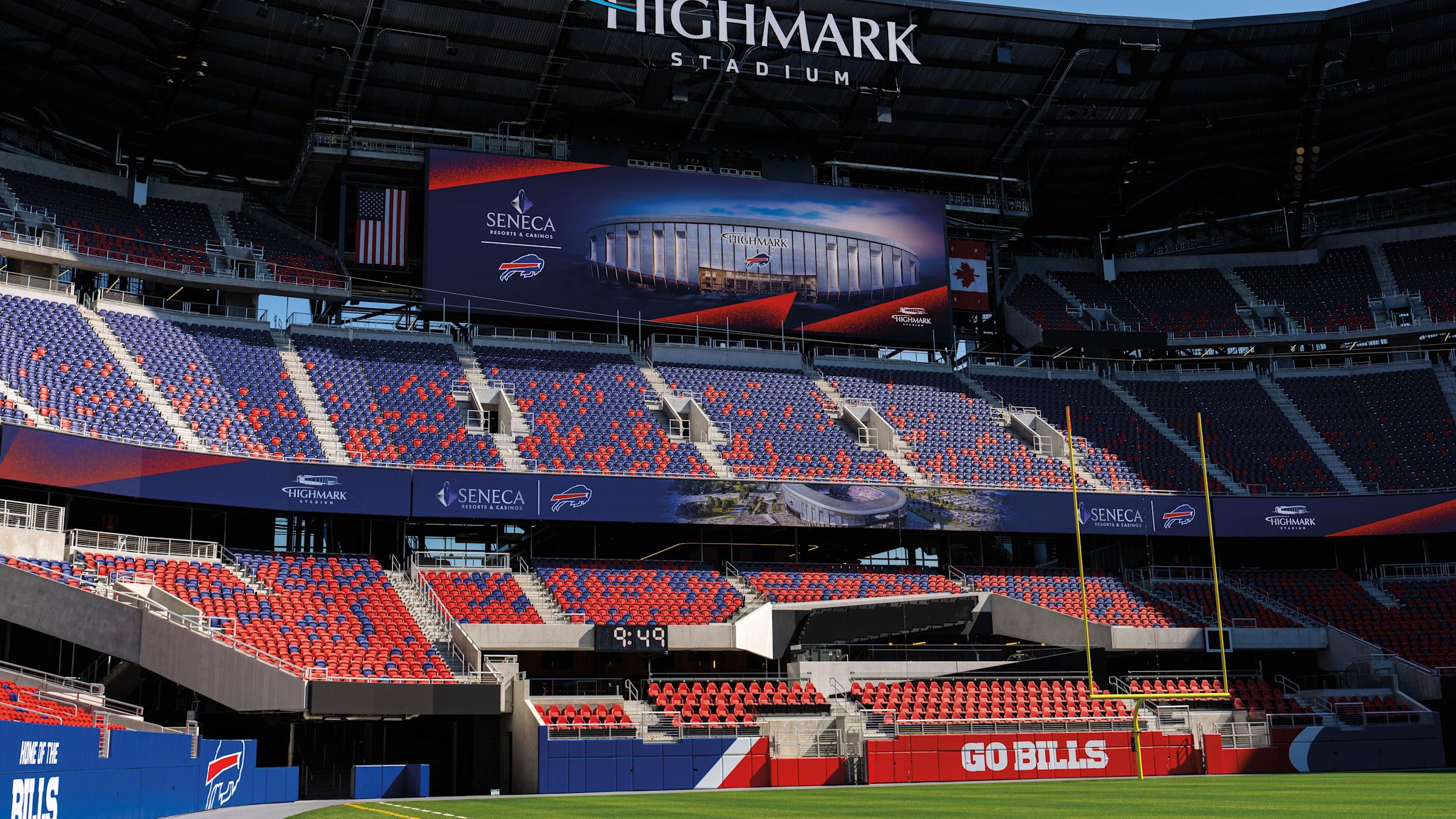
With construction complete, Highmark Stadium is already creating memories for Bills fans, including victories in its first two regular-season games. For Simone and Knight, those moments are the beginning of what they hope will be a long history of memorable experiences at the stadium they helped build.
 Long before Daniel Knight ’16 M.Eng. ’16 helped build the Buffalo Bills’ new Highmark Stadium, he imagined doing exactly that. Growing up in upstate New York as a lifelong Bills fan, Knight painted his bedroom blue and red and dreamed of someday helping build a stadium for his favorite team. His career took him from Stevens to subway projects in New York City and construction work in Los Angeles before bringing him back to Western New York.
Matthew Simone ’06 took a different path. The first in his immediate family to pursue higher education, Simone arrived at Stevens with an aptitude for math and physics.  While completing his fifth year, he worked at a brokerage firm by day and took graduate-level courses at night, experiences that helped steer him toward a career combining engineering, business and construction management.
Years later, their paths converged at Gilbane, a global builder and real estate developer, where both helped oversee construction of the Bills’ new home as part of the Gilbane-Turner joint venture. Simone, a project executive and one of three team leads, oversaw more than 25 trade bid packages, while Knight served as a project manager responsible for elements including elevators, escalators and masonry.
With construction complete, Highmark Stadium is already creating memories for Bills fans, including victories in its first two regular-season games played. Simone and Knight reflect on the challenges of bringing the stadium to life, the work fans may never see and what they hope the new venue will mean to Buffalo.
What made Gilbane-Turner the right team for this project?
Simone: Primarily, it was our combined experience constructing professional stadiums and building in Western New York. We brought people onto the team from across our organizations, including some who relocated from as far away as California. Combining stadium construction experience with knowledge of building in a cold-weather environment helped us anticipate and address potential challenges.
Knight: That combination of local knowledge and stadium construction experience gave us an advantage, but what really stood out to me was the people. Everyone embraced a true one-team mentality. We were working toward something bigger than our individual roles, creating a culture where people learned from one another, supported one another and ultimately delivered something we're all proud of.
How did you keep so many people and companies working toward the same goal?
Simone: We approached managing our staff and trade partners with the mindset of an NFL team. Everyone had to work toward a unified goal, overcome challenges and support one another. There's a cliché that NFL stands for "Not For Long," reflecting how little patience professional teams have for underperformance or unforced errors.
But we also made a point of celebrating our wins. At staff meetings, we recognized people who performed exceptionally or went above and beyond.
Maintaining that culture meant continually reinforcing what we were collectively trying to achieve. We regularly engaged both the tradespeople onsite and the leaders of the companies employing them. Everyone coming onto the site went through an orientation that extended beyond safety and project specifics. We wanted to establish that shared culture from the beginning.
What were some of the biggest challenges you faced during construction?
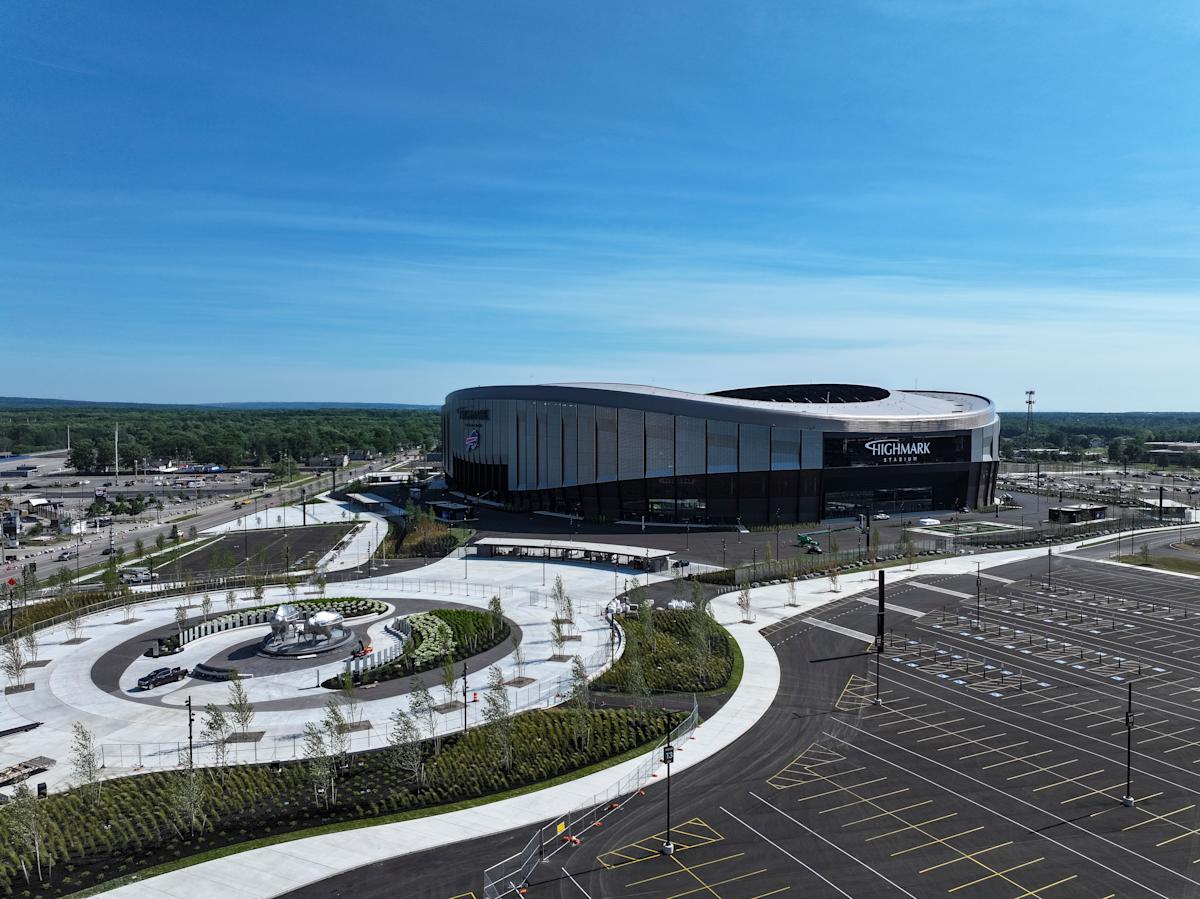 Simone: One of the unique challenges was building an open-air stadium with so many spaces transitioning between outdoor and indoor conditions. New York State code required insulating coatings on structural steel in those areas, and we had to determine how different materials would work together.
Dan was tasked with helping resolve those compatibility issues. Something that might seem as simple as applying insulation and paint became almost a science experiment. We worked with manufacturers and other experts to determine which materials could be applied together and in what order. We couldn't afford failures that might compromise safety or performance.
Then there was the weather. Building in Buffalo meant accounting for snow, wind and temperature limitations. We engineered temporary walls to withstand wind loads and used suspended scaffolding to access the underside of the stadium. Those platforms had to be removed before snow arrived because they occupied some of the structure's intended snow-load capacity.
Even temporary heating required careful consideration because it could introduce humidity that might affect the materials being installed. With the deadline we were facing, there wasn't room for material failures that would require us to redo work.
Knight: The pace and complexity required an elevated level of attention to detail. With a finish date that was non-negotiable, we had to anticipate challenges early and make informed decisions.
The scale of the stadium amplified everything. There was constant coordination among different design disciplines and trade partners, and one decision could affect several others. You had to trust the people around you, bring in the right experts and keep moving forward.
What were some of the most interesting aspects of your work on the stadium?
Simone: One of the most unique aspects for me was overseeing construction of the playing field. When we were dividing up responsibilities, it didn't fit neatly into any of the other categories. As someone who loves sports and wanted to challenge myself, I said, "I want the playing field."
The Bills wanted natural grass in an open-air stadium, which created its own challenges. The field alone contains more than 17 miles of piping. Being involved in that part of the project was a great learning experience.
Knight: One of the most memorable parts of my work involved the escalators. There are 29 elevators and 12 escalators in the stadium, including six outdoor escalators. The two on the south side have rises of approximately 55 feet and cross in opposite directions.
Installing them involved considerable engineering, including temporary engineering considerations, as well as scaffolding and coordination. We also had to carefully sequence the installation so parts of the stadium could be enclosed before winter.
As a season ticket holder, I knew how valuable those escalators would be for fans, so it was exciting to see them in place.
What role did technology play in building the stadium?
Knight: We relied heavily on Virtual Design and Construction (VDC), which allowed us to take a "measure twice, cut once" approach. Each trade partner modeled its scope of work, from structural steel to millwork, so we could identify and resolve potential issues before they reached the field.
One of the biggest differences between a stadium and a more traditional building is the uniqueness of the spaces and geometry. No two areas are necessarily the same. That required us to think creatively about how everything would come together. For me, that was one of the most rewarding parts of the project.
Is there anything about this project that might surprise people?
Simone: A project of this scale can have a workforce comparable to a small town, so the supporting infrastructure has to accommodate everyone working onsite each day.
We even built a barbershop inside the stadium, complete with barber chairs and licensed barbers, so workers could get haircuts during breaks. Many people were working seven days a week, so providing even a small quality-of-life benefit was important. We wanted to make the site a place where people wanted to work.
Was there a particular moment when the stadium really started to come together?
Simone: It was difficult to fully appreciate what we were achieving while we were immersed in the work. It was especially rewarding when people who hadn't visited the site in several weeks pointed out how much we had accomplished. Still, feeling the first tremor from the blasting for sitework created a definite sense of, "Here we go."
Knight: I remember working a summer weekend when only a handful of people were left onsite. Near the end of the day, I watched the first field goal post be raised into place. In that moment, this massive construction project suddenly felt like a football stadium. As the Bills branding came together, it started to feel more like home. As a Bills fan, seeing that transformation firsthand was especially meaningful.
What are you most excited for fans to experience?
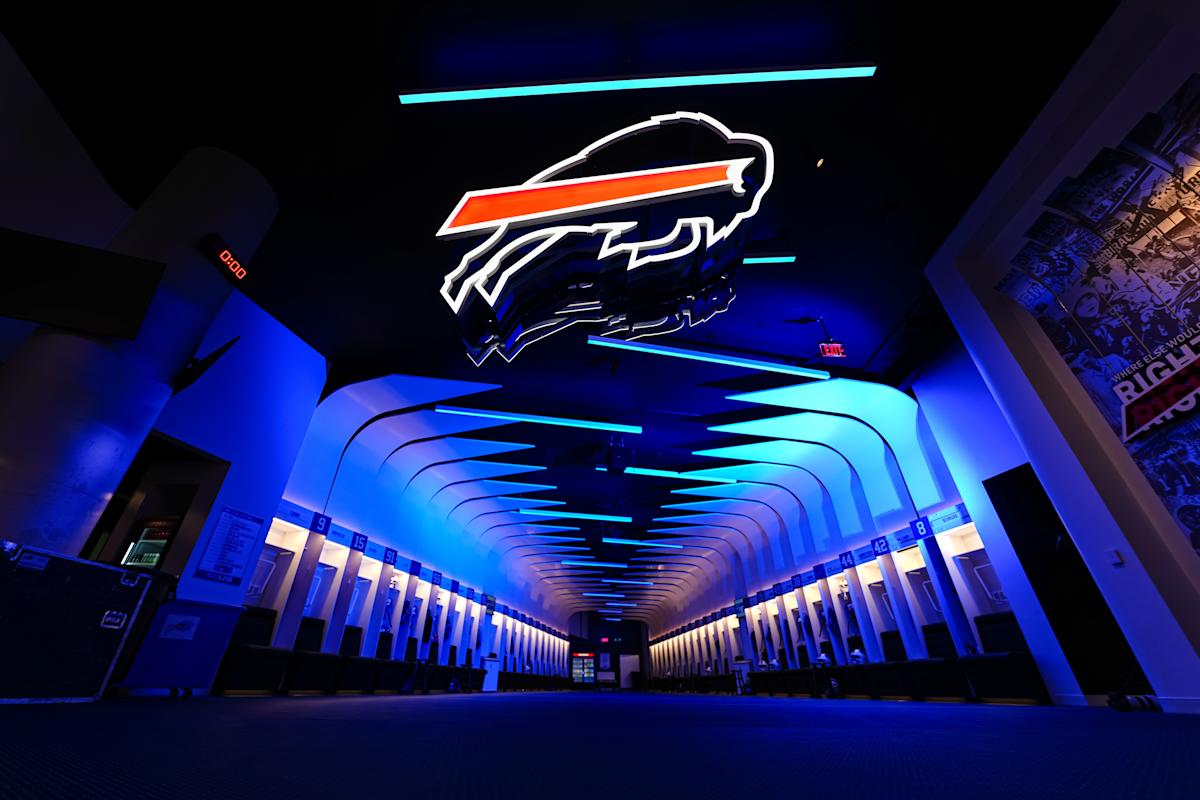 Simone: The stadium has already hosted several events and preseason games, and it has been rewarding to see people's reactions. They come through the entrances with wide eyes and looks of amazement. Even the players were taking photos and seemed to be in awe of the venue. Seeing those reactions is a fitting reward for the work and dedication of so many people.
Knight: I love the open concourses and 360-degree views of the stadium from the main and upper levels. The view of the city from the upper concourse also creates a connection to downtown Buffalo.
I appreciate the thought that went into the "Built for Buffalo" concept, with so many nods to the local community throughout the stadium. And the state-of-the-art audio and visual technology will make the in-game atmosphere incredible. As a Bills fan, I think it will make an already special game-day experience even better.
What has it been like working alongside another Stevens alumnus on a project of this scale?
Simone: Dan and I didn't know each other before this project, despite working for the same company. Discovering that we shared an alma mater created an immediate sense of camaraderie. When we talked about Stevens or our time in Hoboken, it hardly felt as though I had graduated 20 years ago.
Stevens gave us a strong foundation for working within a dynamic team. Dan and I could openly strategize and challenge one another to make sure we arrived at the right solution. Having both played sports, we also shared an appreciation for a strong team culture.
Knight: Our shared technical foundation, combined with communication and teamwork, helped us work through the complexities of the project. Matt was a true mentor throughout the project. He was someone I could turn to when we faced challenges, offering different perspectives and supporting my professional growth. Working alongside a fellow Stevens alumnus made the experience especially meaningful.
What do you hope Highmark Stadium is known for years from now?
Simone: Memories. I hope it's known as a place where people witnessed victories, saw records broken, attended their first game and gathered with family and friends to create lasting experiences.
Knight: As a lifelong Bills fan and season ticket holder, I hope this stadium becomes known for its one-of-a-kind fan experience. And, of course, I'd love nothing more than to see a Super Bowl banner hanging from the rafters someday.
– Charles O’Brien