Answering the Call
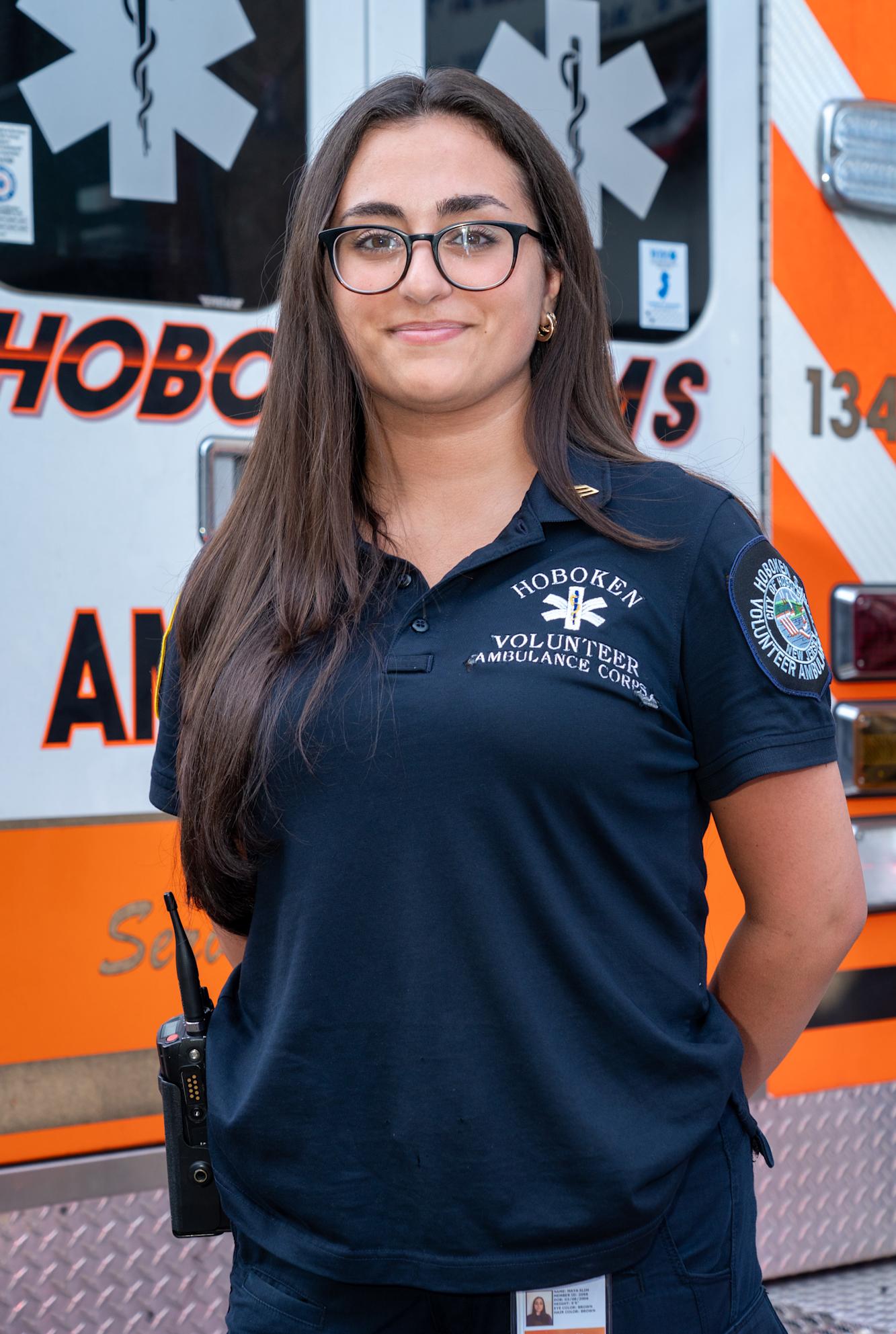
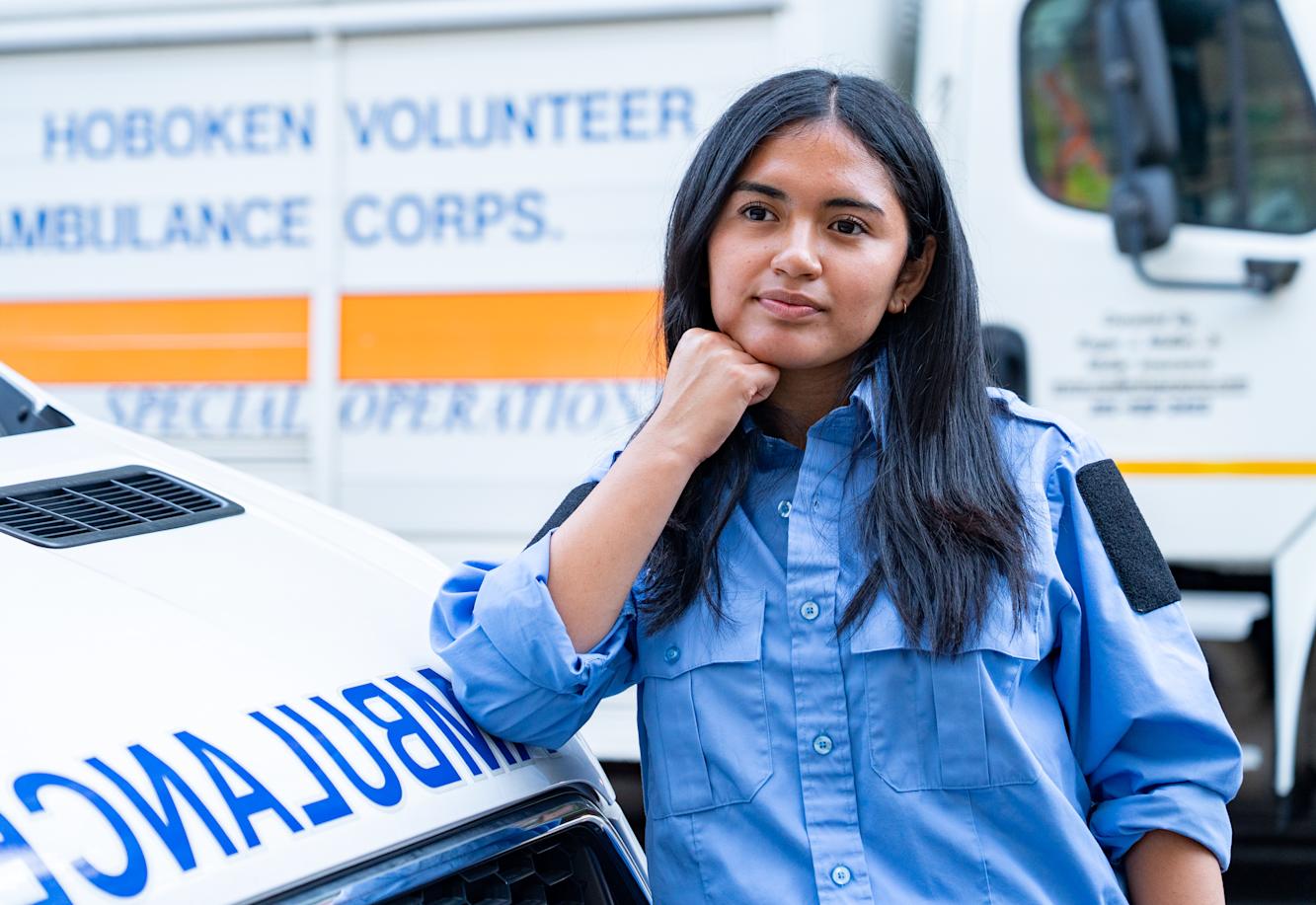
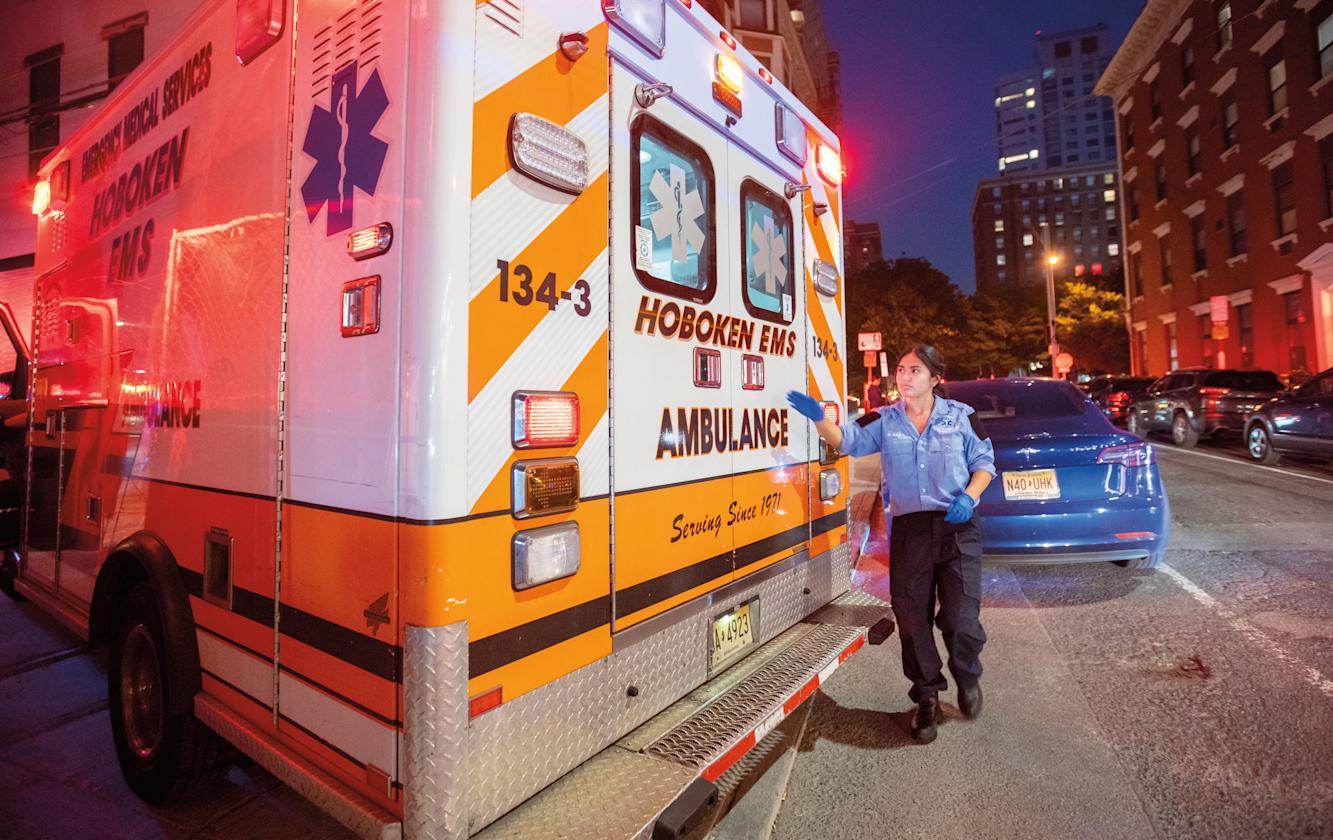
Maya Slim is nearing the end of her overnight shift with the Hoboken Volunteer Ambulance Corps one day this summer and catching a nap back at the station when the call comes in at 4:45 am. A woman is in labor.
When Slim and partner and fellow Stevens student Hanna Matheson ’28 enter the woman’s apartment, the baby’s head is already visible.
“It was the scariest 45 minutes of my life,” Slim later recalls. “It was someone’s whole world and her baby’s first day on earth.” Mom was calm — dad less so — and Slim’s and Matheson’s training as state-certified emergency medical technicians (EMTs) kicked in, on their first-ever birth. They helped the mom deliver a baby girl, with Slim cutting the umbilical cord. The baby wasn’t crying, so she and Matheson gently rubbed the baby’s tiny chest and feet to rouse her, with assistance from a fellow EMT who arrived later. The baby girl opened her eyes and cried.
“How many people at 20 can say that they’ve delivered a baby?” says Slim. She proclaimed the infant healthy — and adorable.
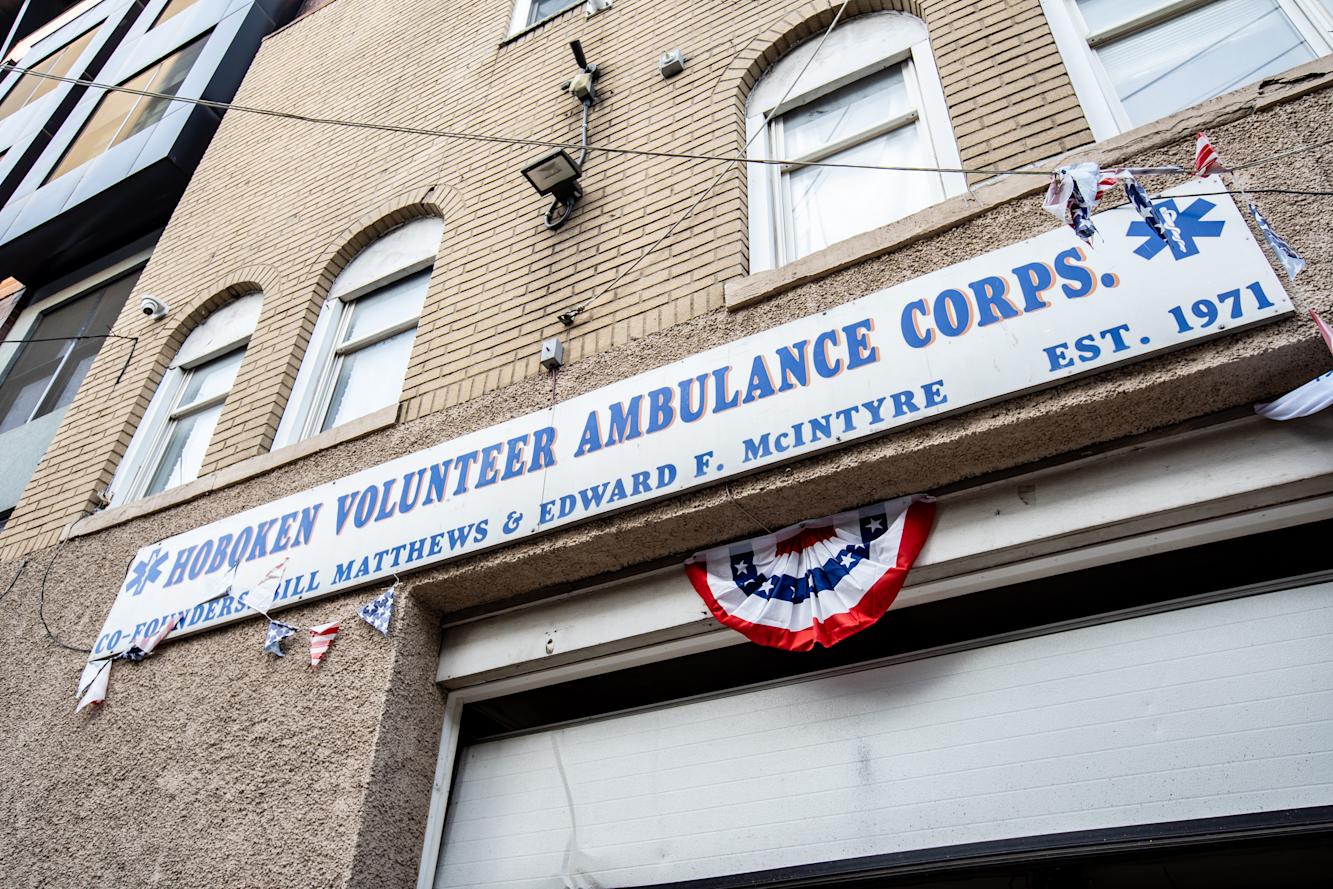
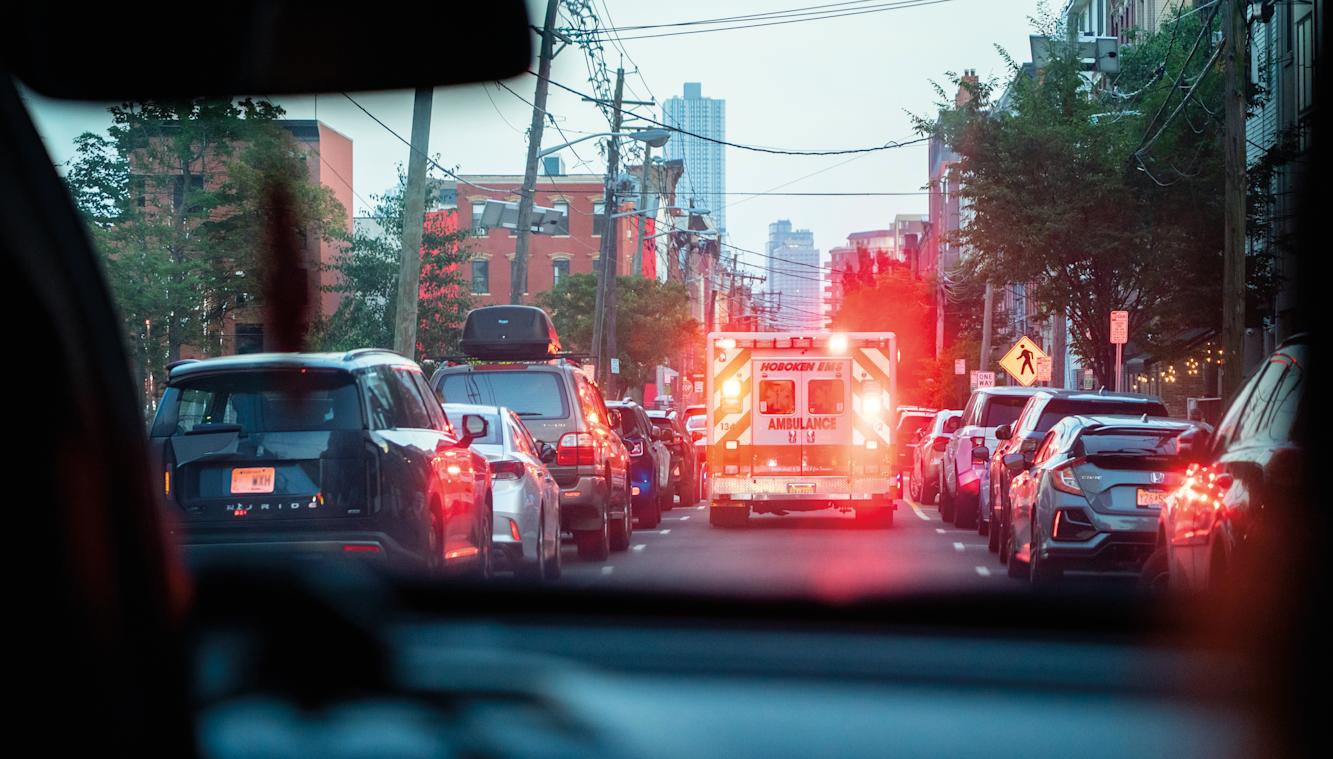
So went another shift with the Hoboken Volunteer Ambulance Corps, where Stevens students aspiring to medical careers not only gain real-world experience but also help ensure that this ambulance service, which has served Hoboken for 55 years, continues to thrive.
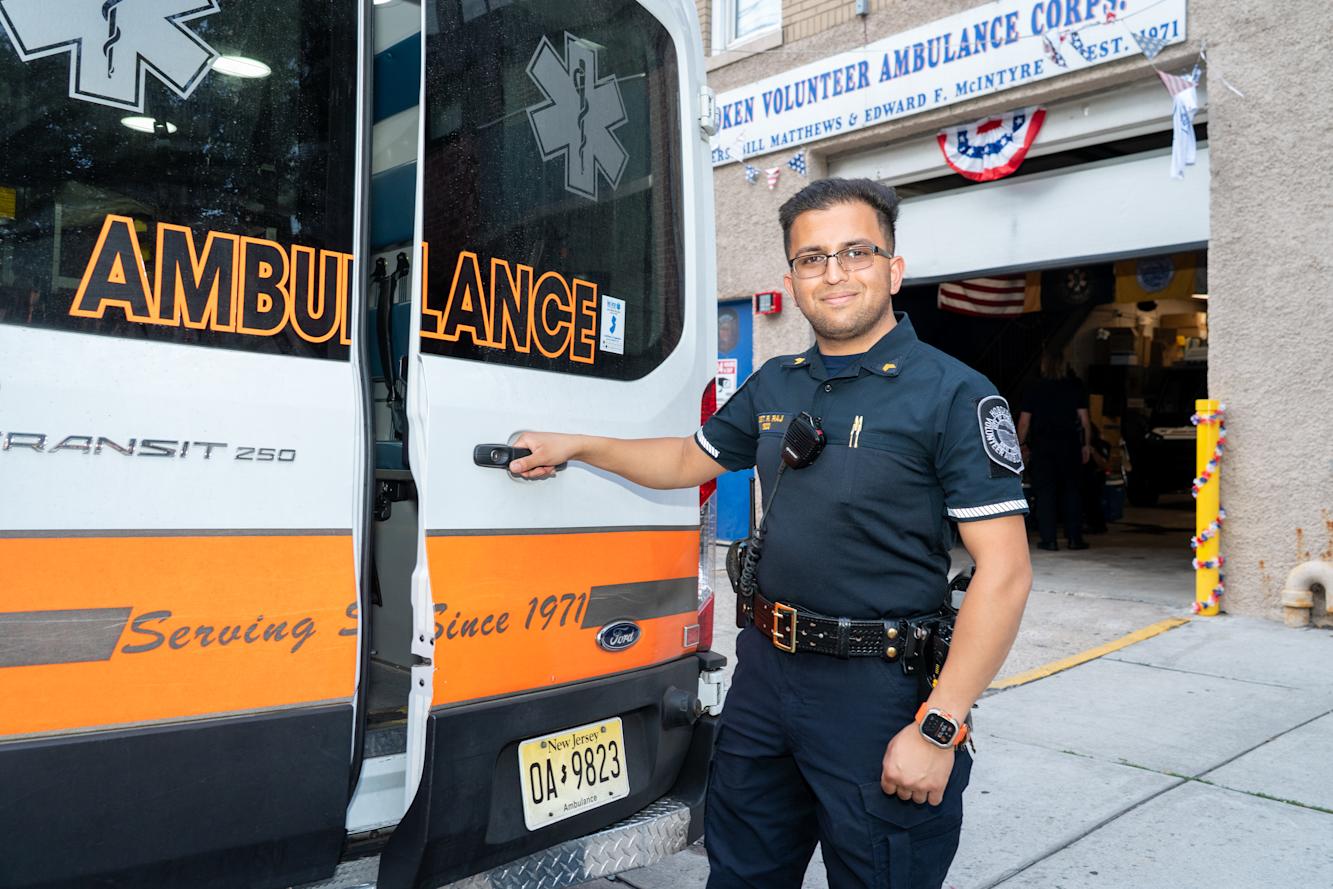
“Everyone wants to be there,” says Rishi Raj ’26, the ambulance corps’ acting first lieutenant and a veteran EMT who is studying for his master’s in computer science at Stevens. “Their motivation is to help the people of Hoboken.”
A Pipeline for Volunteers
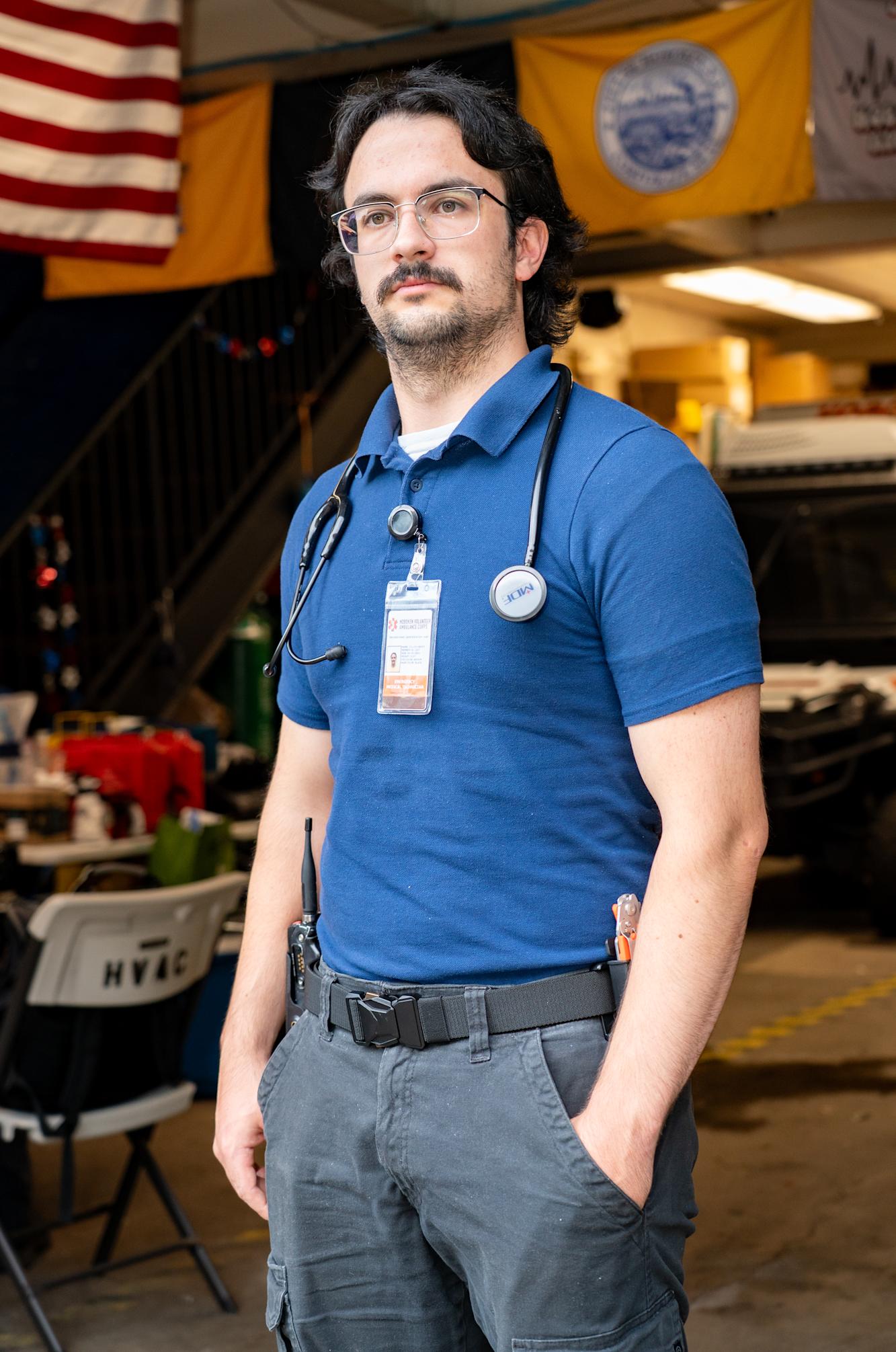
The Hoboken Volunteer Ambulance Corps has close to 200 members, including about 30 Stevens students at any one time. Most opt to train as EMTs, completing five-and-a-half months of coursework and a three-year commitment to the ambulance corps, which pays for their EMT classes. All members must complete at least CPR training, which allows them to ride the ambulance as observers and, if licensed to drive, serve as ambulance drivers.
“Stevens has become a pipeline for us to get members,” says Thomas Molta, longtime president of the ambulance corps. While many volunteer ambulance corps across the country struggle with recruitment, Molta says that as Stevens students graduate, a new crop arrives each fall. He values the diverse life experiences that they bring — students come from all over the world — and their work ethic.
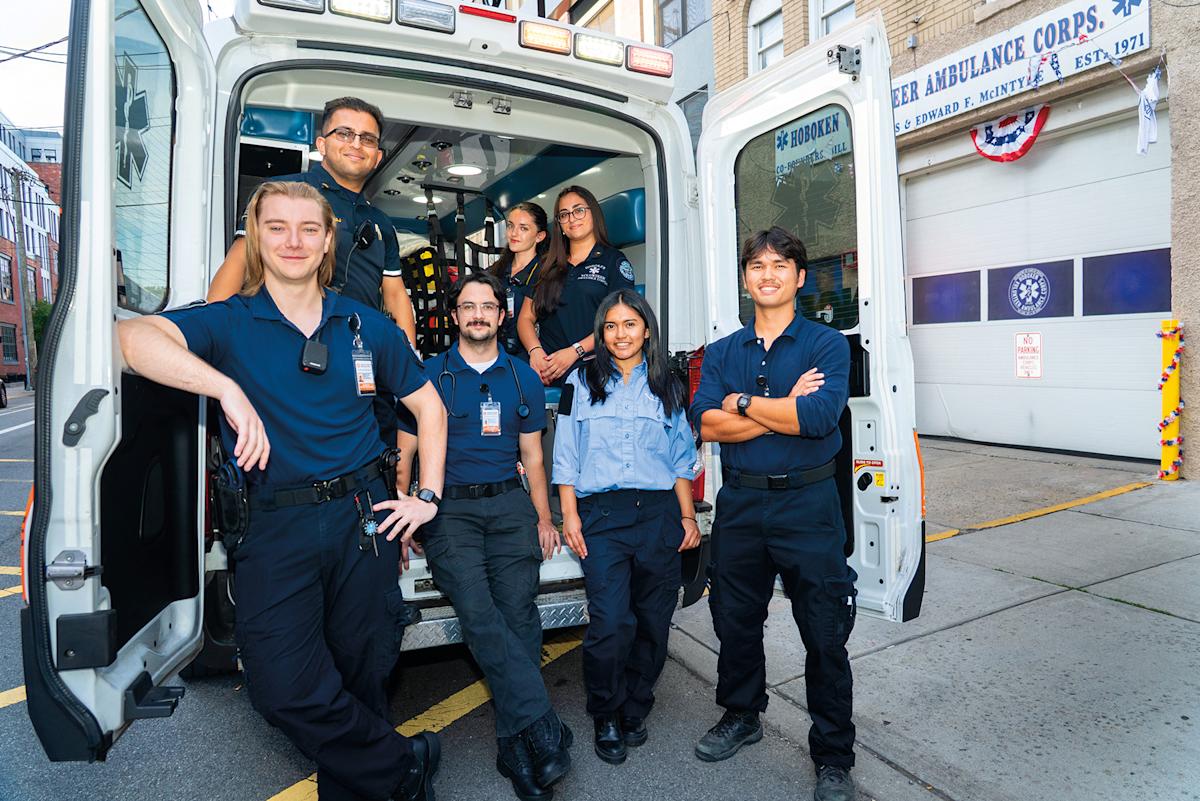
“When you think about the workload these students have, it’s grueling,” he says. “Instead of being out at a bar and partying, they choose to come here. How much better do you get than that? They’re that community-oriented.”
Volunteers must work at least four shifts per month, totaling 20 to 32 hours. Stevens students can schedule shifts around classes, but this is a 24/7 operation, and some students do work overnight shifts. Surprisingly, most interviewed found juggling classes and the corps manageable, with their time on the ambulance almost an escape from classes and a chance to be with people with whom they have an undeniable bond.
Slim, a Class of ’28 biomedical engineering major now considering medical school or a physician assistant program, discovered through the ambulance corps that she loves taking care of patients. And she found her people.
“Everyone looks out for each other. It is hard on the mind and hard on the body,” she says. Discussing the difficult calls afterward helps volunteers process their feelings, says Molta, who explains that the ambulance corps has a wellness committee and both peer and outside counseling are available for the volunteers who need it.
Slim recalls her first CPR call when she helped to revive a middle-aged man.
“Every call you go on, you’re going because it’s a bad day in someone’s life. To be there for them — it’s important for them to be safe.”
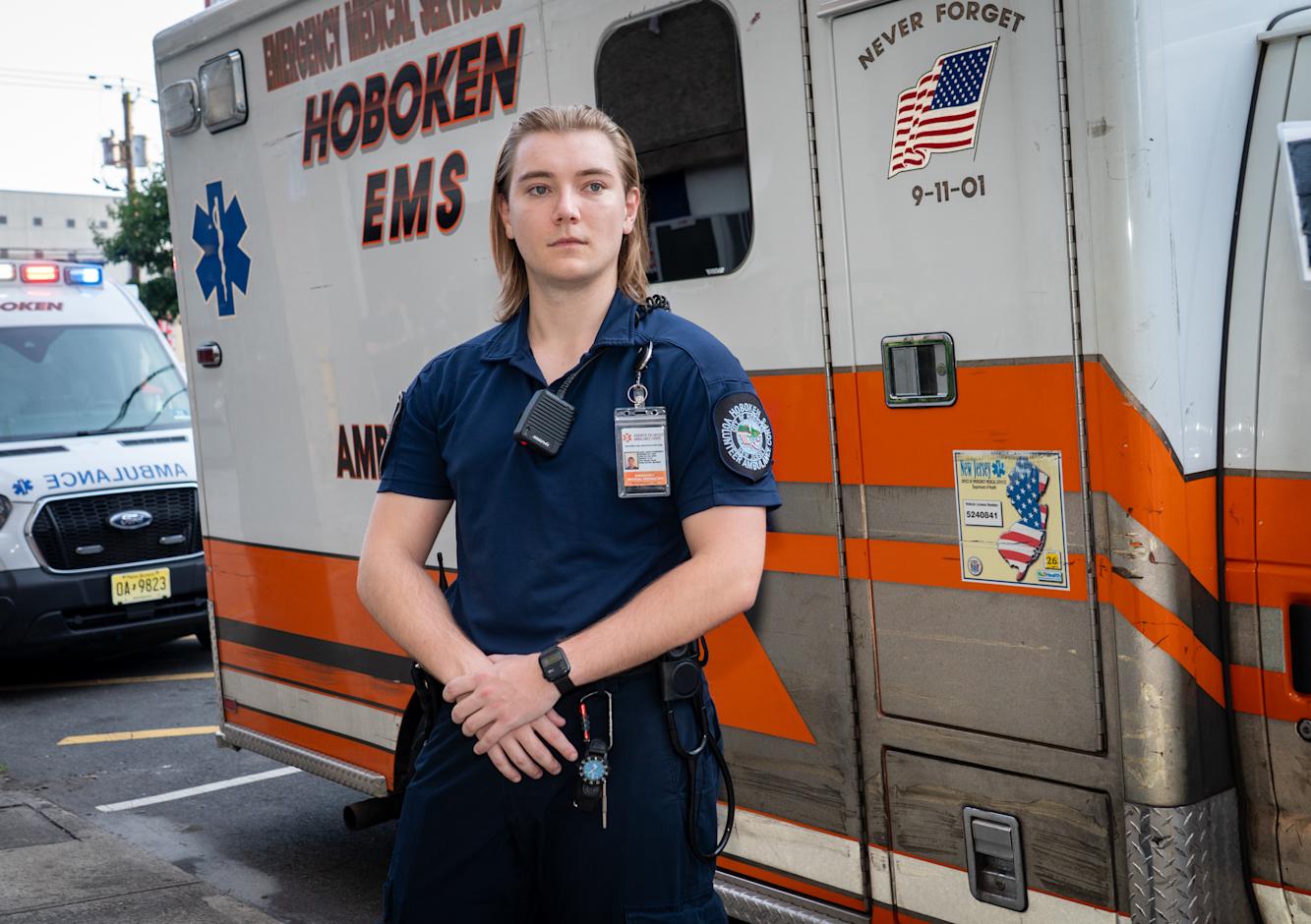
Aidan Robinson ’26 knew by high school that he would pursue a medical career. He was driven to help his older brother, who was born with neurofibromatosis, a genetic condition that has required 13 brain surgeries. Aidan grew up getting to know his brother’s doctors during frequent hospital visits.
“They were always the smartest people in the room. But they also showed much kindness and care,” Aidan says. Robinson has shadowed doctors in hospitals where his brother has been treated. He is currently completing a master’s in chemical biology at Stevens and will apply for medical school next year.
The ambulance corps has opened his eyes to the Hoboken beyond the ivory tower of Stevens; “it expands my view of the world,” he says.
He recalls one encounter with a person experiencing homelessness who was agitated. Robinson got on his knees — he and other EMTs often kneel to speak with patients, so they are seated at the same level — and talked to him. He discovered the man also was from Baltimore, grew up in a poor neighborhood, joined the Army, and feels that he has no one in his life to turn to.
“That small conversation calmed him; he appreciated it,” Robinson says.
Reminded of Life's Fragility
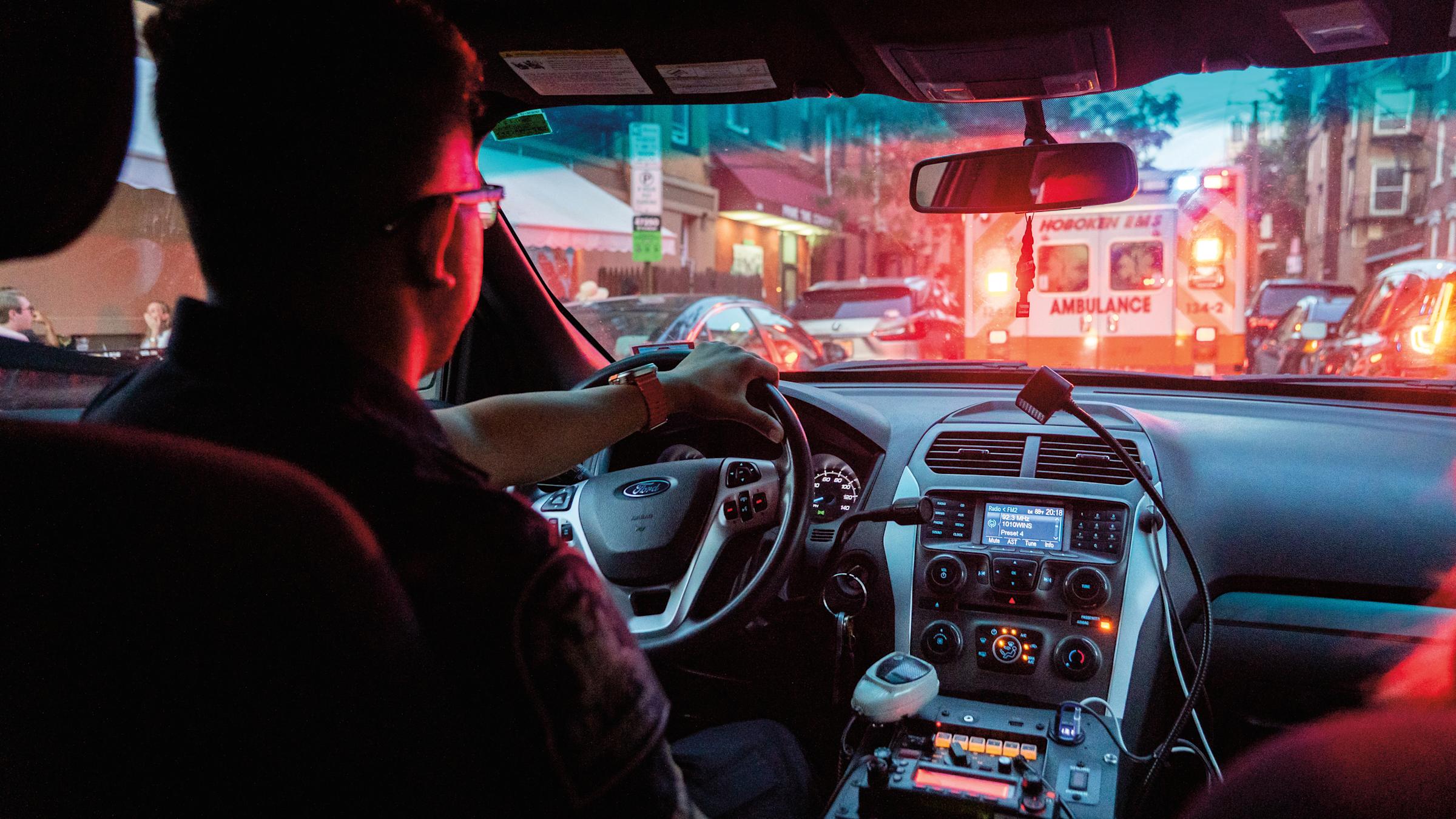
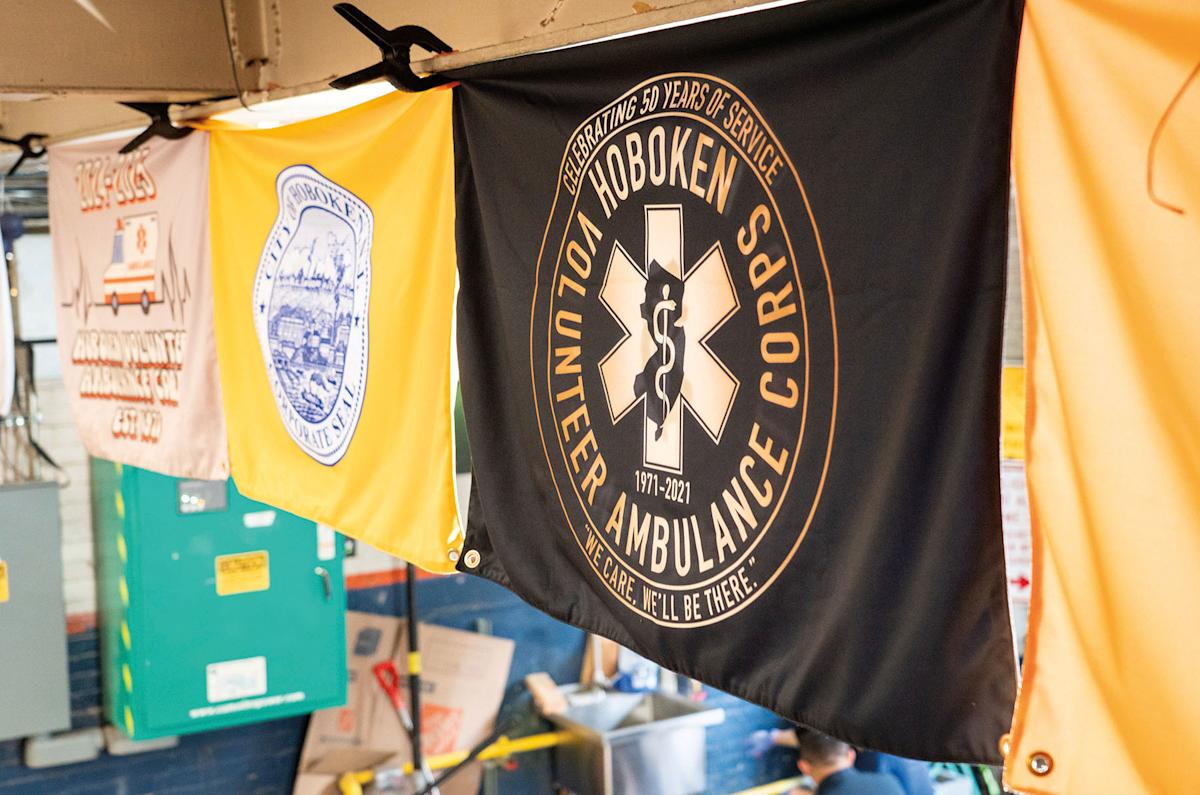
By noon one day in mid-summer, Raj, Slim, Robinson and several other Stevens students have reported for duty — usually four to eight volunteers at any given time — and the day starts calmly. In the ambulance station on Clinton Street, they gather between calls in a large common room with its collection of well-worn couches, adjoining kitchen and dining room table. Volunteers nap, eat takeout together, share photos of favorite dishes they’ve prepared, rib each other.
The afternoon is quiet. But by mid-afternoon, Robinson and Slim are responding to a request from the Hoboken police to examine a teenage girl who has allegedly been struck by her father.
After they arrive, Robinson and Slim speak for a while with the girl, who is very emotional but unhurt physically, Robinson recalls later. Slim hugs her and lets her cry.
The girl eventually calms down and is even cracking jokes.
“It was a sad call,” Slim says. She was glad they were there for this girl in her time of need. Though Slim has had different personal challenges, she says, “it’s much easier for me to let them know they’re understood.” The father was arrested.
The shift is not busy for most of this mid-summer day — until it is.
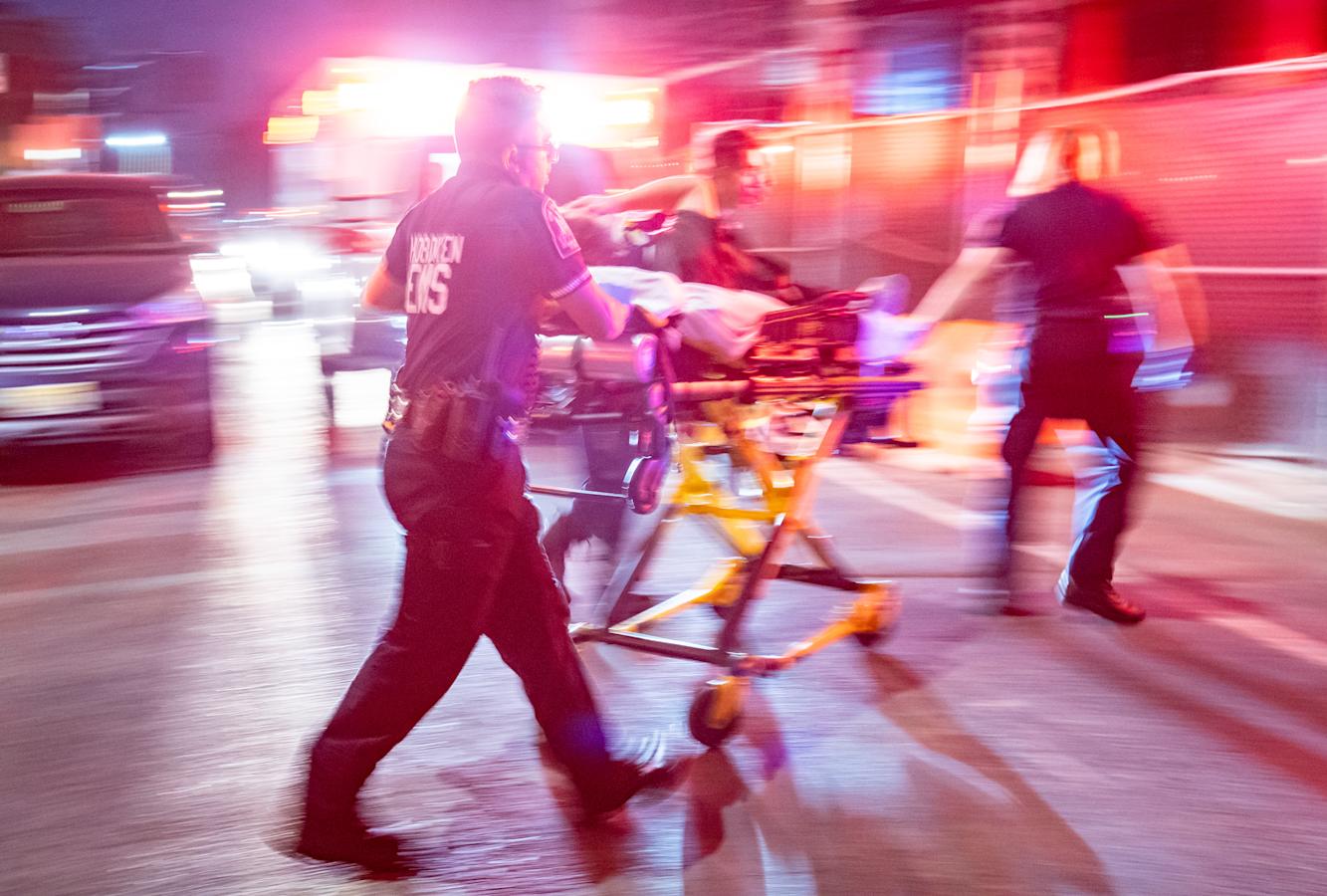
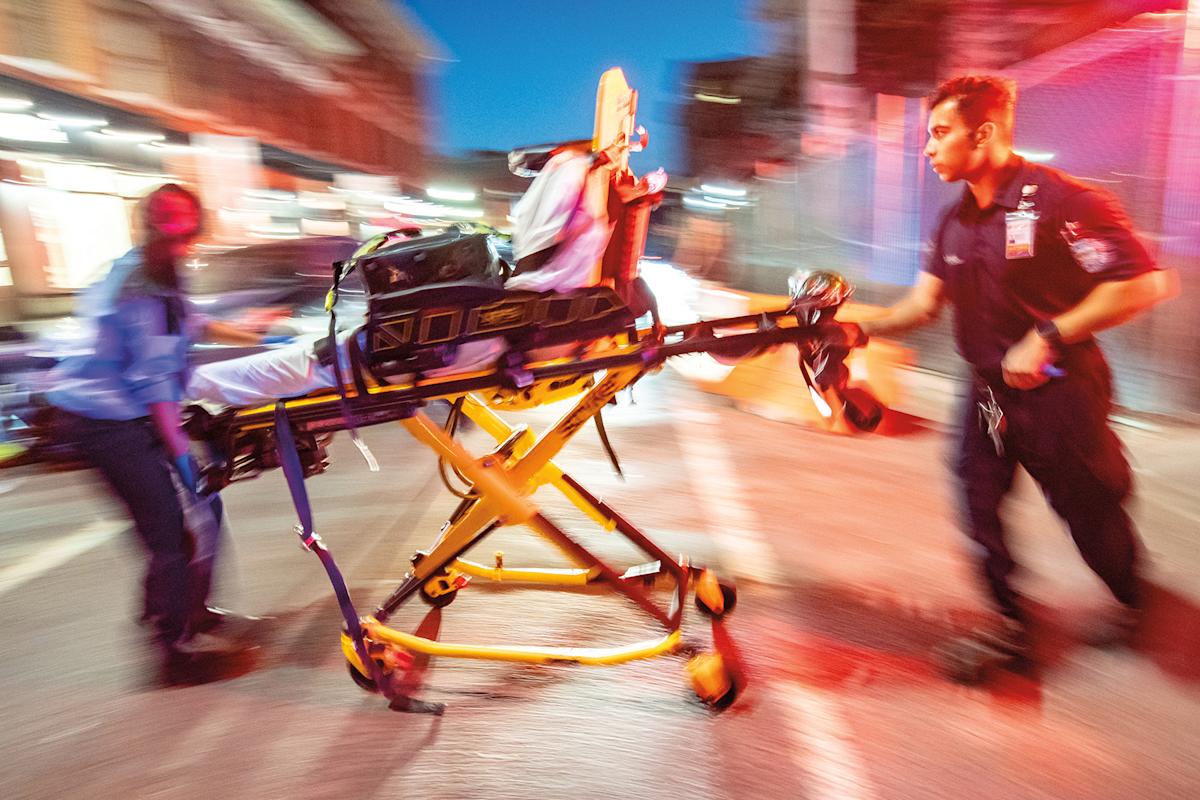
In early evening, Raj, from his supervisor’s truck, is waved down by several frantic bystanders who lead him to where a man is lying near a curb, bleeding from the back of his head. Several bystanders have grown to a small, boisterous group, as Raj grabs his medical bag, and gently puts a cervical collar on the man’s neck, asking him if he’s been drinking. He has. Raj speaks quietly with him, as Robinson, Milagros Carbajal Class of ’28 and another EMT arrive with the ambulance and place the man on a gurney. As they depart for a local hospital, he is conscious and talking.
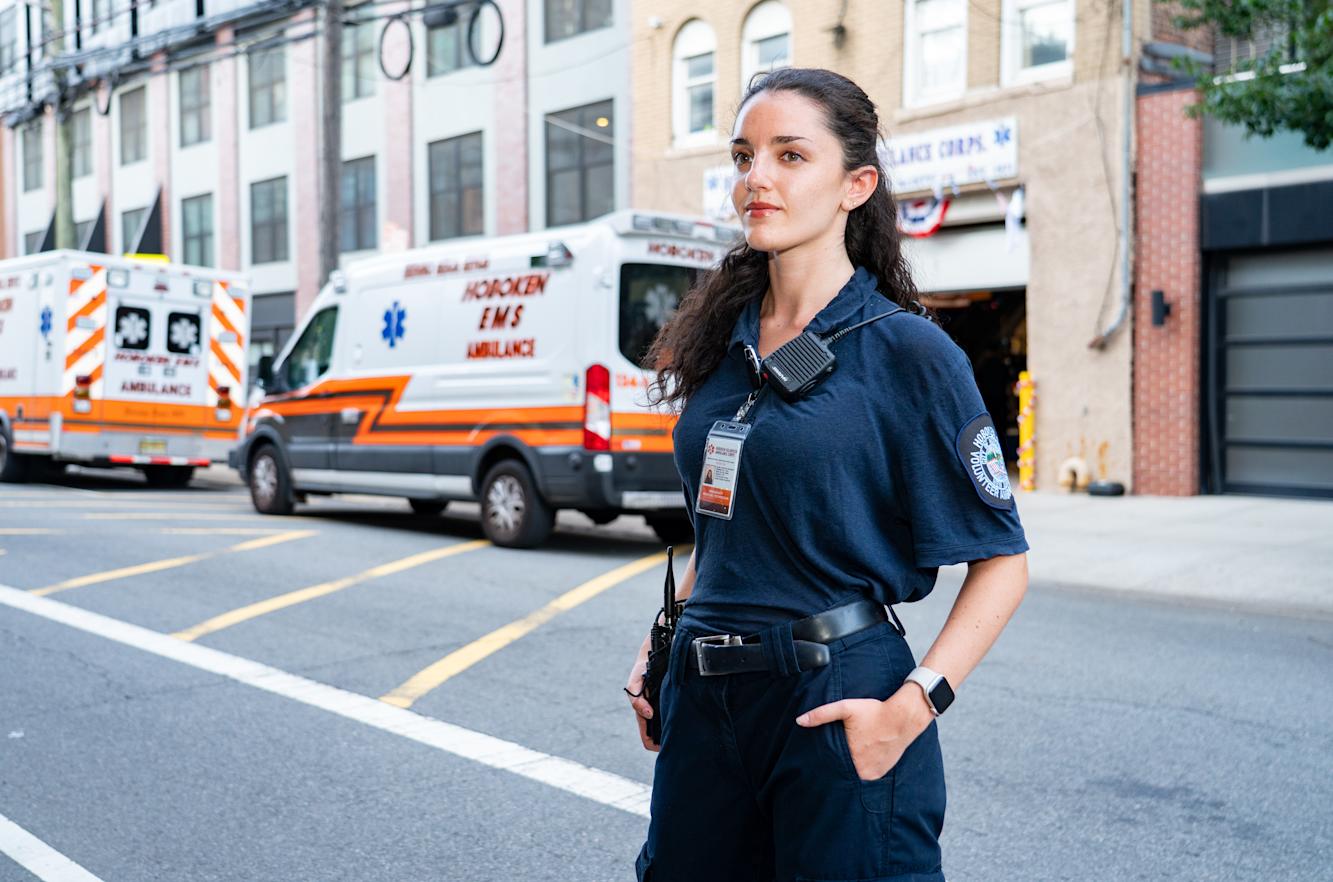
Later into the evening, Raj is about to grab some takeout burgers for dinner at 10:40 pm when a call comes in. A frail, older woman stands outside the entryway to an apartment building. She seems confused. She speaks Spanish, the police don’t, and they need someone to interpret. Carbajal, with Robinson and Raj, answers this call.
Carbajal spends time gently speaking with the woman, who eventually smiles and talks more freely. She thinks she’s in Queens, New York. With Carbajal interpreting, a police officer urges her to go to the hospital, as Robinson gently belts her in the ambulance.
Raj later confirms that she’s on a missing and endangered list and has dementia.
Caring for people in their hour of greatest need has profoundly affected these Stevens students and aspiring medical professionals, they say.
“The experience of the Hoboken Volunteer Ambulance Corps shows how fragile we all are and how easy it is to die,” Robinson says. “The experience pushes me to live fully” and cherish relationships.
He’s been on calls with older people, many of them alone, some asking to hold his hand. “I don’t want to go through life and miss it,” he says. “It makes me want to reach out to people more.”
– Beth Kissinger
Note: Stevens’ Clark Scholars donated $25,000 to the Hoboken Volunteer Ambulance Corps through a new initiative made possible by the Clark Foundation’s $1 million philanthropy fund. Click here to see photos from the donation event.
Ambulance Corps Moments