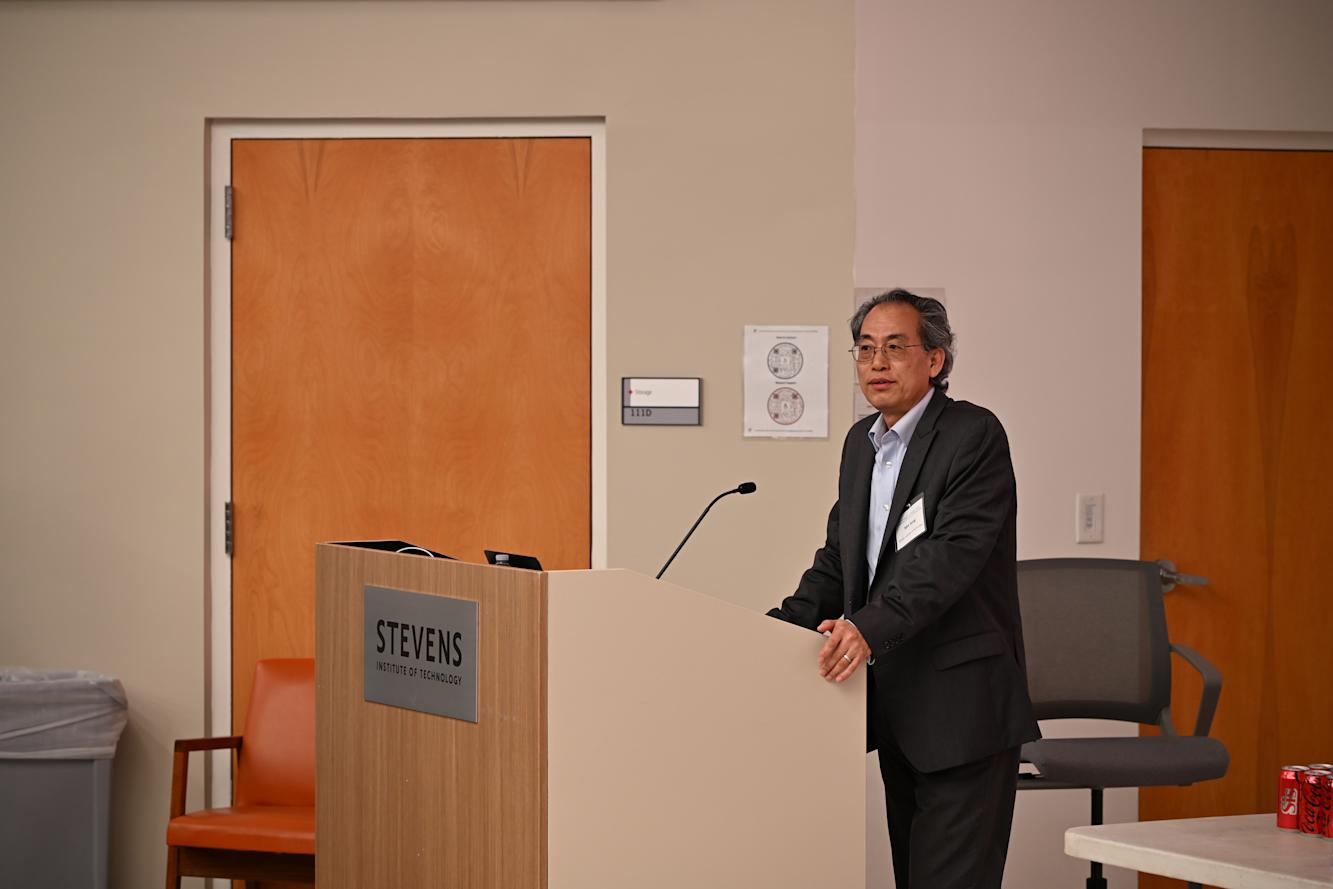
Professor Min Song moderating a panel of five speakers on stage.

iCNS AI Engineering and Science Symposium

Come for the Research. Stay for the Conversation.

iCNS Ai and Engineering Symposium Logo

AI isn’t just advancing — it’s converging. Systems that once operated in isolation now integrate sensing, reasoning, and decision-making into unified, intelligent workflows.

The iCNS AI Engineering and Science Symposium brings that shift into focus, convening the researchers building these systems, the industry leaders deploying them at scale, and the students preparing to push them further.

Hosted by iCNS, this is where ideas get tested, assumptions get challenged, and conversations carry beyond the room. Students will have direct access to speakers and industry attendees throughout the day, creating space for interactions that often extend into research collaborations, internships and full-time roles.


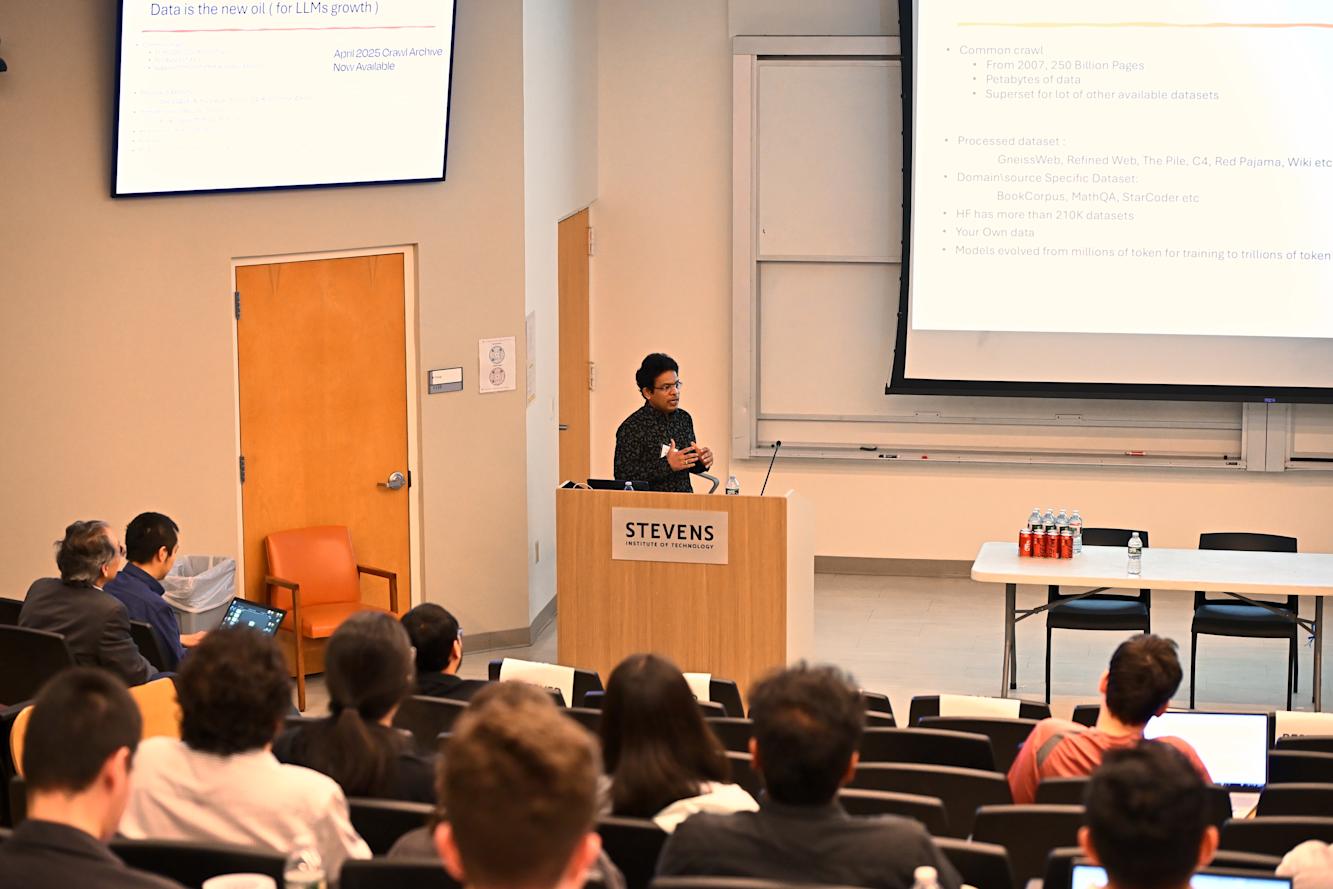
Audience members seated during a presentation at the iCNS Launch.

Spring 2026 Event

Tuesday, May 5, 2026 · 10 a.m.–4 p.m.
University Center Complex, Tech Flex Auditorium
Stevens Institute of Technology, Hoboken, NJ

Join us for a full day of keynote talks, original student research, Elite Poster awards, raffle prizes and complimentary lunch. Open to students, faculty, researchers and industry professionals.

The event is co-sponsored by the Schaefer School of Engineering and Science Office of the Dean, Stevens Institute for Artificial Intelligence and the Departments of Electrical & Computer Engineering, Computer Science and Systems Engineering.


Program Overview

A focused, single-day program designed for depth — not noise.

Event Agenda

10:00 a.m. - 10:30 a.m.

Check-in + Coffee

10:30 a.m. - 10:40 a.m.

Opening remarks: Jean Zu, Lore E. Feiler Dean, Schaefer School of Engineering and Science

10:40 a.m. - 11:10 a.m.

Keynote speech: Dorin Comaniciu, SVP & Chief Expert, Healthcare AI Siemens Healthineers

11:10 a.m. - 11:40 a.m.

Keynote speech: Ching-Yung Lin, Founder & CEO, Graphen, Inc.

11:40 a.m. - 12:10 p.m.

Keynote speech: Zhangyang "Atlas" Wang, Research Director, AI Lab, XTX Markets

12:10 p.m. - 1:30 p.m.

Lunch + Networking

1:30 p.m. - 1:40 p.m.

Raffle

1:40 p.m. - 4:00 p.m.

Posters, Awards & Networking

Beyond the talks, the symposium is designed for access — giving students the opportunity to connect directly with researchers and industry leaders working at the forefront of AI.

Submit Your Poster by Monday, April 20, 2026

Undergraduate, master's and doctoral students are invited to present their work at the Spring 2026 poster session. Projects connected to AI, computing, data, networks, systems and related applications are welcome — whether from faculty-led research, thesis work, coursework or independent study.

Spring 2026 Speakers

Speaker Kevin Loughran on stage with a microphone while a student wearing a red Stevens hoodie is back-facing in the foreground.

Each symposium brings together a small group of speakers working at the leading edge of AI — from foundational research to large-scale deployment in industry.

While their domains vary, they share a common challenge: building intelligent systems that don’t just perform in theory, but operate reliably in complex, real-world environments.

Across talks and discussion, the focus is on what it actually takes to move from model to system, integrating data, infrastructure, and decision-making under real constraints, where performance, robustness, and trust all matter.

Dorin Comaniciu
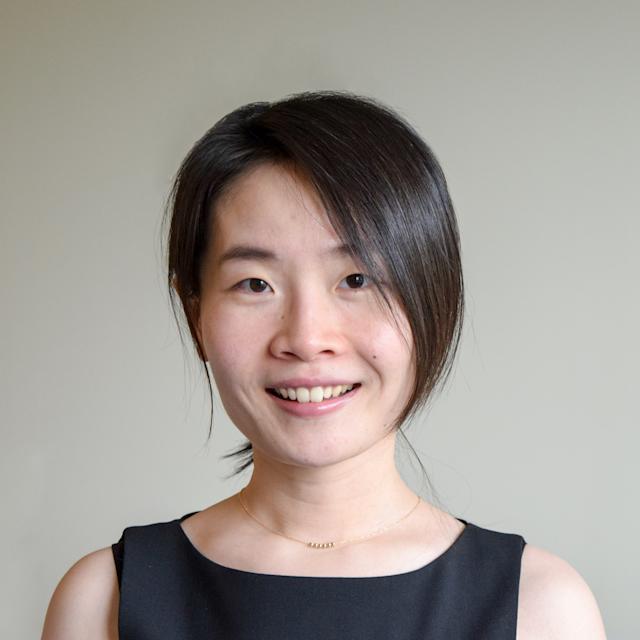
Dorin Comaniciu.

Senior Vice President and Chief Expert, Healthcare AI Siemens Healthineers

Talk: Intelligent Systems in Healthcare: The Road to Autonomy

Artificial intelligence is transforming healthcare by advancing the full engineering stack—from sensing and signal acquisition to image reconstruction, machine perception, and intelligent decision-making. Modern medical systems increasingly rely on algorithms that enable machines to see, sense, reconstruct, interpret, and assist in ways once reserved for human experts.

This talk explores the evolution of intelligent systems in healthcare through the lens of engineering and control theory - from physics-based sensing and signal processing to data-driven reconstruction, multimodal learning, and world models. We will discuss how advances in deep learning and agentic AI are enabling integrated systems that understand clinical context, reason and support decision-making under uncertainty, while assisting complex image-guided medical workflows.

About:

Dr. Comaniciu serves as Senior Vice President and Chief Expert for Healthcare AI at Siemens Healthineers. His scientific contributions to computational imaging and machine intelligence have translated into a broad portfolio of clinical products focused on improving the quality of care across diagnostic imaging, image-guided therapy, and precision medicine.

An elected member of the National Academy of Engineering, the National Academy of Medicine, and the Romanian Academy, Comaniciu is recognized as a Siemens Top Innovator and is a Fellow of the IEEE, ACM, and the MICCAI Society, among other scientific organizations. He is the recipient of the IEEE Longuet-Higgins Prize for fundamental contributions to computer vision and has recently been awarded an honorary doctorate from Friedrich-Alexander University of Erlangen-Nuremberg, Germany.

With more than 550 granted patents, 350 peer-reviewed papers, 69,000 citations, and an h-index of 111, his work has played a significant role in advancing medical imaging to become faster and more automated, while providing efficient and precise solutions for detecting, quantifying, and treating disease.

A graduate of the Wharton School at the University of Pennsylvania, Comaniciu holds doctorates in Electrical and Computer Engineering from Rutgers University and in Electronics and Telecommunications from the Polytechnic University of Bucharest.

He is a passionate advocate for transformative technologies that save and enhance lives, addressing critical issues in global health.

Ching-Yung Lin
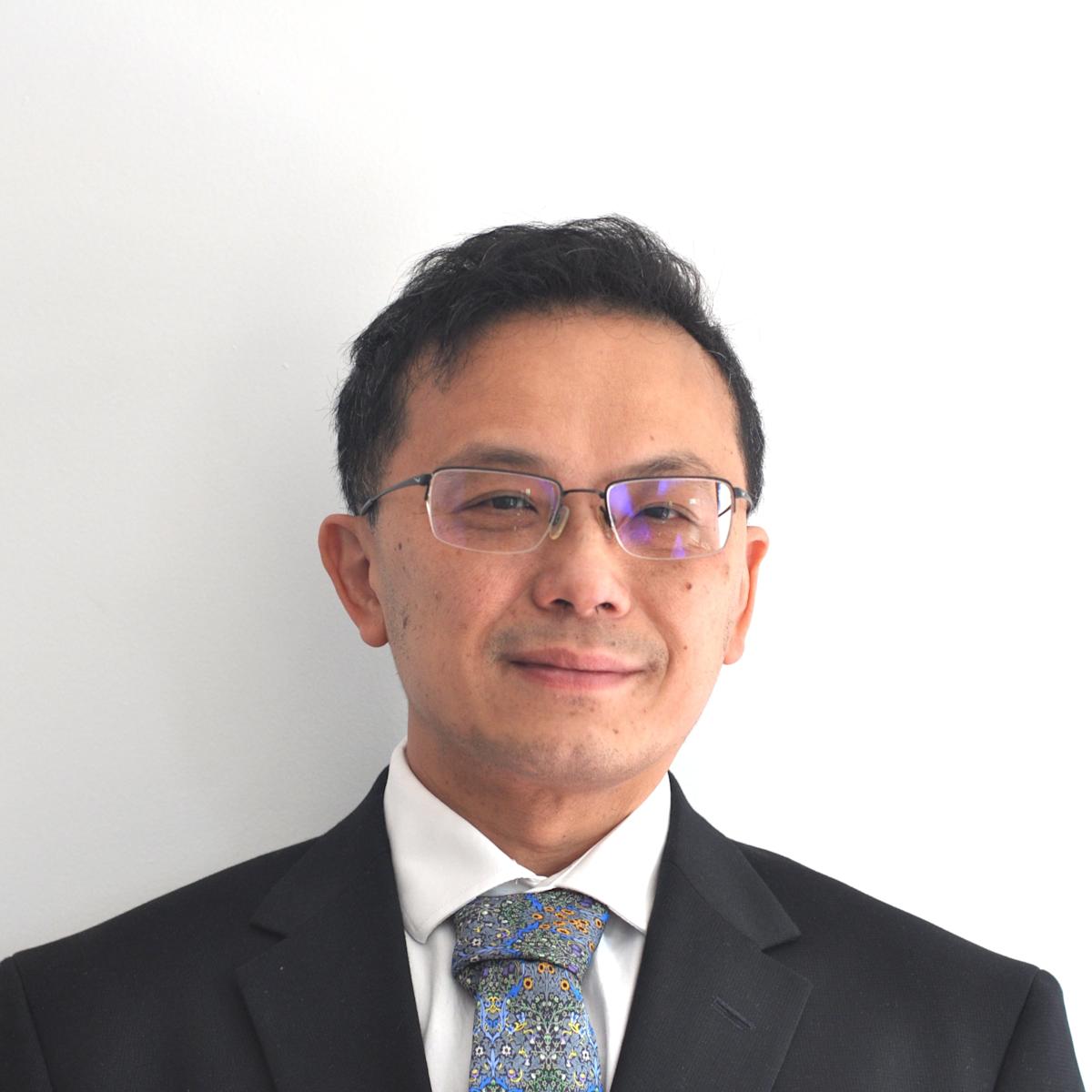
Dr. Ching-Yung Lin.

Founder and CEO, Graphen, Inc.

Talk: Among Us and Beyond Human: AI for the Well-Being of Mankind

Is now the Newton Moment in Biomedicine? In May 2020, the ABI Medical White Paper listed Graphen and Google as two companies that would have a significant impact on drug development, which will be no longer based on try-and-error, but more deterministic, because of AI.

Graphen Drugomics developed an AI platform of more than 100 tools for almost the entire process of drug design, e.g., target identification, protein function & structure prediction, binding prediction, ADME prediction, genomic reasoning, etc. We created All-in-One processes and AI agents to actively design new drugs. Our strong pipeline of more than 10 drugs for popular diseases, including OA knee disease and diabete kidney disease, demonstrated its effectiveness and advantage.

Graphen Agents & Robotics creates Digital Human and Humanoid Robots with potential Artificial General Intelligence (AGI) to assist daily life. With population significantly shrinking in the developed countries, this is a big urgent need. For instance, Taiwan’s birth number shrank 50% in the last 10 years. Many East Asian countries are in a similar trend. No matter in home or in business, shortage of caregiver and labor is tremendous.

Furthermore, I shall demo how the multi-agent-based Graphen AI Co-Doctors are used in hospitals and AI Learning for education.

Impact of AI is everywhere. Hope our effort can help assist life and save live, making human beings happier and healthier.

About:

Dr. Ching-Yung Lin (林清詠) founded Graphen Group in 2017 and serves as CEO. Graphen's mission is to develop State-of-the-art AI or the well-being of mankind. A 2024 survey ranked Graphen as the Top #9 AI company in the world. Graphen is headquartered in New York City and has subsidiaries in Taipei, Tokyo, Singapore, and Hong Kong.

Dr. Lin has been an adjunct professor in Columbia University since 2005. He was the Chief Scientist at IBM Corp (2015-17) and founder of the Network Science and Machine Intelligence Group at the Watson Research Center, where he worked for 17 years. He has also been an adjunct professor at New York University (2014) and the University of Washington (2003-2009). He was appointed an IEEE Fellow in 2011. His interest has always been in artificial intelligence that enables full-brain functionality through fundamental R&D breakthroughs. In the past 25 years, he has led tens of large-scale global AI projects, deployed in the United States, Europe, China, Japan, Russia and Southeast Asia.

Dr. Lin has been an invited keynote speaker at more than 100 conferences, including serving as a co-speaker with the White House Chief Data Scientist at the 2015 American Medical Association Annual Meeting. He is the author or co-author of more than 200 publications, holds 75+ patents, cited approximately 13,000 times, and has an h-index of 57. Dr. Lin's work has received 7 best paper awards and been featured four times in BusinessWeek magazine, including as a cover story in May 2009. In 2010, the IBM Career Review selected Dr. Lin as "a scientist most likely to have the greatest scientific impact on IBM and the world."

Zhangyang "Atlas" Wang
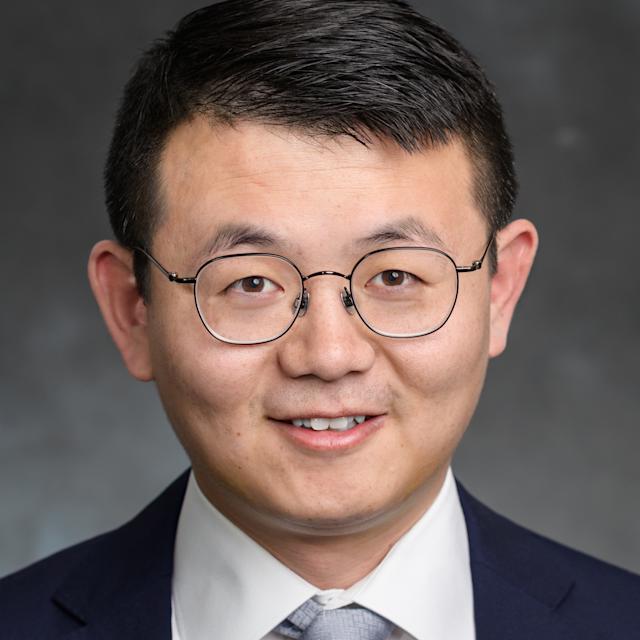
Zhangyang "Atlas" Wang.

Research Director, AI Lab, XTX Markets | On leave: Temple Foundation Endowed Associate Professor, UT Austin

Talk: Algorithmic Trading with Large-Scale Deep Learning

At XTX Markets, we view algorithmic trading as one of the most compelling real-world frontiers for deep learning and foundation models. Every day, our systems generate forecasts for tens of thousands of financial instruments and execute over $300B in global trading volume — fully automated, with no discretionary human intervention. This domain combines massive data scale with high noise, adversarial dynamics, and frequent regime shifts, making it both scientifically challenging and commercially impactful. For machine learning researchers, it serves as a rigorous proving ground where advances in time-series modeling, large-scale optimization, representation learning, and foundation models can translate directly into measurable real-world outcomes. This talk will provide a high-level overview of XTX's research agenda, infrastructure, and key open challenges at the intersection of large-scale AI and quantitative finance.

About:

Dr. Wang is Research Director at XTX Markets, one of the world's leading high-frequency trading firms, where he founded and leads the firm's AI Lab in New York City. His lab focuses on developing large-scale foundation models for financial time series, powered by XTX's proprietary AI infrastructure. Currently on leave from UT Austin, his academic research has received numerous awards. He has mentored a broad network of Ph.D. students and postdoctoral researchers — eight alumni now hold tenure-track faculty positions and nineteen hold senior industry roles.

This shift highlights a rapid maturity in our students' work. It's exciting to see them moving from general application bias and standard model training to optimizing and securing the cutting-edge architecture of LLMs.
Min SongDirector, iCNS
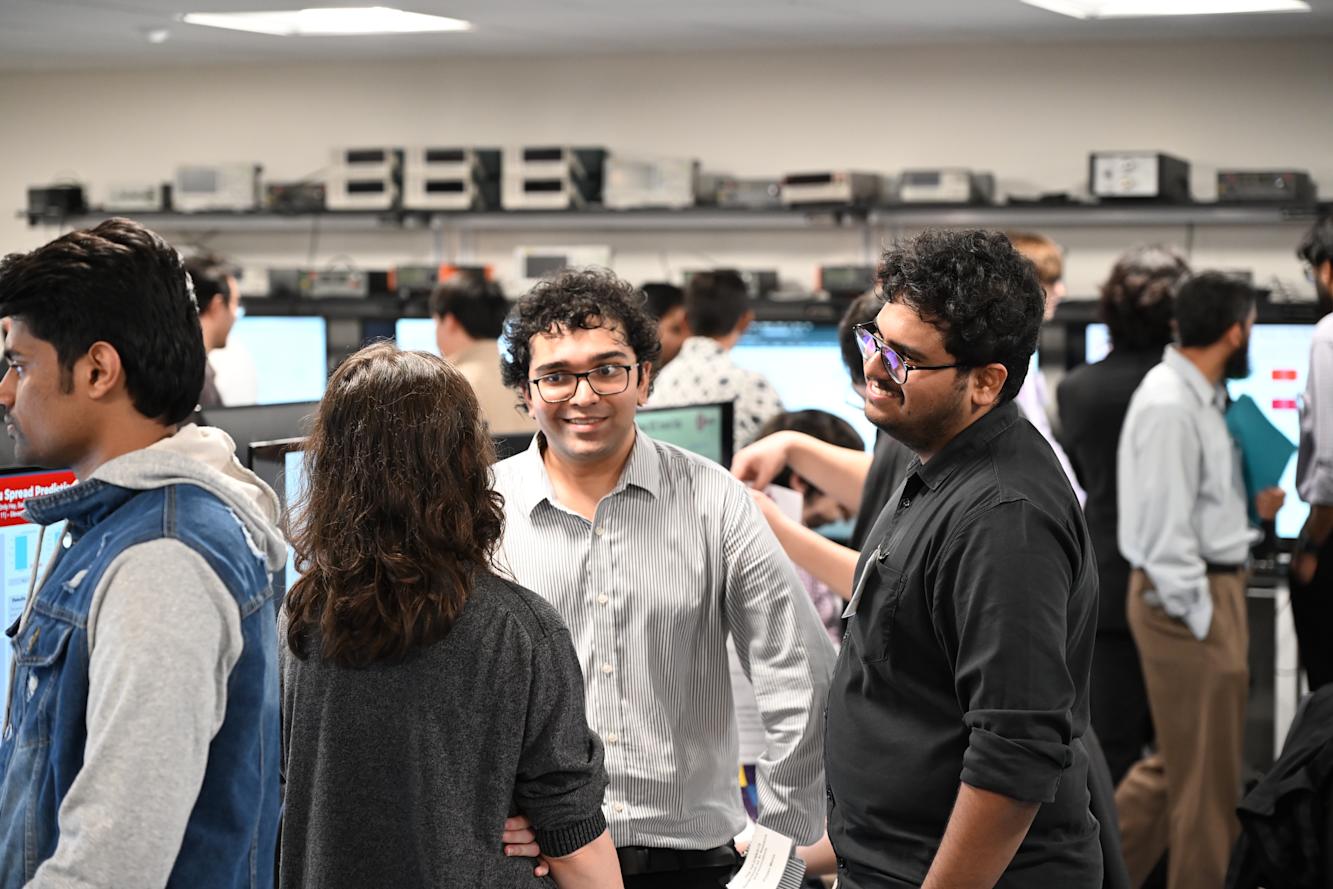
Students and professionals examine poster and phsycial presentations.

About the Symposium

The iCNS AI Engineering and Science Symposium brings together researchers, practitioners, and students at the intersection of artificial intelligence and real-world systems. It serves as a forum for rigorous exchange — where ideas are tested through direct engagement with experts across academia and industry, with a focus on systems-level thinking that spans data, infrastructure, and decision-making in complex environments.

A group of students on the left listening to a professor speak on the right, who is gesturing with his hands and another professor is standing behind him.

Fall 2025: Where Student Research Met Industry

Thirty-four student teams took the stage alongside keynote speakers from opAIda, Prescient Design (Genentech), and NVIDIA — tackling efficient LLMs, model safety, and the system optimization challenges keeping the field up at night.

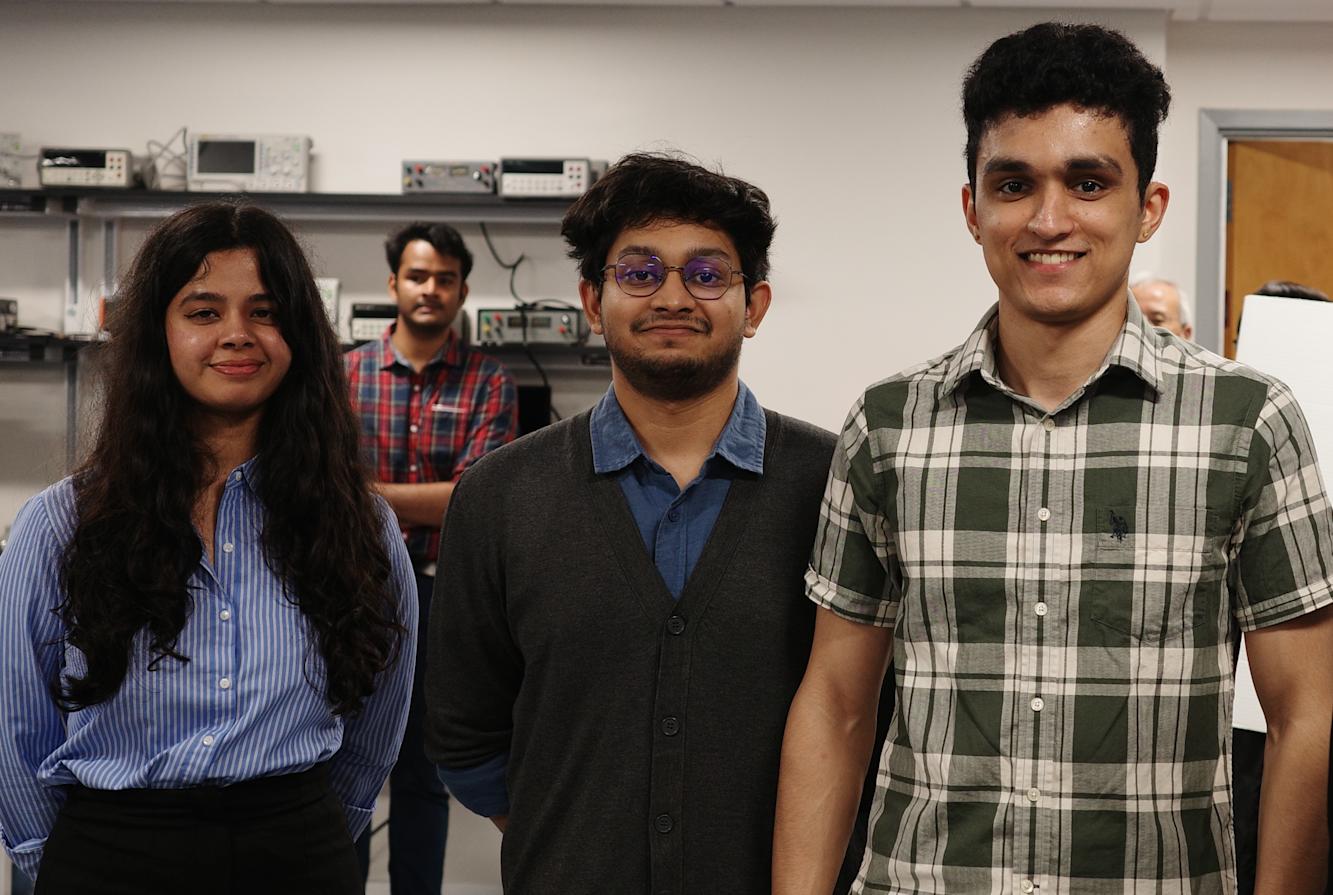
From left to right: Azizul Haque, Fiza Pathan, and Sudhanshu Kakkar discussing their project, "Multi-Class Depression Detection from User-Generated Text."

Spring 2025: The Inaugural Class Makes Its Mark

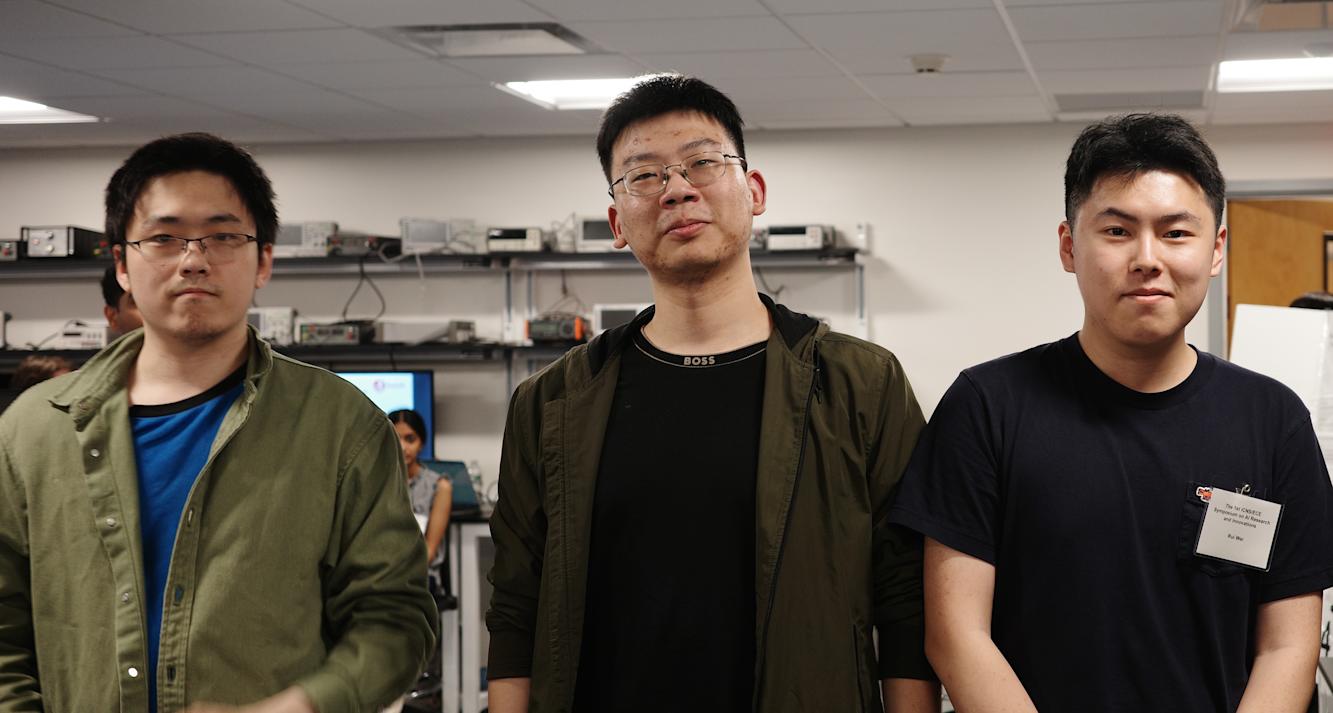
The inaugural symposium, held May 15, 2025, attracted more than 150 students, faculty, researchers, and industry professionals. Research spanned adversarial robustness, reinforcement learning, healthcare AI, fairness and bias, and depression detection from user-generated text. Keynote speakers included representatives from Google, IBM, and Armistice Capital.

Committee Members

Henry Du (hdu)

Henry Du

Professor and Associate Dean for Research and Faculty Development, Department of Chemical Engineering and Materials Science; Co-Chair of the iCNS AI Engineering and Science Symposium

Brendan Englot (benglot)

Brendan Englot

Anson Wood Burchard Professor of Mechanical Engineering, Department of Mechanical Engineering, and Director of the Stevens Institute for Artificial Intelligence (SIAI)

Jessica Gruich (jgruich)

Jessica Gruich

Office Manager, Department of Electrical and Computer Engineering

Joseph Helsing (jhelsing)

Joseph Helsing

Lecturer, Department of Electrical and Computer Engineering

Carlo Lipizzi (clipizzi)

Carlo Lipizzi

Teaching Associate Professor, Department of Systems Engineering, and Faculty Director of Professional Education, College of Professional Education

Yue Ning (yning5)

Yue Ning

Associate Professor, Department of Computer Science

Min Song (msong6)

Min Song

Professor, Director of the Center for Innovative Computing and Networked Systems (iCNS) and Chair, Department of Electrical and Computer Engineering; Co-Chair of the iCNS AI Engineering and Science Symposium

Hao Wang (hwang9)

Hao Wang

Assistant Professor, Department of Electrical and Computer Engineering