William Kraemer ’20 M.S. ’22 Is Taking the Gridlock Out of Our Energy Grids
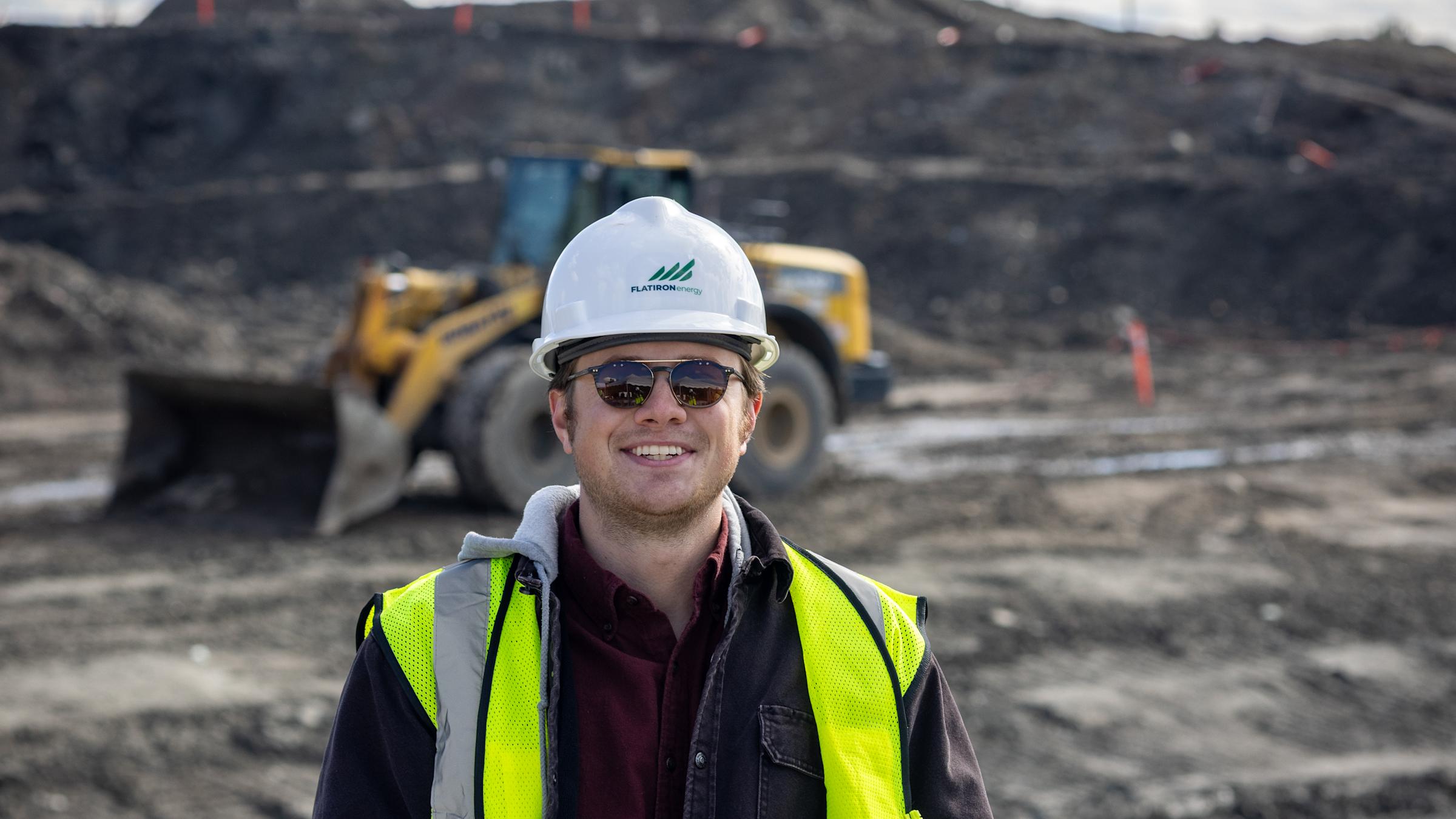
Through his work to establish battery energy storage systems (BESS), Flatiron Energy Project Manager Will Kraemer ’20 M.S. ’22 is helping communities realize the full potential of green energy as a source of sustainable power.
William Kraemer ’20 M.S. ’22 began his Stevens journey without committing to a specific engineering discipline right away. “I had a range of interests and didn’t want to pigeonhole myself too early on,” he says. “Engineering management gave me the flexibility to gain a broad understanding of the engineering and technology landscape before specializing further in my professional career. Plus, the engineering management degree at Stevens is a Bachelor of Engineering – something only available at a handful of colleges – which added a level of rigor I felt would set me apart in the job market.”
Kraemer found other benefits to studying engineering management at Stevens. “Compared with other engineering tracks at Stevens, engineering management left some time for independent reading and exploration,” he points out. “The university’s proximity to New York City was another definite plus.”
Kraemer took advantage of his time outside the classroom to become active with Phi Sigma Kappa, including serving as the fraternity’s president. “I met so many fantastic people,” he recalls. “The variety of backgrounds and perspectives within the fraternity and the student body opened up a whole new world for me. We had a lot of fun, too. I have wonderful memories of attending WCPR music events, exploring Jacobus Hall before it was demolished to make way for the new University Center, and turning our frat house into a Halloween haunted house for the neighborhood kids. Hoboken was a great place to go to school.”
His curiosity about how the world works led to a minor in quantitative finance. “I learned how to read market trends and became familiar with business jargon,” he says. “We read – and were regularly quizzed on – the Wall Street Journal, which trained us to stay tuned in to what is going on around us.”
Internships at Joseph Grace Holdings, the Port Authority of New York and New Jersey and Arup introduced Kraemer to business and industry. “Just being in these environments was instructive,” he says. “I gained so much just by showing up, listening to what was being discussed and paying attention to what was happening.”
“This was in 2018 and 2019, just before the COVID shutdown,” Kraemer adds. “I am grateful that I had an opportunity to experience the workplace before hybrid and remote work changed how businesses operate. There were so many opportunities for in-person interaction – coffee breaks and lunch hours – to share ideas and work on solutions.”
Kraemer’s internship with Arup led to his first full-time role with the firm, as a project control analyst. “I worked in the consultancy unit on the Long Island Rail-Road (LIRR) Main Line Expansion. “The project involved adding a third track through Nassau County, upgrading several train stations and removing grade crossings,” he says. “It was a fantastic multidisciplinary experience where I learned to collaborate with contractors, justify contract modifications, and more. The team was full of talented people, and I was proud to work with them on that project.”
During this time, he further added to his resume by earning a master’s degree in financial engineering.
Kraemer’s next post, as a project manager for Bureau Veritas Power Group, introduced him to the construction of Broad Reach Power’s battery energy storage system (BESS) facilities. “BESS technology stabilizes energy grids,” he explains. “Wind and solar are intermittent power producers that can’t be controlled. BESS captures that power when demand is low so that it does not go to waste and makes it possible to release that power when demand exceeds production. BESS technology makes green power assets more effective, in addition to reducing variability of power prices for Independent Service Operators and ultimately the ratepayers themselves.”
“I was placed in west Texas where there are a lot of solar and wind power projects,” Kraemer says. “I gained incredible experience in project management, negotiating budgets and coordinating complex schedules.”
Earlier this year, after his Texas projects wound down, Kraemer joined the start-up BESS developer Flatiron Energy, where he is project manager and point person for their first project – a BESS facility in New England. Coined the Taft Project in honor of Lydia Chapin Taft, known to be the first woman to legally vote in the U.S., the new facility will be the largest in New England when completed.
“I have a very outward-facing role,” he says. “I communicate with the public about the project’s risks and benefits, work closely with local emergency teams to provide safety training and guidelines and collaborate with area businesses to build American supply chains.”
“My goal is greater visibility for projects like this,” Kraemer continues. “By capturing and saving energy for high demand times, BESS technology adds resiliency to the grid and provides a cleaner alternative to the gas-powered peaker plants that are typically used during peak load. The projects themselves create excellent manufacturing and trade job opportunities as well.”
Kraemer has found that his Stevens degree earns respect in the field. “People in industry know that Stevens graduates are hardworking and intelligent,” he says. “And the Stevens design spine’s emphasis on collaboration as well as individual output teaches us a realistic view of how engineering projects work. Nothing gets done by one person working alone; every project relies on a multidisciplinary team.”
Kraemer has already returned to Castle Point – twice – to participate on alumni panels. “When I was a student, I learned so much from alumni,” he says. “They taught me the importance of paying it forward.”
For Kraemer, that includes encouraging students to reflect on how they can contribute to making a difference in the world. “Use your interests to create a compelling narrative that will come through in interviews,” he advises. “There are so many areas of civic life, from infrastructure to public transportation, that will attract a lot of interest in the coming decade. Position yourself as an enthusiastic, capable person and employers will be eager to give you an opportunity.”