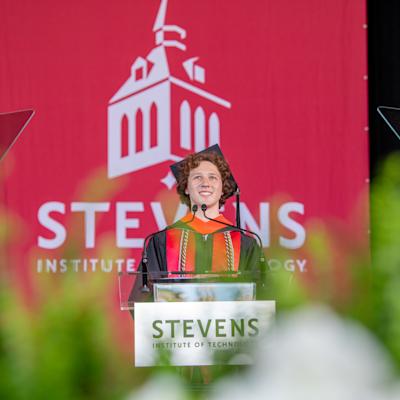
Stevens Robotics Researchers Earn International Honors at ICRA 2026
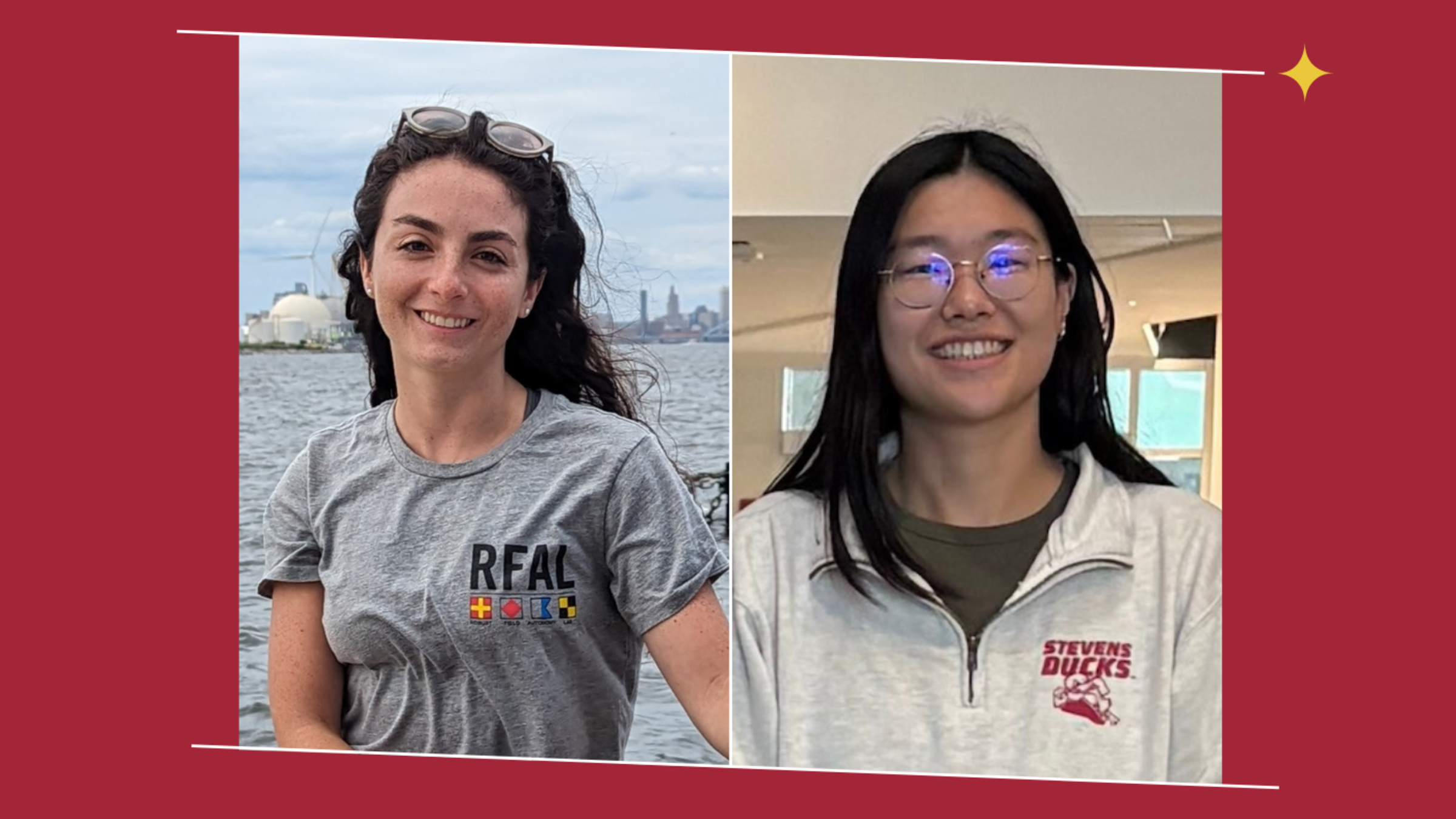
Underwater robotics faces several challenges: communications, navigation, and perception all break down once a robot goes below the surface. Schaefer School of Engineering and Science doctoral students Ivana Collado Gonzalez, a mechanical engineering Ph.D. candidate, and Yewei Huang, a mechanical engineering Ph.D. graduate '25, are tackling those problems with their research.
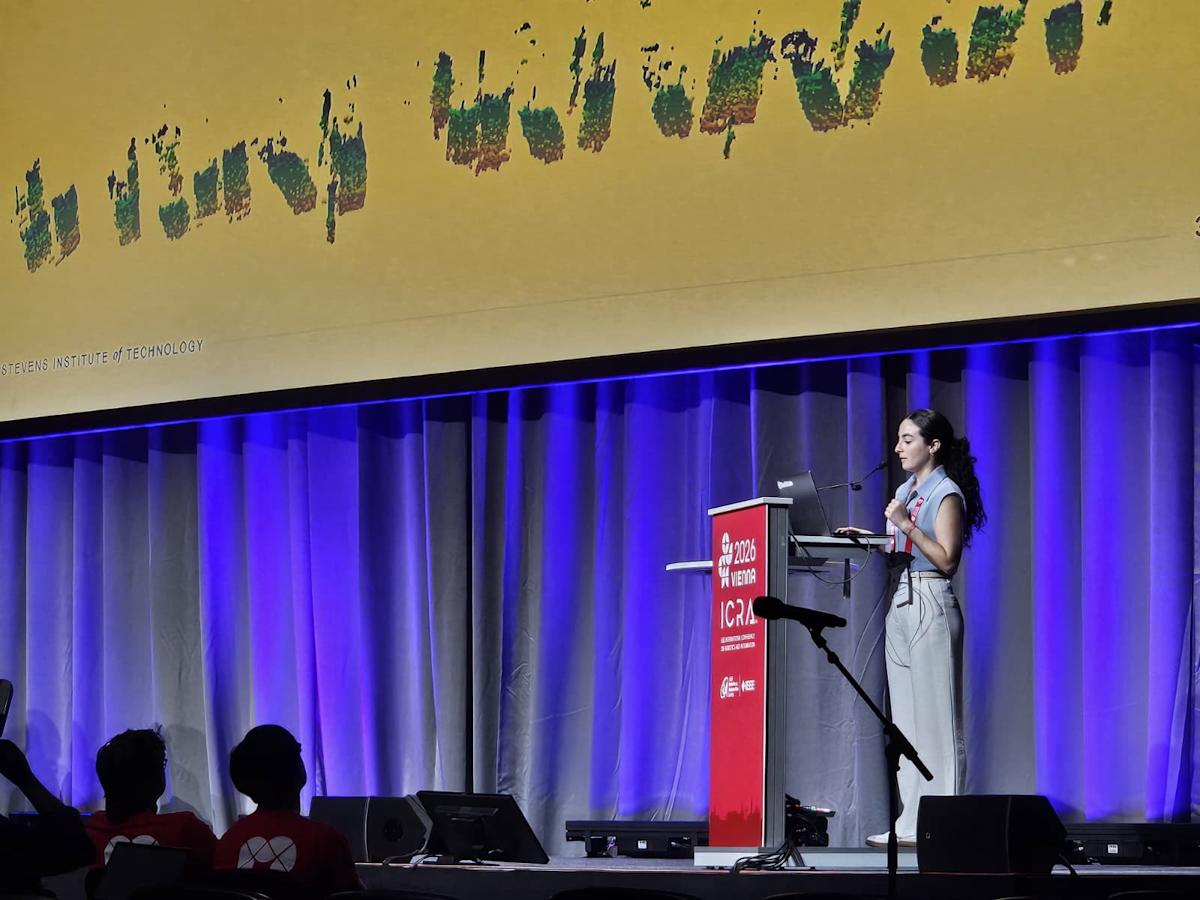 These two Stevens robotics researchers received international recognition at the IEEE International Conference on Robotics and Automation (ICRA), one of the largest robotics gatherings in the world. The event, which attracted nearly 9,000 participants this year, brings together the world's top researchers and industry leaders to exchange knowledge and ideas and advance the field of robotics.
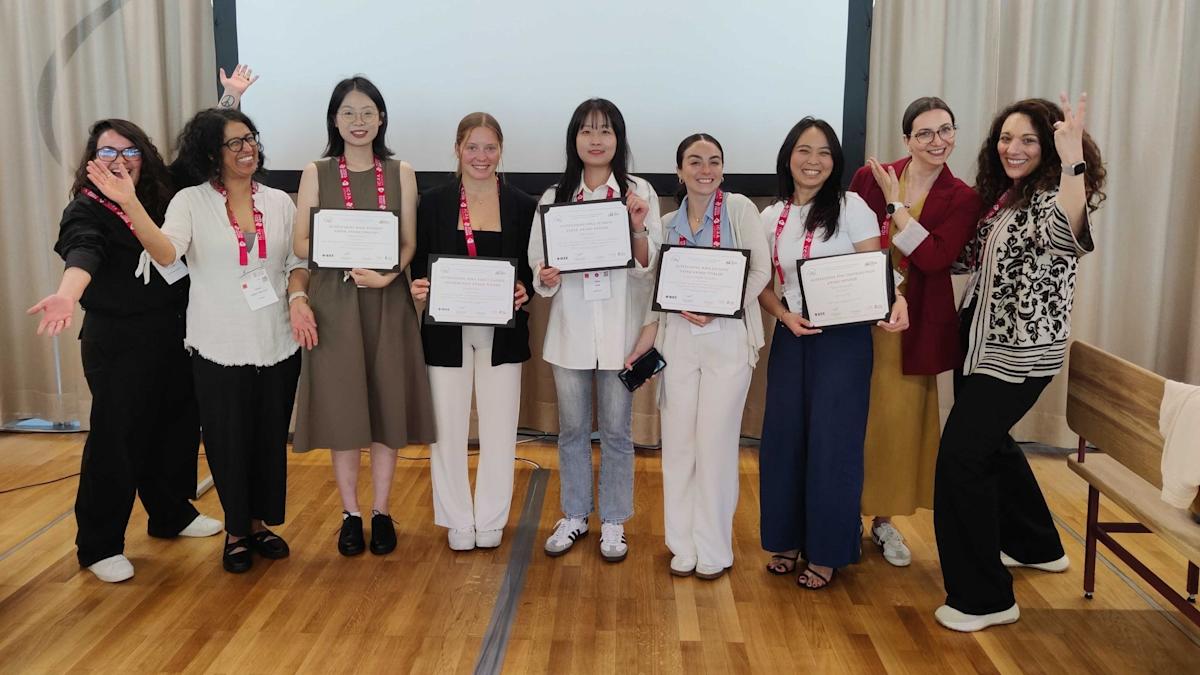
Collado Gonzalez was named one of three finalists for the Outstanding Women in Robotics and Automation (WiRA) Student Paper Award for her paper, "Towards Versatile Opti-Acoustic Sensor Fusion and Volumetric Mapping for Safe Underwater Navigation."
Huang was one of four researchers recognized worldwide, receiving an honorable mention for the 2026 IEEE RAS Women in Engineering Best Dissertation Award in Robotics and Automation for her thesis, "Inference with Factor Graphs for Single and Multi-Robot Perception and Navigation."
Both honors came through nomination processes open to the entire international community, at a conference where most submitted papers are turned away, according to Brendan Englot, Anson Wood Burchard Professor of Mechanical Engineering, Director of the Stevens Institute for Artificial Intelligence (SIAI), and advisor to both Collado Gonzalez and Huang.
"It's huge for Stevens to be recognized at that elite level,” said Englot, who is also a participating advisor of the Stevens Ph.D. program in Robotics. “It means a lot to us to know that our work is of that same quality, that it deserves to be there."
Charting their own research paths
According to Collado Gonzalez, the work they’re doing is niche.
“It’s easy to doubt the impact of your own work. When others see its value and encourage you to share it, that’s when you know its true worth; it’s the ultimate validation,” she said.
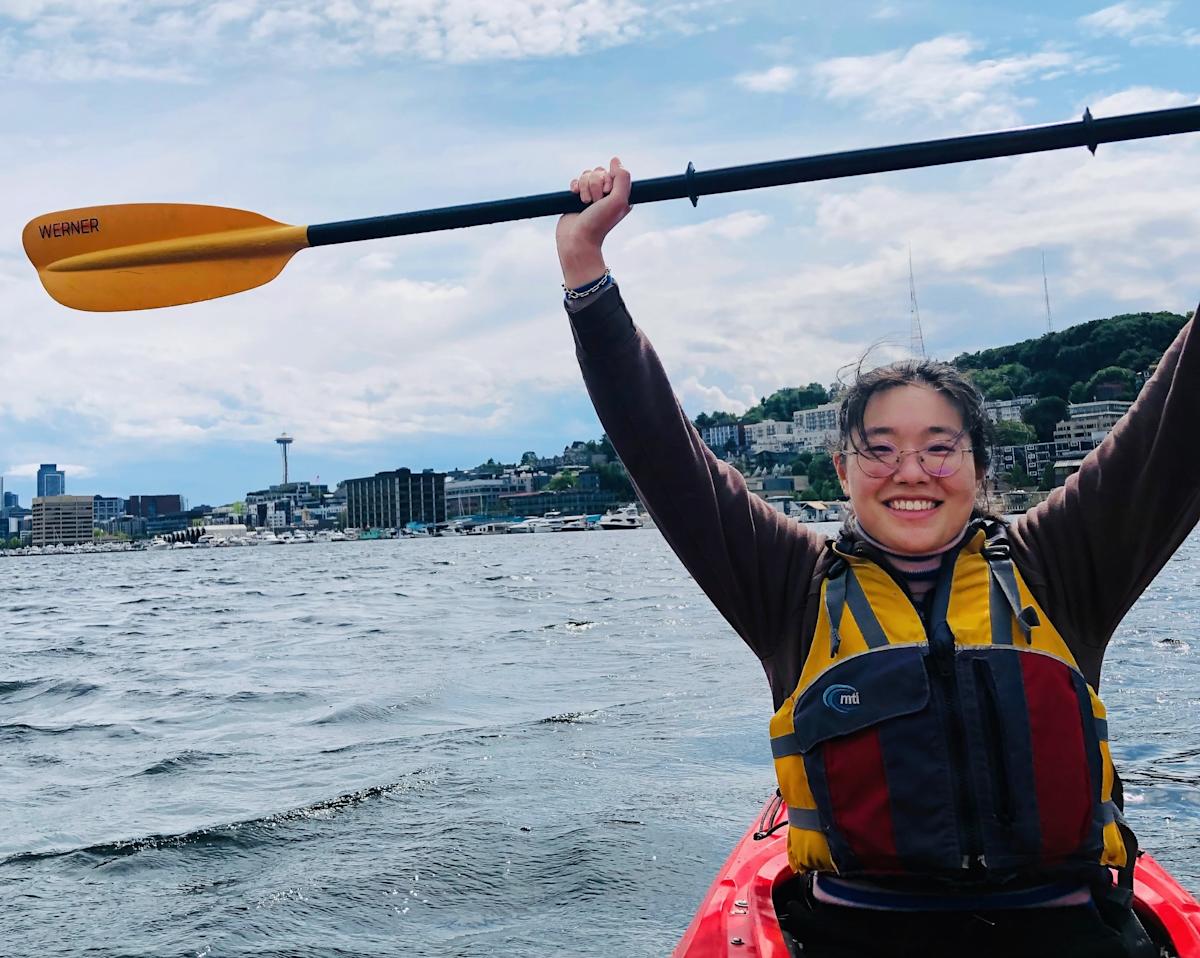 For Huang, the scale of the recognition spoke for itself.
“You are recognized by thousands of your peers all over the world. What else can be better than that?"
What led them there was the chance to pursue research paths of their own. As their advisor, Englot pointed them toward emerging areas that complemented the research already taking place at Stevens.
“One thing I try to do with the most capable and self-motivated PhD students is encourage them to explore an emerging area that I suspect will become increasingly important, and as they become an expert, they can share this knowledge with the rest of us in the lab.”
For Huang, that area was multi-robot systems, specifically, figuring out how to apply Stevens' underwater navigation research to larger teams of robots, or potentially swarms, in the future.
The nature of water makes this hard. Above the surface, robots can rely on Wi-Fi and GPS to know where they are. Underwater, both disappear.
"In the water, there's no Wi-Fi, no GPS, only constrained communication. So, localization for the marine environment is challenging," Huang said.
 Her answer is a mathematical structure called a factor graph, which represents a navigation problem as a network of connected points, then solves for the best fit.
"It involves converting different kinds of problems in robot navigation into optimization problems by using the graph data structure," she explained.
Collado Gonzalez took on a second problem: helping robots see underwater. In murky water, ordinary cameras struggle, and sonar, while reliable, can only reveal so much on its own.
"A lot of the existing research assumes crystal clear water, as you would see in the Caribbean," she explained. "If you go to the East River or Hudson River, that's not the case. It's really hard to work in those environments."
Her research on sensor fusion combines vision and sonar, so the two together see better in those environments than either could alone. Englot said this focus area is increasingly referred to as opti-acoustic perception in the research community.
Underwater work with impact above
For both students, the research has important implications.
“There is actually more marine environment on Earth than land, and we need so many natural resources from the ocean," Huang said.
She highlights how boats and underwater robots that navigate themselves safely can be used for various applications.
"For example, when there's an oil spill, how can you make the boat track it?" Huang asked. "We can also track other contaminants in the water, so we know whether the water is safe to drink for residents."
For Collado Gonzalez, the research directly applies to industry, including people maintaining fish farms, wind farms, ships, and marinas.
"It is very costly to have divers risk their lives and maintain these kinds of infrastructures," she said, noting that robots, as they work autonomously, can become increasingly capable and intelligent.
The valuable role of mentorship
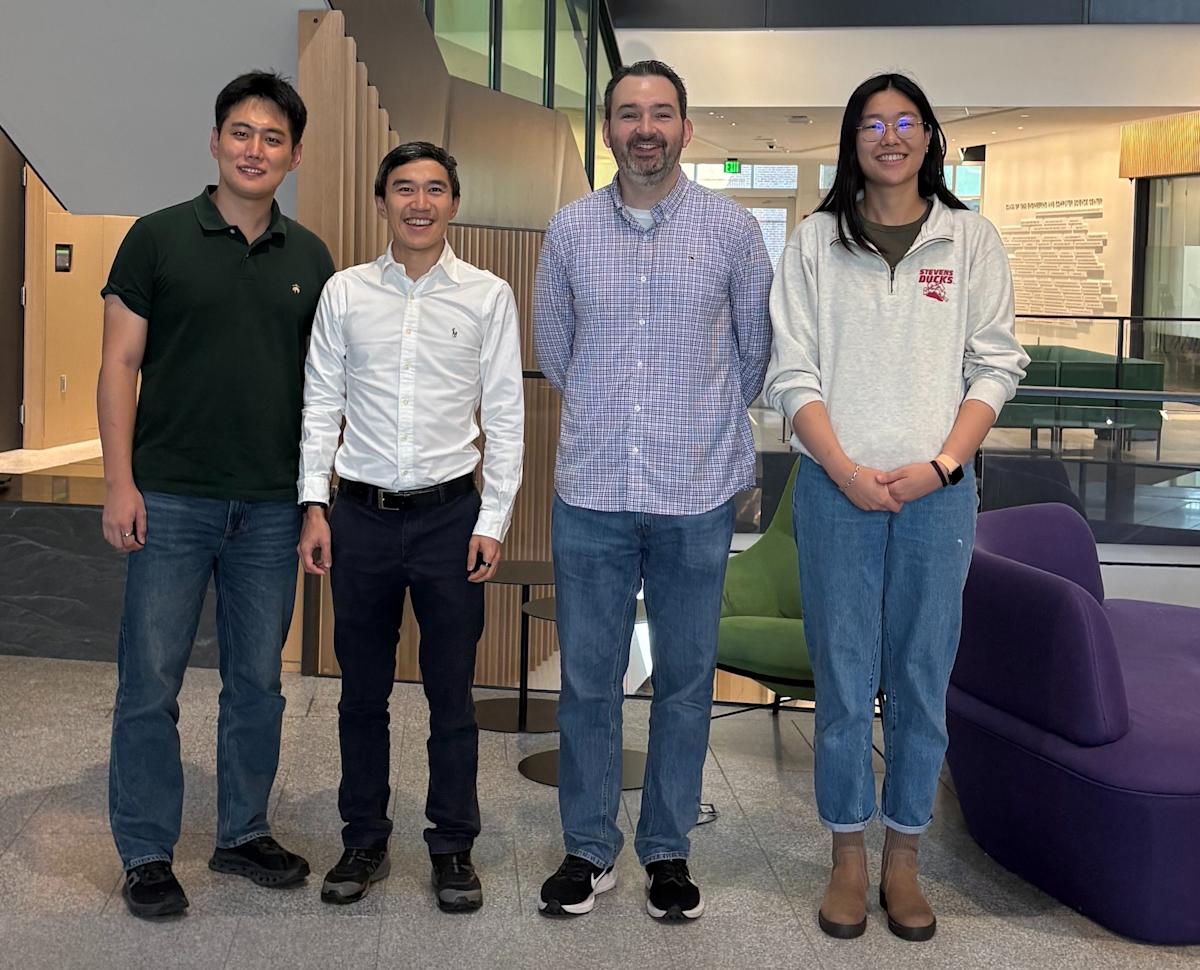 Both students trace much of their growth to Englot's mentorship.
"Dr. Englot is an incredible advisor. He gives you creative freedom while offering the support and motivation needed to navigate the rough patches. He is deeply invested in both your personal and professional growth and truly cares about his students,” Collado Gonzalez said.
"It's not just our studies; Dr. Englot supports and inspires us in all aspects of our lives," Huang said. "He emphasizes work-life balance and acts as a role model for it himself. He always trusts us, no matter what challenges we bring to him.”
Both honors came through the IEEE's women in robotics and engineering programs, which Englot sees as meaningful in a field still working on representation.
"There continues to be what we call the leaky pipeline, where maybe there are lots of students at the K-12 level excited about robotics, but by the time you get to that end of the pipeline, the representation can be further strengthened," he said. "So, an event like this really helps shine a light on the achievements of all the outstanding women in robotics, who are essential to the success of our field."
A community for building ideas and next-generation researchers
Stevens — its size, its people, and its facilities — has been central to the work.
"Because Stevens is small, it's easy to approach the faculty," Collado Gonzalez said. "If my advisor isn't an expert in something, I can go knock on another robotics lab door, and their advisor will probably answer my questions."
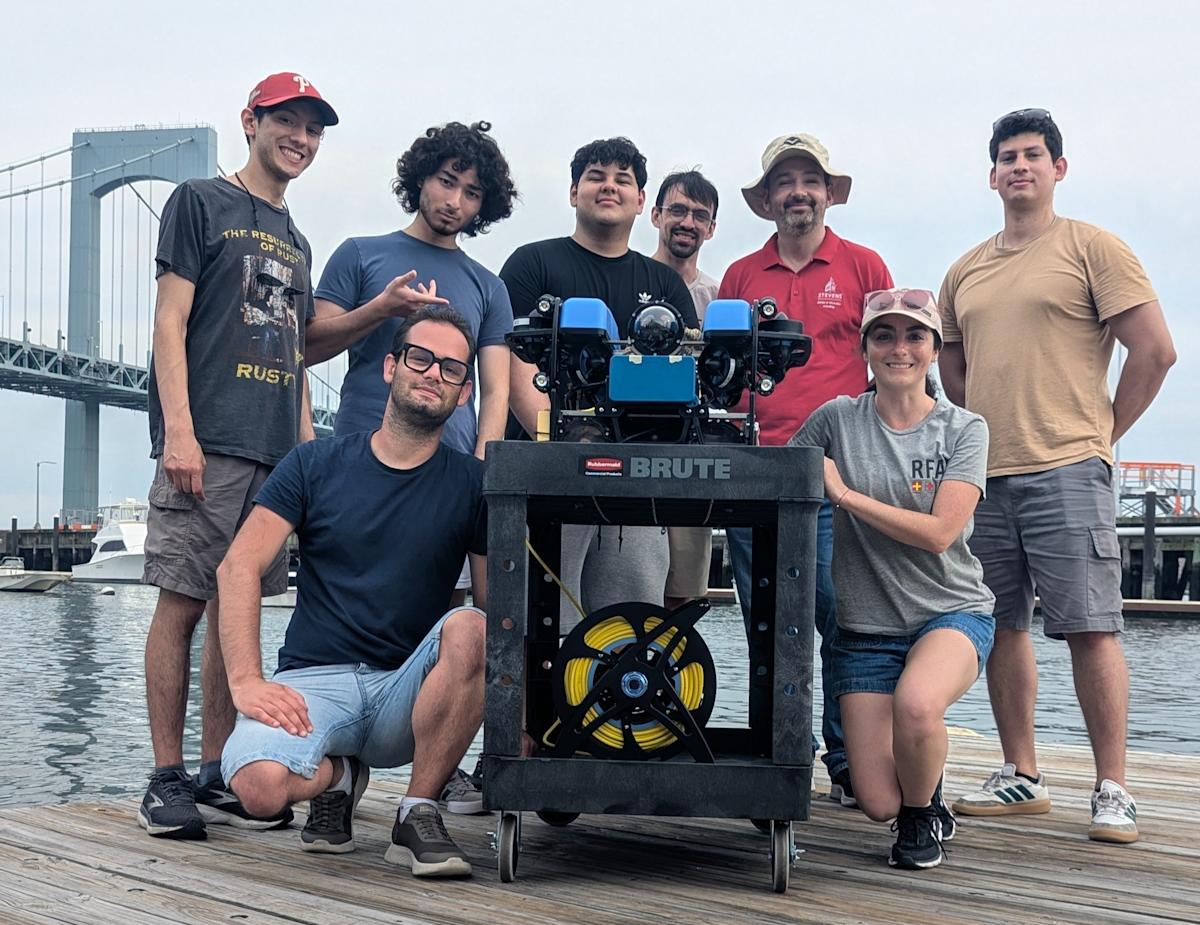 The lab's location helps, too, sitting steps from the hands-on spaces where ideas get built, according to Collado Gonzalez.
"The MakerCenter is located near the lab, and those are important assets for everything we want to tinker with," she said.
Huang notes the mix of community and resources that would be hard to find elsewhere.
"You have people from all parts of the world, and the location is also great. The water tank we have is right next to our building. It's not something you can easily get access to if you are not at Stevens,” Huang said.
For Englot, the two students embody what studying robotics is about: a discipline that draws on nearly every branch of engineering at once.
"When you study robotics, you learn a little bit of almost every type of engineering. It involves some mechanical engineering, electrical, computer engineering, computer science, understanding the properties of the physical environment where the robot is operating," he said. "There's no way to be an expert in all of them, and as you study robotics, you gradually learn how to become an expert in integrating all those things together."
The point, he said, is that no one arrives knowing it all.
"If you come to Stevens to study robotics, you will learn about all of these disciplines and how they come together," Englot said. "Yewei and Ivana exemplify that, because they had existing areas of strength and then found ways to strengthen all of the other areas along the way to become complete, well-rounded robotics engineers in the course of studying here," he said.

Learn more about academic programs and research in the Department of Mechanical Engineering: