New CCB assistant professor studies tiny particles to make big strides toward improving our understanding of chronic diseases
Kwahun Lee, assistant professor in the Department of Chemistry and Chemical Biology (CCB) at Stevens Institute of Technology, loves combining research areas to amplify their results.
His fascination with bioinspired engineering — the field of study that suggests biology can inform developments in engineering — inspired his career path.
“I am a religious person,” Lee said, “so it seemed like an exciting journey to identify design principles of a creator and apply those into my research to impart new knowledge and technology.”
The first in his family to attend college, and also the first to pursue graduate studies, he earned his bachelor’s and master’s degrees at Seoul National University. After working on his bachelor’s thesis for seven months, however, his advisor passed away unexpectedly, and he was forced to abandon the research. His long search for a new advisor finally had a happy ending, yielding a scholarship and a new project developing fundamental insights into cell biology.
Lee then completed his his doctorate in chemistry at Indiana University in Bloomington and his postdoctoral fellowship at Northwestern University. He worked as an American Society for Engineering Education Postdoctoral Fellow at the U.S. Naval Research Laboratory until he joined Stevens in August 2023.
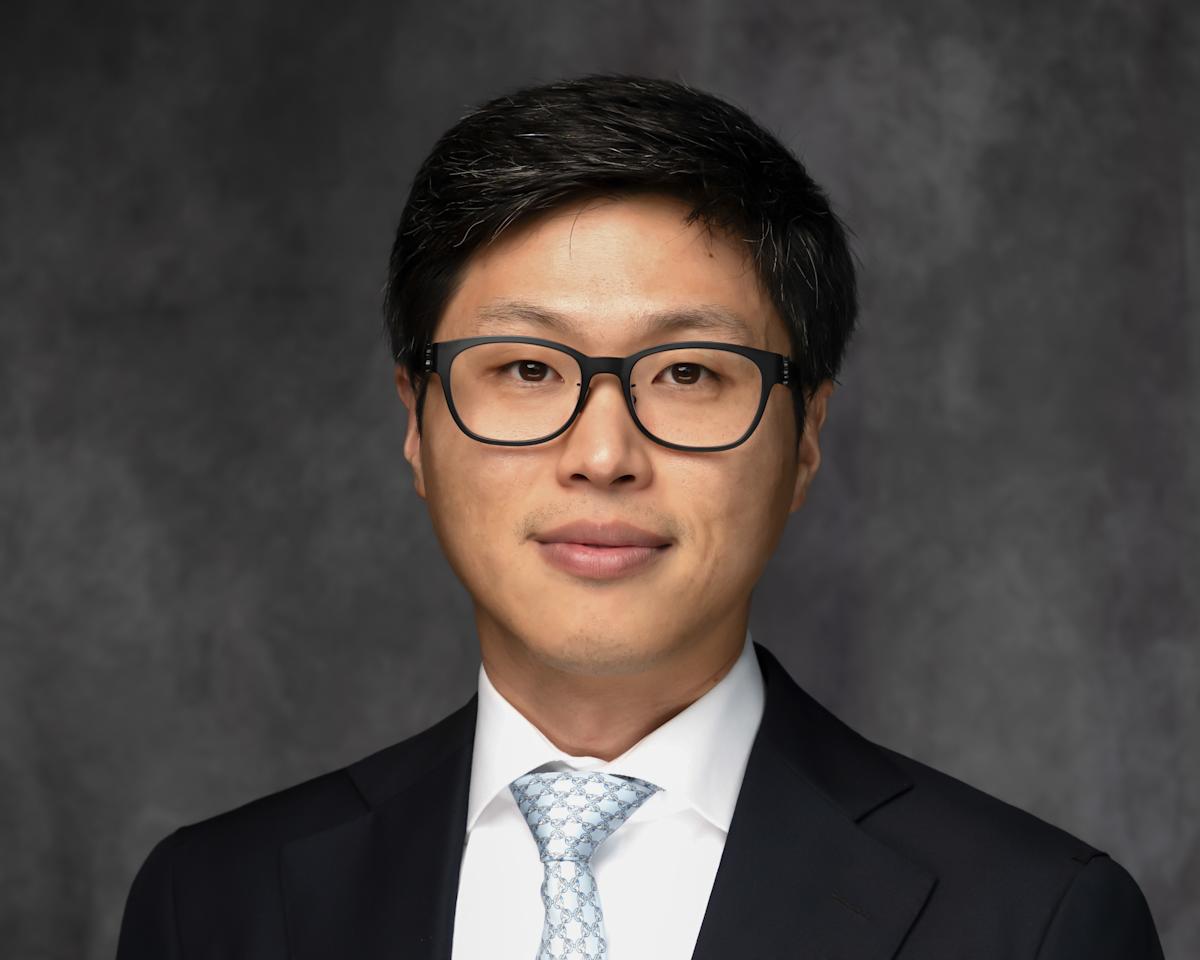
Today, Lee focuses on providing chemical insights that could help resolve challenges in biological processes in two key areas. First, he is working to give immune cells new functions in fighting diseases and infections and better supporting cancer immunotherapies. Second, he is striving to establish an imaging platform to understand and detect the early phase of protein aggregations linked to the progression of neurodegenerative diseases such as Alzheimer's and Parkinson’s.
“I make particles that are nanosized — no larger than one-billionth of a meter — and then graft on biomolecules, such as DNA and antibodies, to manipulate cell behavior and functions,” Lee explained. “Although tiny, these particles show significant, unexpected features. Even small changes in their size, shape, surface and other properties might have a profound effect on their capability to interact with cells and modulate cells' functions. This offers us intriguing insights into their biology."
Lee appreciates that Stevens is small enough to allow him to be close to students and colleagues, and large enough that he can work toward impactful outcomes.
“This lively environment makes me excited to grow as a teacher, scientist and person,” he said, “and to inspire students to pursue their dreams.”
In particular, he’s eager to strengthen the school’s research into nanomaterials and their interactions with molecules that are critical to biological processes.
“The CCB department has excellent chemists who design small molecules for biological applications and biologists who understand cancer biology,” Lee said. “I envision implementing a strong nanotechnology research program to bridge these molecular and cellular approaches, and applying these nanomaterials to visualize changes in the biological processes so that we can tackle important problems related to neurodegenerative diseases, cancer, immune-related diseases and other health issues. Together, we can help make a big difference in the world.”
Learn more about academic programs and research in the Department of Chemistry and Chemical Biology: