PhD Student Seminar

Department of Physics
Location: Babbio Center, Room 219
Speakers: Matthew Daddino, Ph.D. Candidate, Department of Physics, Stevens Institute of Technology
Chandra Shakya, Ph.D. Candidate, Department of Physics, Stevens Institute of Technology
ABSTRACT
A Four-Qubit Helium Benchmark for Variational Quantum Eigensolvers by Matthew Daddino (2:00 p.m.) - We construct a tapered four-qubit helium VQE benchmark from uncontracted STO-3G Gaussian primitives. The six spin-orbital modes are mapped to an initial six-qubit Hamiltonian using the Jordan–Wigner transformation and reduced to four qubits by symmetry-based tapering. The tapered VQE energy is benchmarked against exact diagonalization.
Nonlocal Reflectarray Metasurfaces with High-Efficiency Spin-Dependent Deflection by Chandra Shakya (2:30 p.m.) - We report a nonlocal reflectarray metasurface that resolves a trade-off between efficiency and spectral selectivity in nonlocal flat optics. Local reflectarrays achieve high reflection efficiency but lack spectral control, while nonlocal metasurfaces support high-Q quasi-bound states in the continuum (q-BICs) with tailorable narrowband responses but suffer from an intrinsic 25% efficiency limit. By combining nonlocal resonances with a mirror-backed cavity, our design achieves narrowband, spin-dependent beam steering with efficiencies above 93% and tailorable resonant frequency, Q-factor, and deflection direction. We demonstrate with coupled-mode theory that, by leveraging a self-coupling mechanism of the resonant metasurface through the reflection of the mirror, we achieve control over the amplitude and phase of reflected light at a fixed frequency. We extend these results to show nonlocal metalenses with resonant-exclusive and spin-dependent focusing. These results position hybrid nonlocal reflectarray metasurfaces as a multifunctional platform for efficient, spin-multiplexed imaging, secure optical communication, and quantum photonics.
BIOGRAPHY
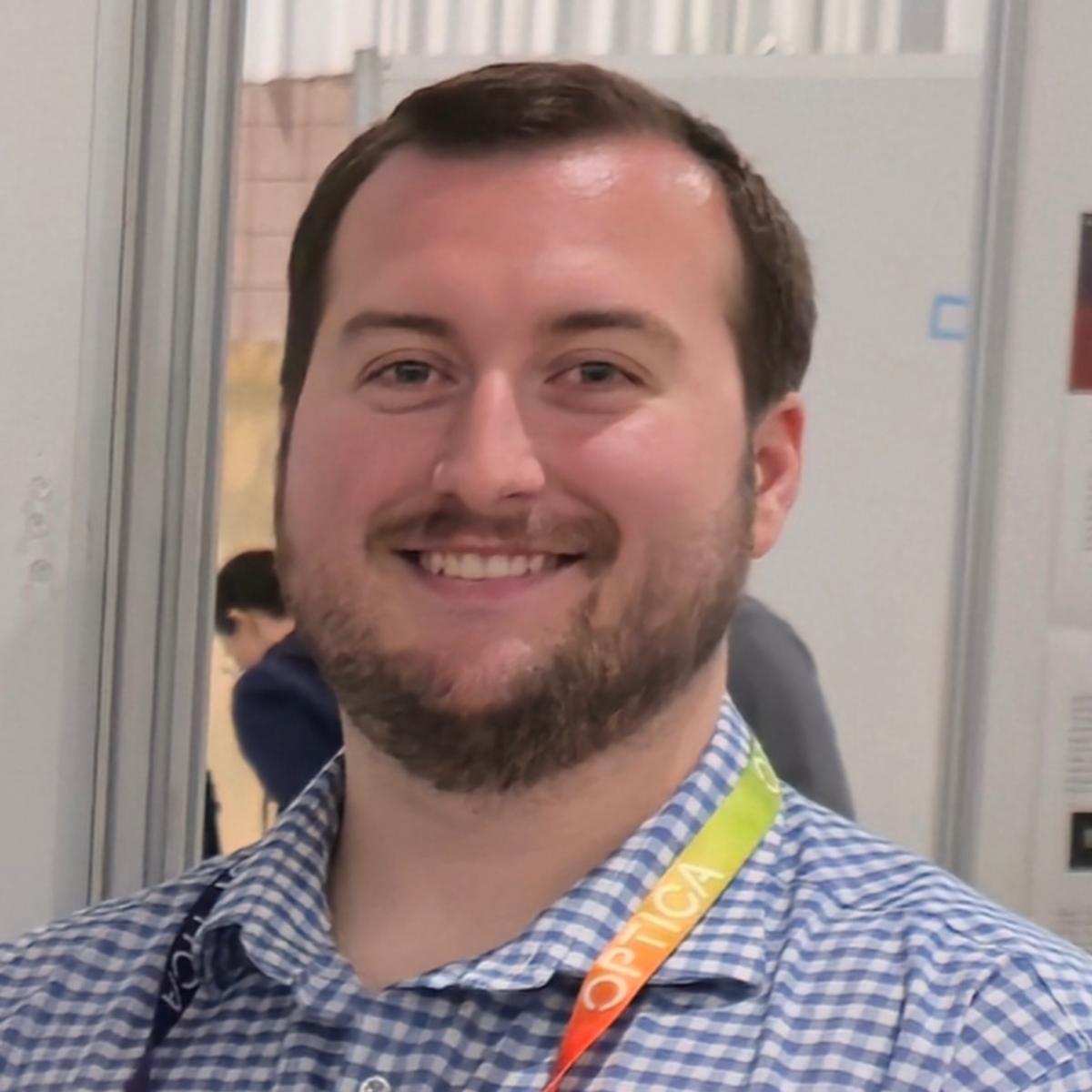
Matthew Daddino is a Ph.D. student in Physics at Stevens Institute of Technology under the guidance of Dr. Xiaofeng Qian. His research focuses on hybrid quantum-classical algorithms and working toward experimentally implementing these algorithms using classical optical systems, with the goal of reproducing quantum circuit operations through the manipulation of light's polarization and spatial modes.
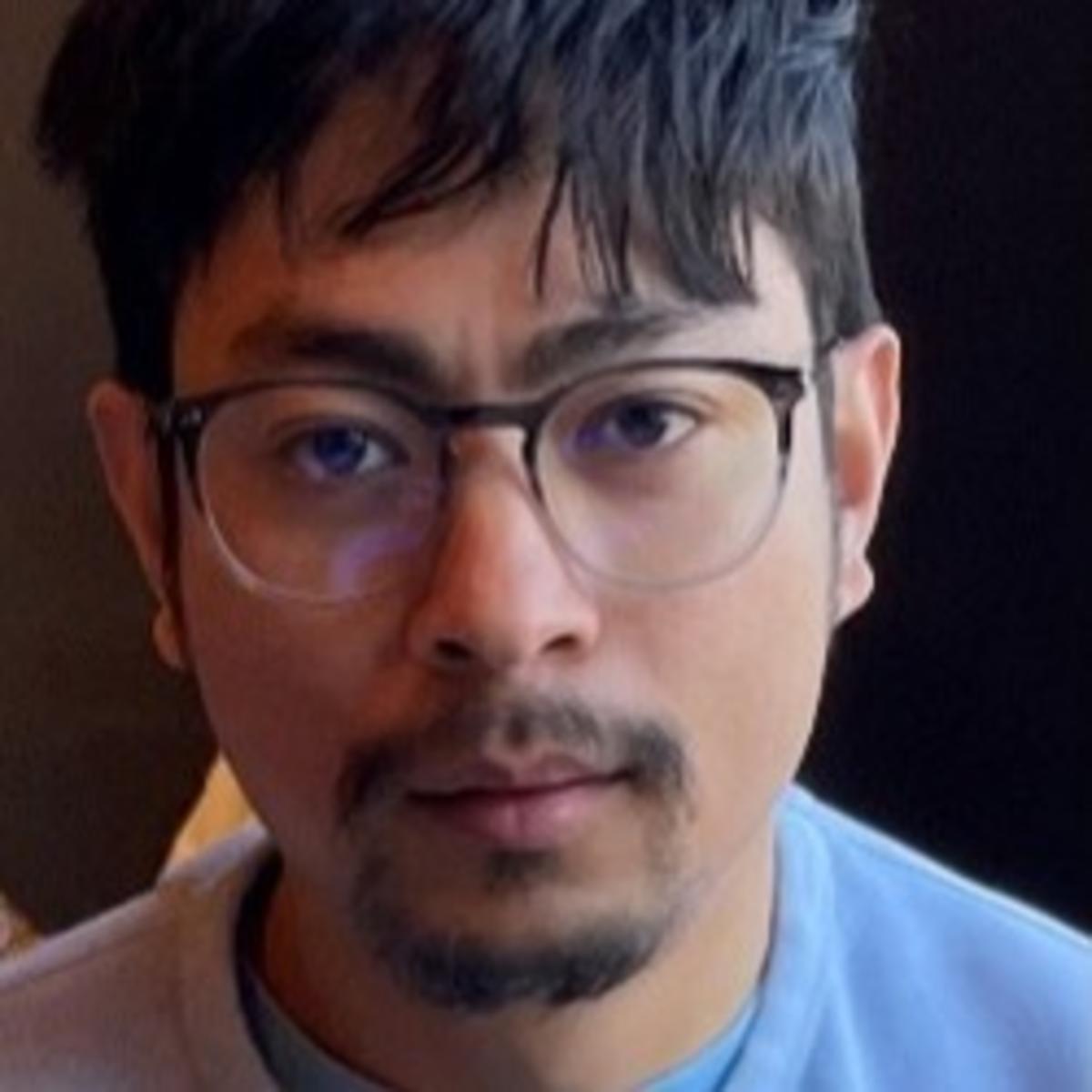
Chandra Shakya is a Ph.D. candidate in Physics at Stevens Institute of Technology, USA, under the supervision of Prof. Adam Overvig. He received his Bachelor's and Master's degrees from Tribhuvan University, Nepal. His research interests include nanophononics, metasurfaces, meta-optics, holography, and nanofabrication. His work encompasses the design, simulation, fabrication, and optical characterization of nanophotonic structures, with particular emphasis on nonlocal metasurfaces for advanced wavefront manipulation. His recent research was published in ACS Photonics.
Publication: ACS Photonics (2026)
Discrimination notice: Persons of all identities are invited to and included in this group. Stevens does not discriminate against any person on the basis of sex, race, religion, disability, sexual orientation, gender expression, or any other basis prohibited by law.
Photo and video notice: At any time, photography or videography may be occurring on Stevens’ campus. Resulting footage may include the image or likeness of event attendees. Such footage is Stevens’ property and may be used for Stevens’ commercial and/or noncommercial purposes. By registering for and/or attending this event, you consent and waive any claim against Stevens related to such use in any media. See Stevens' Privacy Policy for more information.