Stevens and China’s Xidian University Sign Joint Program Agreement
Universities will collaborate on student enrichment programs focused on electrical engineering, computer engineering, applied artificial intelligence, and mechanical engineering
Stevens Institute of Technology and Xidian University in China have concluded an agreement to promote joint educational initiatives involving the two schools.
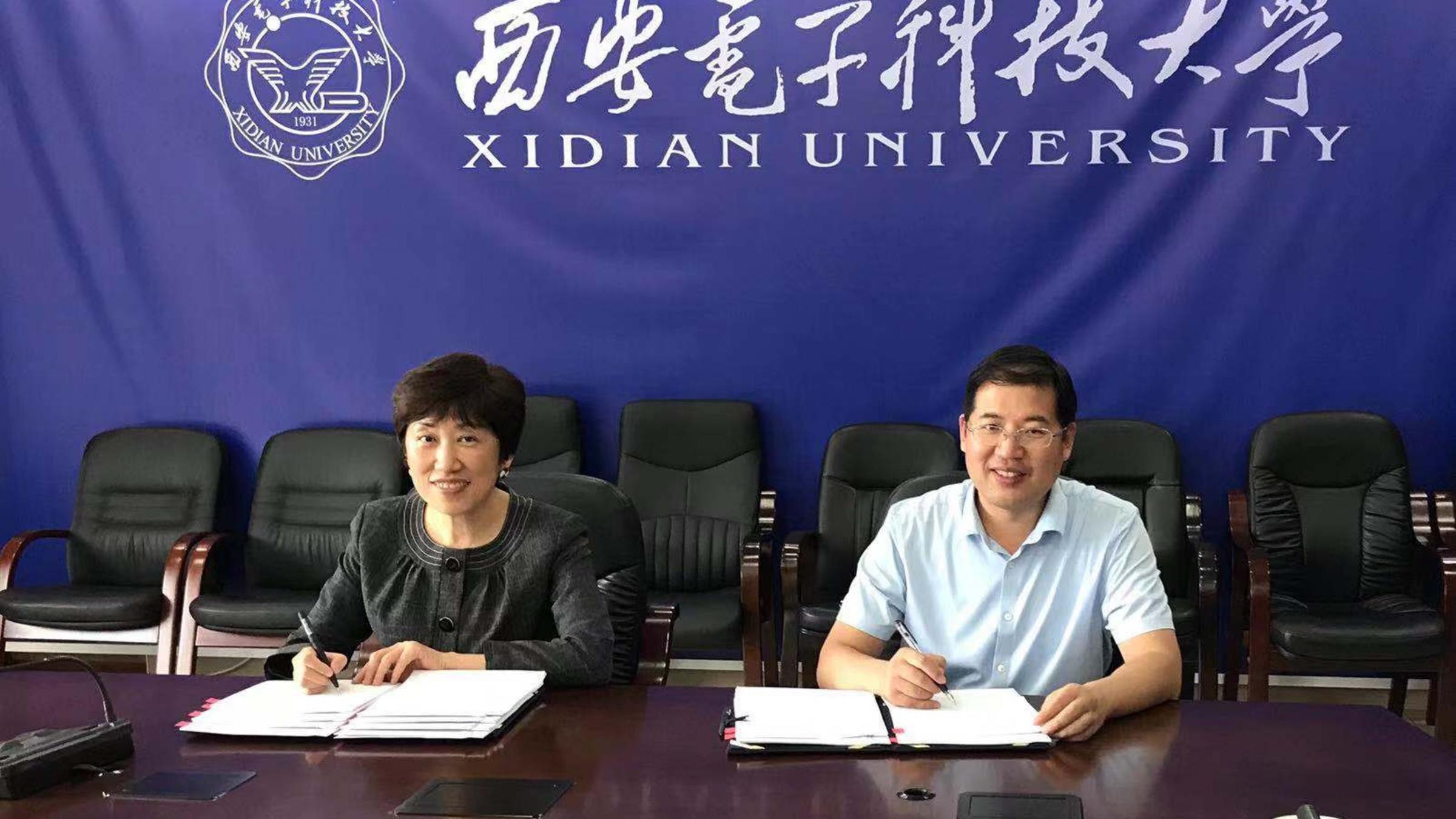
Officials and faculty from Stevens and Xidian—a research university focused on science innovation, electronics and information technology—met on September 10 at Xidian’s campus in the historic city of Xi’an to sign a memorandum of cooperation, which establishes a broad relationship for cooperation between the two institutions.
Xidian’s Vice President, Dr. Xinbo Gao and representatives of Xidian’s Division of International Cooperation and Exchanges welcomed Dr. Jean Zu, Dean of Stevens’ Charles V. Schaefer, Jr. School of Engineering and Science to the signing ceremony and meeting. She said the agreement affords the two universities an opportunity to work jointly on research and to deepen their cooperation in fields such as mechanical engineering, electrical engineering, and computer science.
“Xidian and Stevens are institutions that share a lot in common with a focus on technology-based education and research,” Dr. Zu says. “This agreement is an example of Stevens’ continued commitment to expand and diversify its partnerships with institutions throughout the world, creating opportunities for collaborative teaching and research, as well as to provide enriching experiences to Stevens students and faculty.”

After the signing ceremony, Dr. Zu gave a presentation on higher education trends in the United States to members of the Xidian University delegation. She also met with Xidian University students who participated in Steven’s Summer School program in 2019.
Under the agreement, Xidian students have an opportunity to participate in a Four Plus One program, which allows them to complete their undergraduate degree at Xidian and Master degree at Stevens in five years.
“This agreement will help attract more Xidian students to Stevens to pursue their master’s degrees in electrical engineering, computer engineering, applied artificial intelligence, and mechanical engineering,” says Dr. Min Song, Professor and Chair of the Department of Electrical and Computer Engineering at Stevens. It can potentially promote research collaborations between the two universities, and over the long-term, help in the establishment of a joint institute, he adds.