Space Debris Endangers Future Space Missions — But There’s a Way to Clean it Up
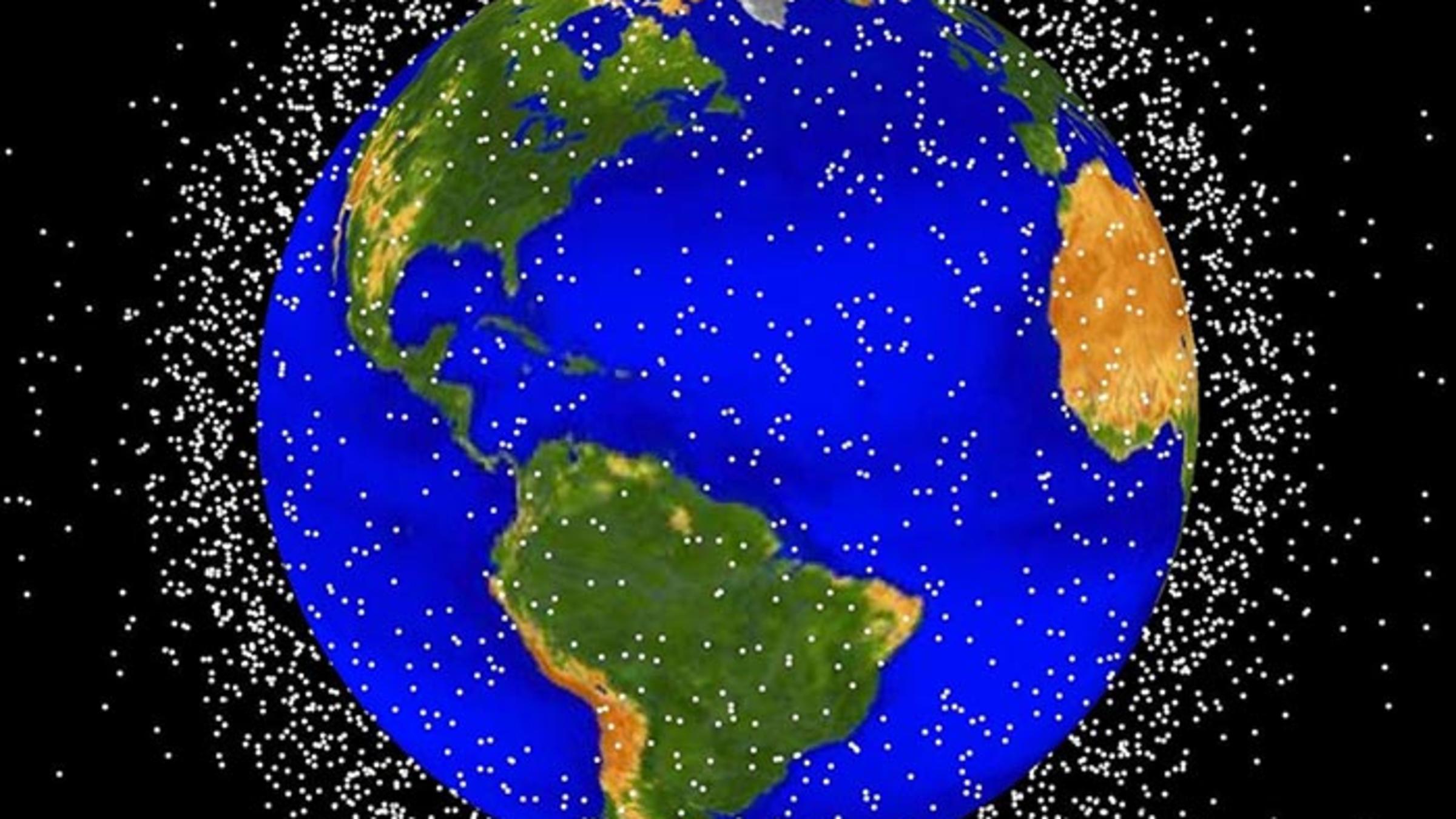
Hoboken, N.J., December 4, 2025 — High up in the earth’s orbit, millions of human-made objects large and small are flying at speeds of over 15,000 miles per hour. The objects, which range from inactive satellites to fragments of equipment resulting from explosions or collisions of previously launched rockets, are space debris, colloquially referred to as space junk. Sometimes the objects collide with each other, breaking into even smaller pieces.
No matter the size, all of this debris poses a problem. Flying at high speeds caused by prior launches or explosions, they create danger for operational satellites and spacecraft, which are vital for the efficacy of modern technologies like GPS, digital communication and weather forecasting. At orbital speeds, even tiny fragments can cause significant damage to operational equipment, endangering future space missions and the people who would participate in them.
“Even if a tiny, five-millimeter object hits a solar panel or a solar array of a satellite, it could break it,” says Assistant Professor Hao Chen, whose research involves space systems design. “And we have over 100 million objects smaller than one centimeter in orbit. So if you want to avoid a collision, you have to maneuver your spacecraft, which takes up fuel and is costly. Additionally, we have humans on the International Space Station who sometimes must go outside the spacecraft where the space debris can hit them too. It’s really dangerous.”
Cleaning up space junk is technologically challenging and expensive. Furthermore, there are currently no incentives for countries or private companies to do so. Without binding international regulations or an enforceable "polluter pays” principle with consequences for non-compliance, the circumstances have led to a "cosmic free-for-all." So in his latest study, Space Logistics Analysis and Incentive Design for Commercialization of Orbital Debris Remediation published in Journal of Spacecraft and Rockets on October 5, 2025, Chen and his collaborators investigated ways to create commercial opportunities for space operators and debris remediators to clean up the dangerous junk. “We wanted to see whether there’s any potential to have commercial players interested in removing the debris,” Chen says.
The study analyzed three possible scenarios of debris cleanup — controlled reentry back to earth, uncontrolled reentry back to earth, and recycling in space. All three methods would require a space debris remediation satellite — a vehicle designed to capture and remove space junk from orbit.
In the uncontrolled reentry scenario, the remediation service vehicle would grab the debris from the orbit path it flies in and bring it down to about 350 kilometers away from earth. The piece of debris would continue orbiting around our planet until it enters the atmosphere and either burns or lands someplace. “It will either burn or drop somewhere on earth, but we don't know where because it depends on the atmospheric drag it receives,” Chen explains. This uncontrolled reentry method is the cheapest as the remediation vehicle doesn’t have to fly long distances.
In the controlled reentry scenario, the remediation service vehicle would bring the debris much closer to earth, down to about 50 kilometers. “Controlled reentry is more expensive because the servicer needs to bring the debris down closer to earth and then fly up again to get the next piece of debris,” Chen says. “That consumes more energy and more fuel than an uncontrolled reentry.”
In the recycling scenario, the debris would be transported from its original orbit to a recycling center up in space. The transportation would require fuel adding to the cost, but a lot of energy will also be saved by reusing aluminum, the metal commonly used in spacecraft, up in orbit rather than having to bring it up from earth. “It takes about $1500 per kilogram to launch anything from earth to space,” explains Chen. “So if you don’t have to launch from earth, it’s a benefit.”
Next Chen and collaborators analyzed ways to incentivize companies into space debris removal. They used Game Theory and Nash Bargaining Theory, developed by mathematician John Nash, to figure out the fairest deal for the two entities involved — in this case space operators, companies that own and run satellites, and debris remediators, entities that remove the space junk.
“The debris remediators pay for the missions, the technology, and the actual work. Without some kind of financial incentive, they don’t really gain anything from it — they bear all the costs while others reap the benefits,” says Chen. Meanwhile space operators stand a lot to gain from debris removal. Their satellites can operate more safely and efficiently, so they save money on fuel and operations, since they don’t have to make extra maneuvers to avoid collisions. “However, they don’t actually do anything to remove the debris themselves — they just enjoy the cleaner, safer environment,” Chen points out.
To solve this problem, Chen’s team proposes creating fees that space operators would have to pay. “We will need some agency to create an incentive for the debris remediators,” says Chen. “The money should come from the people who enjoy all those benefits. Our analysis shows that there is a surplus to be generated from the remediation of orbital debris, and that surplus can be optimally shared by space operators and debris remediators.”
Without such a solution, the space debris dangers will only continue growing, generated by the current and future objects left in orbit, Chen notes. “That is what’s needed to move us closer to a space industry that is safer, more sustainable, and still profitable.”
Chen’s research was funded by the NASA Office of Technology, Policy, and Strategy. The team will present their research at NASA headquarters on December 10, 2025.
About Stevens Institute of Technology
Stevens is a premier, private research university situated in Hoboken, New Jersey. Since our founding in 1870, technological innovation has been the hallmark of Stevens’ education and research. Within the university’s three schools and one college, more than 8,000 undergraduate and graduate students collaborate closely with faculty in an interdisciplinary, student-centric, entrepreneurial environment. Academic and research programs spanning business, computing, engineering, the arts and other disciplines actively advance the frontiers of science and leverage technology to confront our most pressing global challenges. The university continues to be consistently ranked among the nation’s leaders in career services, post-graduation salaries of alumni and return on tuition investment.
Stevens Media Contact
Lina Zeldovich
Manager of Media Relations
Division of University Advancement
201-216-5123
[email protected]