Gizem Acar Puts Curiosity Into Motion
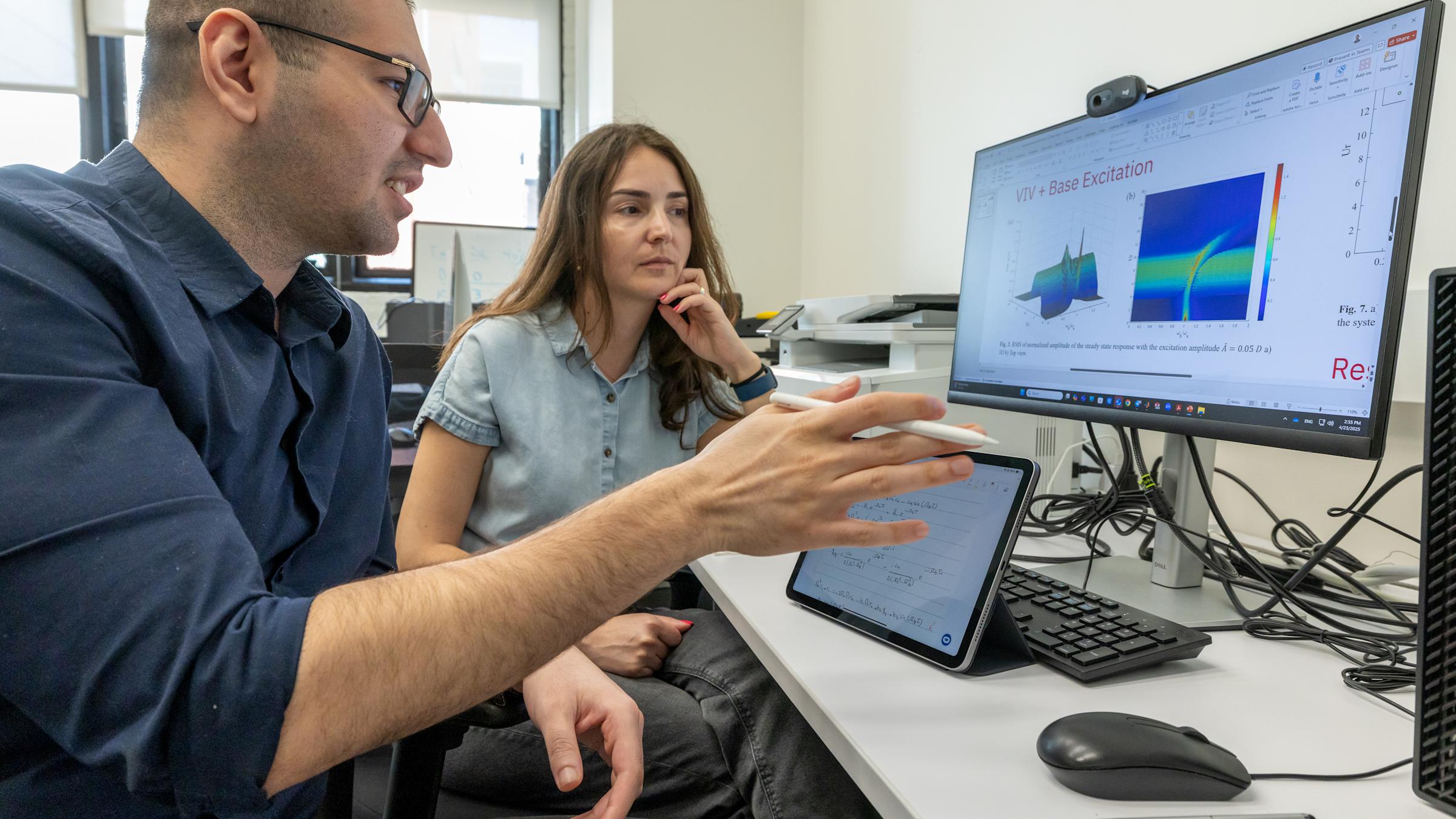
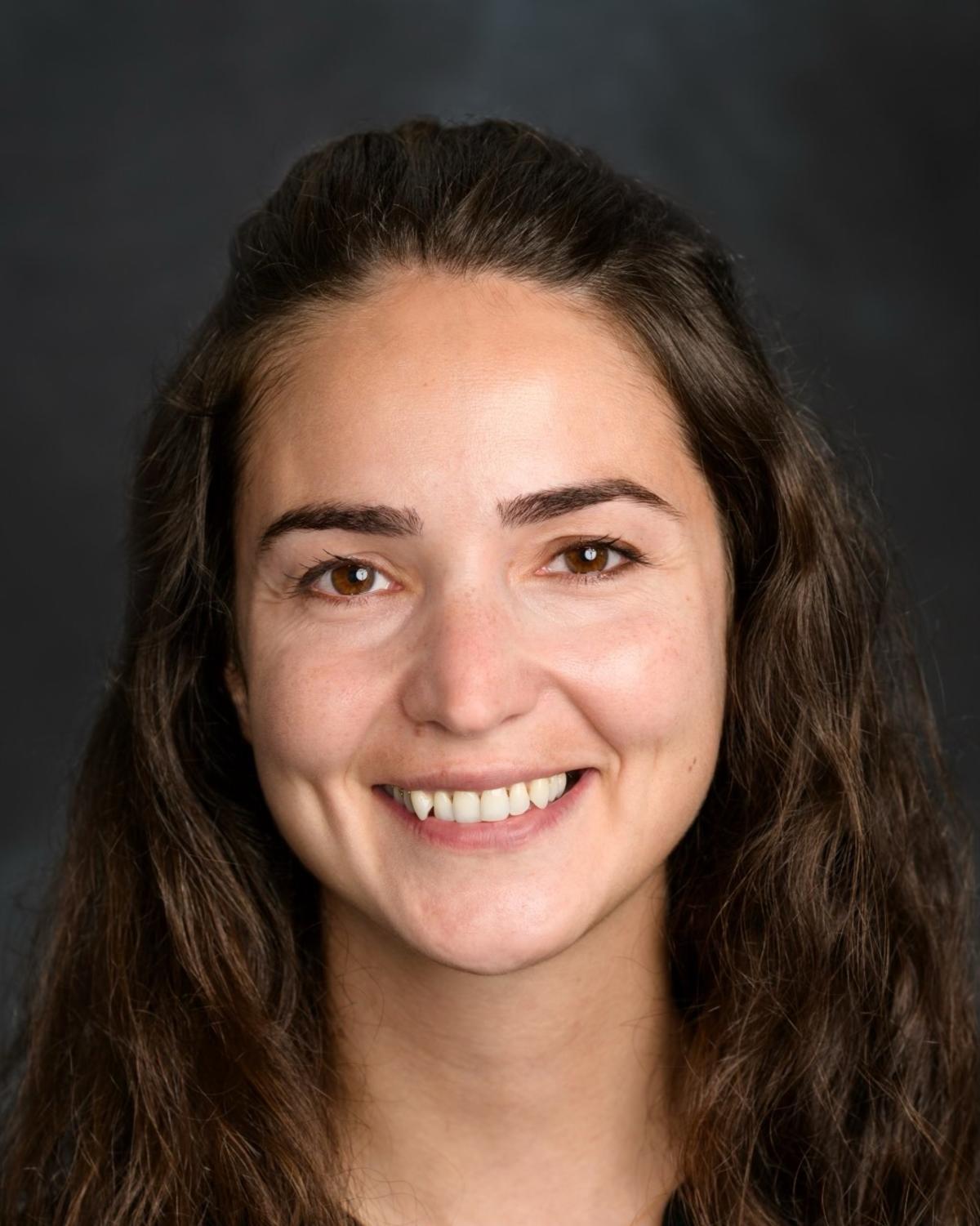 Gizem Acar, assistant professor in the Department of Mechanical Engineering at Stevens, chose her career because it allowed her to both teach and research her passion around dynamical systems.
“Motion is everywhere — in vehicles, energy systems and even microscopic materials,” she said, pointing to defense and energy systems as examples that drive her research today. “Accurately predicting motion and stability directly affects how safely and efficiently those systems perform.”
Moving toward better outcomes
Since joining Stevens in 2020, Acar's research has centered on nonlinear dynamics, vibrations and adaptive metamaterials, which humans create with specific properties that can respond differently depending on external conditions.
She combines classical mechanics to explain system behavior with machine learning’s data-driven tools that reveal deeper patterns. Studying how these complex dynamics behave can lead to practical benefits, particularly in aerospace and defense applications, where failure risks carry serious consequences.
Theories are just the beginning of discovery
Acar earned both her B.S. and M.S. degrees in mechanical engineering at Boğaziçi University in Turkey, completed her Ph.D. at Michigan State University, and finished her three-year postdoctoral appointment at the University of Maryland.
She remembers an “aha!” moment when a research problem refused to follow the theories.
“After months of unsuccessful modeling attempts,” she recalled, “I realized that nonlinear systems don’t always give clean answers, and that’s the beauty of them. That realization changed how I approached problems, and it’s why I now encourage my students to see unexpected results as part of the learning process.”
In contrast to linear systems, where inputs lead to predictable outputs, the nonlinear dynamics Acar studies can behave very differently. In some cases, even small changes lead to instability or entirely new patterns of motion.
Not just going through the motions
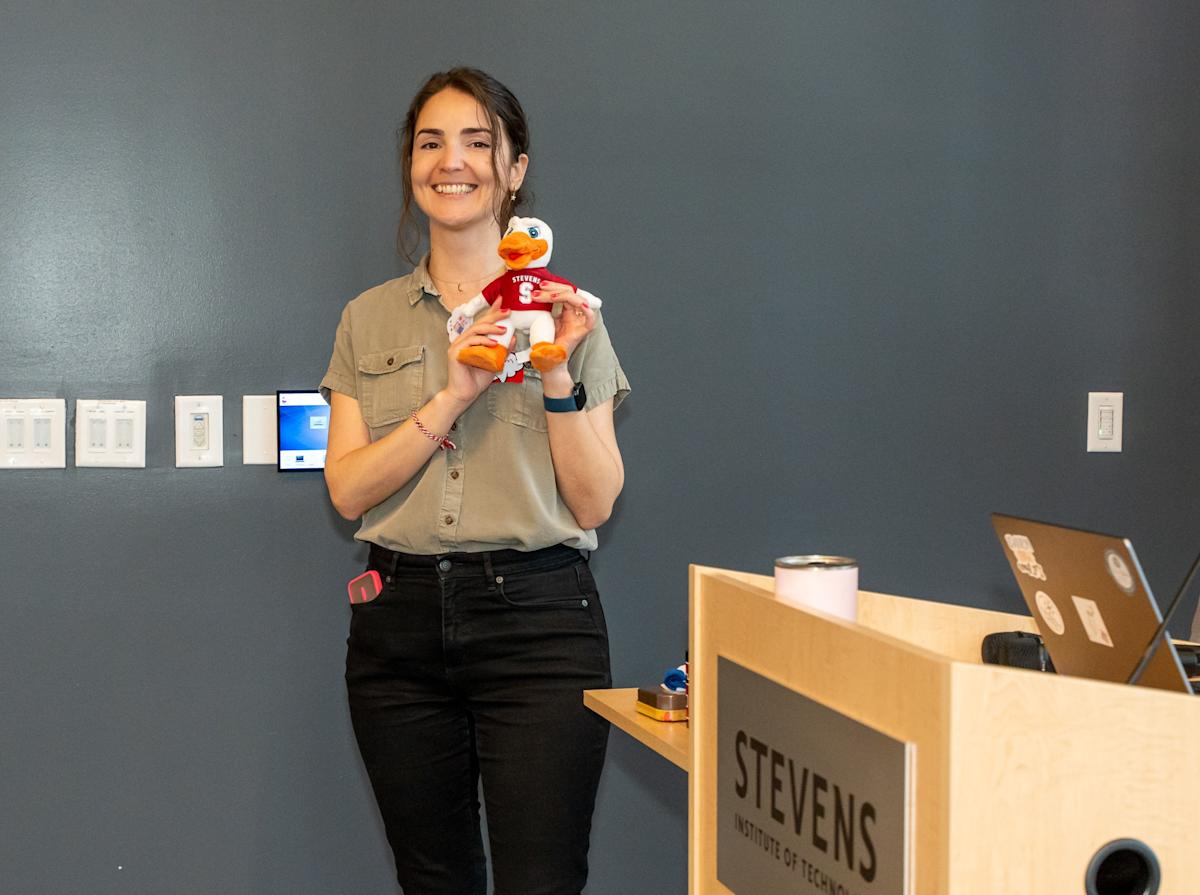 Acar teaches core Stevens courses including Statics, Introduction to Engineering Mechanics and Mechanics of Materials. She helps students navigate fellowships, research opportunities and graduate study options. In 2025, she earned a Stevens Early Career Mentor Award honoring her commitment to guiding students to build confidence and independence.
In addition, she leads the collaborative Dynamics and Vibrations Research Laboratory.
“Students share ideas, troubleshoot together and celebrate each other’s successes,” she said. “That sense of teamwork strengthens both the research and the learning experience.”
One student, Sally Mangassa ’26, was a co-author with Acar on the paper Metamaterials with Programmable Nonlinearity, published in the engineering journal Nonlinear Dynamics. Mangassa also received a Top Poster Presentation Award for this work at the Stevens Symposium for Undergraduate Research.
Acar’s advice to future mechanical engineers? Work hard, stay curious and seek out mentors.
“Mechanical engineering needs varied perspectives,” she counseled, “and there is space for you to thrive.”
Learn more about academic programs and research in the Department of Mechanical Engineering: