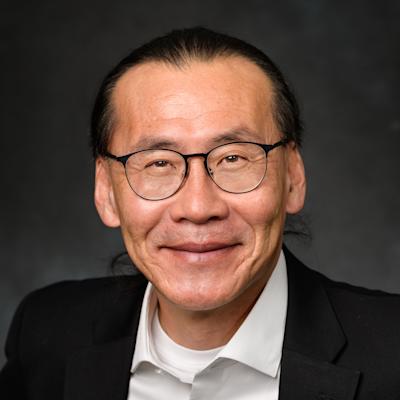
Woo Lee
Professor and Department Chair
Charles V. Schaefer, Jr. School of Engineering and Science
Department of Chemistry and Chemical Biology
Education
- Ph.D. (1990) Georgia Institute of Technology (Chemical Engineering)
- M.S. (1987) Auburn University (Chemical Engineering)
- B.S. (1985) University of Maryland (Chemical Engineering)
Research
My current research investigates how the thoughtful adoption of AI can make science education more deeply human – strengthening rather than replacing the social interactions, mentorship, and experiential learning that produce genuine student transformation. I frame AI as a cognitive amplifier that enhances inquiry-based and experiential learning while placing greater emphasis on human judgment, ethical reasoning, and meaningful connection. I view the evolving role of educators as human guides, instructional designers, and technology integrators who exercise pedagogical judgment and empathy alongside powerful new tools – with careful evidence-based attention to the efficacy and safety of AI in student learning.
To focus on this new direction, I am transitioning away from my prior research on “human tissue on chip” as models for studying cancer, particularly multiple myeloma. This work represents the most recent chapter in my research portfolio, spanning structural materials for aerospace systems, microreactor and microfluidic technologies, and tissue engineering – reflecting a sustained commitment to pursuing consequential and timely scientific questions across disciplinary boundaries.
To focus on this new direction, I am transitioning away from my prior research on “human tissue on chip” as models for studying cancer, particularly multiple myeloma. This work represents the most recent chapter in my research portfolio, spanning structural materials for aerospace systems, microreactor and microfluidic technologies, and tissue engineering – reflecting a sustained commitment to pursuing consequential and timely scientific questions across disciplinary boundaries.
General Information
Under my leadership, the Department of Chemistry and Chemical Biology has grown substantially in student enrollment, maintained strong placement rates into medical and dental schools, and developed a 15-member External Advisory Board connecting students to professionals working across the Northern New Jersey regional economy. I have secured philanthropic gifts supporting student research and scholarship, and lead a department recognized for its commitment to student-centered education for student success and shared governance through collaboration.
This current role builds on a career of leadership that has consistently crossed disciplinary boundaries. I previously served as Chair of the Department of Chemical Engineering and Materials Science at Stevens, and have led research programs, teaching initiatives, and community-building efforts spanning materials science, chemical engineering, biomedical engineering, and chemistry and chemical biology — reflecting a sustained commitment to interdisciplinary collaboration in research, teaching, and service.
This current role builds on a career of leadership that has consistently crossed disciplinary boundaries. I previously served as Chair of the Department of Chemical Engineering and Materials Science at Stevens, and have led research programs, teaching initiatives, and community-building efforts spanning materials science, chemical engineering, biomedical engineering, and chemistry and chemical biology — reflecting a sustained commitment to interdisciplinary collaboration in research, teaching, and service.
Experience
Professor and Chair, Department of Chemistry and Chemical Biology, Stevens Institute of Technology, 2020-present
Professor, Department of Chemical Engineering and Materials Science, Stevens Institute of Technology, 1997-2023
George Meade Bond Chair of Chemical Engineering and Materials Science, Stevens Institute of Technology, 2009-2019
Chair, Department of Chemical Engineering and Materials Science, Stevens Institute of Technology, 2001-2005
Associate Professor, Department of Chemical Engineering and Materials Science, Stevens Institute of Technology, 1997-2001
Research Staff Member, Oak Ridge National Laboratory, 1992-1997
Research Scientist, United Technologies Research Center, 1990-1992
Professor, Department of Chemical Engineering and Materials Science, Stevens Institute of Technology, 1997-2023
George Meade Bond Chair of Chemical Engineering and Materials Science, Stevens Institute of Technology, 2009-2019
Chair, Department of Chemical Engineering and Materials Science, Stevens Institute of Technology, 2001-2005
Associate Professor, Department of Chemical Engineering and Materials Science, Stevens Institute of Technology, 1997-2001
Research Staff Member, Oak Ridge National Laboratory, 1992-1997
Research Scientist, United Technologies Research Center, 1990-1992
Innovation and Entrepreneurship
My research has produced seven winners of the New Jersey Inventors Hall of Fame Graduate Student Award and contributed award-winning, patented technologies to industrial practice. Extending this commitment to educational innovation, I am building the AiBC Community — a cross-sector partnership among Stevens and neighboring four-year and community colleges, supported by NSF and philanthropic partners, dedicated to making science education more human, more affordable, and more accessible in the age of AI. Built together with colleagues across institutions, sectors, and disciplines, it represents a deliberate response to a challenge that every science educator is navigating: how to harness AI's promise while preserving the human engagement that makes learning transformative.
Honors and Awards
Edison Patent Award, New Jersey R&D Council, 2022.
Academic Research Award: Printed Electronics USA Conference, 2011.
Master of Engineering (Honoris Causa): Stevens Institute of Technology, 2008.
Fellow, American Ceramic Society, 2004.
Academic Research Award: Printed Electronics USA Conference, 2011.
Master of Engineering (Honoris Causa): Stevens Institute of Technology, 2008.
Fellow, American Ceramic Society, 2004.
Professional Societies
- New York Academy of Sciences Member
- American Association for the Advancement of Science Member
Grants, Contracts and Funds
47 grants and contracts awarded totaling $19.6M, from NIH, NSF, DOD, DOE, and industry partners. Most recent:
“ICT Capacity-Building: Early Career Exploration Community for Biology and Chemistry Students,” NSF IUSE:EDU, $200,000, 2025–2027. PI: Woo Lee; Co-PIs: Emily Atieh and Patricia Muisener.
“Identifying and Characterizing Functional Noncoding Mutations in Multiple Myeloma,” NIH-NCI subaward, $216,995, 2023–2028.
“ICT Capacity-Building: Early Career Exploration Community for Biology and Chemistry Students,” NSF IUSE:EDU, $200,000, 2025–2027. PI: Woo Lee; Co-PIs: Emily Atieh and Patricia Muisener.
“Identifying and Characterizing Functional Noncoding Mutations in Multiple Myeloma,” NIH-NCI subaward, $216,995, 2023–2028.
Patents and Inventions
18 U.S. patents awarded in microfluidics, tissue engineering, graphene-based electronics, and energetic materials.
Selected Publications
Selected Publications
Education Research
W. Lee, “I’m a college professor. Using AI helps my students learn faster and have more fun,” The AI Journal (2025).
L. Ezeonu, G. Baxter, W. Li, and W. Lee, “Knowledge-Building Approach to Address Societal Grand Challenge in Large-Enrollment Introductory Materials Science and Engineering Course,” Proceedings of the Annual ASEE National Meeting (2022).
Biomedical Research
C. Sui and W. Lee, “Role of Interleukin 6 and Its Soluble Receptor on the Diffusion Barrier Dysfunction of Alveolar Tissue,” Biomedical Microdevices, 25, 40 (2023).
S. Alshehri et al. and M. Iwanicki and W. Lee, “Extracellular Matrix Modulates Outgrowth Dynamics in Ovarian Cancer,” Advanced Biology, 6 (2022).
C. Cui, Z. Zilberberg, and W. Lee, “Microfluidic Device Engineered to Study the Trafficking of Multiple Myeloma Cancer Cells through the Sinusoidal Niche of Bone Marrow,” Scientific Reports, 12, 1439 (2022).
Z. Chen, S. He, J. Zilberberg, and W. Lee, “Pumpless Platform for High-throughput Dynamic Multicellular Culture and Chemosensitivity Evaluation,” Lab on a Chip, 19, 254–261 (2019).
Education Research
W. Lee, “I’m a college professor. Using AI helps my students learn faster and have more fun,” The AI Journal (2025).
L. Ezeonu, G. Baxter, W. Li, and W. Lee, “Knowledge-Building Approach to Address Societal Grand Challenge in Large-Enrollment Introductory Materials Science and Engineering Course,” Proceedings of the Annual ASEE National Meeting (2022).
Biomedical Research
C. Sui and W. Lee, “Role of Interleukin 6 and Its Soluble Receptor on the Diffusion Barrier Dysfunction of Alveolar Tissue,” Biomedical Microdevices, 25, 40 (2023).
S. Alshehri et al. and M. Iwanicki and W. Lee, “Extracellular Matrix Modulates Outgrowth Dynamics in Ovarian Cancer,” Advanced Biology, 6 (2022).
C. Cui, Z. Zilberberg, and W. Lee, “Microfluidic Device Engineered to Study the Trafficking of Multiple Myeloma Cancer Cells through the Sinusoidal Niche of Bone Marrow,” Scientific Reports, 12, 1439 (2022).
Z. Chen, S. He, J. Zilberberg, and W. Lee, “Pumpless Platform for High-throughput Dynamic Multicellular Culture and Chemosensitivity Evaluation,” Lab on a Chip, 19, 254–261 (2019).
Courses
My distinctive identity is being a learner through research across disciplines. Over thirty years at Stevens, I have taught courses spanning chemical engineering, materials science, biomedical engineering, and introductory biology — moving from graduate-level materials science and upper level engineering courses early in my career, through a large-enrollment core engineering course serving several thousand students, to first-year biology (BIO181 Biology and Biotechnology) today. This career-long endeavor across disciplinary boundaries informs my conviction that science education, at its best, prepares students not for a single career path but for a lifetime of adaptation, inquiry, and impact.