Undergraduate Research Projects
Celebrating the 2026 PSEG Undergraduate Research Scholars for Environmental Justice
{image}
The Stevens Center for Sustainability (SCS) successfully concluded the 2026 cohort of the PSEG Undergraduate Research Scholars for Environmental Justice. Now in its third year, the 10-week summer program brought together seven undergraduate scholars to conduct interdisciplinary, faculty-mentored research focused on sustainability and environmental justice. Through hands-on research, professional development, and collaboration, scholars strengthened their skills while exploring real-world challenges affecting communities in New Jersey and beyond.
The 2026 cohort included Alvaro Quequejana, Anna McHugh, Anthony Palanti, August Rose, Justin Safner, Owen Eriksson, and Sophia Boufadel, representing institutions including Stevens Institute of Technology and Rutgers University–New Brunswick. Their work was supported by faculty and research mentors Jae Chul Kim, Samantha Muka, Yi Bao, Jia Mi, Mehmet Hecan, Arion Cheong, and Hani Nassif, bringing together expertise across engineering, environmental science, policy, economics, and data-driven research.
Funded by the PSEG Foundation and coordinated by SCS, the program provides paid summer research opportunities for undergraduate students whose work addresses sustainability and environmental justice challenges.
Scholars work closely with faculty mentors while gaining experience in research, critical thinking, community engagement, and sustainability-focused problem-solving across the environmental, social, and economic dimensions of sustainability.
During the summer, the 2026 scholars explored topics including clean energy storage, sustainable construction materials, wave-powered marine technologies, ethnic food systems, infrastructure investment, and ESG analytics. Viewed through an environmental justice lens, their projects examined how sustainability, health, energy access, infrastructure, and economic opportunity intersect in communities facing disproportionate environmental and social challenges. Together, the projects demonstrated how engineering, environmental science, public policy, economics, and data science can contribute to more sustainable, resilient, and community-centered solutions.
With generous support from the PSEG Foundation, the Stevens Center for Sustainability awards seven undergraduate scholars and their faculty mentors the opportunity to conduct interdisciplinary research in sustainability and environmental justice. This 10-week summer research program integrates research, innovation, student learning, and community engagement to address environmental challenges in New Jersey.
Below are the projects from 2024:
In-pipe Hydropower
Project name
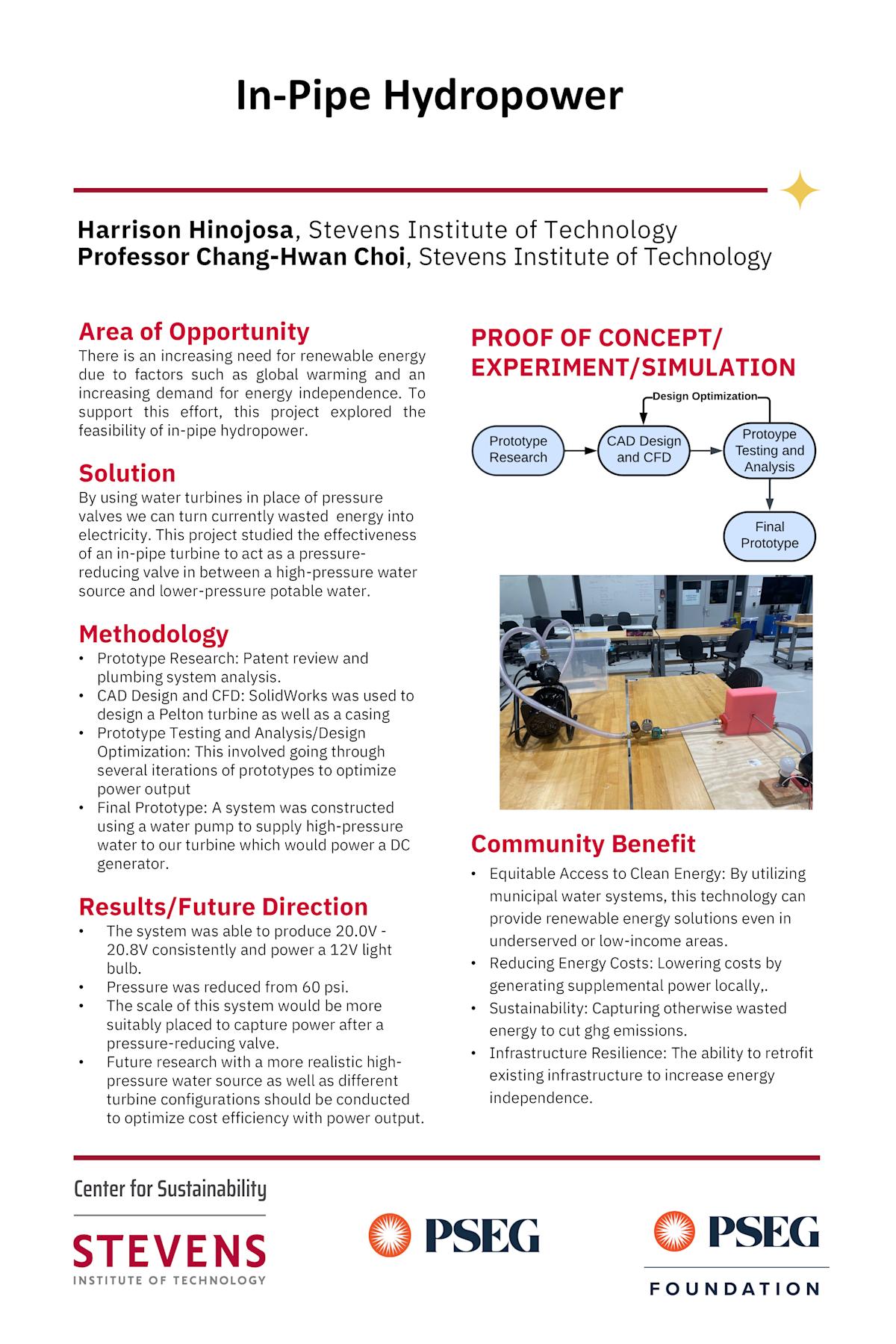
In-pipe Hydropower
Description
This research explored the feasibility of using water turbines in place of pressure valves in pressurized pipe systems to convert wasted energy into electricity. Several existing patents that describe various approaches to converting in-pipe pressure to electricity were reviewed, to identify alternate approaches to capturing energy. Prototypes were designed and scaled up for production via 3D printing.
Team member(s)
Harrison Hinojosa – Senior, Mechanical Engineering, Stevens Institute of Technology
Advisor(s)
Dr. Chang-Hwan Choi, Professor of Mechanical Engineering, Stevens Institute of Technology
Carbon Dioxide Removal (CDR) Methods Through Direct Air Capture (DAC)
Project name
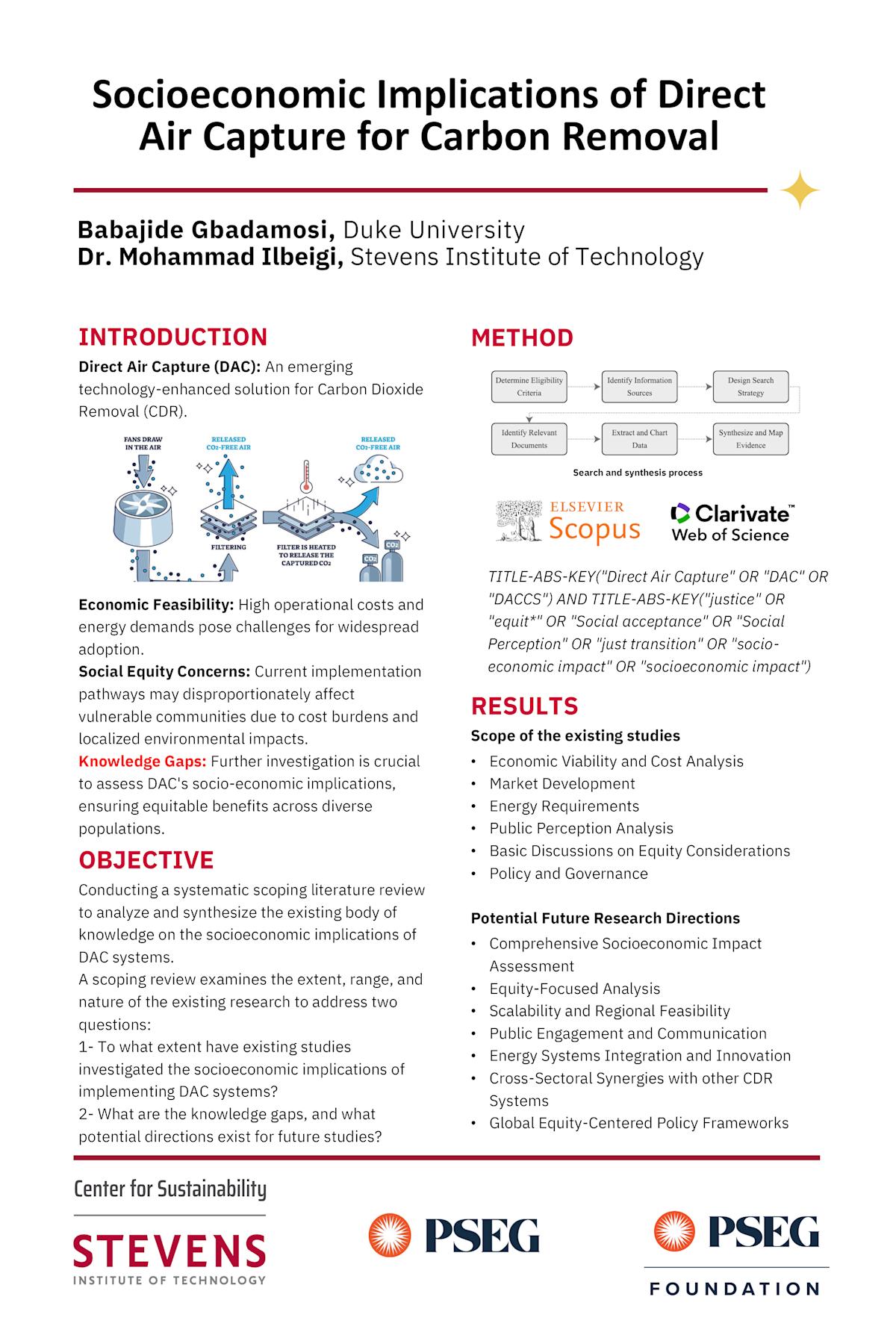
Carbon Dioxide Removal (CDR) Methods Through Direct Air Capture (DAC) and Their Socioeconomic Implications
Description
The objective of this study was to examine the socioeconomic implications of Carbon Dioxide Removal and Direct Air Capture (DAC) technology, emphasizing how these technologies are perceived by various communities, their impact on institutions, and the potential benefits and challenges they present.
Team member(s)
Babajide Gbadamosi, sophomore, Computer Engineering, Duke University (formerly at Stevens)
Advisor(s)
Dr. Mohammad Ilbeigi, Assistant Professor, Department of Civil, Environmental and Ocean Engineering at Stevens Institute of Technology
Exploring Synergies Between NJ Regional Resilience Adaptation Action Plans
Project name
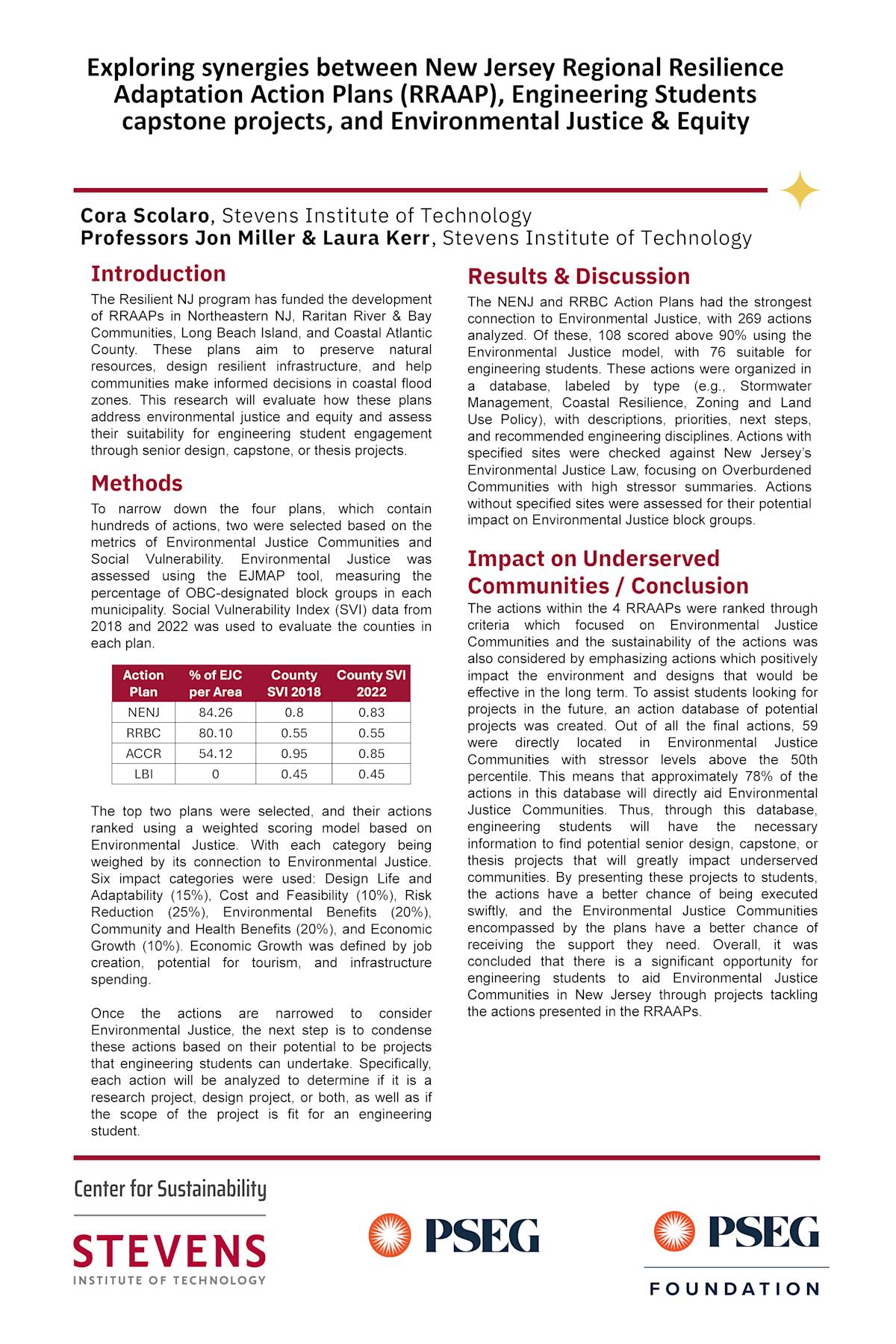
Exploring Synergies Between New Jersey Regional Resilience Adaptation Action Plans (RRAAP), Engineering Students Capstone Projects, and Environmental Justice and Equity
Description
Research was focused on determining to what extent the actions outlined in the Resilient NJ Regional Resilience and Adaptation Action Plans facilitate engineering students in aiding environmental justice communities through senior design, capstone, or thesis projects. The Social Vulnerability Index (SVI) developed by the Centers for Disease Control (CDC), was used as a metric for communities’ need for environmental justice.
Team member(s)
Cora Scolaro, senior, Naval Engineering, Stevens Institute of Technology
Advisor(s)
Dr. Jon Miller, Senior Associate Professor, Department of Civil, Environmental and Ocean Engineering at Stevens Institute of Technology
Enhancing the Resilience of Communities by Addressing Environmental...
Project name
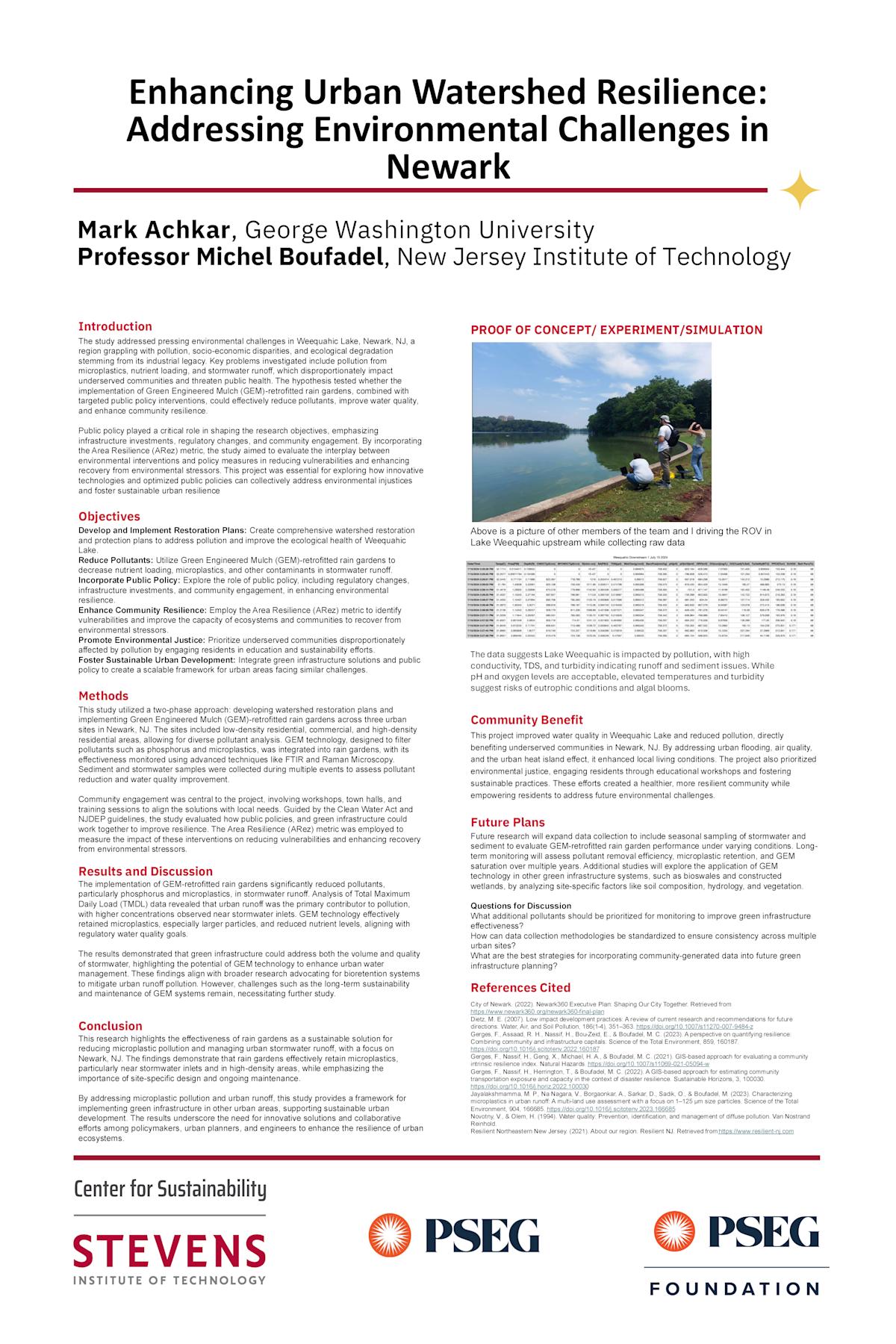
Enhancing the Resilience of Communities by Addressing Environmental Challenges in Public Lakes
Description
The project included identification of major pollutant sources such as phosphorus and microplastics, and the development of targeted management practices to mitigate these issues. The ARez framework was applied to assess community resilience, highlighting areas of strength and vulnerability, and guiding policy recommendations.
Team member(s)
Mark Achkar, sophomore, Biology, George Washington University
Advisor(s)
Dr. Michel Boufadel, Distinguished Professor and Director at Center for Natural Resources, NJIT
Developing a Green Map to Highlight Local Businesses in Newark
Project name
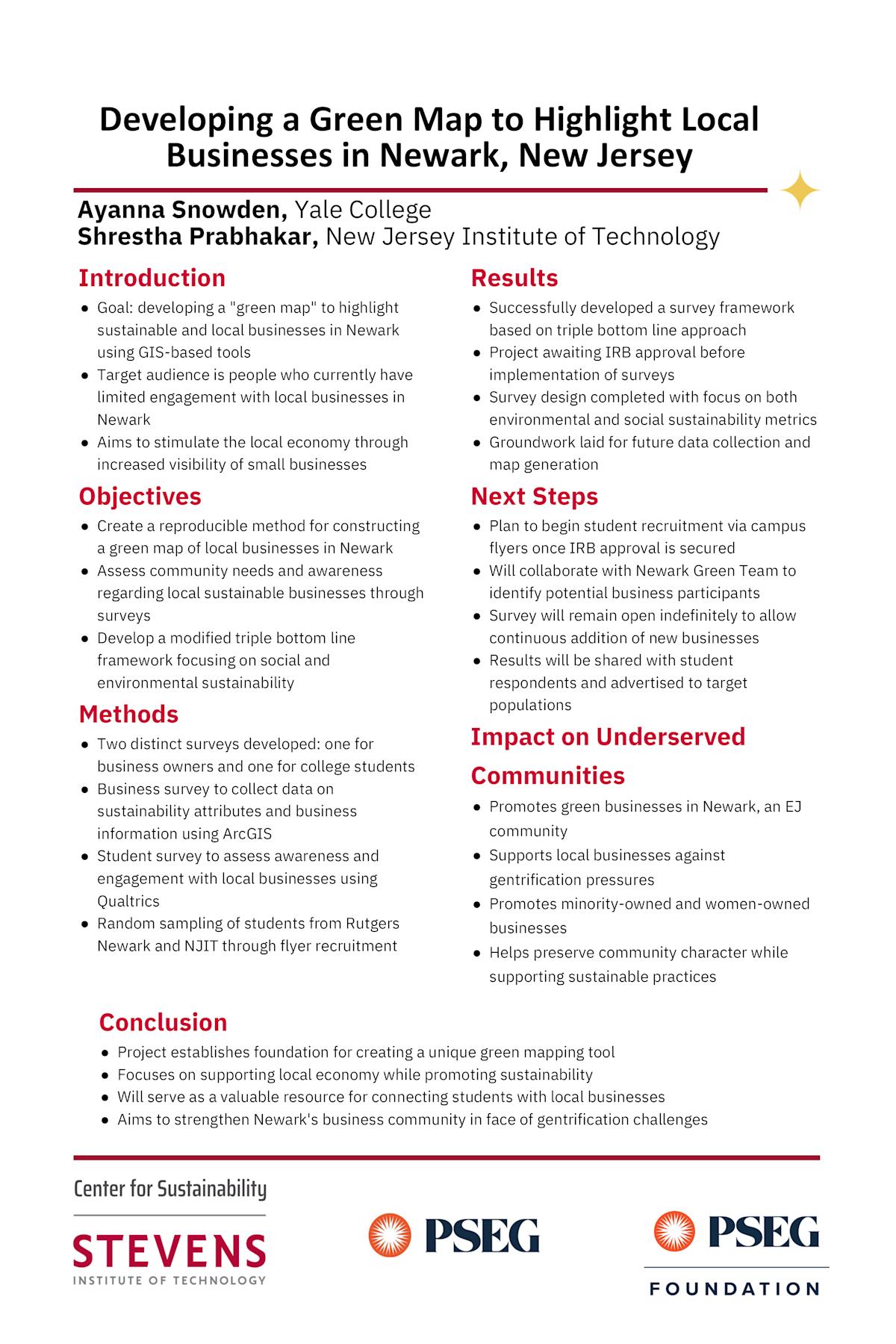
Developing a Green Map to Highlight Local Businesses in Newark
Description
The objective of the project was to examine and document a method for constructing a “green map”, highlighting small and local businesses and organizations in Newark using Geographic Information System (GIS)-based tools.
Team member(s)
Ayanna Snowden, sophomore, Environmental Studies, Yale University
Advisor(s)
Dr. Prabhakar Shrestha, Assistant Director of Sustainability, NJIT
Analytical Study of the Challenges Faced by NJ Underprivileged Communities
Project name
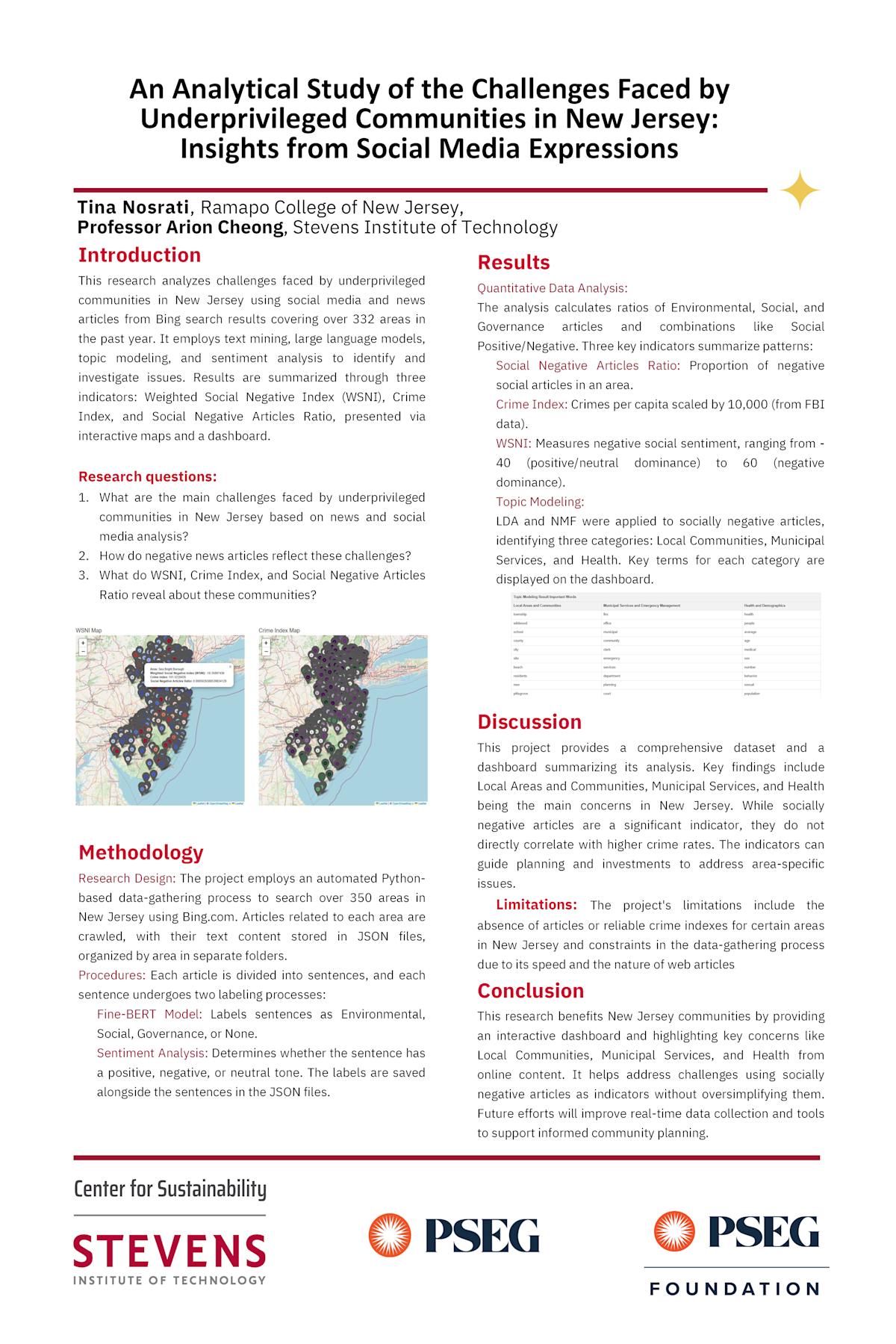
An Analytical Study of the Challenges Faced by Underprivileged Communities in New Jersey: Insights from Social Media Expressions
Description
By analyzing social media and news article content from general online sources using large language models, this team used sentiment analysis to identify negative-toned articles in more than 350 communities. By identifying and analyzing these issues, the research provides valuable insights that can help guide policymakers, community leaders, and social organizations in making informed decisions and intervention procedures for socially negative behavior.
Team member(s)
Tina Nosrati, Junior, Computer Science, Ramapo College of New Jersey
Advisor(s)
Dr. Arion Cheong, Assistant Professor of Accounting, Stevens Institute of Technology
Achieving Environmental Equity: An Analysis of NJ Environmental Justice Law
Project name
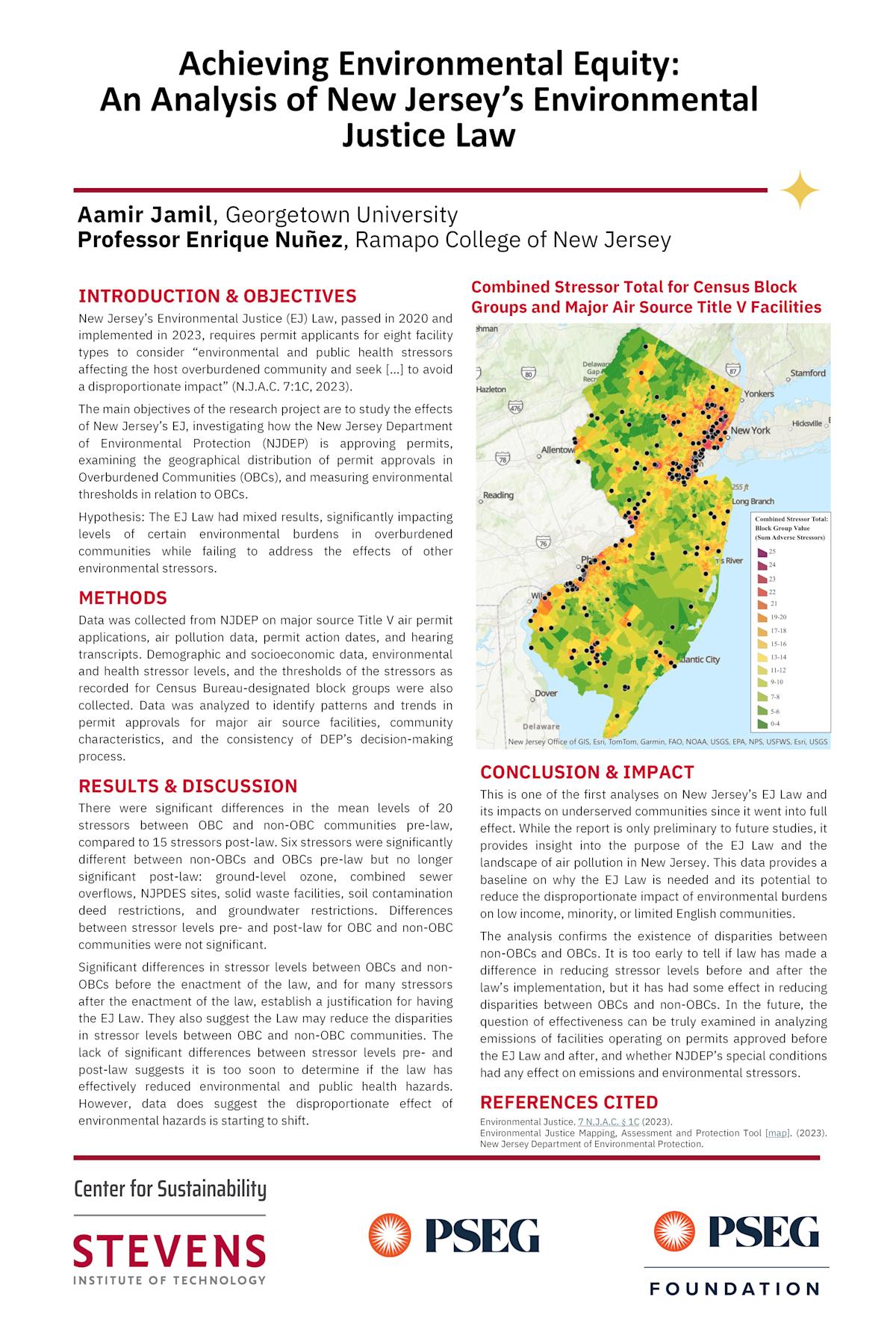
Achieving Environmental Equity: An Analysis of New Jersey’s Environmental Justice Law
Description
This research examined the effects on overburdened communities (OBCs) of New Jersey’s Environmental Justice (EJ) Law, passed in 2020 and implemented in 2023, which requires permit applicants for eight types of facilities “to consider the relative environmental and public health stressors affecting the host overburdened community and seek, in the first instance, to avoid a disproportionate impact”. The project used data from NJ DEP to examine the levels of 20 stressors in OBCs and non-OBCs before and after the passage of the EJ law to determine if the law was effective in reducing stressors on OBCs.
Team member(s)
Aamir Jamil, Sophomore, Government and Philosophy, with a minor in Spanish, Georgetown University
Advisor(s)
Dr. Enrique Nuñez, Professor of Business, Ramapo College of New Jersey
Celebrating the 2025 PSEG Undergraduate Research Scholars for Environmental Justice

The Stevens Center for Sustainability (SCS) successfully concluded the 2025 cohort of the PSEG Undergraduate Research Scholars for Environmental Justice. In its second year, the program experienced continued growth in visibility and competitiveness, receiving an impressive 116 applications for just seven scholar positions—a strong indicator of its expanding regional reach and impact.
Applicants represented institutions across the Northeast, including Stevens Institute of Technology, New Jersey Institute of Technology, Hudson County Community College, Kean University, Passaic County Community College, Rutgers, George Washington University, Columbia University, Brandeis, Cornell, and others. Seven distinguished faculty mentors from Stevens, NJIT, Ramapo College, and the Center for Discovery and Innovation supported the cohort, reinforcing the program’s commitment to interdisciplinary, community-engaged research focused on environmental justice.
Funded by the PSEG Foundation and coordinated by SCS, the program provides paid summer research opportunities for undergraduates whose work addresses environmental and social challenges in overburdened and environmental justice communities. Scholars receive mentorship, research training, and opportunities to translate academic inquiry into actionable insights.
During the summer, the 2025 scholars investigated critical issues ranging from microplastics and PFAS contamination to food safety inequities, air quality monitoring, community resilience, green infrastructure and renewable aquaculture. By integrating science, engineering, and social analysis, their projects advanced practical knowledge and solutions that support sustainability, resilience, and equity in communities most affected by environmental harms.
Meet the 2025 PSEG Scholars and Their Research Projects
Mapping New Jersey’s Green Future

Julia Navarro
NJIT
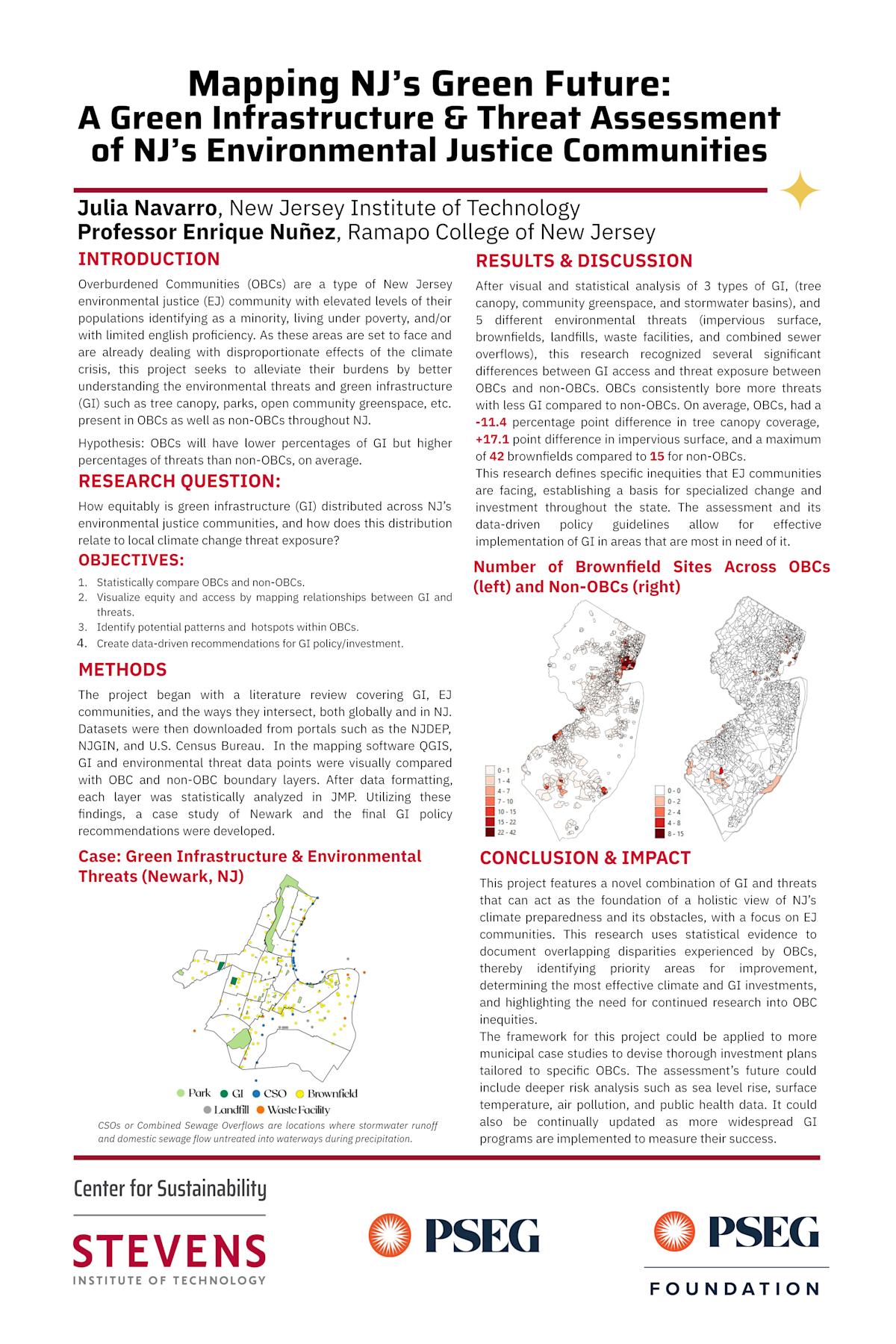
Mapping New Jersey’s Green Future: A Green Infrastructure and Threat Assessment of Environmental Justice Communities
Julia used GIS tools to assess how equitably green infrastructure is distributed across New Jersey. Her findings revealed gaps in tree canopy, open space, and storm-water systems that leave overburdened communities more vulnerable to flooding and heat.
Advisor: Dr. Enrique Nuñez
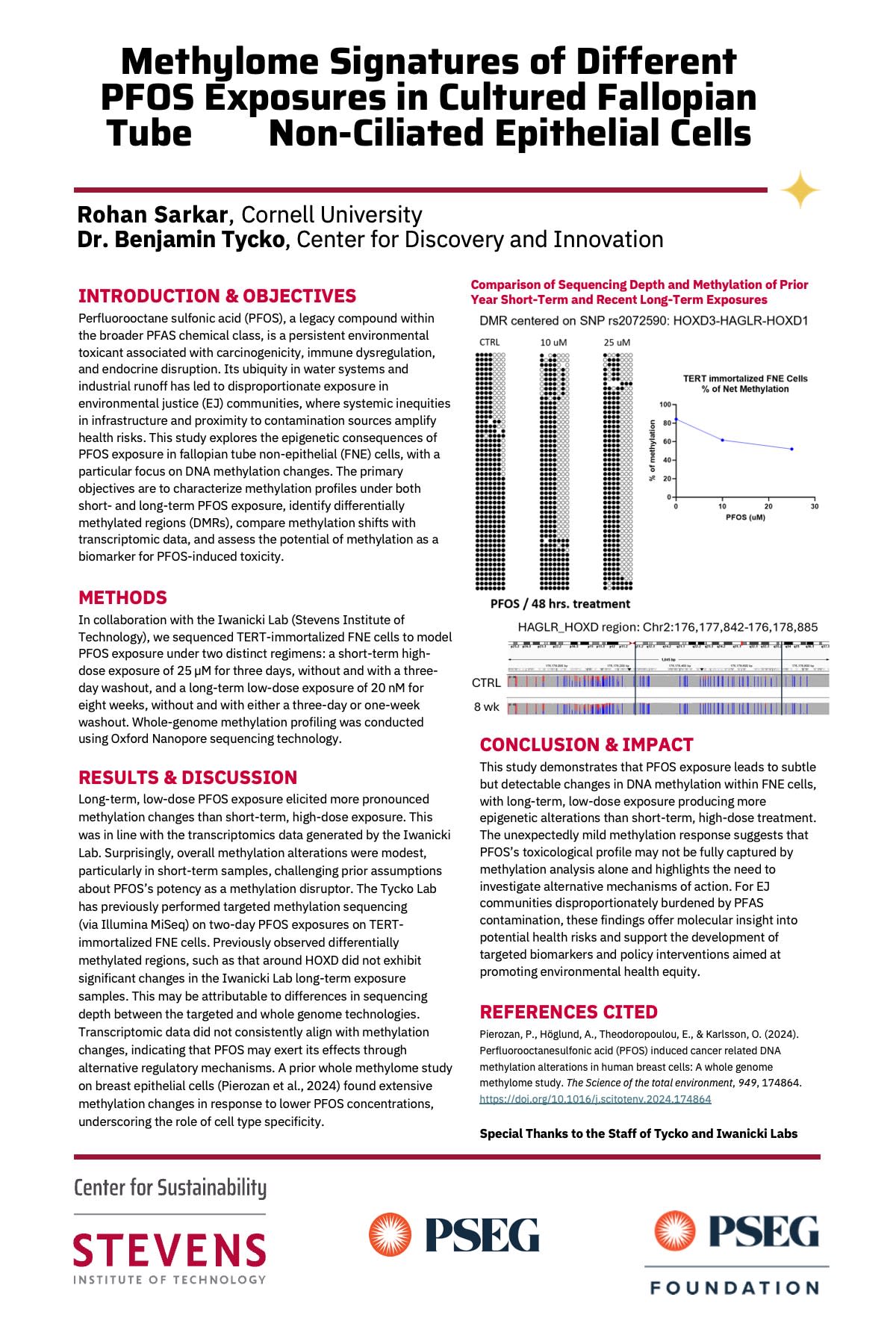
Methylome Signatures of PFOS Exposure in Cultured Fallopian Tube Cells
Rohan Sarkar
Cornell University
Methylome Signatures of PFOS Exposure in Cultured Fallopian Tube Cells
Rohan explored how PFOS—one of the “forever chemicals” found in industrial waste—changes DNA methylation patterns. His molecular-level results strengthen understanding of chemical exposure risks for environmental justice communities.
Advisor: Dr. Benjamin Tycko
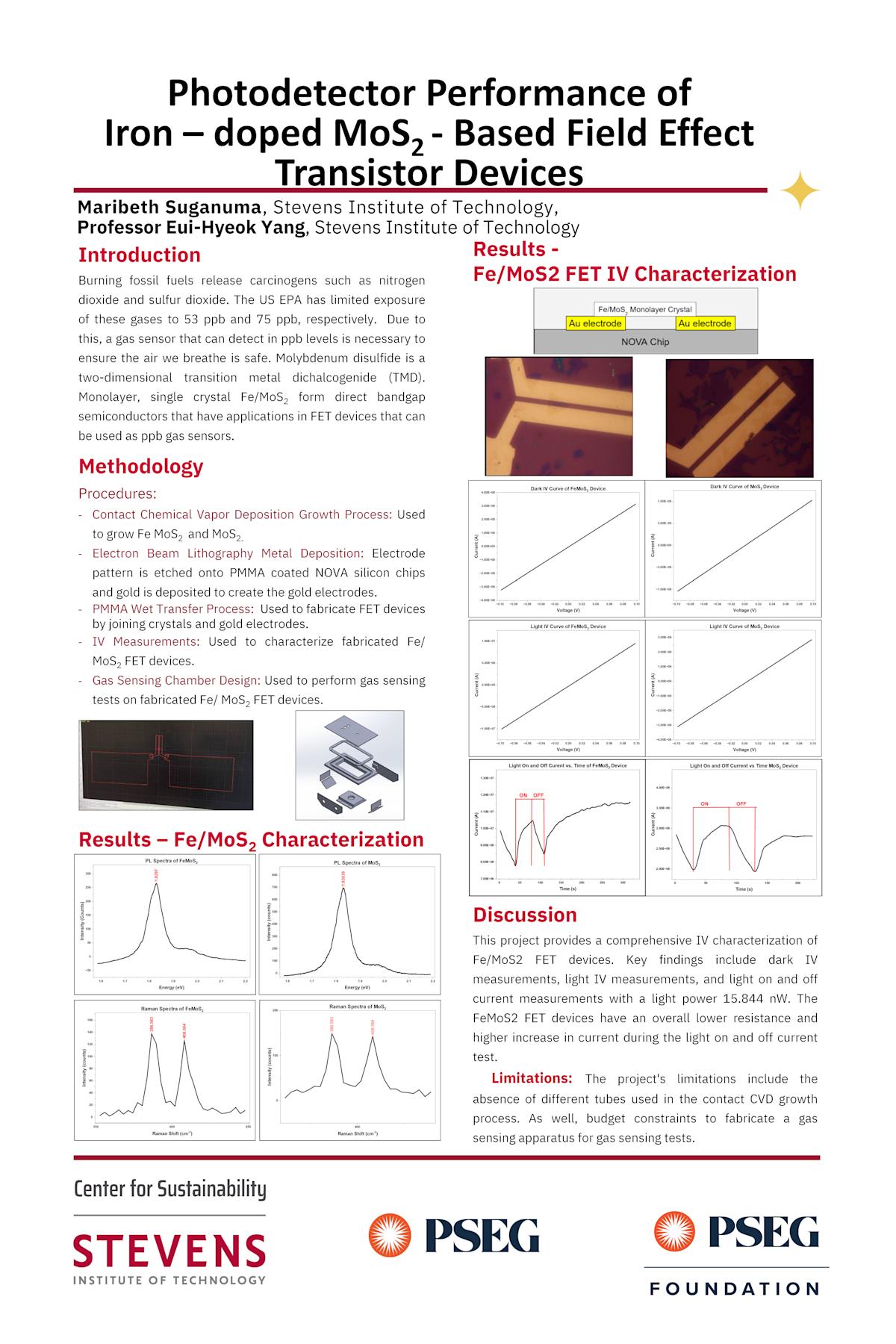
Photodetector Performance of Iron-Doped MoS₂-Based Field-Effect...

Maribeth Suganuma
Stevens Institute of Technology
Photodetector Performance of Iron-Doped MoS₂-Based Field-Effect Transistor Devices
Maribeth designed and tested iron-doped MoS₂ sensors that detect harmful gases with high sensitivity and low power use—technology that can improve real-time air-quality monitoring in densely populated areas.
Advisor: Dr. Eui-Hyeok Yang and Mengqi Fang
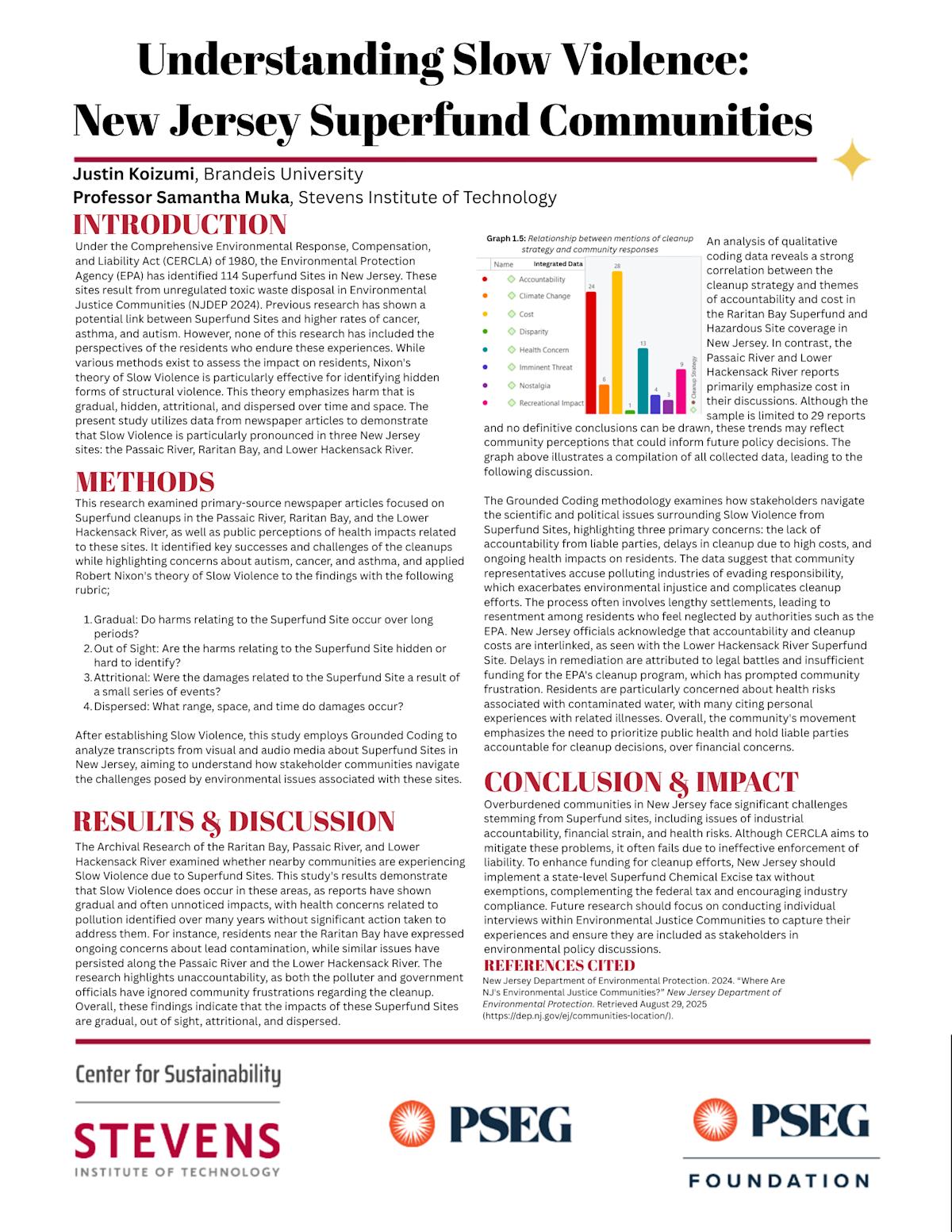
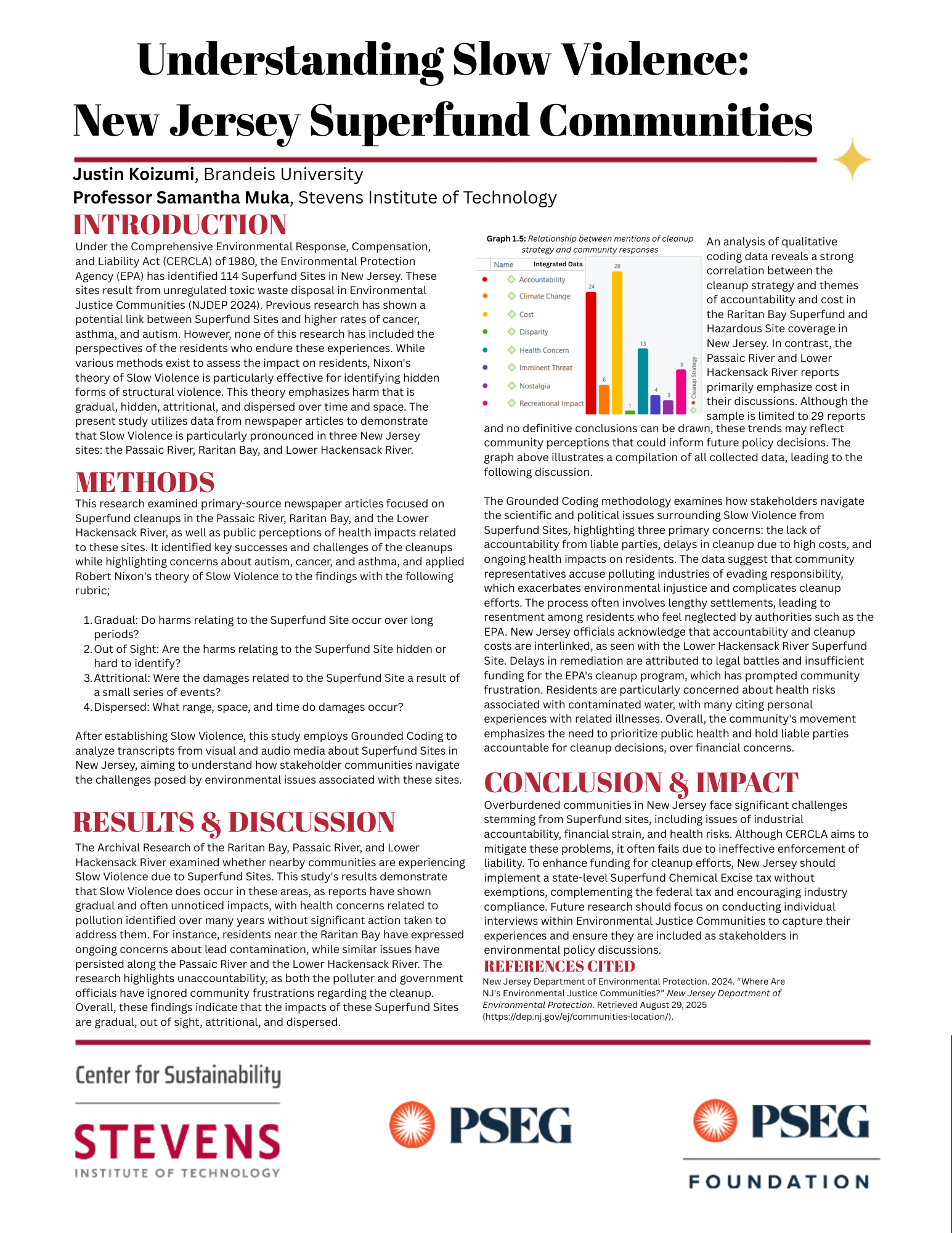
Understanding Slow Violence in New Jersey Superfund Communities
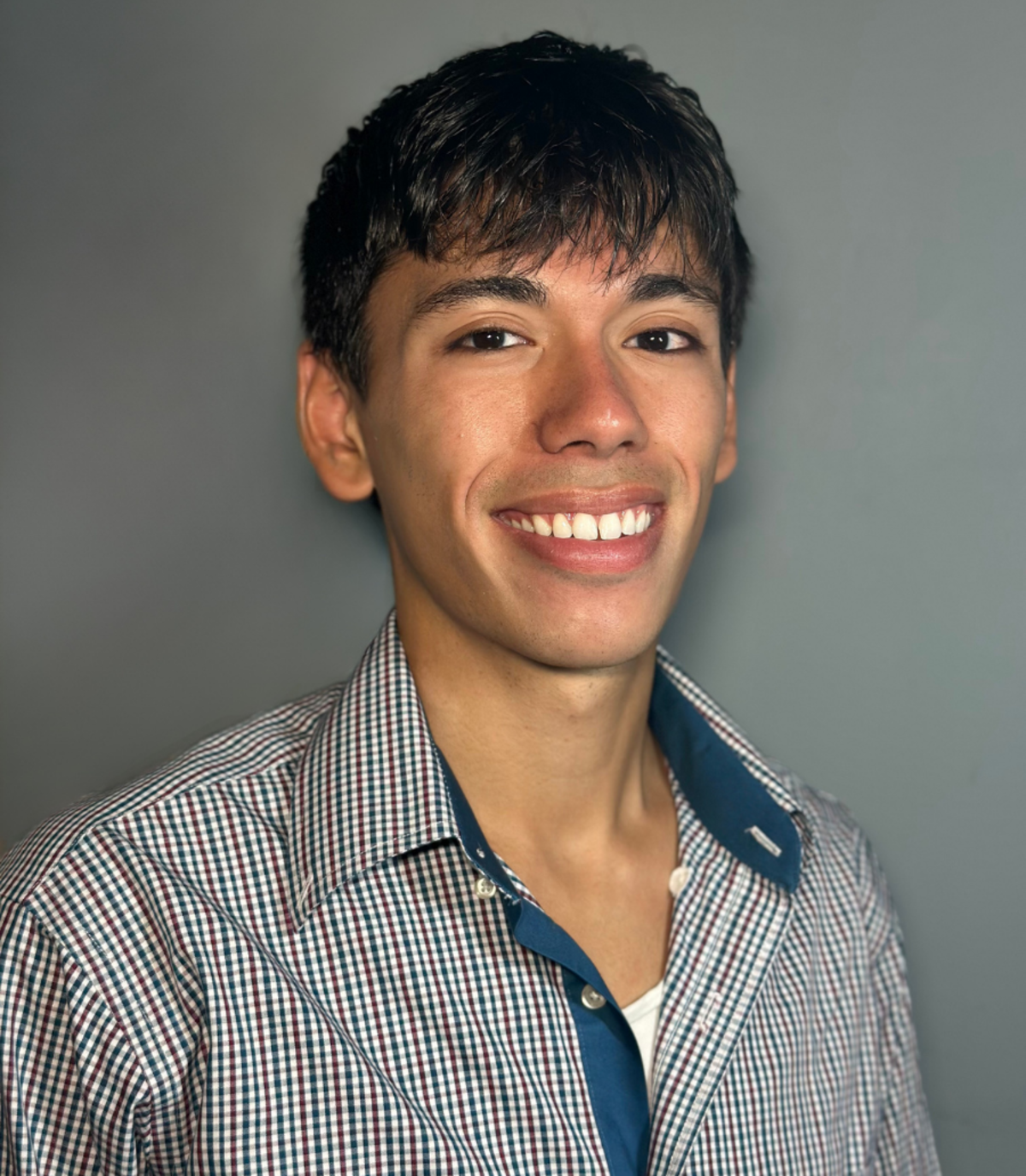
Justin Koizumi
Stevens Institute of Technology
Understanding Slow Violence in New Jersey Superfund Communities
Justin applied the theory of “slow violence” to three Superfund sites—the Passaic River, Raritan Bay, and Lower Hackensack River—to reveal how long-term industrial pollution affects health and policy. He recommends stronger accountability and funding for cleanup efforts.
Advisor: Dr. Samantha Muka
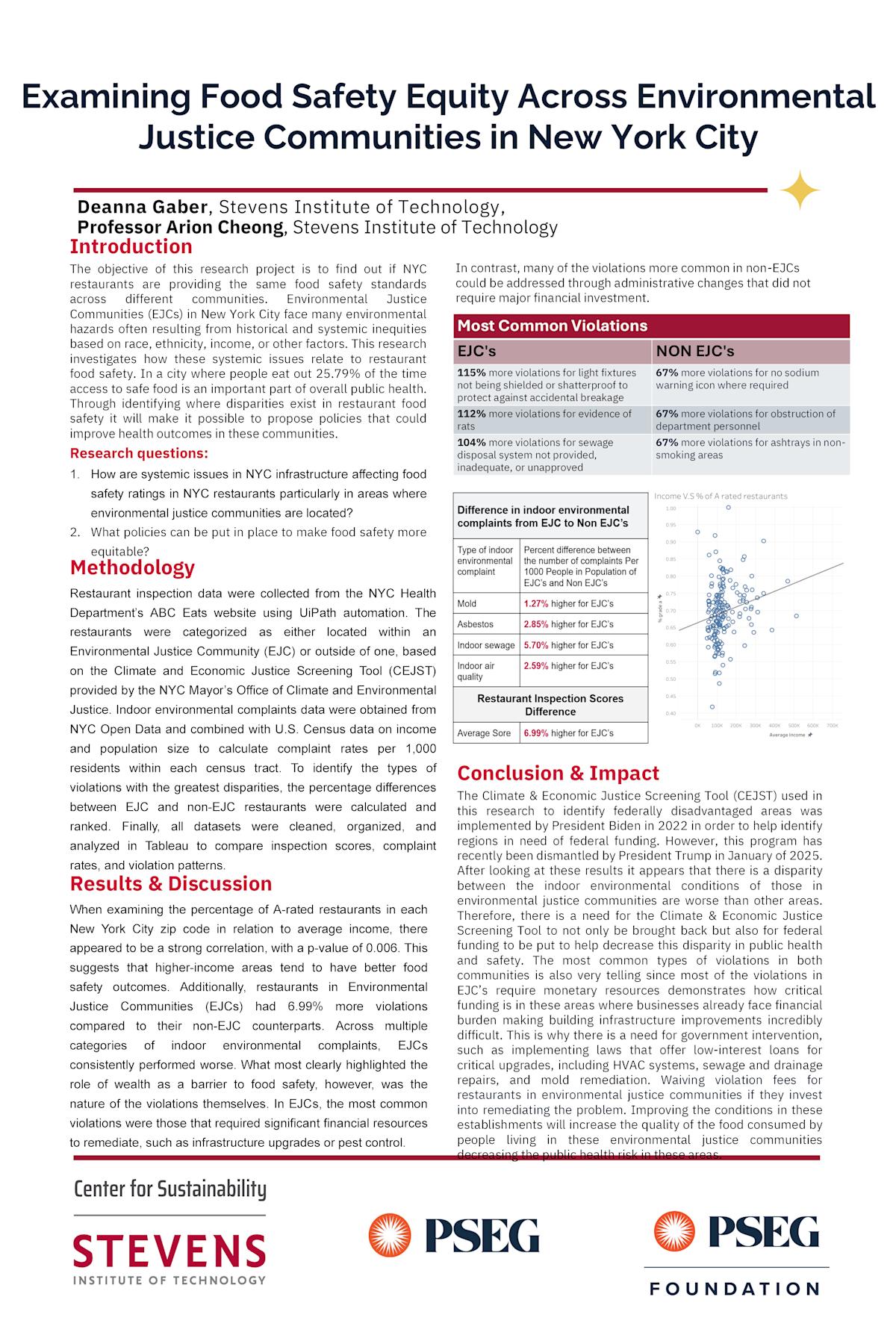
Examining Food Safety Equity Across Environmental Justice Communities...

Deanna Gaber
Stevens Institute of Technology
Examining Food Safety Equity Across Environmental Justice Communities in New York City
Deanna’s study of NYC restaurant data showed that restaurants in environmental justice areas have nearly 7 percent more violations than those in wealthier neighborhoods. She advocates for targeted financial support to improve food safety equity.
Advisor: Dr. Arion Cheong
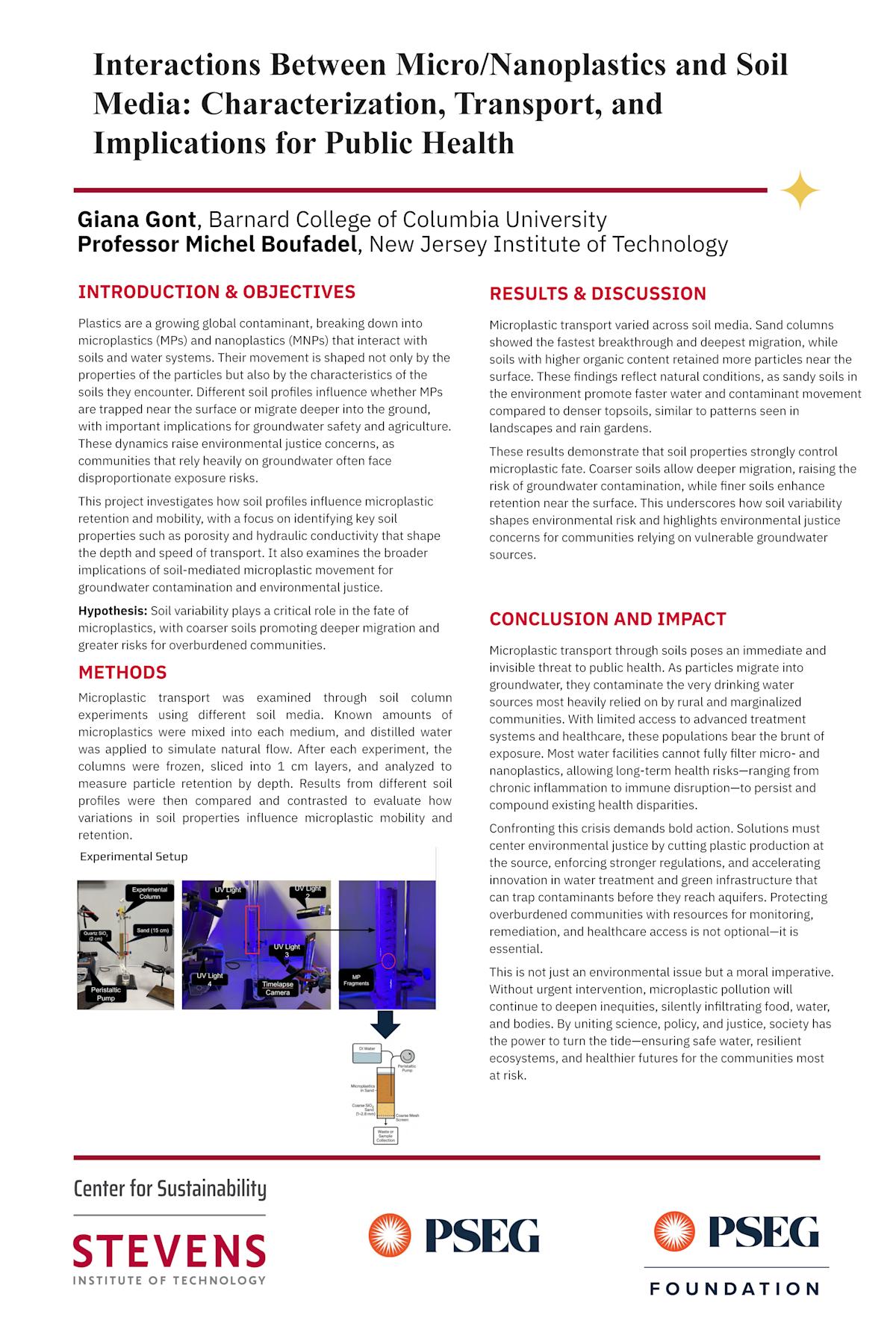
Interactions Between Micro/Nanoplastics and Soil Media...

Giana Gont
Barnard College of Columbia University
Interactions Between Micro/Nanoplastics and Soil Media: Characterization, Transport, and Implications for Public Health
Giana’s column tests showed that sandy soils allow microplastics to travel deeper into groundwater, raising contamination risks for rural communities. Her research calls for new filtration technologies and regulatory protections.
Advisor: Dr. Michel Boufadel, Dr. Viravid Na Nagara, and Abdul Doughan
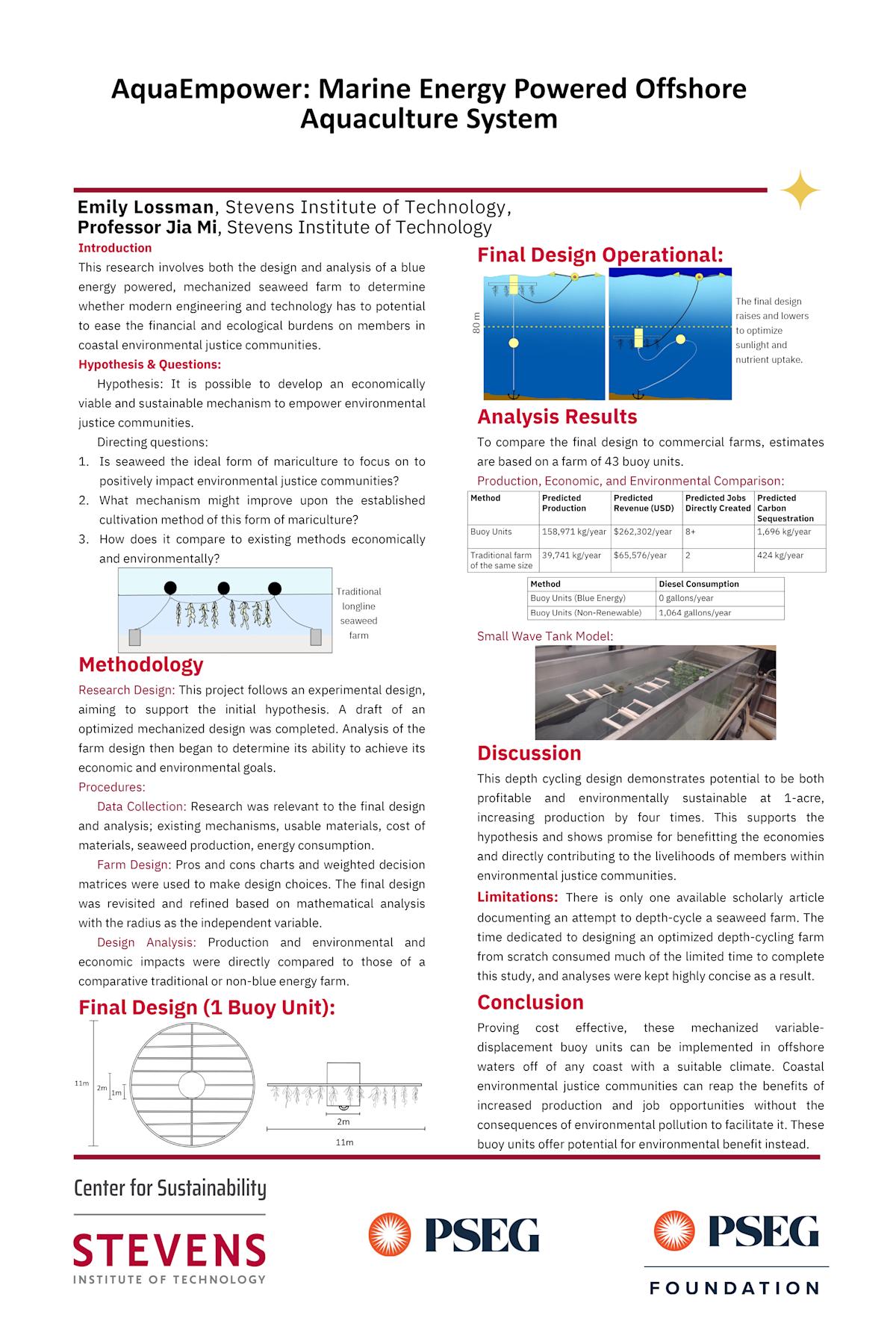
AquaEmpower: Marine Energy-Powered Offshore Aquaculture System AquaEmpower: Marine Energy-Powered Offshore Aquaculture System
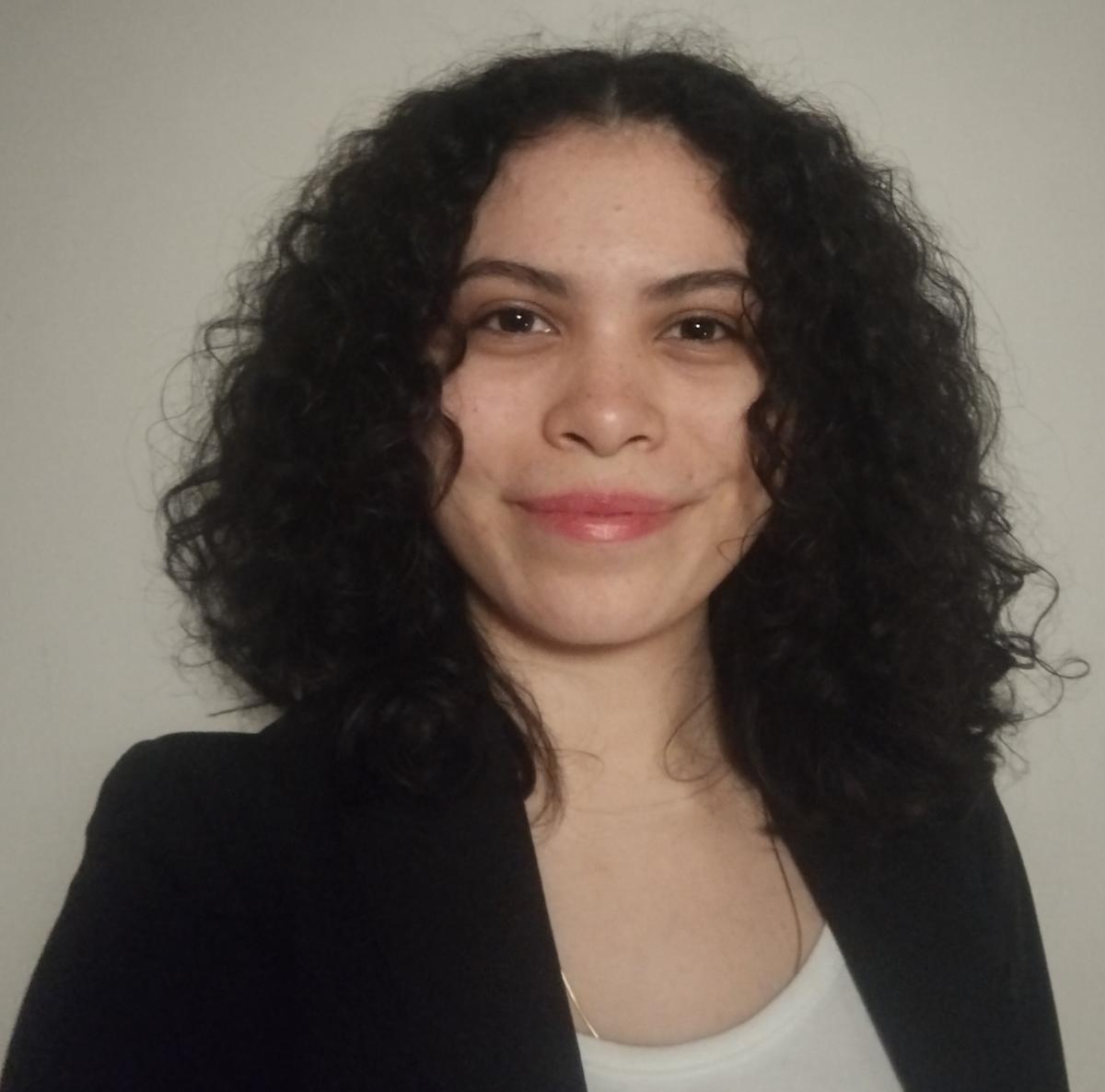
Emily Lossman
Stevens Institute of Technology
AquaEmpower: Marine Energy-Powered Offshore Aquaculture System
Emily developed a wave-powered seaweed farm that quadruples biomass growth while creating green jobs in coastal communities. Her depth-cycling design shows how renewable marine energy can support both economic and environmental resilience.
Advisor: Dr. Jia Mi
2024
